Key Takeaways
- Storing Bitcoin in 2026 takes more caution than ever, with smarter scams, growing security risks, and no way to recover lost funds.
- Bitcoin gives users full control: whoever holds the private keys has complete access, with no bank recovery or customer support options.
- Different wallet types serve different purposes, from cold storage for long-term safety to hot wallets for fast daily transactions.
Storing Bitcoin in 2026 is not just about picking a wallet and hoping for the best. It is about staying ahead of a landscape where scams are more convincing, hacks are more targeted, and small mistakes can lead to big losses. As Bitcoin continues to go mainstream, more people are holding it long term, which makes security a bigger priority than ever. Unlike traditional bank money, Bitcoin does not come with a reset button or a customer support line. Whoever controls the private keys controls the funds.
That is why how you store it really matters. From everyday mobile wallets to offline storage methods, there are now more ways than ever to keep your Bitcoin safe, but also more ways to get it wrong if you are not careful.
Below are nine practical and widely used ways to store Bitcoin safely in 2026.
1. Hardware Wallets (Cold Storage Devices)
Hardware wallets are one of the safest ways to store Bitcoin because they keep your private keys completely offline on a physical device. Even when connected to a computer or phone, the keys never leave the device, and transactions are signed internally, which helps protect against hacking, malware, and phishing attacks.
They are widely used for long-term storage, especially for users holding larger amounts of Bitcoin. Since they are built specifically for security rather than daily transactions, they offer strong protection against most online risks.
Key idea: Best for long-term holding and large amounts of Bitcoin.
2. Mobile Wallets (Hot Wallets for Daily Use)
Mobile wallets are smartphone applications that allow users to store, send, and receive Bitcoin directly from their devices. Because they are always connected to the internet, they offer fast access and easy transactions, making them highly convenient for everyday use. However, this constant online connection also makes them more vulnerable to risks such as malware, phishing attacks, and device theft if proper security measures are not followed.
These wallets are typically used for small, routine transactions rather than long-term storage. They are best suited for users who need quick access to Bitcoin for payments or transfers on the go, while keeping larger holdings in more secure offline storage.
Key point: Best for daily spending and small amounts, not long-term savings.
3. Desktop Wallets
Installed directly on a personal computer, desktop wallets give users full control over their Bitcoin private keys without relying on third-party platforms like exchanges. Because the keys are stored locally, users gain more ownership and flexibility, along with features such as portfolio tracking, address management, and transaction history tools.
Security depends heavily on the condition of the device itself. If a computer is exposed to malware, phishing software, or system vulnerabilities, funds can become at risk. For this reason, desktop wallets are typically chosen by users who want stronger control than exchanges offer but are not ready for hardware-based storage.
Simple idea: Balances control and usability, but security is only as strong as the computer it runs on.
4. Exchange Wallets (Custodial Storage)
Exchange wallets allow users to store Bitcoin directly on crypto platforms such as Binance, Coinbase, and Kraken, where the exchange manages the private keys on their behalf. This makes buying, selling, and trading more convenient, since funds are instantly available without the need to transfer assets between wallets.
The main drawback is reduced control. Since the exchange holds the private keys, users rely on the platform’s security and policies. Risks can include exchange hacks, account restrictions, or withdrawal delays during high market activity or regulatory changes.
In short: Highly convenient for trading, but comes with higher custodial risk.
5. Paper Wallets
Paper wallets store Bitcoin private and public keys on a physical printout, keeping them completely offline and away from digital threats such as hacking, malware, and phishing. Because the keys never touch an internet-connected device, they are considered a form of cold storage and can offer strong protection when generated and handled correctly.
The main risk comes from physical vulnerability. Paper can be lost, torn, faded, or damaged by water or fire, which can permanently remove access to the funds. It also requires careful handling during creation and storage to avoid exposure of the keys.
Key idea: Highly secure when kept safe offline, but physically fragile and easy to lose or damage.
6. Air-Gapped Devices (Offline Computers)
Air-gapped devices are dedicated computers that are completely disconnected from the internet to store and manage Bitcoin keys. Transactions are created and signed on this offline machine, then transferred to an online device via USB drives or QR codes for broadcasting to the network. Since the private keys never touch an internet-connected system, this setup significantly reduces the attack surface for hackers and malware.
This approach is often used for high-security storage where maximum isolation is required. It does require careful setup and strict operational discipline to avoid accidental exposure during file transfers or device handling.
Core idea: Advanced security method designed for users who want maximum isolation and control.
7. Multi-Signature (Multi-Sig) Wallets
Multi-signature wallets add an extra layer of security by requiring multiple private keys to approve and complete a Bitcoin transaction. Instead of relying on a single key, the system can be configured to require two or more approvals before funds can be moved, such as a 2-of-3 setup where at least two of three keys must sign.
This structure helps reduce the risk of theft or accidental loss because no single compromised device or account is enough to access the funds. It is commonly used by businesses, teams, or individuals managing large Bitcoin holdings who want distributed control and stronger protection against single points of failure.
Key point: Enhanced security for shared accounts and large holdings through multiple approval layers.
8. Seed Phrase Metal Backup
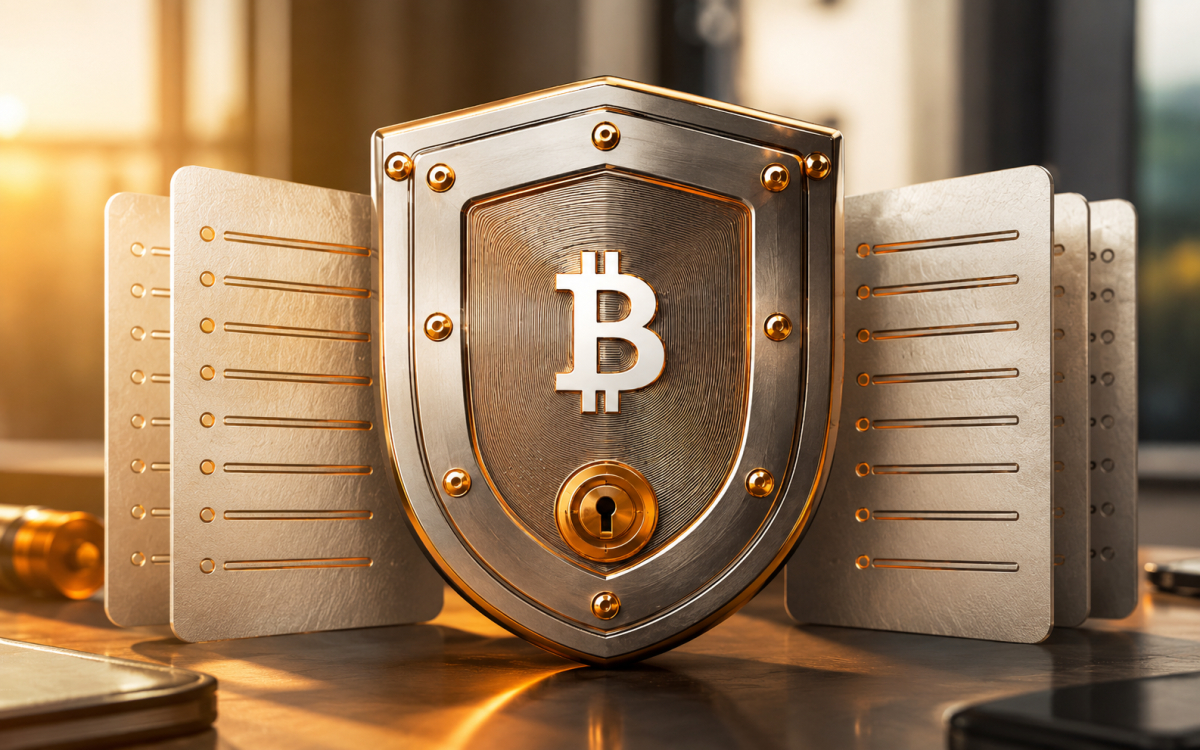
A seed phrase acts as the master recovery key for a Bitcoin wallet, allowing users to restore access if a device is lost, damaged, or replaced. While many people write it on paper, metal backups store the seed phrase by engraving or stamping it onto metal plates designed to withstand extreme conditions.
Unlike paper, metal backups are resistant to fire, water, corrosion, and long-term wear, making them a more durable option for protecting recovery information. This makes them especially useful as a long-term safeguard for wallets that hold significant value.
Key idea: A critical backup method that adds long-term durability and protection to any wallet setup.
9. Hybrid Storage Strategy (Cold + Hot Mix)
A hybrid storage strategy combines different wallet types so Bitcoin is not stored in just one place. Funds are divided based on how often they are used and how much risk each portion can handle. This method is widely used because it improves both security and flexibility.
- Cold storage for long-term savings.
- Hot wallets for daily transactions.
By separating funds this way, larger holdings stay protected offline while smaller amounts remain easily accessible for everyday use. This reduces overall risk without sacrificing convenience.
In short: The most practical and widely used approach in 2026 for balancing security and accessibility.
Final Thoughts
Storing Bitcoin safely in 2026 comes down to one simple idea: control and protection must work together. With rising cyber threats, smarter scams, and the irreversible nature of blockchain transactions, choosing the right storage method is essential for protecting your assets long term. Each storage option serves a different purpose, from highly secure offline solutions to convenient tools for everyday use. The strongest approach is not to rely on a single method, but to understand when and how to use each one based on your needs. In a space where mistakes cannot be undone, smart storage decisions ultimately keep your Bitcoin safe.
You Might Also Like: