Key Takeaways
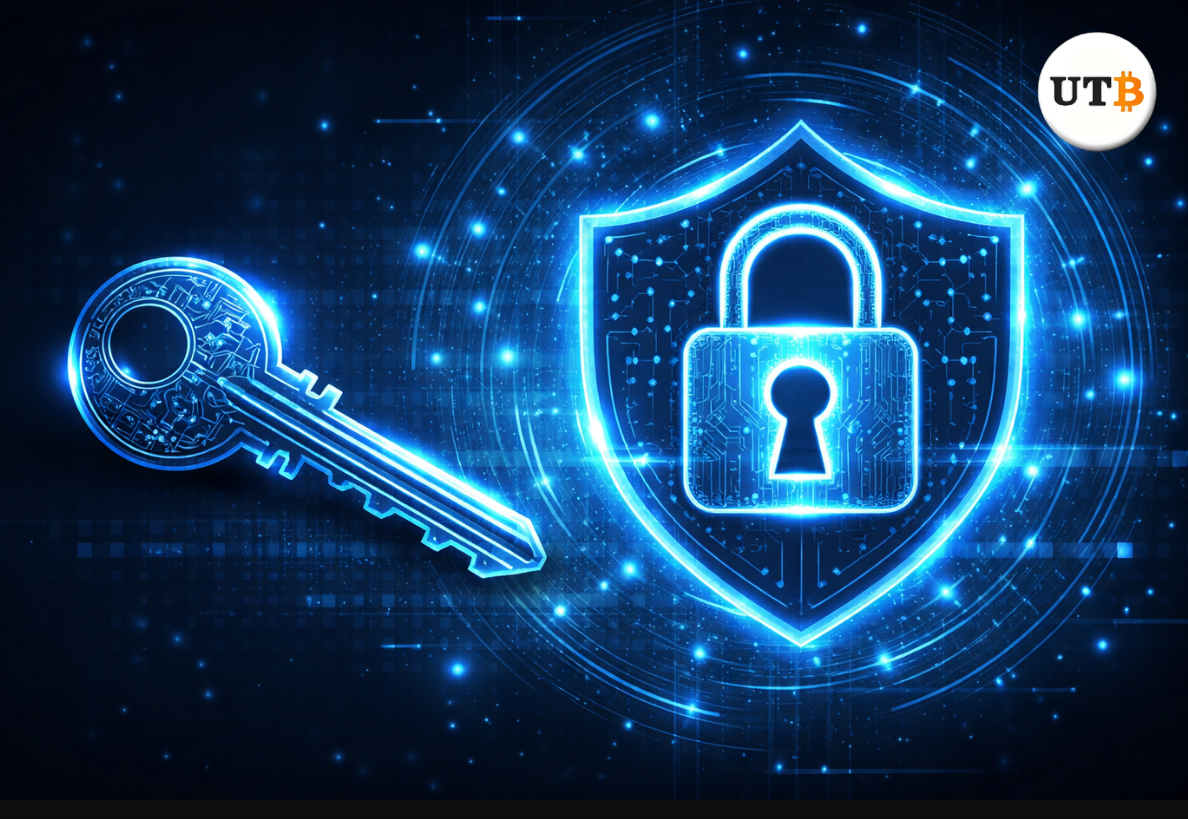
- Public and private keys are the foundation of crypto security, enabling users to send, receive, and control assets without banks or central authorities.
- They work as a pair in asymmetric cryptography, where the public key receives funds and the private key controls and approves transactions.
- Public keys can be shared safely, but they cannot reveal the private key, keeping wallets secure while still allowing open transactions.
Public and private keys are the invisible backbone of cryptocurrencies and modern digital security. Without them, sending or receiving digital assets securely, without a bank or central authority, would simply not be possible.
They work as a matched pair within a system called asymmetric cryptography, where one key secures information, and the other verifies or accesses it. This carefully engineered design solves one of the oldest problems in finance: how to prove ownership and authorize transactions without handing control to someone else.
The answer lies in mathematics so strong that even the most advanced computers cannot crack it. No bank. No authority. Just cryptography protecting your assets from everyone else. In this article, we’ll break down exactly how public and private keys work and why they matter.
What is a Public Key?
A public key is a cryptographic code that can be shared openly without risking security. It is generated from a private key and is used to receive digital assets, verify digital signatures, or confirm the authenticity of transactions. In cryptocurrencies, the public key is used to create an address that others can use to send funds or data to you.
While it is algorithmically linked to the private key, it is designed in a way that makes it practically impossible to reverse-engineer or expose the private key from it. This makes the public key safe to share and essential for enabling secure, trustless transactions on blockchain networks.
What is a Private Key?
A private key is a secret cryptographic code that must be kept confidential at all times. It is generated as part of a key pair and is used to authorize transactions and prove ownership of digital assets linked to a corresponding public key. In blockchain systems, the private key acts as the ultimate proof of control over a wallet or account.
It allows the owner to sign transactions, meaning it provides the authorization needed to move funds or interact with decentralized applications. Because full control of a wallet is tied directly to this key, anyone who gains access to it can take complete control of the associated assets. For this reason, losing or exposing a private key can result in irreversible loss of access or theft of funds.
How Public and Private Keys Work Together
Public and private keys work as a pair to keep digital assets secure and prove ownership on the blockchain. When someone sends you crypto or digital assets, they send it to your public key address. The public key can be shared with anyone and is used to receive funds and help verify transactions.
The private key is the secret part. It is used to sign transactions, which proves that you are the real owner and allows you to move or use your funds. The private key is never shared.
This system makes sure that:
- The public key (and address) is used to receive funds and verify authenticity.
- The private key is used to sign transactions and prove ownership.
- Only the holder of the private key can authorize movement of assets, ensuring security and control without intermediaries.
Digital Signatures and Verification
Private keys are used to create digital signatures, which serve as proof that a transaction was truly authorized by the wallet owner.
When a user sends a transaction, the private key generates a unique signature based on the transaction details. This signature is tied to both the transaction and the key used to create it, meaning it cannot be reused or copied for other transactions.
Once the transaction is broadcast to the network, validators or nodes use the sender’s public key to verify the signature. If the signature matches the public key, the network confirms that the transaction is valid and came from the rightful owner. If it does not match, the transaction is rejected.
This verification system ensures that:
- Authenticity – confirms the sender is the true owner of the assets.
- Integrity – guarantees that the transaction data has not been altered after signing.
- Non-Repudiation – the sender cannot deny approving the transaction.
- Security – prevents fraud, tampering, and unauthorized transactions across the network.
Why Public-Key Cryptography Is Secure
Public-key cryptography is secure because it relies on mathematical problems that are easy to compute in one direction but almost impossible to reverse. You can easily create a public key from a private key, but you cannot figure out the private key just from the public key. Most systems use elliptic curve cryptography, which is based on math problems that even supercomputers can’t solve in a realistic amount of time.
It is also secure because private keys are generated using random numbers, making them extremely hard to guess due to the vast number of possible combinations. That’s why blockchain systems don’t rely on passwords or central control. Only the person who has the private key can access or approve transactions.
Where Public and Private Keys Are Used
Public and private key systems are used in many areas where security, privacy, and verification are important. They help protect data, confirm identity, and secure communication across both blockchain and traditional digital systems.
A. Cryptocurrency Wallets and Blockchain Networks
In cryptocurrencies, public and private keys are used to control wallets, send and receive digital assets, and verify transactions. The private key authorizes transfers, while the public key is used to receive funds and confirm ownership on the blockchain.
B. Secure Messaging Systems
Some messaging apps use public and private keys to encrypt messages. This ensures that only the intended recipient can read the message, even if it is intercepted while being sent.
C. Digital Identity Verification
Public and private key systems are used to prove identity online without sharing sensitive personal information. They help confirm that a user is the real owner of an account or digital identity.
D. Online Encryption and Secure Data Transfer
These keys are also used to protect data sent over the internet, such as passwords, files, and payment information. They ensure that data stays private during transmission and can only be accessed by the correct recipient.
Risks and Responsibilities
Public and private key systems are very secure, but their safety depends fully on how well users protect their private keys.
A. Loss of Private Key
If a private key is lost, access to the wallet or digital assets is permanently gone. There is no recovery option because decentralized systems do not store or reset private keys. This means all funds associated with that key become inaccessible.
B. Theft or Exposure
If a private key is stolen or exposed, another person can take full control of the wallet. They can transfer funds or access assets without permission, and these actions cannot be reversed once confirmed on the blockchain.
C. Irreversible Transactions
Blockchain transactions are permanent. Once a stolen private key is used to sign and approve a transaction, it cannot be undone or canceled, making prevention the only real protection.
D. User Responsibility
The entire system relies on the user to keep the private key safe. It must be stored securely, never shared, and protected from hacking, phishing, or accidental exposure.
In short, the strength of cryptographic security depends on how carefully the private key is handled.
Final Thoughts
Public and private keys are what make secure digital ownership possible in blockchain systems. They eliminate the need for banks or middlemen by allowing people to send, receive, and protect assets directly. The public key is shared so others can send you funds or verify transactions, while the private key is kept secret and is used to approve and control those funds. Together, they form a secure system where only the owner can access their assets. This works because the private key cannot be derived from the public key, but it also means the responsibility is entirely on the user. If the private key is lost or stolen, there is no way to recover it, and access to the funds is gone.
You Might Also Like: