Key Takeaways
- Ethereum remains a main foundation for Web3, supporting apps like finance, gaming, and digital assets through a growing system of connected blockchain layers.
- Layer 2 networks help blockchains run faster and cheaper by handling transactions off the main chain while still using Ethereum for security.
- Zero-knowledge rollups improve blockchain performance by processing many transactions off-chain and proving them securely on Ethereum.
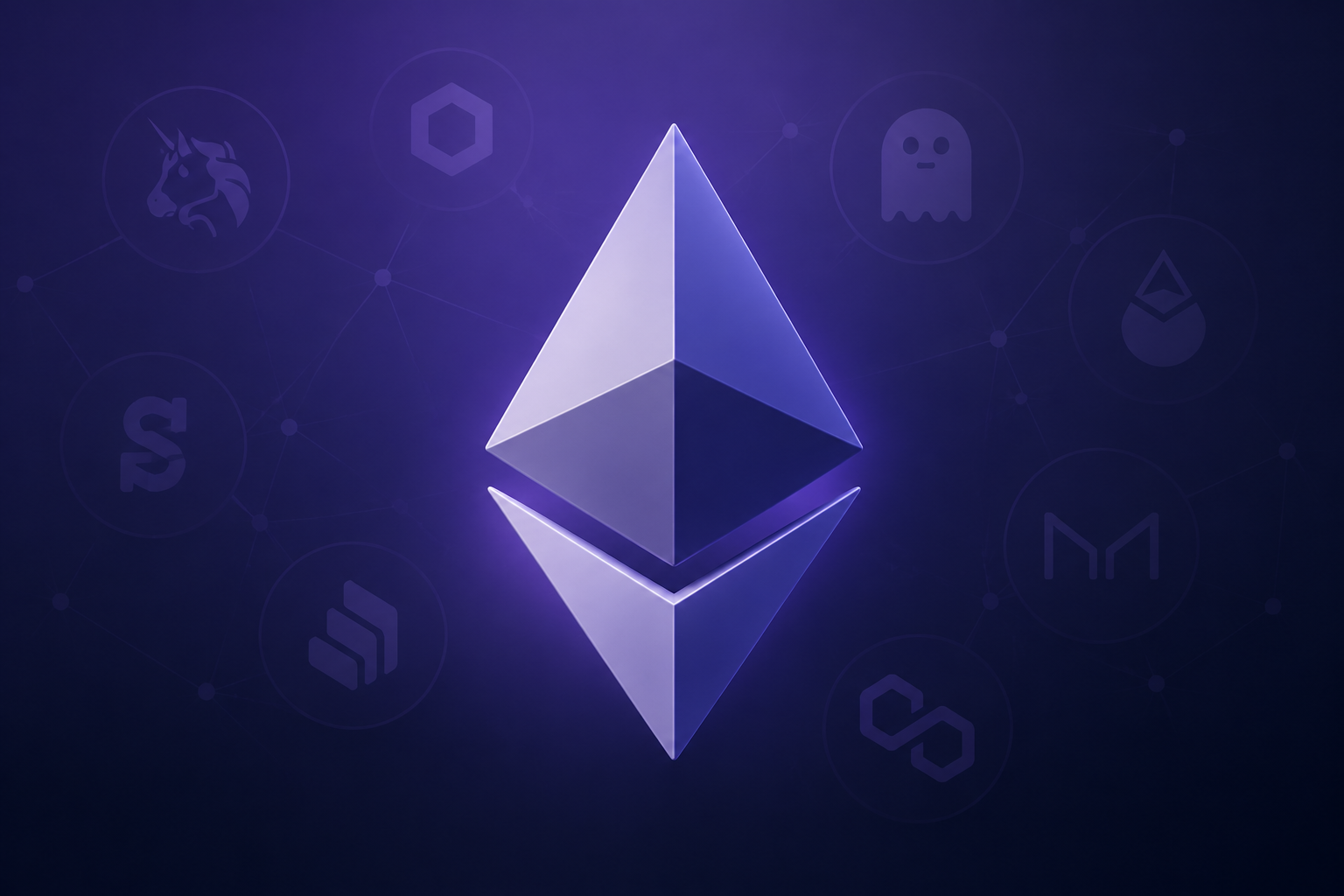
Ethereum remains one of the main pillars of Web3 in 2026, powering decentralized finance, NFTs, gaming, and enterprise blockchain solutions. While the network continues to improve through upgrades and scaling solutions, its real strength comes from the ecosystem built on top of it.
Layer 2 networks, infrastructure protocols, and DeFi platforms are now shaping how digital value, ownership, and data move across the internet. Together, they are helping Ethereum grow beyond a single blockchain into a wider digital economy.
Below are 8 Ethereum-based projects to watch closely in 2026, chosen for their adoption, innovation, developer activity, and growing influence in the ecosystem.
1. Arbitrum (ARB)
Arbitrum has become one of the most popular Layer 2 networks on Ethereum, and it’s easy to see why. Instead of putting every transaction directly on Ethereum, it processes them off-chain using optimistic rollups and only sends the final results back to Ethereum. The result is a system that feels much faster and cheaper, without losing Ethereum’s security.
By 2026, it’s still a major hub for DeFi activity, especially platforms that need fast execution and deep liquidity. Many high-volume trading and lending protocols prefer it because it keeps costs low without sacrificing security. That combination of speed and reliability is what keeps it consistently at the top of the L2 space.
Related Article: What Is Arbitrum (ARB)? All You Need To Know
2. Optimism (OP)
Optimism is more than just a scaling solution now; it’s become a key part of Ethereum’s broader direction, especially with its “Superchain” idea. Instead of having many separate Layer 2s that don’t really talk to each other, Optimism is building a system where multiple chains share infrastructure, standards, and security.
Its OP Stack has made it much easier for projects to launch their own Layer 2 networks without building everything from scratch, giving developers a ready-made framework to scale faster. It also stands out for reinvesting network revenue into ecosystem growth, especially public goods and open-source tools. Over time, Optimism has moved beyond being just a single Layer 2 and now functions more like core infrastructure supporting a growing network of interconnected chains.
Related Article: What Is Optimism (OP)? All You Need To Know
3. Polygon (POL)
Polygon has evolved into a full multi-layer scaling ecosystem rather than just a single solution for faster Ethereum transactions. It combines different technologies, such as sidechains and zero-knowledge rollups, giving developers more flexibility depending on what they’re building. This range of options is a big reason it continues to attract both startups and large companies.
It’s widely used in real-world applications, from payment systems to gaming and tokenized assets. Many enterprises choose Polygon because it’s easier to integrate and offers practical scaling without too much complexity. Today, it remains one of the most adopted Ethereum-based ecosystems outside of pure DeFi.
Related Article: What Is Polygon (POL)? All You Need To Know
4. Chainlink (LINK)
Chainlink plays a foundational role in Ethereum and Web3 by connecting smart contracts to real-world data. Blockchains on their own can’t access external information, so Chainlink provides secure “oracle” networks that deliver price feeds, API data, and other off-chain inputs needed for apps to function properly.
Without this layer, most DeFi systems wouldn’t function at all, especially lending, trading, and derivatives platforms. Its role has expanded into cross-chain communication and tokenized real-world assets, where reliable data and secure messaging are essential.
Related Article: What Is Chainlink (LINK)? All You Need To Know
5. Lido DAO (LDO)
Lido DAO has become the most widely used platform for Ethereum staking by solving a simple problem: staking ETH usually locks it up, making it unusable elsewhere. Lido changes that by giving users a liquid version of their staked ETH, so they can still use it across DeFi while earning staking rewards in the background.
This approach has made staking much more accessible and flexible, especially for users who don’t want their capital sitting idle. As Ethereum staking grows, Lido continues to sit at the center of both network security and DeFi liquidity, making it a core part of the staking economy.
Related Article: What Is Lido DAO (LDO)? All You Need To Know
6. Uniswap (UNI)
Uniswap remains the largest decentralized exchange on Ethereum and one of the most important pieces of DeFi infrastructure. Instead of relying on traditional order books, it uses automated liquidity pools, allowing anyone to trade tokens directly in a permissionless way. This model helped shape how decentralized trading works today.
Over time, it has expanded across multiple Layer 2 networks to improve speed and reduce transaction fees. By 2026, Uniswap continues to act as a key liquidity layer, connecting assets and markets across the broader Ethereum ecosystem.
Related Article: What Is Uniswap (UNI)? All You Need To Know
7. EigenLayer (EIGEN)
EigenLayer introduces a major shift in how Ethereum security is used through a concept called restaking. Instead of ETH being staked for only one purpose, it can now be reused to help secure additional protocols on top of Ethereum. This effectively extends Ethereum’s security to other applications.
This model lowers the barrier for new projects because they don’t need to build their own validator set from scratch. Instead, they can tap into Ethereum’s existing trust system. It’s quickly becoming a key part of modular blockchain design and shared security infrastructure.
8. Starknet (STRK)
Starknet is a zero-knowledge rollup designed to push Ethereum’s scalability even further using advanced cryptography. It processes large batches of transactions off-chain and then uses STARK proofs to verify them on Ethereum securely and efficiently.
What makes it stand out is its ability to handle heavy computing without slowing things down or increasing costs. This makes it useful for apps that need both speed and strong security. It’s increasingly used in areas like blockchain gaming, advanced DeFi systems, and privacy-focused apps where fast performance and high processing power are important.
Related Article: What Is Starknet (STRK)? A Comprehensive Guide
Key Trends Across These Projects
Across these eight projects, Ethereum’s ecosystem is clearly evolving in a few important directions that show how the network is being used in practice rather than just in theory.
1. Layer 2 Becomes the Main Activity Layer
Most Ethereum activity is now transitioning to Layer 2 networks such as Arbitrum, Optimism, Polygon, and Starknet. These networks process transactions faster and at lower cost while still relying on Ethereum for security. This change helps Ethereum scale without reducing decentralization.
2. Modular Blockchain Design
The ecosystem is moving away from single, all-in-one blockchains toward modular systems in which different layers handle distinct roles. EigenLayer highlights this change by enabling shared security through restaking, allowing new protocols to use Ethereum’s trust instead of building their own validator systems.
3. Real-World Integration
Ethereum is becoming more connected to real-world use cases. Chainlink provides external data for smart contracts, while Polygon supports enterprise adoption and asset tokenization. These tools help bridge blockchain with traditional finance and real-world systems.
4. More Mature DeFi Ecosystem
DeFi is becoming more efficient and structured. Uniswap continues to lead decentralized trading, Lido strengthens Ethereum staking through liquid assets, and Arbitrum supports high-volume financial activity. The focus is now on efficiency, scalability, and wider adoption.
An Ecosystem Built Around Ethereum
Ethereum’s strength today is no longer just the base layer, but the growing ecosystem built around it. From scaling networks like Arbitrum and Optimism to infrastructure tools like Chainlink and EigenLayer, each project helps make Ethereum faster, more connected, and more useful in real-world use. Together, these projects show how Ethereum has grown into a wider digital economy rather than just a single blockchain. From DeFi and gaming to staking and tokenized assets, everything is becoming more linked through its ecosystem. As development continues, Ethereum is shaping up as the foundation of a more connected Web3 world.