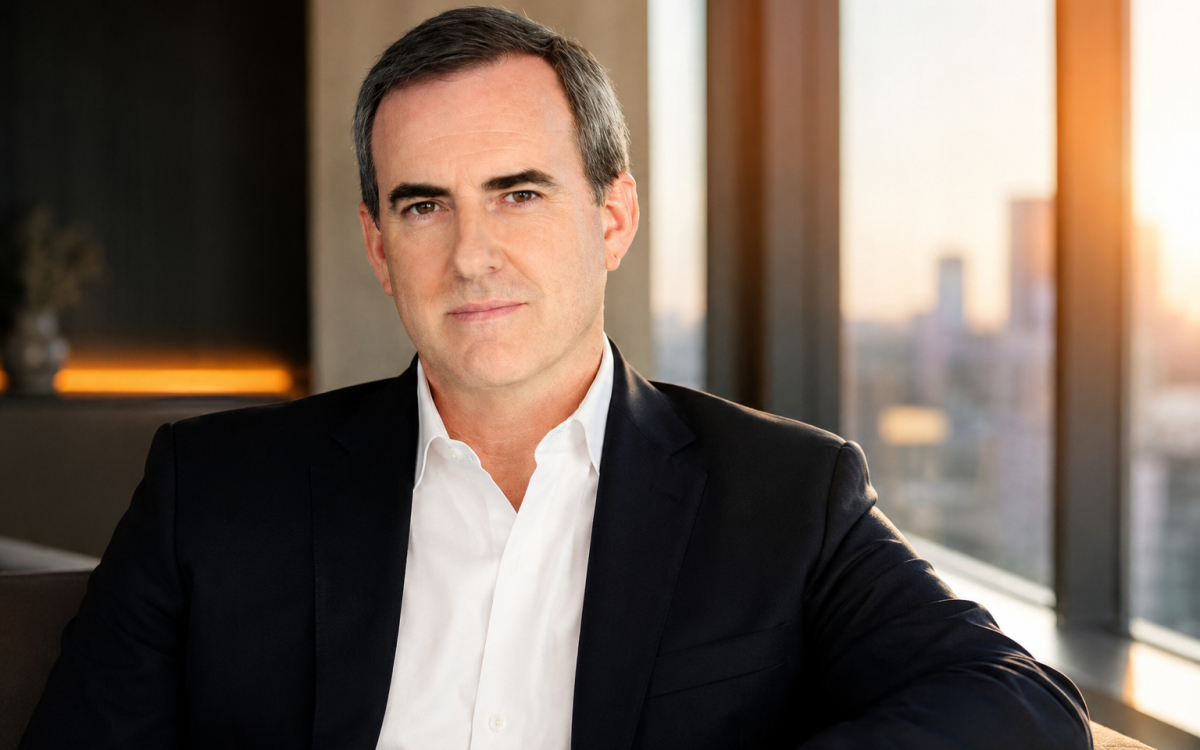
Michael Saylor co-founded MicroStrategy in 1989, took it public in 1998, and later transformed the business intelligence company into Strategy, the world’s largest corporate holder of Bitcoin. He stepped back from the CEO role in 2022 to focus on Bitcoin strategy and advocacy full time.
Who Is Michael Saylor?
Michael Saylor was born on February 4, 1965, in Lincoln, Nebraska, to a military family that moved frequently among Air Force bases before settling near Wright-Patterson Air Force Base in Fairborn, Ohio, when he was around 11.
He enrolled at MIT in 1983 on a full Air Force ROTC scholarship and graduated in 1987 with dual degrees in aeronautics and astronautics and in science, technology, and society.
While at MIT, he joined the Theta Delta Chi fraternity, where he met Sanju Bansal, his future MicroStrategy co-founder, and wrote a thesis on mathematical modeling of a Renaissance Italian city-state while studying system dynamics at MIT’s Sloan School.
He worked briefly in consulting before joining DuPont in 1988, building computer models that helped the company anticipate market changes, including a predicted 1990 recession across several of DuPont’s major markets.
Michael Saylor’s Career and Contributions
Saylor founded MicroStrategy with Sanju Bansal in 1989, funded in part by early consulting work with DuPont.
The company built software for data mining before shifting toward business intelligence, and a 1992 $10 million contract with McDonald’s to analyze the efficiency of the chain’s promotions helped establish the company’s reputation and drove rapid growth through the 1990s.
MicroStrategy went public in June 1998 at $12 per share, with the stock doubling on its first day of trading.

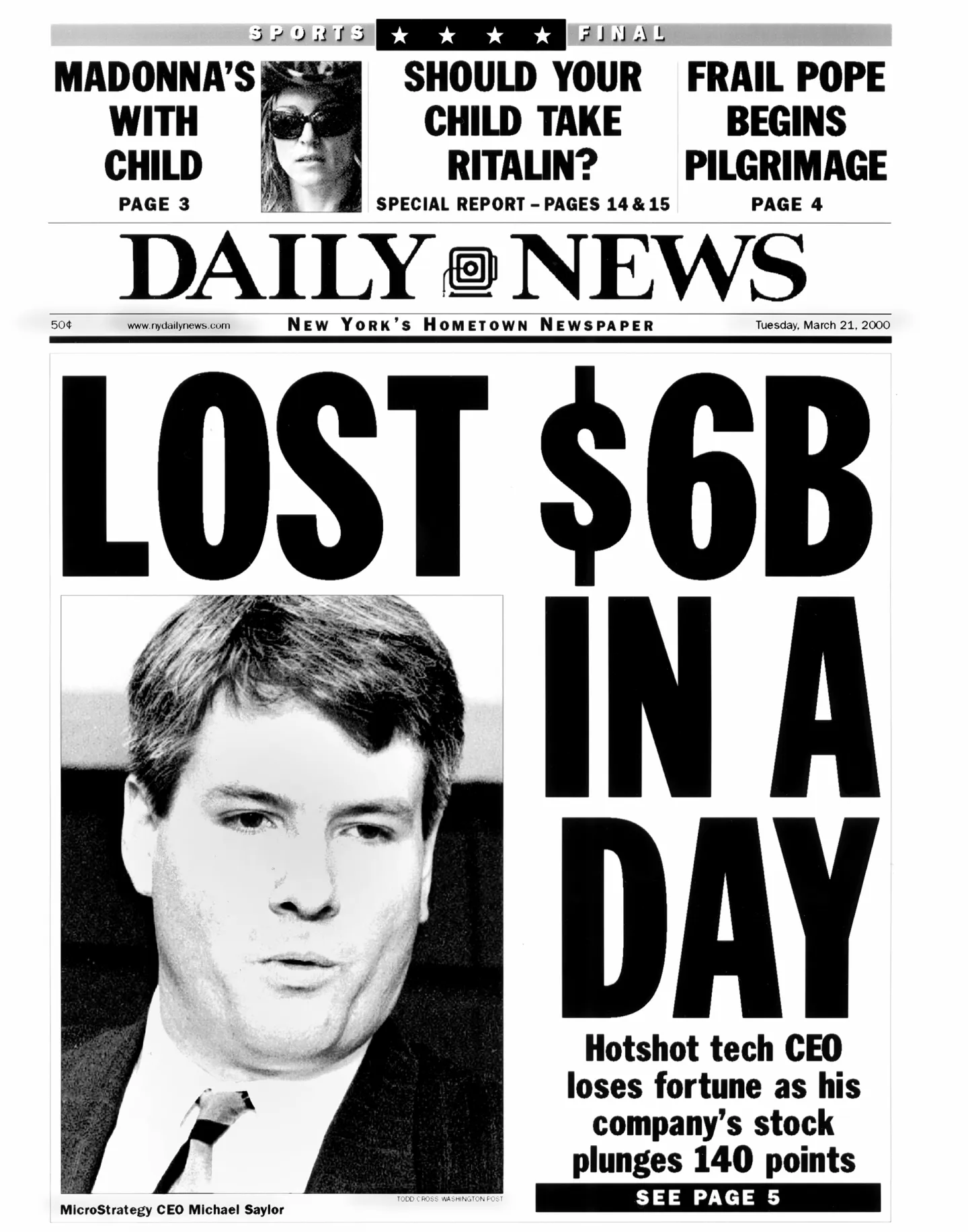
By early 2000, Saylor’s net worth had reached roughly $7 billion, making him one of the wealthiest people in the Washington, DC area at the time.
However, that peak was short-lived. In March 2000, MicroStrategy announced it would restate two years of financial results, and its stock, which had climbed as high as $333 per share, fell 62% in a single day to $120 per share. The episode is considered one of the defining moments of the dot-com crash.
Class-action securities fraud suits followed, and in December 2000, the SEC filed fraud charges against MicroStrategy and its executives.
Saylor settled without admitting wrongdoing, paying a $350,000 penalty and disgorging $8.3 million in profits, and his personal net worth fell by roughly $6 billion in the aftermath.
According to his own official biography, Saylor is also a named inventor on more than 48 patents and separately founded Alarm.com, an early home automation and security company, and Angel.com, a cloud-based interactive voice response provider that sold to Genesys Telecommunications Laboratories for $110 million in 2013.
Saylor stepped back from the CEO role in August 2022, becoming executive chairman and naming company president Phong Le as his successor, a move he described as freeing him to focus on Bitcoin acquisition strategy and advocacy while Le managed day-to-day operations. In February 2025, the company rebranded from MicroStrategy to Strategy, adopting a stylized “B” logo and an orange color scheme intended to signal its Bitcoin focus.
Saylor’s early career recognition included being named KPMG’s Washington High-Tech Entrepreneur of the Year in 1996 and Ernst & Young’s Software Entrepreneur of the Year in 1997, as well as a spot on MIT Technology Review’s “Innovator Under 35” list in 1999.
In 2012, he published “The Mobile Wave: How Mobile Intelligence Will Change Everything,” which examined how mobile technology would reshape commerce, healthcare, and education, reaching number seven on the New York Times hardcover non-fiction bestseller list and number five on the Wall Street Journal’s business bestseller list that year.
Separately, Saylor established what’s now known as Saylor Academy in 1999, a nonprofit offering free, self-paced college and professional-level courses that has served millions of students worldwide, with Saylor serving as its sole trustee.
For profiles of other builders shaping the Web3 industry, visit our crypto personalities page.
Michael Saylor’s Bitcoin Strategy
Strategy (MicroStrategy at the time) made its first Bitcoin purchase in August 2020, buying 21,454 BTC for $250 million as an alternative to holding cash, a move that helped popularize the term “digital asset treasury” for public companies holding cryptocurrency in this way.
The company steadily expanded its holdings through additional purchases funded by debt and equity, eventually diversifying into a broader capital markets toolkit that now includes at-the-market equity offerings and several preferred share classes, including STRK, STRF, STRD, and STRC.
STRC alone had scaled to an aggregate stated amount of $3.4 billion with an 11.25% dividend rate as of February 2026, and the company maintained a $2.25 billion USD reserve around the same time intended to cover roughly two and a half years of dividend and interest obligations, a buffer designed to reduce the risk of forced Bitcoin sales during a price downturn.
As of late June 2026, Strategy’s holdings stood at approximately 847,363 BTC, acquired at a total cost basis of nearly $64.1 billion at an average price of roughly $75,650 per coin.
That June 32 BTC transaction, widely described as financially tiny but symbolically significant since it crossed a line many investors had assumed the company would never cross, turned out to mark the start of a broader shift rather than a one-time event.
Strategy went on to sell 1,363 BTC for about $80.8 million at the end of June, then 3,588 more BTC for roughly $216 million shortly after, before pausing for about four weeks.
That pause ended in early August, when an 8-K filing disclosed the company had sold 1,638 BTC between July 27 and August 2 for $104.7 million at an average of $63,957 per coin, reducing total holdings to 842,138 BTC.
Proceeds from that latest sale split almost evenly between covering preferred stock dividend distributions and repurchasing STRC shares, the variable-rate preferred security carrying a 12% annual payout, with the company also raising $290.6 million through a separate MSTR share sale that same week, sending $250 million of it into a dollar reserve against future dividend and interest obligations that has now grown to $4 billion.
Strategy’s remaining Bitcoin carries an average cost basis of $75,419, meaning the position is sitting roughly $10.9 billion underwater at prices seen in early August, following an $8.2 billion second-quarter net loss the company reported, driven almost entirely by unrealized markdowns on Bitcoin it still holds.
Saylor has also outlined a plan, described as the “21/21 Plan,” to raise $42 billion over three years through a mix of equity and debt specifically to continue expanding Strategy’s Bitcoin position, a goal that now coexists with the company’s newer practice of selling portions of its holdings to fund preferred shareholder obligations.
For more on how the company has approached its holdings recently, our coverage of Strategy’s selective Bitcoin selling tactics covers this shift in more detail.
Michael Saylor’s Views and Positions
Saylor has consistently framed Bitcoin as a superior store of value compared to cash or traditional assets, describing it as “the apex property of the human race” and arguing its fixed supply of 21 million coins makes it structurally different from currencies that can be printed without limit.
He has compared buying Bitcoin to buying a home in a city everyone wants to move to, and frames its core utility as capital preservation rather than speculation.
Saylor has projected that Bitcoin could reach $13 million per coin by 2045, a forecast he bases on the assumption that Bitcoin’s share of global wealth could grow from roughly 0.1% today to 7%, implying an annual return near 29% over two decades.
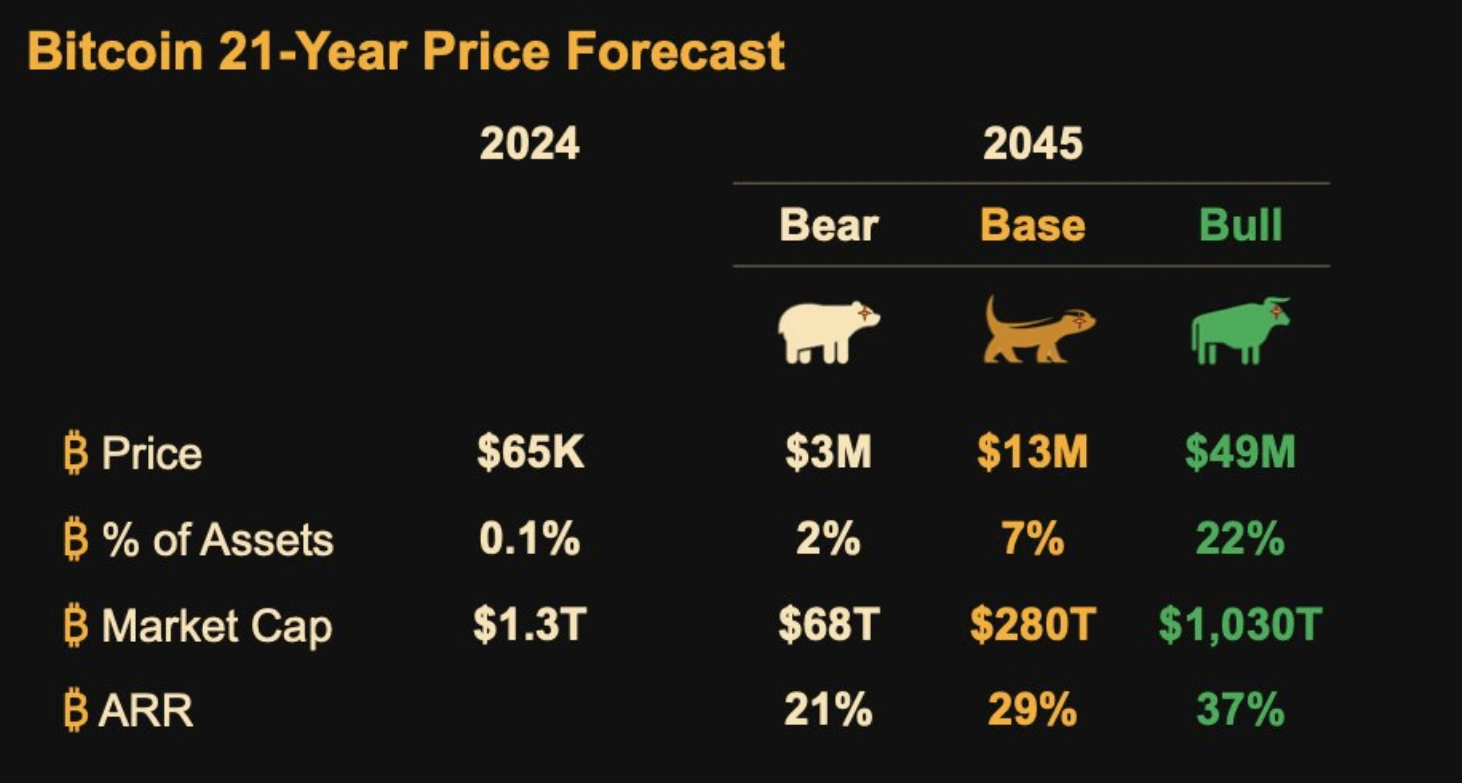
This is Saylor’s own long-term, speculative projection rather than a consensus market forecast, and should be treated accordingly. He has also advocated publicly for a US strategic Bitcoin reserve, arguing that this could encourage similar moves by other countries.
Saylor’s public profile hasn’t been limited to Bitcoin advocacy. In a widely circulated internal memo to MicroStrategy employees dated March 16, 2020, titled “My Thoughts on COVID-19,” Saylor criticized pandemic countermeasures including social distancing, describing them as “soul-stealing and debilitating,” and predicted that in a worst-case scenario, global life expectancy would decline by only a few weeks.
He declined to close MicroStrategy’s offices unless legally required to do so. The memo briefly circulated publicly before being reposted by the Washington Business Journal.
Michael Saylor’s Legal Controversies
Beyond the 2000 SEC settlement, Saylor faced a separate legal matter in August 2022, when the District of Columbia’s Attorney General sued him for tax fraud, alleging he avoided more than $25 million in DC taxes between 2005 and 2021 by claiming residency in Virginia and later Florida instead.
MicroStrategy was separately accused of helping facilitate the alleged evasion by misreporting his address to tax authorities.
Saylor settled the case in June 2024 by agreeing to pay a $40 million fine without admitting wrongdoing, stating he disagreed with the District’s position but looked forward to a fair resolution.
Michael Saylor’s Net Worth in 2026
Michael Saylor’s personal net worth is separate from Strategy’s corporate Bitcoin treasury, since the company’s 842,138 BTC belongs to Strategy as a public company rather than to Saylor individually.
Historically, his net worth peaked around $7 billion in early 2000 at the height of the dot-com boom, then fell by roughly $6 billion following the SEC’s accounting adjustments and MicroStrategy’s subsequent stock collapse that same year.
As of August 2026, Forbes estimates Saylor’s real-time personal net worth at approximately $3.2 billion to $3.3 billion, driven by a steep 75% year-over-year contraction in Strategy’s stock price. His personal Bitcoin stash remains at 17,732 BTC, originally purchased for $175 million.
Frequently Asked Questions
Need a refresher? Here are the questions readers most often ask about Michael Saylor.
How much Bitcoin does Michael Saylor’s company own?
As of August 2026, Strategy held approximately 842,138 BTC, with a total original cost basis of roughly $63.69 billion, reflecting an average purchase price of about $75,476 per coin, following a recent sale of 1,638 BTC. This Bitcoin belongs to Strategy as a public company, not to Saylor personally.
Did Michael Saylor co-found MicroStrategy?
Yes. Saylor co-founded MicroStrategy in 1989 with Sanju Bansal, whom he met at MIT. The company began as a data mining and business intelligence software provider before later becoming a Bitcoin treasury company under Saylor’s leadership.
Why did MicroStrategy rebrand to Strategy?
The company rebranded in February 2025 to reflect its evolved focus on Bitcoin accumulation alongside its original analytics software business, adopting a stylized “B” logo and an orange color scheme intended to represent its Bitcoin strategy.
What legal trouble has Michael Saylor faced?
Saylor settled SEC fraud charges in 2000 tied to MicroStrategy’s restated financial results, paying a $350,000 penalty and disgorging $8.3 million in profits. Separately, he settled a District of Columbia tax fraud lawsuit in June 2024 for $40 million without admitting wrongdoing.
Has Strategy ever sold any of its Bitcoin?
Yes, the company sold Bitcoin on multiple occasions, primarily to manage the high cash-flow demands of its financing structures. While its first sale of 704 BTC in December 2022 was strictly for tax-loss harvesting, the company shifted its strategy in mid-2026 to allow for operational liquidations. Between May and August 2026, Strategy executed three more sales totaling 5,258 BTC (raising over $323 million) to fund heavy dividend obligations on its STRC preferred stock and build cash reserves. Despite these sales, the company remains the largest corporate holder of Bitcoin globally, retaining a massive treasury of over 842,138 BTC.