Satoshi Nakamoto is the pseudonym used by the person or people who created Bitcoin, who published its whitepaper in October 2008 and launched the network in January 2009. Nakamoto was active in Bitcoin’s development until late 2010, sent a final known message in 2011, and has not been heard from since. Their true identity has never been confirmed.
Who Is Satoshi Nakamoto?
Nakamoto said work on Bitcoin’s code began in the second quarter of 2007, registered the bitcoin.org domain in August 2008, and published the whitepaper, “Bitcoin: A Peer-to-Peer Electronic Cash System,” on a cryptography mailing list on October 31, 2008.
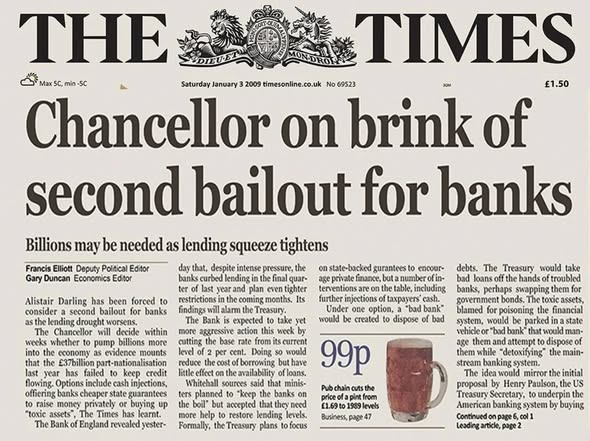
On January 9, 2009, Nakamoto released the first version of the Bitcoin software and mined the genesis block, embedding the text “The Times 03/Jan/2009 Chancellor on brink of second bailout for banks,” a headline from that day’s edition of the British newspaper The Times, widely read as both a timestamp and a comment on the instability of fractional-reserve banking.
Nakamoto continued making all modifications to Bitcoin’s source code personally until mid-2010, then handed control of the code repository and network alert key to developer Gavin Andresen and transferred related domains to other prominent early contributors.
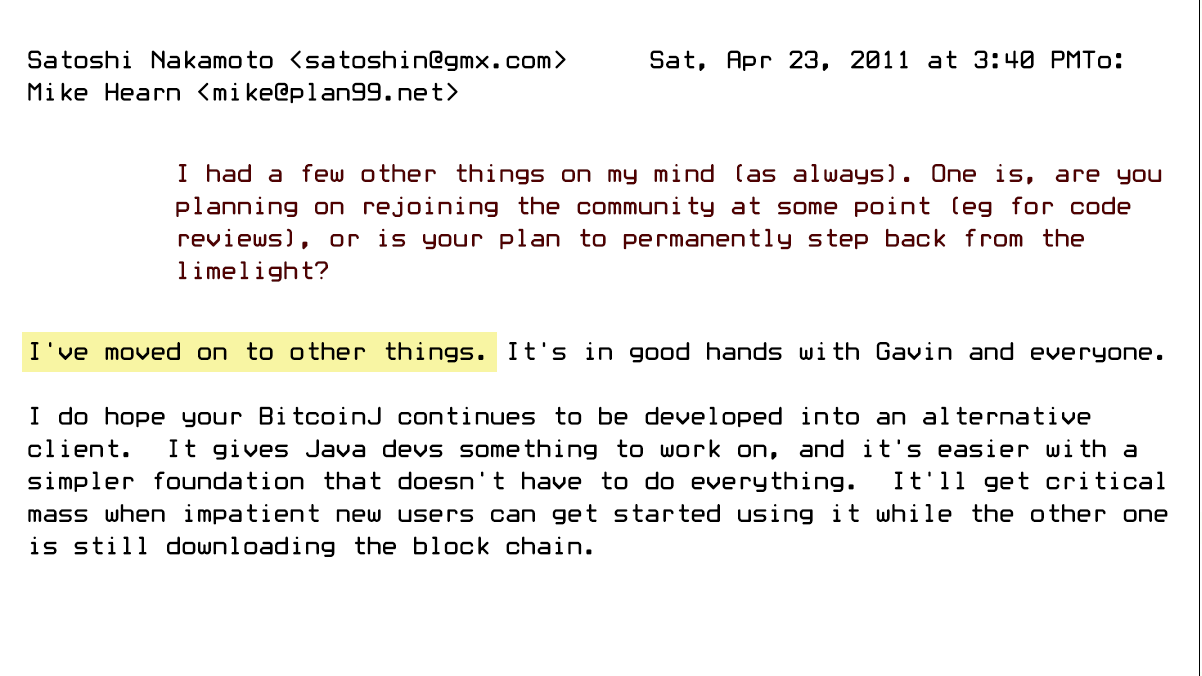
Nakamoto’s final known communications came on April 23, 2011, in an email to a fellow early Bitcoin developer stating that they had “moved on to other things.”
For profiles of other builders shaping the Web3 industry, visit our crypto personalities page.
What Satoshi Nakamoto Solved
Before Bitcoin, digital currencies faced the double-spending problem. Unlike physical cash, a digital token could potentially be copied and spent more than once, a flaw earlier systems addressed only by relying on a trusted third party like a bank.
Nakamoto’s whitepaper proposed removing that intermediary entirely, using a peer-to-peer network where participants collectively verify transactions, timestamp them, and record them permanently on a shared ledger, the blockchain, secured through a proof-of-work consensus mechanism now commonly called mining.
Readers interested in how that mechanism compares to newer alternatives can find more in our guide on proof-of-work versus proof-of-stake.
Characteristics and Clues About Satoshi Nakamoto’s Identity
Nakamoto never disclosed personal details while discussing technical matters and claimed in a 2012 P2P Foundation profile to be a 37-year-old man living in Japan, with a birth date of April 5, 1975, a date some have speculated references the signing and later repeal of a US executive order banning private gold ownership.
Several specific clues have fueled speculation that Nakamoto is not Japanese. One of those factors is that the whitepaper wasn’t initially translated into Japanese, Nakamoto’s English read as native-level rather than translated, and an analysis of the timestamps across more than 500 of Nakamoto’s forum posts showed almost no activity between roughly midnight and 6 a.m. US Eastern time, a pattern consistent with a Western time zone and inconsistent with someone keeping Japan Standard Time hours.
Nakamoto’s writing also used British spellings and slang, including “colour,” “grey,” “maths,” and expressions like “bloody hard,” further fueling speculation about a UK or Commonwealth connection, reinforced by the choice to embed a British newspaper’s headline in the genesis block itself.
Some who worked directly with Nakamoto have suggested the code reflects more than one person’s work. Security researcher Dan Kaminsky described Nakamoto as either a “team of people” or a “genius”; developer Laszlo Hanyecz felt the code was too well-designed for one person; and Gavin Andresen called Nakamoto “a brilliant coder” whose work was nonetheless “quirky.”
List of Alleged Identities of Bitcoin’s Mysterious Creator
No candidate has ever proven authorship, and the clearest way to do so, signing a message with the private keys tied to Bitcoin’s earliest addresses, has never been done publicly by anyone.
Adam Back
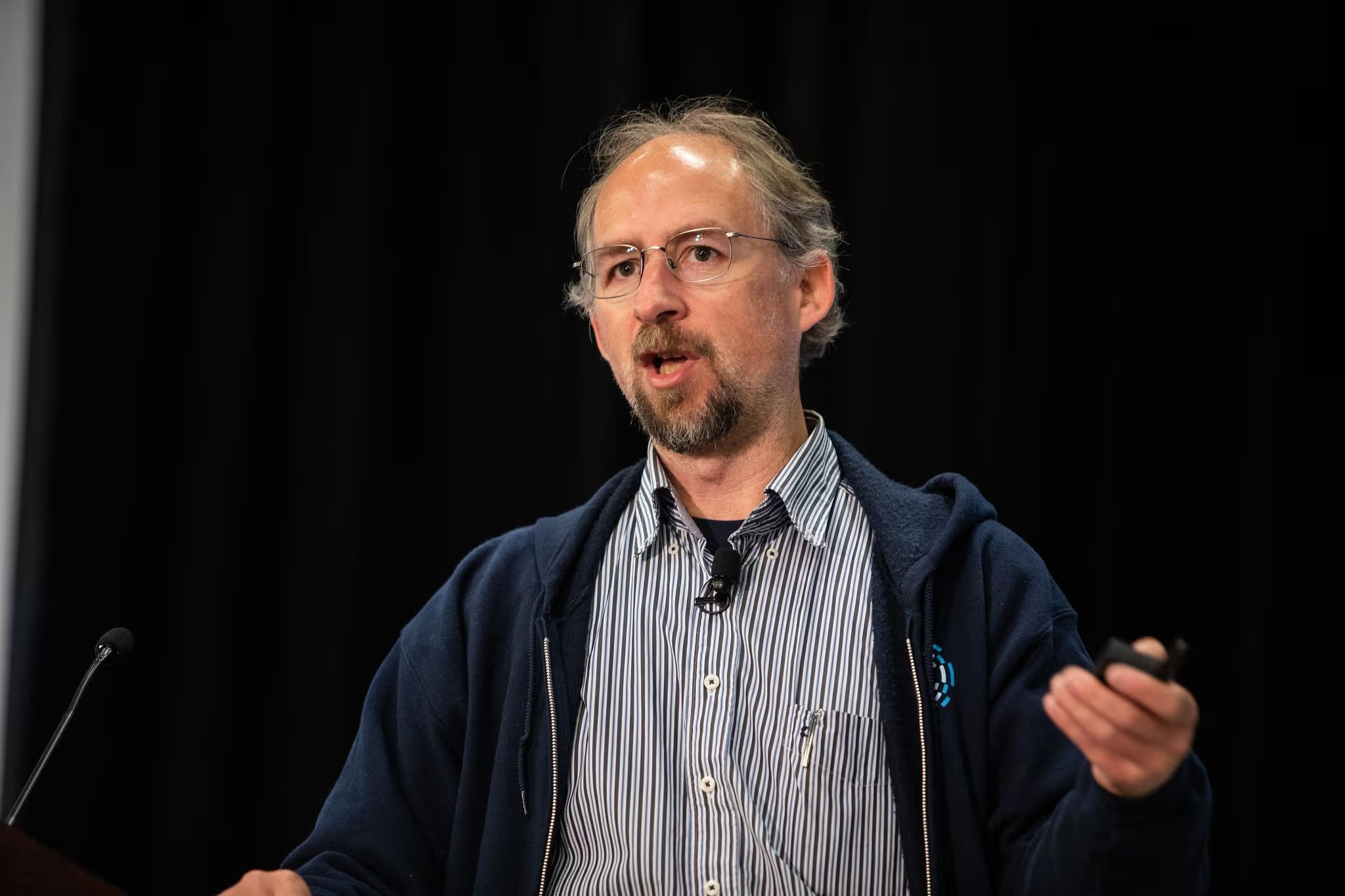
Adam Back is a British cryptographer who invented Bitcoin’s precursor Hashcash and is named directly in the Bitcoin whitepaper, has faced recurring speculation since at least 2016, including a 2018 claim by John McAfee and renewed attention following a 2026 New York Times investigation by John Carreyrou that cited stylometric writing comparisons and circumstantial factors.
Back has repeatedly denied being Nakamoto, including in a direct, in-person interview with the New York Times podcast hosted by Natalie Kitroeff, stating that his resemblance to Nakamoto reflects “a combination of coincidence and similar phrases from people with similar experience and interests.”
In an earlier 2024 HBO documentary, Back offered a more ambiguous response, saying, “I thought you might think I’m Satoshi. And I don’t want that to be on the record, really.”
Hal Finney

Hal Finney is a cryptographic pioneer who died in 2014 and was the first person besides Nakamoto to use the Bitcoin software, receiving the first-ever Bitcoin transaction on January 12, 2009.
Writing-analysis firm Juola & Associates found his writing to be the closest resemblance to Nakamoto’s among the candidates studied, but after reviewing Finney’s emails, wallet history, and his direct denial, journalist Andy Greenberg concluded Finney was telling the truth about not being Nakamoto.
Dorian Nakamoto
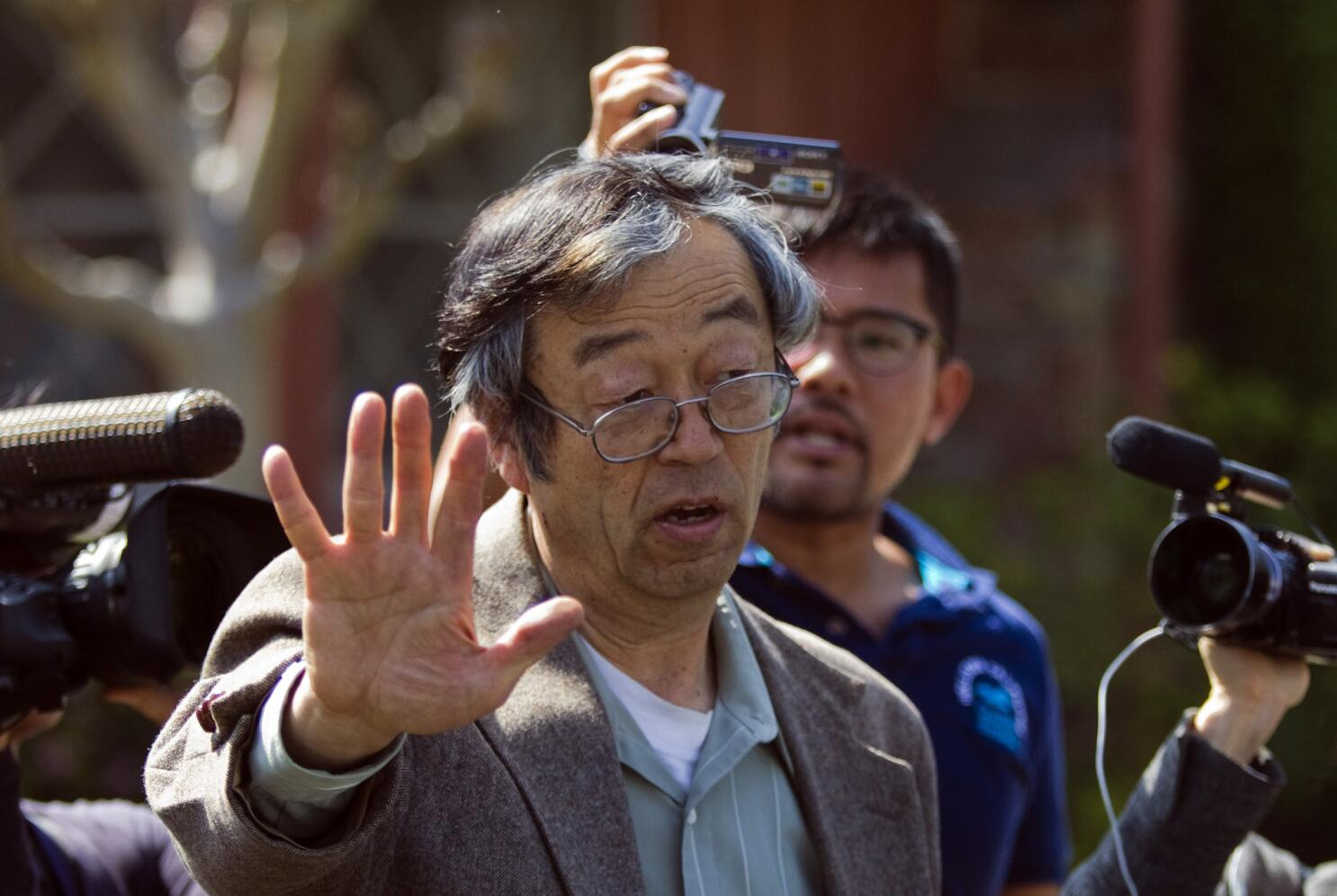
Dorian Nakamoto is a Japanese-American engineer in California whose birth name is Satoshi Nakamoto, and was identified by name in a widely criticized 2014 Newsweek article.
He denied any connection to Bitcoin, and the pseudonymous Nakamoto’s own P2P Foundation account posted “I am not Dorian Nakamoto” the same day, though that account later claimed it had been hacked, raising doubts about the message’s authenticity.
Nick Szabo
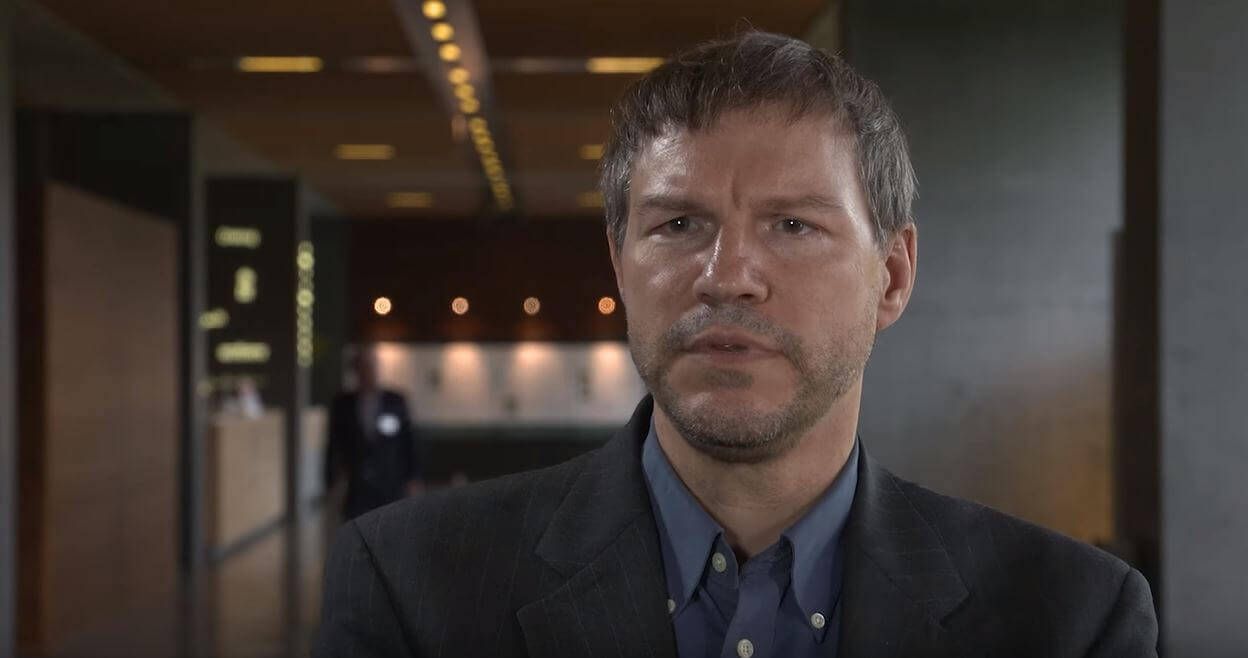
Nick Szabo proposed a Bitcoin precursor called “bit gold” and has denied being Nakamoto, was linked to the whitepaper through stylometric analysis in 2013. Notably, New York Times reporter Nathaniel Popper wrote in 2015 that “the most convincing evidence pointed to” Szabo specifically, one of the stronger endorsements any single candidate has received from a major outlet.
Craig Wright

Craig Wright is an Australian academic and the only major candidate who publicly and repeatedly claimed to be Nakamoto himself rather than being accused of it, and pursued legal action against people who disputed his claim.
In March 2024, a UK High Court judge ruled decisively that Wright was not Nakamoto, did not author the whitepaper, and had fabricated supporting evidence, later finding Wright had “lied to the court extensively and repeatedly.”
Wright was subsequently sentenced to a year in prison, suspended for two years, for contempt of court in a related matter.
Peter Todd

Peter Todd is a Bitcoin developer and was named in a 2024 HBO documentary, citing circumstantial timing between one of Nakamoto’s final posts and a Todd forum comment. Todd has firmly denied it, calling the claim “ludicrous” and “grasping at straws.”
A long list of other names have surfaced with weaker evidence and equally firm denials, including Vili Lehdonvirta, Michael Clear, patent co-filers Neal King, Vladimir Oksman, and Charles Bry, mathematician Shinichi Mochizuki, developers Gavin Andresen and Jed McCaleb, and Elon Musk.
A claimed statistical link between Nakamoto and Silk Road founder Ross Ulbricht was later retracted by the researchers who proposed it.
Cypherpunk Len Sassaman, who died in 2011, remains a candidate in some later speculation, including a theory that Nakamoto was a partnership between Sassaman and Finney.
Some have even speculated, with little evidentiary weight, that “Nakamoto” derives from a group of companies including Samsung, Toshiba, Nakamichi, and Motorola.
Satoshi Nakamoto’s Net Worth in 2026
Blockchain analysis of Bitcoin’s earliest mined blocks, a pattern researcher Sergio Demian Lerner named the “Patoshi pattern,” suggests Nakamoto mined between roughly 750,000 and 1.1 million BTC in the network’s first year.
That wallet has never moved a single coin since 2010. Valued at Bitcoin’s price at different points, that presumed holding would have been worth up to $73 billion in November 2021, nearly $135 billion in July 2025, roughly $87.5 billion by late 2025, and around $78 billion as of April 2026.
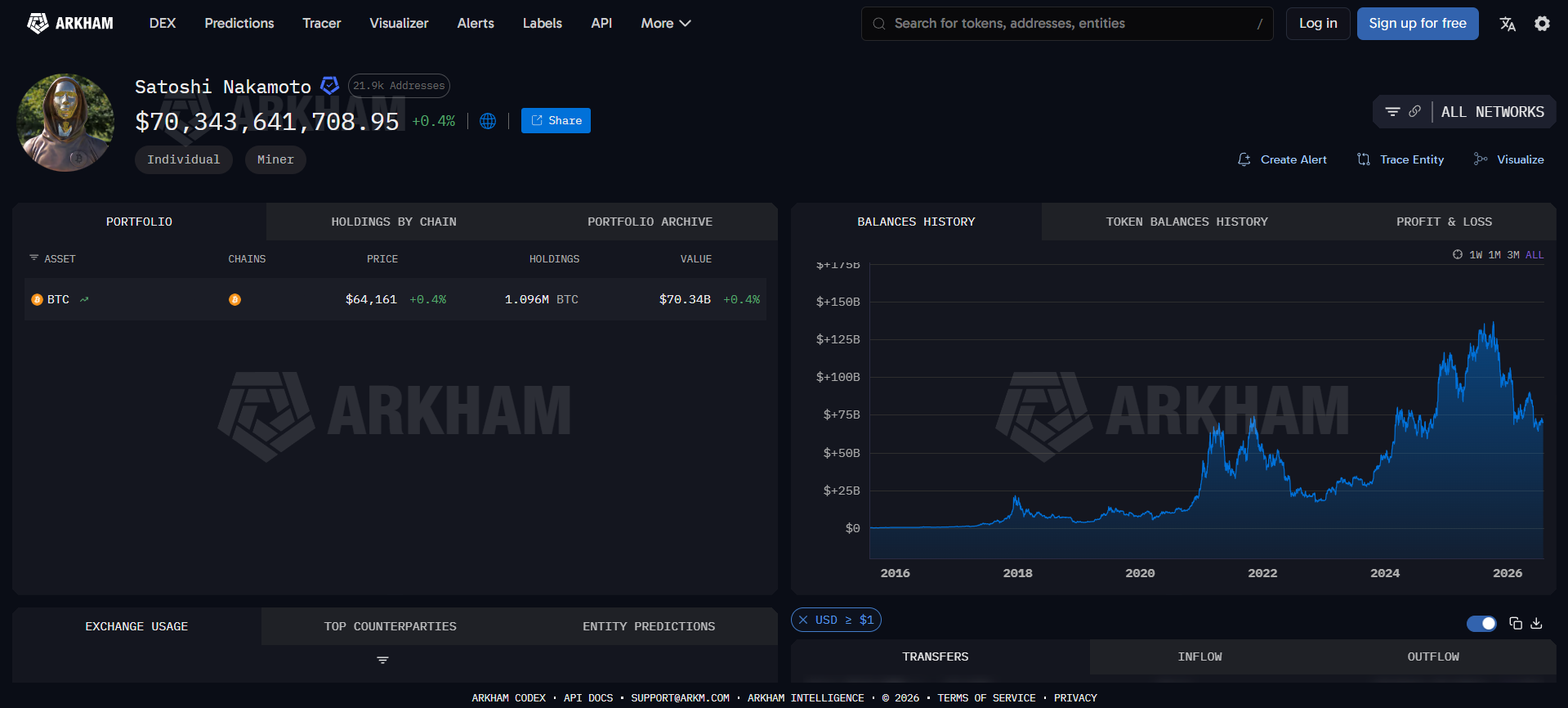
If Nakamoto is a single individual who retains control of that wallet, he/she would rank among the wealthiest people alive at any of those valuations.
Frequently Asked Questions
Need a refresher? Here are the questions readers most often ask about Satoshi Nakamoto.
Is Satoshi Nakamoto a real person or a group?
It’s unknown. The Bitcoin whitepaper and original software draw on cryptography, distributed systems, and economics, and some who reviewed the code early on believed it reflected more than one contributor’s work, while others believed a single skilled developer could have produced it. No one has proven ownership of Nakamoto’s earliest Bitcoin addresses, so the question remains unresolved.
Has anyone ever been confirmed as Satoshi Nakamoto?
No. Every named candidate has either denied being Nakamoto or, in Craig Wright’s case, been formally ruled against by a UK court that found his supporting evidence was fabricated. The clearest possible proof, signing a message with the private keys tied to Bitcoin’s earliest addresses, has never been done publicly by anyone.
How much Bitcoin does Satoshi Nakamoto have?
Blockchain analysis of early mining activity suggests roughly 750,000 to 1.1 million BTC are tied to a wallet that has not moved any coins since 2010. This is a presumed holding based on onchain patterns, not a confirmed personal balance.
Why did Satoshi Nakamoto disappear?
Nakamoto gradually reduced involvement through 2010, transferring control of Bitcoin’s source code and related domains to other early contributors, then sent a final known message in 2011 saying they had moved on to other things. Some observers connect the departure to Bitcoin’s decentralized design, arguing a known, ongoing founder could have become a central figure the project was specifically designed not to need.
What was the first Bitcoin transaction?
Nakamoto sent 10 BTC to cryptographer Hal Finney on January 12, 2009, shortly after mining the genesis block on January 3. Finney had downloaded the software soon after its release and was the first person besides Nakamoto to use it.