Key Takeaways:
- The best crypto under $1 assets have real utility and active development, not just low prices that attract speculation
- A low token price does not indicate value unless the project behind it solves a genuine problem with adoption to back it up
- Market cap matters more than price per token when evaluating the actual size and growth potential of any low-priced asset
The best crypto under $1 in 2026 attracts a lot of attention from investors who associate a low price with high upside potential. That thinking is partly correct, but it skips over something important. Price per token means very little without context. A coin trading at $0.10 with a $10 billion market cap has less room to grow than one at $0.50 with a $200 million market cap. Understanding what actually drives value in low-priced assets separates informed buyers from those chasing the wrong signals. This guide covers the strongest sub-$1 crypto assets in 2026 and what makes each one worth a closer look.
Why Does Price Per Token Mislead So Many Crypto Investors?
The idea that a cheap coin is a bargain is one of the most common misunderstandings in crypto. Price per token only tells you what one unit costs. It says nothing about total supply, market cap, or how much the project would need to grow for your investment to double.
Two assets can both trade under $1, but one might need a $50 billion increase in market cap to reach $2 while the other only needs $500 million. Total circulating supply determines how far a price can move for a given level of market cap growth. Evaluating sub-$1 assets on market cap rather than price per token gives you a much more accurate picture of realistic upside. Our guide on top crypto research platforms covers the tools that make this kind of analysis straightforward before you commit any capital.
What Are the Best Crypto Assets Under $1 in 2026?
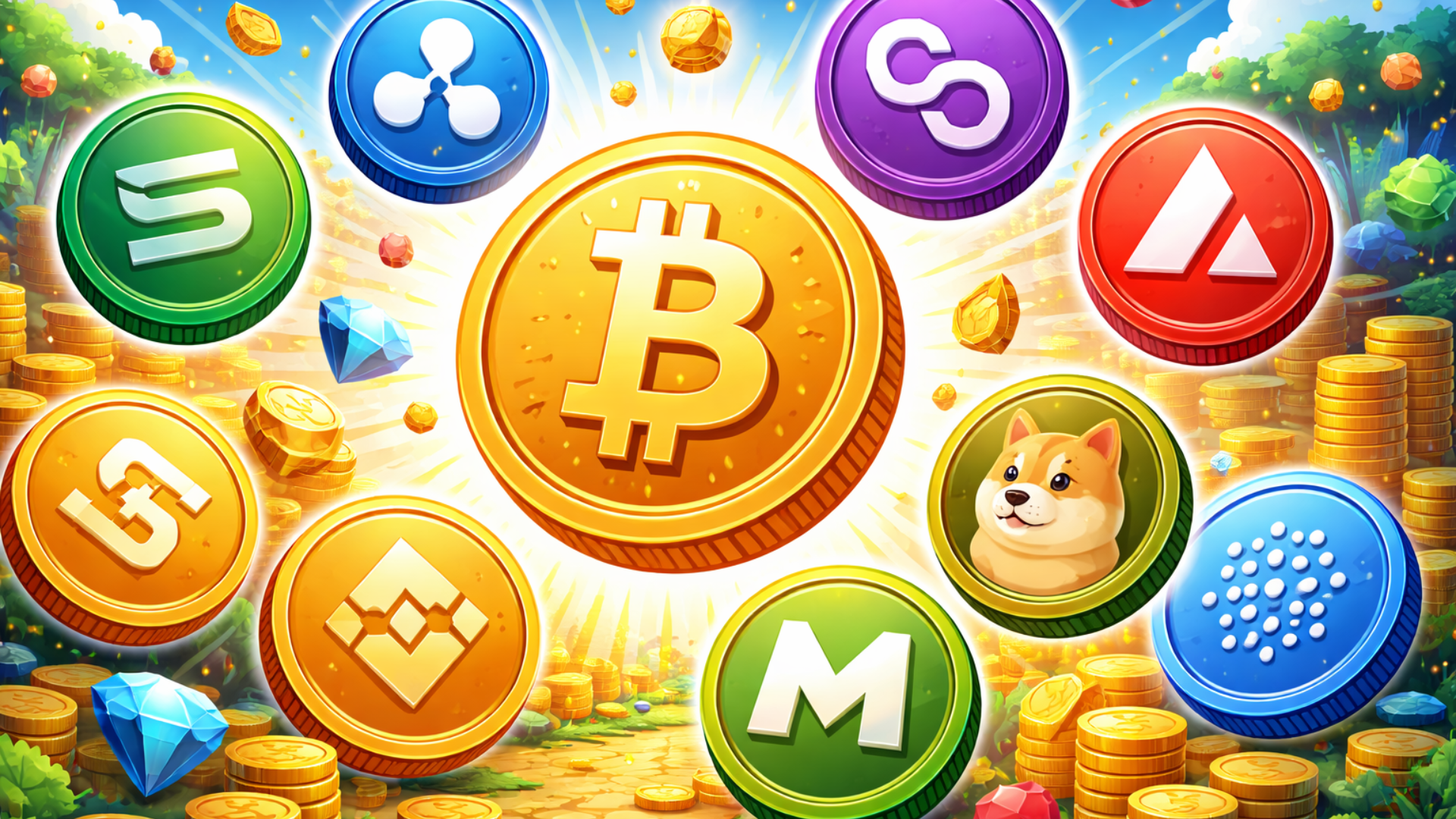
The assets below each offer a combination of real utility, meaningful adoption, and market caps that leave room for genuine growth. They are not just cheap coins. Each one has a specific reason for being on this list based on what it actually does and who is using it.
XRP
XRP has maintained its position as one of the most actively used crypto assets for cross-border payment settlements. Ripple’s network of financial institution partners continues to expand, and the resolution of its SEC legal battle in the United States restored a level of regulatory clarity that few other altcoins can point to. XRP consistently trades below $1 during quieter market periods and has demonstrated the ability to attract genuine institutional usage rather than purely retail speculation.
For investors looking at low-priced assets with real-world financial utility, XRP has one of the more credible long-term narratives in the under-$1 category.
Stellar (XLM)
Stellar focuses on fast, low-cost transfers between currencies and financial institutions, particularly in emerging markets. The Stellar Development Foundation has built partnerships with payment platforms and financial services companies across Africa, Southeast Asia, and Latin America. That real-world traction in underserved payment markets gives Stellar a use case that extends well beyond crypto speculation.
XLM consistently trades well below $1 and has a market cap that leaves meaningful room for growth if adoption in its target markets continues to expand.
Algorand (ALGO)
Algorand offers fast transaction finality, low fees, and a carbon-negative blockchain that has attracted government and institutional interest. Several central bank digital currency pilot programs and government bond tokenization projects have used Algorand’s infrastructure. That institutional engagement, combined with an active developer ecosystem, gives ALGO a stronger foundation than most assets at its price level.
The platform’s focus on real financial applications rather than DeFi speculation sets it apart from many other low-priced layer-1 networks. Our guide on Algorand nodes and earning potential covers additional ways to engage with the Algorand network beyond simply holding ALGO.
VeChain (VET)
VeChain focuses on supply chain management and product authentication using blockchain technology. Major brands and logistics companies use VeChain to track goods from manufacturing through delivery, providing verifiable records of origin, handling, and condition. That enterprise adoption in physical supply chain use cases gives VET a demand base that is not dependent on crypto market sentiment alone.
VET trades well under $1 and has maintained consistent enterprise partnerships through multiple market cycles, which demonstrates staying power beyond short-term speculation.
What Should Investors Check Before Buying Any Sub-$1 Crypto?
Low price alone is never enough reason to buy a crypto asset. Before committing capital to any under-$1 coin, running through a basic evaluation checklist helps separate genuine opportunities from hype-driven tokens. Here are the key things to verify:
- Check total and circulating supply. A token with 100 billion in circulation trading at $0.01 has a $1 billion market cap. That context changes how you assess growth potential significantly.
- Look at developer activity. Active GitHub commits and regular protocol updates indicate a project with ongoing development rather than one that launched and stagnated. Platforms like Messari and CoinGecko display developer activity metrics for most established assets.
- Verify real-world usage. Transaction volume, active wallet addresses, and partnerships with non-crypto companies all point to genuine adoption rather than speculative activity driven by social media.
- Assess the competitive position. Most low-priced assets operate in crowded categories. Understanding why a specific project has an advantage over its competitors is essential before buying.
- Use a reputable exchange. Platforms like Binance, Coinbase, and KuCoin list most established sub-$1 assets with strong liquidity and reliable trading infrastructure.
For ongoing portfolio monitoring after you buy, our guide on crypto portfolio trackers covers the most useful tools for tracking multiple assets at once.
Frequently Asked Questions
Is a low token price a good reason to buy a crypto asset?
No. Price per token tells you nothing about value or growth potential without knowing the total supply and market cap. A coin at $0.001 with 1 trillion tokens in circulation has a large market cap and limited upside despite its low price. Always evaluate market cap alongside price per token before buying.
Which crypto under $1 has the strongest real-world use case?
XRP and VeChain both have strong real-world use cases backed by institutional adoption. XRP focuses on cross-border financial settlements, while VeChain addresses supply chain verification for enterprise clients. Both have maintained active partnerships through multiple market cycles rather than relying on speculation alone.
Where is the best place to buy crypto under $1?
Exchanges like Binance, KuCoin, and Coinbase list most major sub-$1 assets with deep liquidity and straightforward buying processes. Always use a regulated, well-established exchange to minimize counterparty risk when trading lower-cap assets.
How should I store crypto assets that I plan to hold long term?
A hardware wallet like Ledger or Trezor stores your private keys offline and removes exchange-related risk from your long-term holdings. For a full overview of wallet options, our guide on top cryptocurrency wallets covers the most reliable choices available in 2026.