Token burning in crypto is the permanent removal of tokens from circulation, done by sending them to a wallet nobody can open or by deleting them inside the network’s code. Projects burn tokens to shrink supply and create scarcity, but a smaller supply does not guarantee a higher price, and the examples below show why.
How Does Token Burning Work?
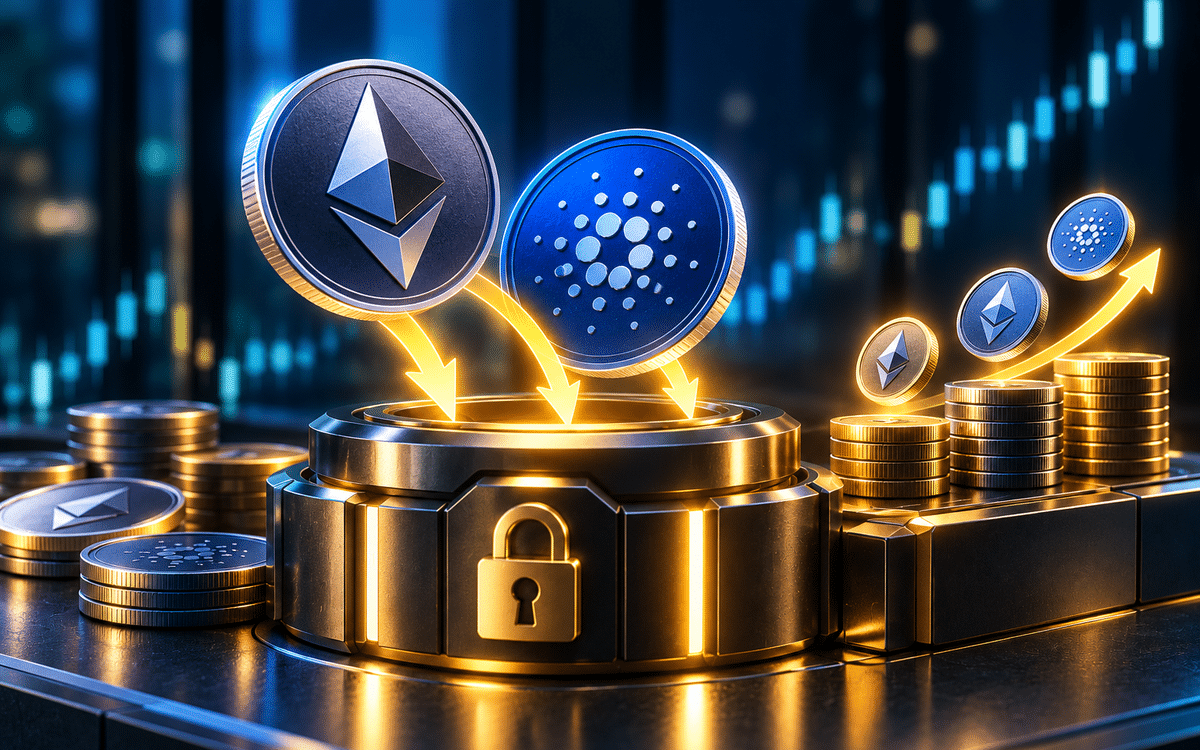
Token burning works by removing tokens from circulation for good, either by sending them to a burn address, a wallet with no known private key, or by deleting them in the network’s code. The smaller circulating supply is meant to create scarcity, and projects burn in four main ways: fee, scheduled, voluntary and redemption burns.
Picture a country that prints 100 million banknotes, shreds 10 million, and publishes a receipt for the shredding. Each remaining note now represents a slightly larger share of the whole. Token burning follows the same logic, with one difference. Every burn is recorded on a blockchain, the public ledger that stores every crypto transaction, so anyone can check it.
A token’s circulating supply is the number of tokens available to trade, and a burn cuts that number for good. Projects do this in four main ways.
Fee Burns
A fee burn destroys some or all of the small fee paid to send a transaction, so that portion is removed from supply instead of paid to anyone. Busier networks burn more, because more transactions mean more fees. The XRP Ledger, for example, destroys the entire transaction cost, a minimum of 10 drops, or 0.00001 XRP. This burn does not depend on a team decision. The protocol’s core rules build it in directly.
Scheduled Burns
A scheduled burn destroys tokens at set intervals, such as every quarter, under rules the project publishes in advance. That makes the timing predictable, and the amount often follows a formula instead of a one-off decision.
BNB Chain runs a quarterly Auto-Burn. The amount comes from a formula that uses BNB’s average price and the number of blocks produced on BNB Smart Chain that quarter, according to the BNB Chain Foundation.
Since BNB Chain Fusion, the burn runs on the network itself, independent of the Binance exchange. April’s burn went to 0x000000000000000000000000000000000000dEaD, a burn address, meaning a wallet with no known private key, so nothing sent there can be spent.
Voluntary Burns
A voluntary burn is initiated by a project team or token holder rather than required automatically by the protocol. The decision to burn, and often its amount and timing, depends on the relevant party or governance process, although the burn itself may be carried out on-chain. For example, Cronos Labs has proposed using 100% of revenue from its Ult trading app and Cronos Launch to buy CRO on the open market and burn it, subject to governance approval.
Redemption Burns
A redemption burn happens when someone turns a token back into the asset it represents, such as cash. The issuer then removes that token from circulation for good, so the supply keeps matching what backs it. Tether’s 2.5 billion USDT burn on July 7, 2026 shows how large these burns can get. Developers also burn tokens to fix mistakes, such as coins created by a software bug.
Why Does Token Burning Matter for Someone New to Bitcoin?
If you came to crypto through Bitcoin, burning can sound like destroying money on purpose. The idea is closer to something Bitcoin already does. Bitcoin’s code caps its supply at 21 million coins, so it needs no burns to stay scarce. Many other tokens have no such cap, and their teams use burns to create scarcity after launch. Readers can find more background on supply and other fundamentals in the crypto basics guides.
Basic economics says the same demand spread across fewer tokens should lift each token’s price. The evidence is mixed. A burn helps the price only if demand holds steady or grows, and a burn cannot create demand on its own. A burn can also be smaller than the new tokens a network creates, so total supply may keep growing even while burns continue. Burn size matters.
Burns also change the math behind a coin’s market capitalization, and how crypto market capitalizations work explains the calculation in more detail for beginners.
Token Burn Examples Compared
Burns look different from one project to the next. The table below pairs each burn type with a real example, so the differences are easy to compare side by side.
| Project | Burn type | What triggers it | Latest figure |
| BNB | Scheduled Auto-Burn | Quarterly formula on BNB Smart Chain | 1,615,827.795 BNB burned on July 15, 2026 |
| Tether (USDT) | Redemption burn | Users and exchanges cashing out USDT for dollars | 2.5 billion USDT burned on July 7, 2026 |
| XRP | Fee burn | Every transaction | About 14.36 million XRP as of July 13, 2026 |
| Cronos (CRO) | Voluntary burn | Team decision, pending governance approval | Proposed: 100% of Ult and Cronos Launch revenue, announced September 15, 2026 |
Table 1. Four token burn types, each paired with a recent example and its latest published figure from July to September 2026.
The four examples differ in what sets off the burn: a formula for BNB, cash-outs for Tether, every transaction for XRP, and a team decision for Cronos. The steps below show how to check any of them.
How to Get Started Checking a Token Burn
To check a token burn, find the project’s announcement and its transaction ID (TXID), paste the TXID into the block explorer for that network, and confirm the destination is a burn address and the amount matches the announcement. Then divide the burned amount by total supply to see whether the burn is big enough to matter.
You do not have to trust a burn announcement. You can check it yourself with a block explorer, a public website that shows every transaction on a blockchain. Etherscan covers Ethereum, and BscScan covers BNB Smart Chain.
Follow these steps to check a burn:
- Find the announcement. Open the project’s official site or blog. BNB Chain publishes a transaction ID, or TXID, the unique code that identifies one transaction, with each quarterly burn.
- Paste the TXID. Enter it into the block explorer for that network.
- Check the destination. It should be a burn address, or the burn should be built into the protocol.
- Match the amount. The amount on the explorer should equal the amount in the announcement.
- Work out the real size. Divide the burned amount by total supply. A large burn number means little on its own. Only the share of total supply shows whether the burn is big enough to matter, because the same number of tokens can be huge for one project and negligible for another.
The three 2026 BNB burns also show the formula at work. January’s burn was 1,371,803.77 BNB, worth about $1.277 billion. April’s was 1,569,307.34 BNB, about $1.02 billion. July’s was 1,615,827.795 BNB, about $932 million. The token count rose each quarter while the dollar value fell, which fits a formula that takes price into account.
Common Mistakes to Avoid
Most burn mistakes come from reading a headline without checking the size or the mechanism behind it.
- Treating a burn headline as a buy signal. Burn headlines quote big percentages or token counts, but those numbers say nothing about demand or about the burn’s size against total supply. Many burns remove only a tiny share of supply, so a burn alone gives little reason to expect a price change. Check the share of supply removed and the demand behind the token before reading a burn as a reason to buy.
- Assuming a burn means deflation. Deflation means total supply is shrinking, and a burn only causes that when it outpaces the creation of new tokens.
- Confusing burned tokens with locked tokens. Tokens held in escrow, a time-locked account that releases them on a schedule, can return to circulation. Ripple’s XRP escrow works this way, and those released tokens go back into market circulation instead of being destroyed. Only the transaction cost removes XRP for good.
- Skipping verification. A burn only counts if the receiving address has no known private key or the protocol deletes the coins. A project that announces a burn with no transaction ID, or sends tokens to an ordinary wallet it controls, has not burned anything. The five steps above take a few minutes.
Check the Next BNB Burn Yourself
The fastest way to learn this is to run the five checks on a live burn. The next BNB Auto-Burn is currently expected to land around October 2026. When BNB Chain posts the transaction ID, open it in BscScan, match the amount to the announcement, and work out what percentage of supply it removed.
This article is for informational purposes only and does not constitute financial advice. Do your own research before making any investment decisions.
Frequently Asked Questions
These are the questions readers ask most often about token burning.
Can burned crypto be recovered?
Burned tokens cannot be recovered once the transaction is confirmed. Fee burns on Ethereum and the XRP Ledger delete the coins at the protocol level, and a burn address such as BNB’s 0x000000000000000000000000000000000000dEaD has no known private key, so nothing sent there can be spent. The same finality applies if you send tokens to a burn address by mistake.
Does token burning make a crypto price go up?
Not on its own. A burn cuts supply, but price also depends on demand, and SHIB’s 41.08% burned share sits alongside a price about 93% below its all-time high. The size of the burn relative to total supply, market conditions, and the project’s real usage all shape the outcome for any given token.
Who decides when tokens are burned?
It depends on how the project is built. BNB Chain’s quarterly amount comes from a published formula, Ethereum and XRP burns happen automatically with every transaction, and Shiba Inu burns come from its team and individual holders. Check the project’s documentation to see which model applies before treating a burn as a commitment.
Does Bitcoin have token burning?
Bitcoin has no built-in burn mechanism. Its supply is capped at 21 million coins in the protocol, so scarcity comes from the cap itself. Coins sent to unspendable addresses or lost with their keys leave circulation in practice, but that is not a designed burn.
Where can I track token burns?
Start with the project’s own announcements and add a tracker. BNB Chain publishes each quarterly burn, Ultrasound.money tracks Ethereum’s supply and burn rate, and Shibburn tracks SHIB. For XRP, the XRPL.org documentation explains the fee burn, and XRPScan is a widely used tracker for the cumulative total burned.