
Key Takeaways:
- Day trading crypto requires a clear strategy matched to your schedule, skill level, and risk tolerance.
- Risk management tools like stop-losses and position sizing protect your capital during losing streaks.
- The right technical indicators and trading platforms give you a measurable edge over guesswork.
Day trading crypto means buying and selling digital assets within a single day. Traders aim to profit from short-term price swings rather than holding for the long term. The crypto market runs 24/7, which creates more opportunities than traditional markets. That same around-the-clock access also raises the risk of overtrading and emotional burnout.
Unlike stocks or forex, crypto never closes. Price moves happen at 2 AM just as easily as 2 PM. That makes preparation and discipline non-negotiable, not optional extras.
What Does Day Trading Crypto Actually Involve?
Day traders open and close positions within hours or even minutes. Every trade targets a small piece of a price move, and those gains stack up over a session. Most traders focus on a handful of coins rather than chasing everything moving in the market.
The strategy relies on three core inputs: technical analysis, awareness of market sentiment, and attention to news that drives volatility. Strip any one of those away and your decision-making gets weaker fast.
How Day Trading Differs From Other Strategies
Many beginners mix up day trading with swing trading or long-term investing. Here’s how the three compare:
- Day trading: Positions open and close within the same day. Trades capture intraday price swings. No overnight exposure.
- Swing trading: Traders hold positions for days or weeks. They target larger price moves and check in less frequently.
- Long-term investing (HODLing): Investors buy and hold for months or years. Fundamentals matter more than charts.
Day trading demands the most time and screen attention of the three. If you can’t monitor the market actively, results suffer.
Which Strategies Do Day Traders Actually Use?
No single method works for every trader. Most experienced day traders pick one or two strategies, master them, and build consistency before experimenting with others.
Trend Following
Trend following means identifying when an asset moves consistently in one direction and entering positions that align with that move. Traders use tools like moving averages and trendlines on shorter timeframes to spot these patterns. The challenge comes in sideways markets where signals flip frequently and cause repeated small losses.
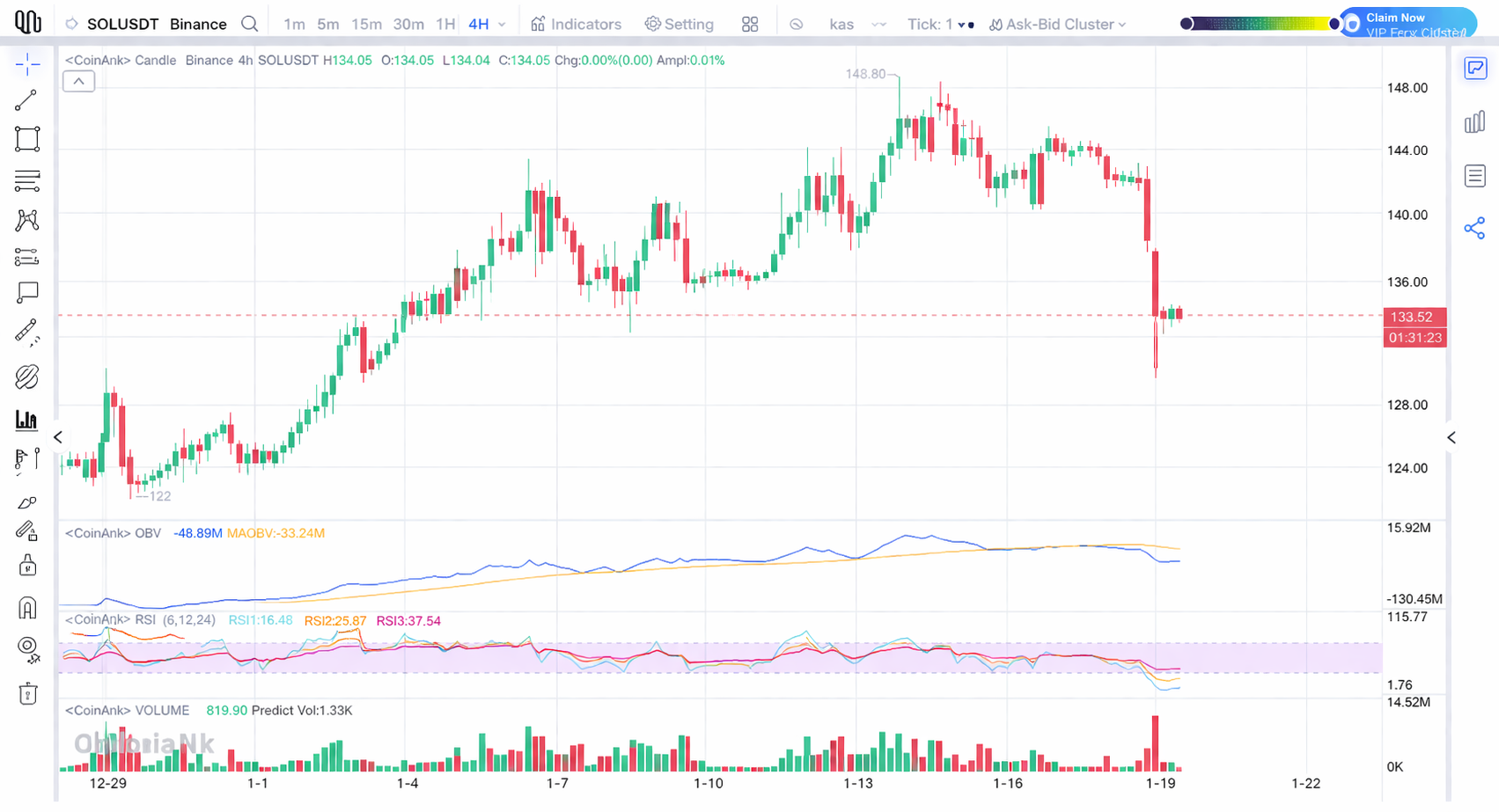
For example, if Solana makes higher highs and higher lows on the 1-hour chart all morning, a trend follower enters long and trails a stop-loss below each new swing low. When price breaks that level, they exit and protect capital.
Momentum Trading
Momentum traders look for assets moving sharply in one direction, often confirmed by a volume spike. They enter while the move is active and exit before momentum fades. Timing is the hardest part. Enter too late and you catch the tail end just before a reversal. Momentum indicators on 15-minute to 1-hour charts help confirm whether a move has legs.
Breakout Trading
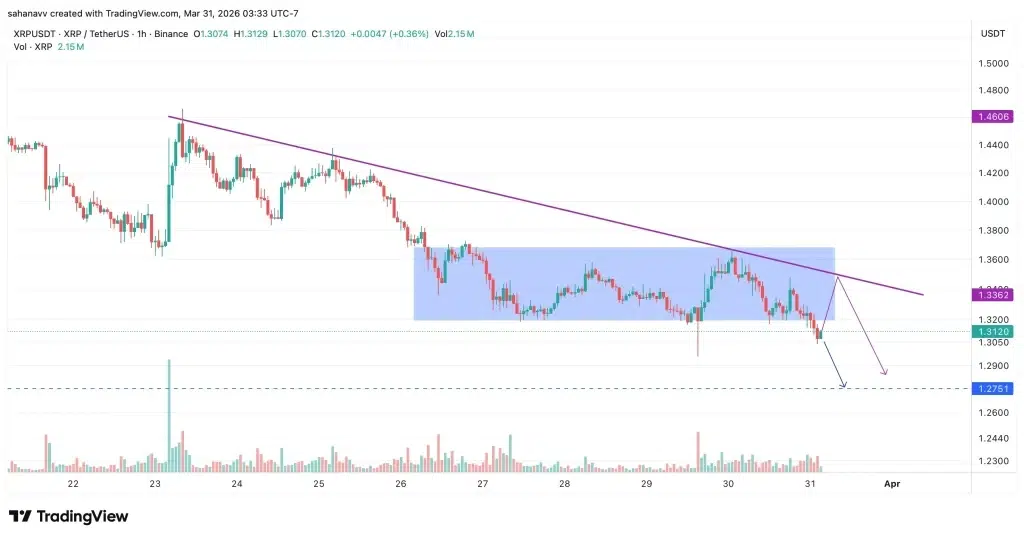
A breakout happens when price pushes above a resistance level or below support after consolidating in a tight range. Traders enter at the breakout point and ride the follow-through. Volume confirmation separates real breakouts from fakeouts. A breakout on three times average hourly volume carries far more weight than one on thin volume.
Range Trading
Some assets trade sideways for extended periods. Range traders buy near support and sell near resistance. They use oscillators like RSI to confirm when an asset is oversold near the bottom or overbought near the top of the range. This strategy works well in stable conditions but fails fast when a strong trend breaks the range.
Scalping
Scalping compresses trades down to minutes or even seconds. Scalpers make dozens of trades per session, each targeting a small gain. Success requires tight bid-ask spreads, fast execution, and low fees. Even small costs eat into razor-thin margins at this pace. Exchanges like Bybit, KuCoin, and BingX attract scalpers because of their deep liquidity and competitive fee structures.
What Technical Indicators Do Day Traders Rely On?
Indicators don’t predict the future. They help traders read current conditions and make more informed decisions. Most experienced day traders combine two or three indicators rather than relying on just one.
Here are the core tools worth learning:
- RSI (Relative Strength Index): Measures momentum on a scale of 0 to 100. Readings above 70 signal overbought conditions. Readings below 30 suggest oversold conditions. RSI divergence from price often hints at an upcoming reversal.
- MACD (Moving Average Convergence Divergence): Highlights trend direction and momentum strength. A bullish signal appears when the MACD line crosses above the signal line. A bearish signal occurs when it crosses below.
- Moving Averages (SMA and EMA): Smooth price data to reveal trends. The EMA responds faster to recent price changes than the SMA. Crossovers between short and long-term averages often signal trend shifts.
- Bollinger Bands: Plot standard deviation bands around a moving average. Price pushing outside the bands signals an overextended move that may revert toward the mean.
- Volume: Confirms whether a price move has conviction. High volume during a breakout validates it. Low volume often signals a fakeout.
Match indicators to your timeframe. RSI works well for short-term trades. Longer moving average crossovers suit traders watching 4-hour or daily charts.
What Tools Give Day Traders a Real Edge?
Good tools make execution faster and cleaner. Here’s what experienced day traders actually use:
- Charting platforms: TradingView is the most widely used for clean charts, indicators, and price alerts.
- Trading bots: Automated tools like Coinrule, Cryptohopper, and 3Commas let traders run strategies without watching screens around the clock. Check out UTB’s full list of top crypto trading bots for more options.
- Portfolio trackers: Real-time P&L visibility keeps you honest about performance. See UTB’s picks for the best crypto portfolio trackers.
- On-chain analytics: Tracking exchange inflows and wallet flows adds context that price charts alone can’t provide. UTB covers the top crypto analytics and on-chain data platforms worth bookmarking.
The exchange you use also affects results directly. Kraken, Gate.io, Gemini, and Coinbase are strong picks depending on your region and preferred trading style.
How Do You Manage Risk as a Day Trader?
Risk management keeps a trader in the game long enough to improve. Without it, a short losing streak can wipe out weeks of gains. Every professional trader treats risk management as a non-negotiable part of their system.
Position Sizing
Risk no more than 1-2% of your total capital on a single trade. Losing 10 trades in a row at 1% each costs you roughly 10% of your account. The same losing streak at 10% per trade is catastrophic. Small position sizes give you room to absorb losses and stay in the market.
Stop-Loss Orders
Set a stop-loss before entering every trade. Decide your maximum acceptable loss upfront, then stick to it. Moving your stop-loss lower to delay taking a loss is one of the fastest ways to blow up an account. The stop-loss is a commitment, not a suggestion.
Managing Emotions
Emotional trading driven by fear or greed almost always leads to poor decisions. Sharp price moves trigger reactions that bypass rational thinking. A written trading plan with clear entry and exit criteria removes emotion from the equation. When conditions are met, you act. When they’re not, you wait.
Keeping a Trade Journal
Write down every trade: the setup, your entry, your exit, and the result. Review it weekly. Over time, patterns emerge that show where your edge is strongest and where you consistently lose money. A trade journal turns experience into structured learning.
Frequently Asked Questions
How much money do you need to start day trading crypto?
Most traders recommend starting with at least $500 to $1,000. Smaller accounts make proper position sizing difficult and leave fees eating a larger share of returns. Starting with more capital gives you room to size trades correctly without over-leveraging.
Is day trading crypto legal?
Yes, day trading crypto is legal in most countries. Regulations and tax treatment vary by jurisdiction. In the U.S., the IRS treats crypto as property, meaning every trade is a taxable event. Always check your local laws and keep detailed records of every trade, deposit, and withdrawal.
How do crypto taxes work for day traders?
Short-term gains from assets held under a year get taxed at ordinary income rates in the U.S. Tools like CoinLedger and Koinly automate crypto tax reporting and save significant time at tax season.
Can trading bots replace manual day trading?
Bots handle execution without emotion and can run specific strategies 24/7. They work especially well for scalping and grid-based setups. However, they still need human oversight, a clearly defined strategy, and properly set risk parameters to operate safely.