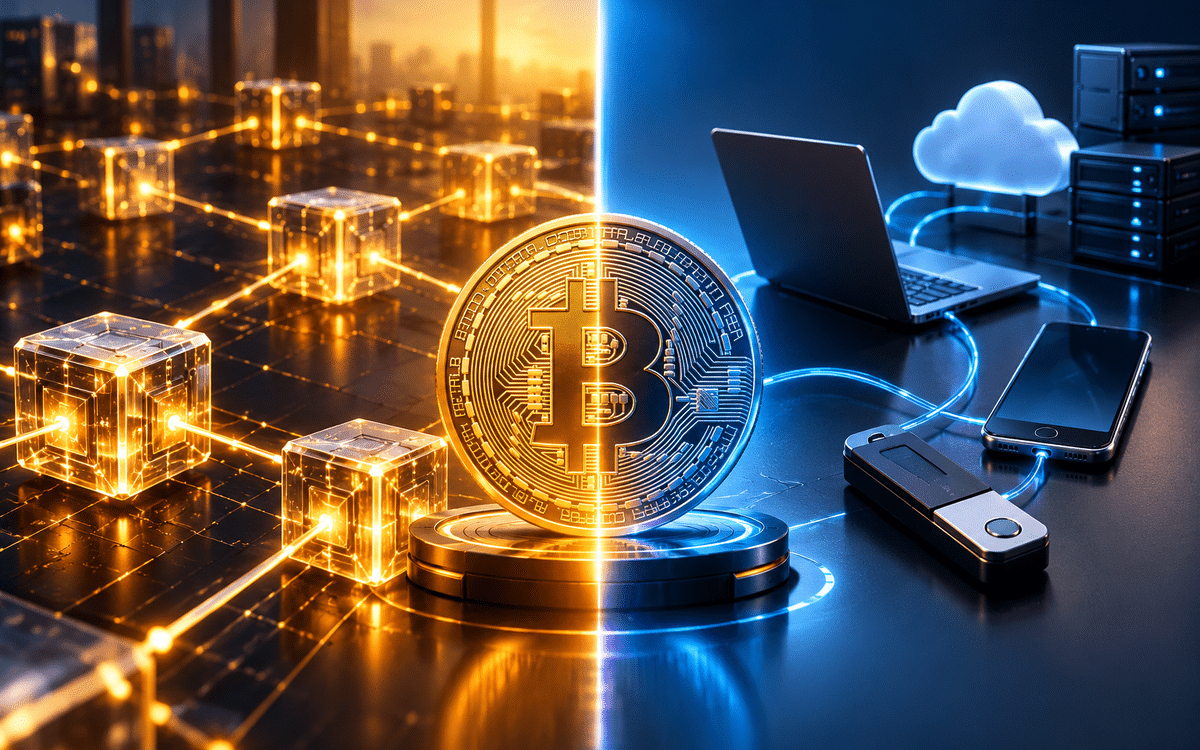
Every Bitcoin transaction gets confirmed by computers competing to solve a math puzzle, and the winner gets paid in new Bitcoin. That’s mining in one sentence.
As of 2026, the computers doing this work together represent more than 600 exahashes per second of combined processing power, making the Bitcoin network one of the most powerful computing systems ever built.
If you’ve ever wondered what happens between hitting “send” on a Bitcoin transaction and seeing it confirmed, this is that process, broken into every stage.
What Is Cryptocurrency Mining?
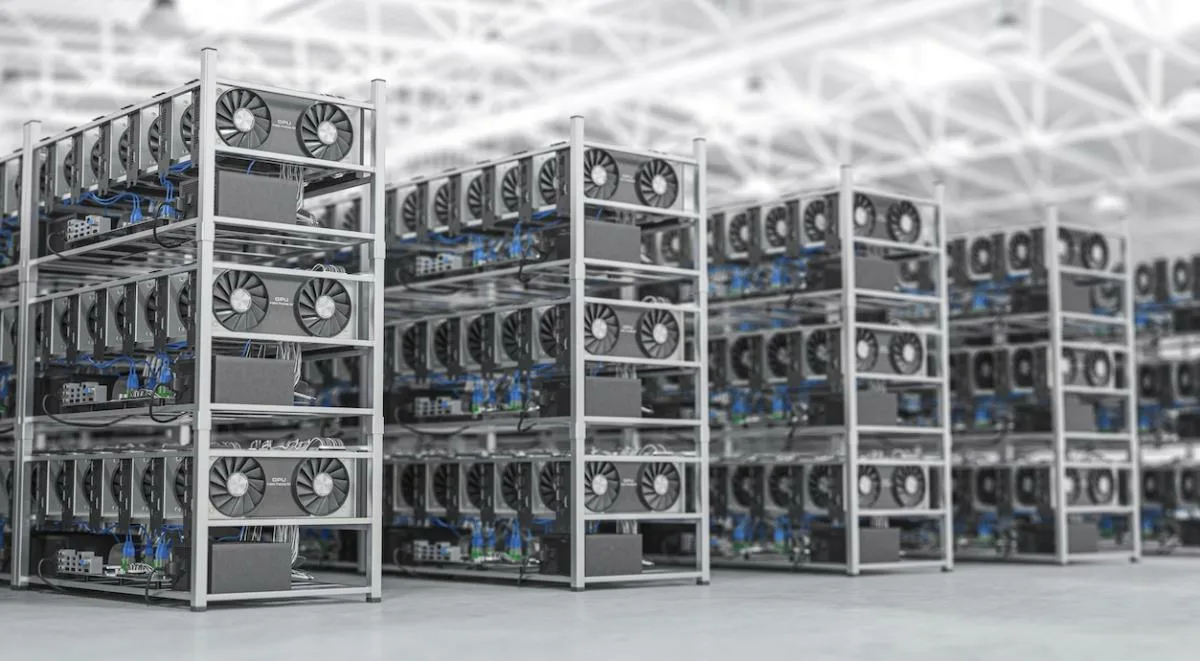
Cryptocurrency mining is the process computers use to check that transactions are real, group them together, and permanently record them on the blockchain. Miners don’t manually approve anything. Instead, they compete to solve a cryptographic puzzle, and whichever machine solves it first earns the right to add the next block of transactions and collect a reward for doing so.
This only applies to certain cryptocurrencies. Bitcoin and Litecoin both use mining through a system called proof-of-work (PoW), where solving that puzzle requires real computing power and real electricity.
Ethereum used to work this way too, but switched to a different system called proof-of-stake (PoS) in 2022, where validators lock up coins instead of running hardware. Mining, specifically, only exists on proof-of-work networks.
How Does Bitcoin Mining Work, Step by Step?
Every mining cycle follows the same five stages, whether it happens once or a million times a day across the network.
Step 1: A Transaction Enters the Mempool
When someone sends Bitcoin, that transaction doesn’t go straight into the blockchain. It first lands in the mempool, a holding area for transactions waiting to be confirmed. Miners pull from this pool when they build their next candidate block.
Step 2: Miners Bundle Transactions Into a Block
Miners select a batch of pending transactions and group them into a block candidate. They also add a value called a nonce, a number they change repeatedly while searching for a valid result. Thousands of competing machines run this process simultaneously, in milliseconds.
Step 3: Solving the Cryptographic Puzzle
This is the actual “mining” part. Miners run billions of calculations per second, searching for an output that meets the network’s current difficulty target. The first miner to find a valid result earns the right to publish that block. Bitcoin’s difficulty sat near 141.67 trillion in early 2026, and it adjusts over time specifically to keep competition this intense.
Step 4: Broadcasting the New Block
Once a miner finds a valid result, it broadcasts the completed block to the rest of the network. Other nodes independently check the solution, and once enough of them agree it’s valid, the block becomes a permanent part of the blockchain.
Step 5: Collecting the Block Reward
The winning miner receives newly created Bitcoin plus every transaction fee included in that block. The current reward is 3.125 BTC, set after Bitcoin’s April 2024 halving. The next halving, expected around 2028, will cut that number to 1.5625 BTC.
Why This Matters if You Are New to Bitcoin
If you have bought Bitcoin but never thought about mining, here’s the part that’s easy to miss: mining is what makes Bitcoin function without a bank or company in the middle. There’s no central server confirming your transaction. There’s no company you can call if something looks wrong. Instead, thousands of independent machines compete to confirm transactions honestly, because cheating the system costs more in wasted computing power than it could ever pay out.
That matters for a simple reason, which is why Bitcoin transactions take time to confirm, why fees exist, and why the network is described as secure. Understanding mining also helps explain why halving events matter for anyone holding Bitcoin, since block rewards directly shape how many new coins enter circulation.
If you already hold Bitcoin and want to understand how to store it safely rather than mine it yourself, our guide on wallets covers the basics of self-custody and hardware wallets.
What Hardware Do Miners Need?
Hardware determines how competitive a miner can realistically be. Running underpowered equipment usually means spending more on electricity than the mining rewards are worth. Three main options exist today:
ASIC Miners
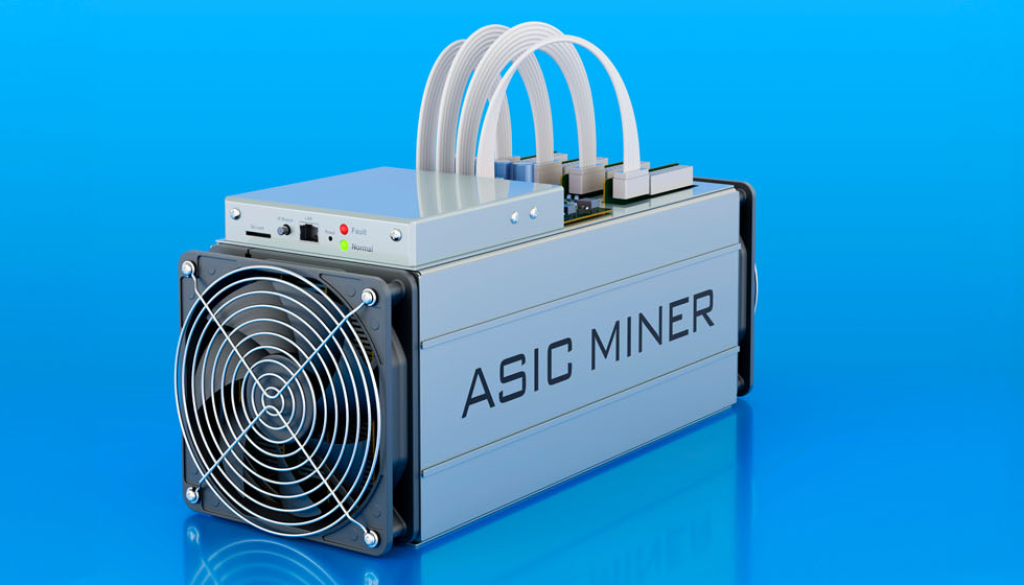
ASIC miners are machines built for one specific algorithm and nothing else. They deliver the highest hash rates available for Bitcoin specifically, with top models processing tens of terahashes per second.
GPU Rigs
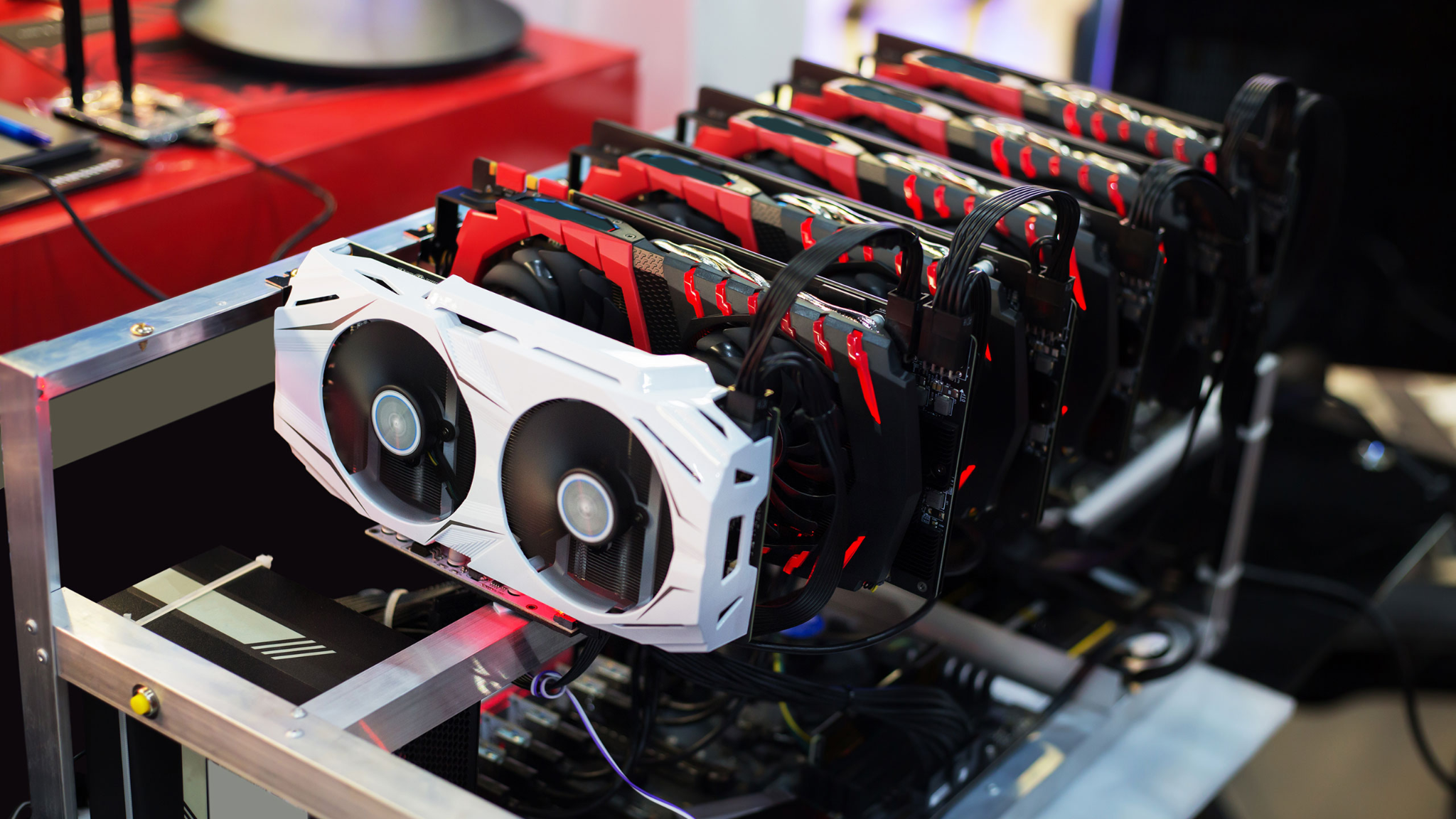
GPU rigs link multiple graphics cards together to mine altcoins that support this method. GPUs are more flexible than ASICs since the same hardware can switch between different mining algorithms.
Mining Software
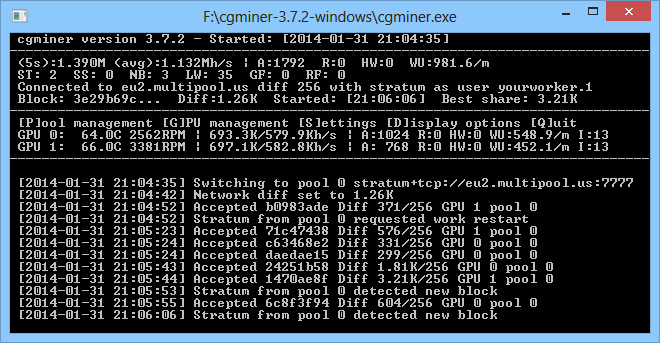
Mining software tools like Cudo Miner connect hardware to the network, track earnings, and manage power settings through one dashboard rather than requiring manual configuration of each machine.
Readers curious about the hardware side specifically can find more detail in our guide on Bitcoin mining rigs.
How to Get Started: Pools, Rewards, and Storage
To get started with Bitcoin mining, join a mining pool, which splits rewards by each member’s contribution, instead of mining solo. Set the wallet address in your mining software before you start, move rewards to secure long-term storage such as a hardware wallet, and then pick a strategy for your earnings that fits your goals and risk tolerance.
- Join a mining pool rather than mining solo. A single machine competing against warehouses full of ASICs has almost no realistic shot at winning a block reward alone. Pools combine many participants’ computing power and split any reward based on each member’s contribution, trading a small, rare payout for smaller, consistent ones.
- Decide where mined coins will go before you start. Mined crypto is sent to whatever wallet address is set inside your mining software, so this needs to be configured correctly from the start, not fixed after the fact.
- Move rewards to secure, long-term storage. Many miners store coins on hardware wallets like Tangem to keep funds offline and away from online threats, rather than leaving them sitting in the account used for mining itself.
- Decide your strategy from there. Some miners hold long-term, some trade on exchanges like Binance, and some convert earnings on a regular schedule. None of these is automatically correct. The right choice depends on your own goals and risk tolerance, not a fixed rule.
One structural trend worth knowing about in 2026 is that several large, publicly listed mining companies now run AI and high-performance computing data centers alongside their mining rigs.
Mining revenue alone carries real risk given halving cycles, so diversifying into other infrastructure has become common practice among institutional players, not just a side experiment.
Common Mistakes to Avoid
Before you start mining, watch out for these common mistakes that can reduce your chances of making a profit.
Solo Mining Without Doing the Math First
At current difficulty levels, a small home setup mining alone could realistically take years to find a single block. Most people who try this give up long before understanding why, having spent on electricity with nothing to show for it.
Ignoring Electricity Costs When Buying Hardware
A powerful ASIC in a region with expensive electricity can lose money every month even while mining successfully. The hardware’s hash rate only tells half the story.
Leaving Mined Coins In a Hot Wallet Indefinitely
Coins sitting in the same wallet configured inside mining software are more exposed than coins moved to offline, hardware-based storage.
Assuming Every Cryptocurrency Works the Same Way
Ethereum hasn’t used mining since 2022. Applying Bitcoin mining logic, hardware, or pool strategy to a proof-of-stake coin simply won’t work, since those networks don’t have block rewards to mine in the first place.
Frequently Asked Questions
Need a quick refresher? Here are answers to common questions about cryptocurrency mining.
Does every cryptocurrency use mining?
No. Mining applies specifically to proof-of-work blockchains like Bitcoin and Litecoin. Ethereum switched to proof-of-stake in 2022, which uses validators instead of miners, so not all crypto networks require this kind of energy-intensive computation.
How long does it take to mine one Bitcoin?
A single Bitcoin block takes about 10 minutes to mine on average, but that reward is currently 3.125 BTC, not a whole coin, and gets split across an entire mining pool in most cases. At today’s difficulty, a small solo setup could realistically take years to mine one full Bitcoin’s worth of rewards.
Is Bitcoin mining still profitable in 2026?
It depends on hardware efficiency, electricity cost, and current Bitcoin price. Large operations with cheap electricity can still run profitable margins, while smaller setups face tighter margins, especially with difficulty sitting near 141.67 trillion.
What is hash rate and why does it matter?
Hash rate measures how many calculations a miner performs per second. A higher hash rate means more chances to solve the puzzle first, and the network’s total hash rate also determines its security, since a higher collective rate makes attacking the network more expensive.
Do I need a special wallet to store mined crypto?
Mined crypto goes to whichever wallet address is set inside your mining software. Hardware wallets offer stronger protection for long-term storage, while exchange wallets are more convenient for active trading but carry more risk if left unattended.