CoinMarketCap is one of the most widely used platforms for tracking cryptocurrency prices, market capitalizations, trading volumes, historical charts, and exchange listings. It works well as a quick reference for the overall state of the crypto market.
Even so, plenty of traders, investors, and researchers use other platforms alongside it or in place of it. Some of these alternatives cover more assets, some are built for a specific job like developer access or research, and some just present the same data in a way a beginner finds easier to read.
Below are seven platforms worth knowing, from simple price trackers to research-heavy analytics tools.
1. CoinGecko
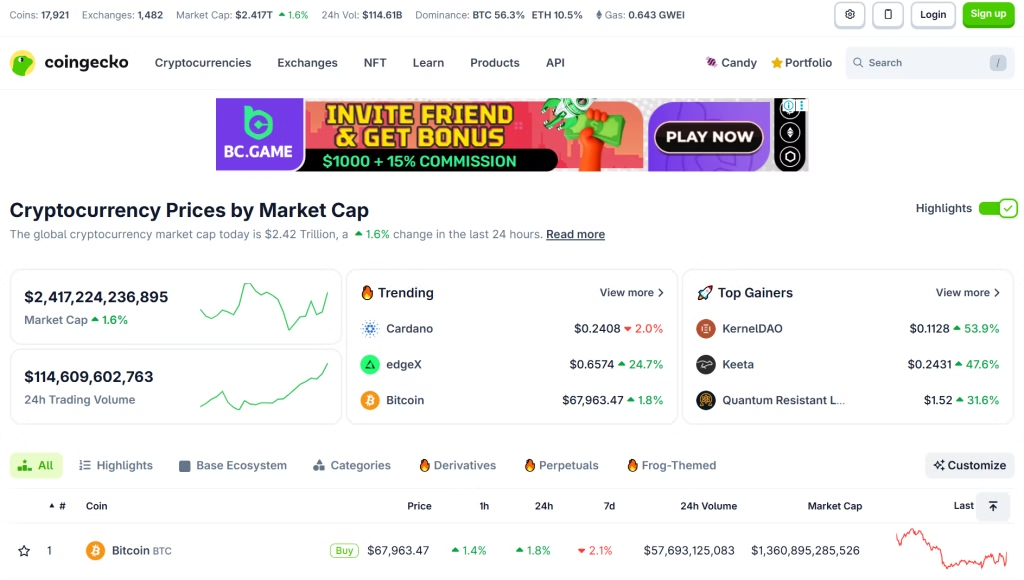
CoinGecko tracks live prices, market capitalization, trading volume, and historical charts across thousands of cryptocurrencies. Its own 2026 industry data puts live coverage at more than 18,400 coins across roughly 1,494 exchanges, with a free tier for casual users and paid API plans starting at $35 a month for developers who need heavier data access.
CoinGecko also shows developer activity, community engagement, and liquidity data for individual projects, which gives a fuller picture than price alone. It lists a wide range of tokens, including newer and smaller ones, so it tends to be the first stop for anyone comparing CoinMarketCap against a close alternative.
2. CoinStats
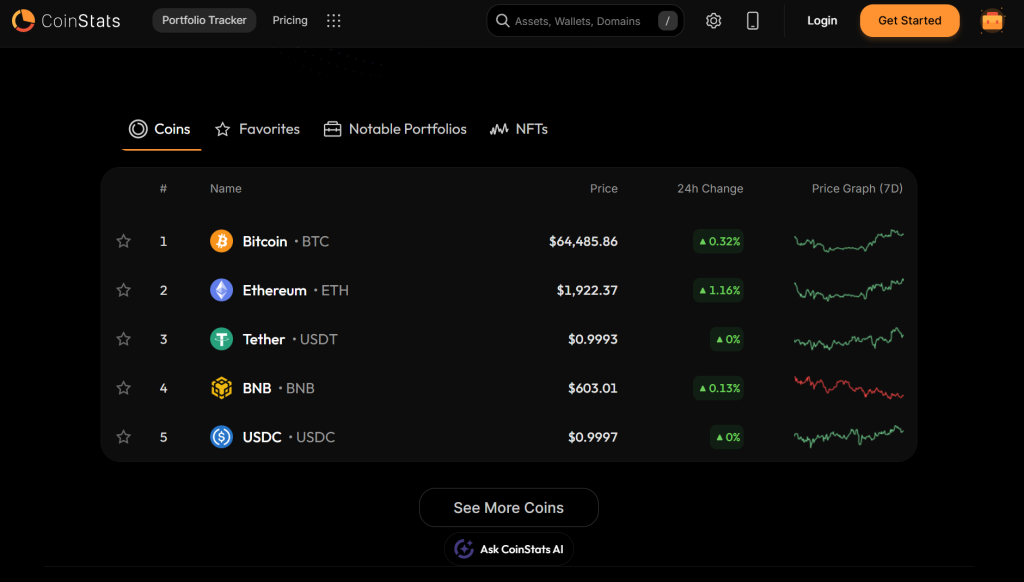
CoinStats takes a different approach from a pure price tracker by centering everything on portfolio management. It syncs with more than 300 exchanges and wallets, so once connected, it pulls in real prices, profit and loss, and asset allocation across every account in one dashboard instead of requiring manual entry.
Beyond tracking, CoinStats covers DeFi positions and NFTs alongside standard coins, plus a news feed pulled from more than 140 sources and customizable price alerts. A free Basic tier covers casual use, while paid tiers raise sync limits and transaction caps for people juggling many accounts. For anyone who wants their tracker to double as a portfolio manager instead of just a price board, CoinStats fills that gap CoinMarketCap doesn’t.
3. CoinCap
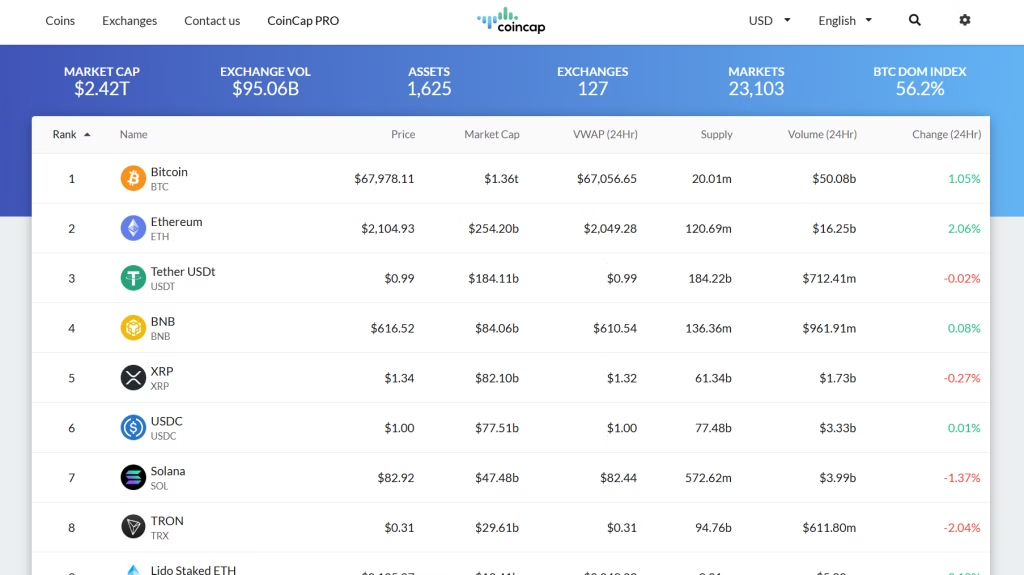
CoinCap focuses on fast, real-time price updates through a clean, minimal interface. It shows price movements, market capitalization, trading volume, and percentage changes without extra clutter, which makes it easy to scan.
The platform still includes basic watchlists and asset search for tracking specific coins over time. On the developer side, CoinCap has expanded its API to support direct, pay-per-call access designed for AI agents and automated tools, on top of its standard REST access, so it now serves both casual browsers and more technical users.
4. LiveCoinWatch
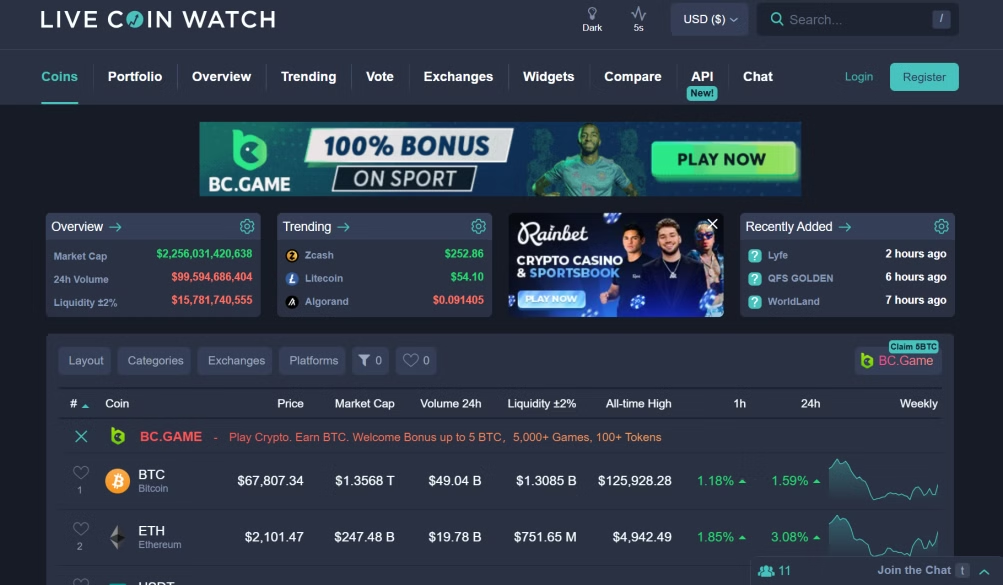
LiveCoinWatch tracks tens of thousands of cryptocurrencies across more than a thousand centralized and decentralized exchanges. It covers prices, market capitalization, trading volume, liquidity statistics, and historical charts, and it leans into customization more than most competitors.
Watchlists, sorting tools, and filters let users narrow the market down to what matters to them instead of scrolling through a fixed ranking. That flexibility often draws people from a more rigid layout like CoinMarketCap’s.
5. CoinCodex
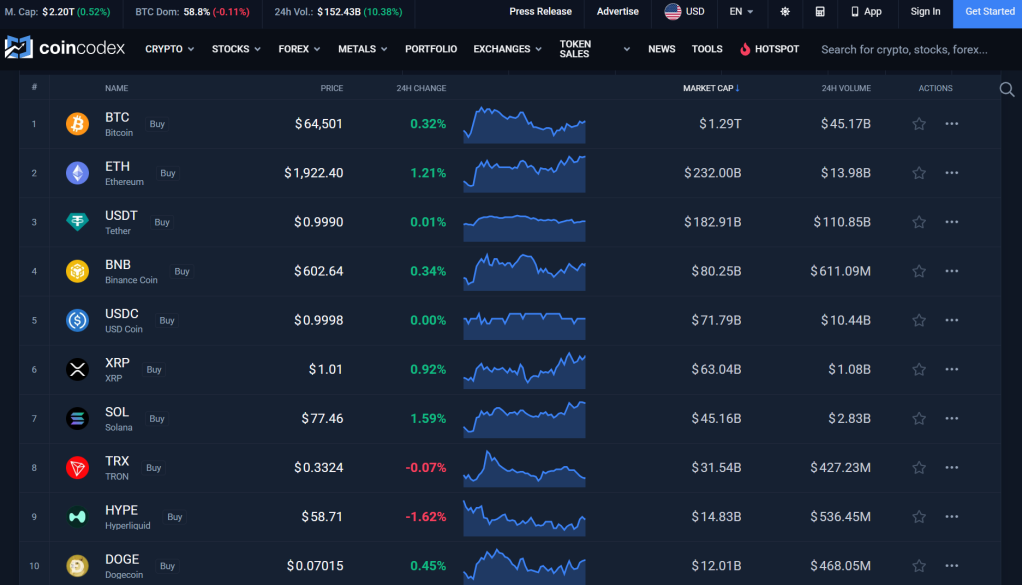
CoinCodex combines price tracking with lighter research tools. It pulls prices from more than 400 exchanges and calculates a volume-weighted average, so exchanges with heavier trading activity carry more influence on the displayed price.
Beyond the core tracker, CoinCodex includes a news section and price alerts, along with comparison and filtering tools for evaluating assets side by side. It’s a reasonable middle ground for someone who wants tracking and basic research without juggling two separate tools.
6. CoinPaprika
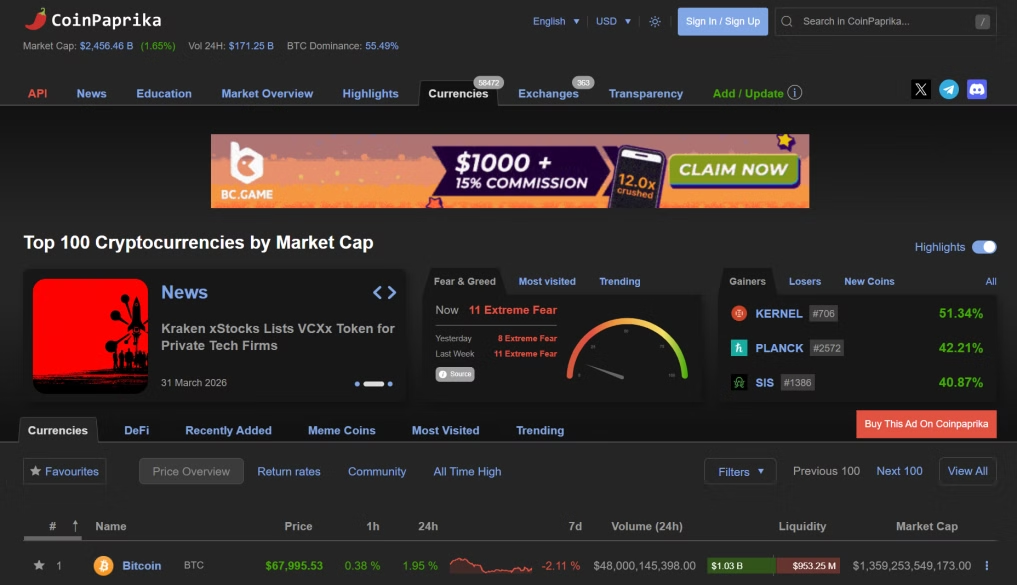
CoinPaprika organizes data on more than 60,000 cryptocurrencies into price, market capitalization, trading volume, and historical performance, along with detailed project pages covering team information, official links, and supported exchanges.
Its ranking system helps compare assets across multiple metrics rather than market cap alone, and it offers an API for developers building their own dashboards or tools. For someone who wants a more structured, research-first view of the market, CoinPaprika often goes a step further than a basic tracker.
7. Messari (Now Messari by Blockworks)
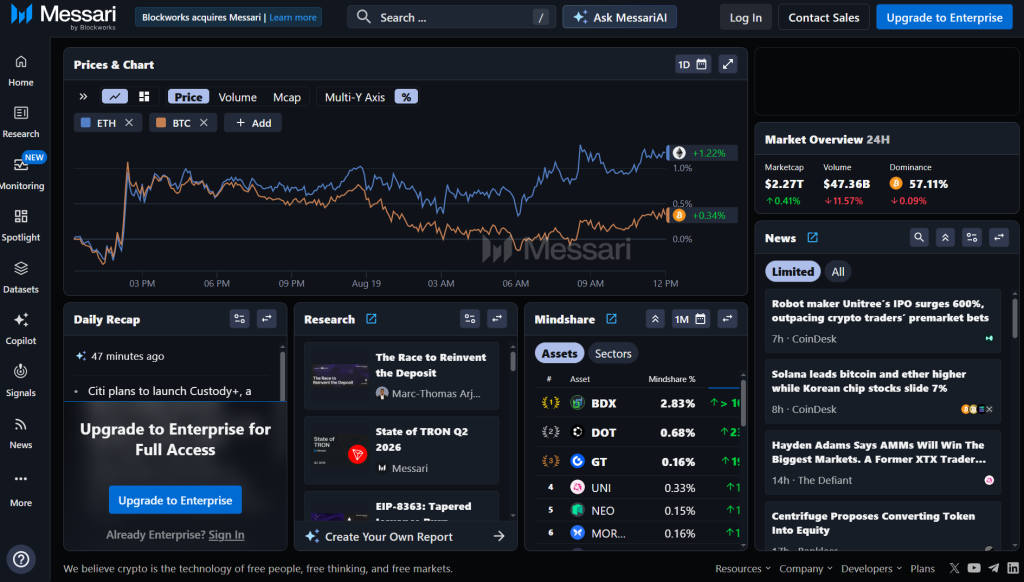
Messari used to be a standalone crypto research and data platform, but that changed in June 2026, when crypto data company Blockworks acquired it. The combined platform now operates as Messari by Blockworks, with Messari’s asset coverage and API folded into Blockworks’ broader data and compliance business. Messari’s annual Mainnet conference was discontinued as part of the deal.
The platform still provides detailed asset dashboards, historical trends, and screening tools for comparing cryptocurrencies, along with research content built to support more informed decisions. Some of its deeper reports and advanced features sit behind a paid subscription, which keeps it aimed more at investors and analysts than casual price-checkers.
Which Alternative Fits Your Workflow
Picking between these platforms comes down to what you actually do day to day. If you just want a quick price check, CoinCap or LiveCoinWatch strip away anything you don’t need. If you want more context around a project before buying in, CoinGecko or CoinPaprika give you the extra layers.
If you’re tracking real holdings across several exchanges, CoinStats folds that into the same dashboard, while CoinCodex and Messari by Blockworks go further into structured research and institutional-grade coverage.
Try two or three of these side by side with a coin you already track. The differences in layout and depth become obvious fast, and that’s a better test than reading about them. You can check our resources hub for more crypto tools comparisons once you’ve narrowed down what you’re looking for.
Frequently Asked Questions
Need a refresher on the basics before you start comparing tools? Here are quick answers to what most beginners ask first.
Is CoinGecko more accurate than CoinMarketCap?
Neither platform invents its own prices. Both pull data from exchanges and calculate an aggregate, so small differences usually come down to which exchanges each platform weighs more heavily, not one being more “correct” than the other.
Do I have to pay to use these CoinMarketCap alternatives?
No. Every platform on this list offers free access to core price tracking. Paid tiers mainly exist for developers who need higher-volume API access or for investors who want Messari by Blockworks’ deeper research reports.
Which of these platforms have a developer API?
CoinGecko, CoinCap, CoinPaprika, and CoinStats all offer API access for developers who want to pull data into their own apps or dashboards. Rate limits and pricing vary, so check each platform’s current API documentation before building anything that depends on it.
What happened to Messari?
Blockworks, a competing crypto data company, acquired Messari in June 2026. The platform now operates under the Messari by Blockworks name, and its former Mainnet conference was discontinued as part of the acquisition.
Which CoinMarketCap alternative is best for a beginner?
CoinGecko and CoinCap are the easiest starting points. Both keep the interface simple while still covering thousands of assets, so you won’t have to learn a complicated dashboard on day one.