Key Takeaways
- Iranians use peer-to-peer platforms and local exchanges to buy Bitcoin outside traditional banking systems
- VPN paired with self-custody wallet represents standard setup for safe crypto access in Iran
- Legal status remains ambiguous with mining permitted but domestic payments restricted
- Major international exchanges block Iranian users due to sanctions compliance requirements
- P2P trades, local platforms, and OTC markets provide primary Bitcoin acquisition methods
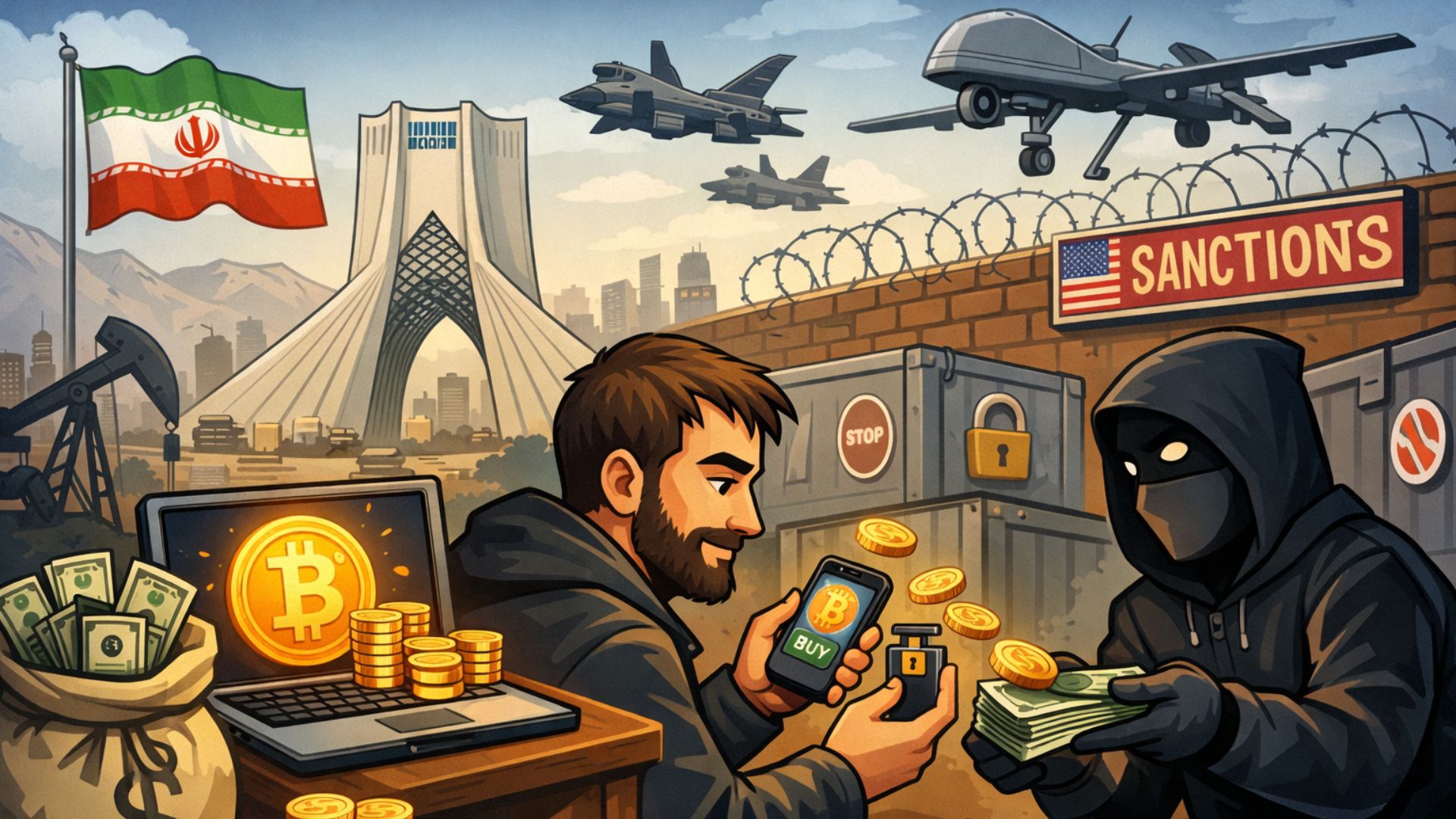
Iran operates under some of the strictest financial sanctions globally. U.S., EU, and UN restrictions cut Iranians off from SWIFT transfers, international payment processors, and most foreign bank accounts. With traditional finance largely inaccessible, many Iranians turned to Bitcoin to store value, pay for services, and move money across borders.
Cryptocurrency offers a workaround for people excluded from the global financial system. While buying Bitcoin in Iran carries legal and financial risks, thousands navigate these challenges daily using peer-to-peer platforms, local exchanges, and careful operational security.
What Is Bitcoin’s Legal Status in Iran?
Iran maintains a complicated relationship with cryptocurrency that creates confusion for potential users. The government officially licensed Bitcoin mining in 2019, making Iran a notable contributor to global hash rate during various periods.
However, using crypto for everyday domestic payments remains restricted under current policy. The Central Bank of Iran barred banks from dealing in cryptocurrency directly. The government simultaneously explored using crypto for international trade settlements to circumvent sanctions.
This contradiction creates legal gray zones for regular users:
- Mining with government license remains permitted and encouraged
- Buying and using Bitcoin for personal finance sits in murky territory
- Regulations shift with little warning creating uncertainty
- Enforcement priorities change based on political conditions
- International sanctions add additional legal complexity
The ambiguity means Iranians buying Bitcoin operate without clear legal protection. Regulations could tighten suddenly, making activities legal today potentially problematic tomorrow.
How Do Iranians Buy Bitcoin Without Bank Access?
Most major exchanges like Coinbase or Kraken block Iranian users due to sanctions compliance requirements. Iranians developed alternative routes accessing cryptocurrency markets outside traditional channels.
Peer-to-Peer Platform Usage
P2P platforms connect buyers and sellers directly, removing centralized exchange requirements. Payments happen through local methods including cash, mobile transfers, or domestic bank apps.
Platforms like Hodl Hodl and LocalCoinSwap operate without strict KYC requirements in many cases. This accessibility serves users with limited or no international banking access.
Before using P2P platforms, consider these safety measures:
- Review seller’s complete trade history and ratings before committing
- Use escrow whenever platforms offer it for transaction protection
- Avoid sharing personal documents unless platform verification is verified and trusted
- Start with small transactions to test counterparty reliability
- Verify payment methods work reliably in your specific region
P2P trading requires more active involvement than centralized exchanges. Users negotiate prices directly, manage payment transfers, and handle disputes when they arise. The extra effort provides access otherwise unavailable.
Local Iranian Exchange Operations
Several Iran-based crypto exchanges operate domestically with Iranian rial trading pairs. Platforms like Nobitex and Wallex served Iranian users for years despite sitting in legal gray areas.
Local exchange characteristics include:
- IRR trading pairs eliminating foreign currency conversion needs
- Domestic bank transfer integration for deposits and withdrawals
- Farsi language interfaces and customer support
- ID verification typically required for larger trades
- Smaller amounts may process with lighter requirements
These platforms provide familiar banking-style interfaces that reduce technical barriers. However, users face risks from potential government intervention, platform closures, or regulatory changes affecting operations.
Over-the-Counter and In-Person Trading
OTC trading happens directly between two people, often settled in cash. Informal crypto markets developed in cities like Tehran with buyers and sellers connecting through Telegram groups or personal networks.
OTC advantages and considerations:
- Real privacy avoiding centralized platform records
- No geographic restrictions or IP blocking
- Cash settlements eliminating banking system involvement
- Higher counterparty risk without escrow protection
- Price negotiation flexibility for larger amounts
Only trade with people verifiable through trusted contacts or established community reputation. Physical meetings carry additional personal security considerations requiring careful planning and public location selection.
What Tools Enable Safe Crypto Access From Iran?
Accessing international crypto platforms from Iran requires specific technical setup beyond just finding sellers. Experienced users rely on these tools maintaining security and accessibility.
VPN for Geographic Access
International platforms block Iranian IP addresses maintaining sanctions compliance. Reliable VPN services reroute connections enabling platform access without triggering geo-blocks.
VPN selection criteria include:
- Strong privacy policies avoiding user activity logging
- Server locations in crypto-friendly jurisdictions
- Consistent connection speeds supporting trading activities
- Payment methods accessible to Iranian users
- Reputation within privacy-focused communities
Private Internet Access represents one widely used option known for strong privacy features. However, users should research current VPN effectiveness as platforms continually update blocking mechanisms.
Self-Custody Wallet Requirements
Moving Bitcoin off exchanges into personal control represents critical security practice. Hardware wallets like Ledger or Trezor store cryptocurrency offline completely outside exchange reach.
Self-custody advantages include:
- Protection from exchange closures or account freezes
- Immunity from platform sanctions compliance actions
- Full control over private keys and recovery phrases
- Ability to access funds regardless of platform availability
- Long-term security for significant holdings
Understanding what self-custodial wallets are and how they work helps users implement proper security practices. Seed phrase backup and secure storage become personal responsibilities rather than exchange obligations.
Stablecoin Bridge Strategies
Many Iranians buy USDT first since it maintains dollar value and shields savings from rial inflation. Stablecoins serve as intermediate holdings before converting to Bitcoin when desired.
Stablecoin usage patterns include:
- Initial purchase through P2P platforms with IRR
- Dollar value preservation during volatile periods
- Simplified trading between different cryptocurrencies
- Remittance applications for cross-border transfers
- Gradual Bitcoin accumulation through dollar-cost averaging
This approach separates currency preservation from Bitcoin investment decisions. Users maintain dollar-denominated savings while choosing optimal Bitcoin entry points.
What Risks Come With Buying Bitcoin in Iran?
Purchasing Bitcoin in Iran involves significant risks extending beyond typical cryptocurrency volatility. Every potential buyer should understand these challenges before proceeding.
Legal and Regulatory Uncertainties
Personal crypto use in Iran operates without clear legal definition. Rules change quickly and unpredictably based on political conditions and enforcement priorities.
Legal risk factors include:
- Ambiguous regulations creating interpretation uncertainty
- Potential for retroactive rule enforcement
- Government surveillance of cryptocurrency activities
- Unlicensed platform usage attracting regulatory attention
- International sanctions creating additional compliance layers
These uncertainties mean activities considered acceptable today could face different treatment tomorrow. Staying informed about regulatory developments requires constant attention to official announcements and community intelligence.
Sanctions Exposure Consequences
U.S. law prohibits American companies from serving Iranian users. Accounts on major platforms face flagging or freezing once Iranian identity gets detected.
Sanctions-related challenges include:
- Account closures even when using VPN location masking
- Fund freezes during identity verification processes
- Limited recourse when platforms enforce sanctions policies
- Difficulty accessing customer support for blocked accounts
- Risk assessment every time providing identification documents
International exchanges implement sophisticated detection methods beyond simple IP blocking. Device fingerprinting, payment patterns, and verification documents all contribute to user origin identification.
Fraud and Scam Prevalence
P2P markets attract fraudsters exploiting information asymmetries and limited recourse mechanisms. Fake sellers, payment fraud, and phishing attempts remain common.
Common crypto remittance scam tactics include:
- Fake escrow services appearing legitimate
- Payment reversal after cryptocurrency release
- Phishing links mimicking real platform interfaces
- Social engineering extracting private keys or passwords
- Advance fee scams requiring upfront payments
Always use platform escrow features when available. Verify counterparty reputation through multiple sources. Avoid sharing personal data unnecessarily beyond platform requirements.
Market Volatility Amplification
Bitcoin price volatility creates financial risk independent of regulatory concerns. Sharp price movements affect purchasing power and portfolio values significantly.
Volatility considerations include:
- Large holdings without clear strategy adding financial stress
- Rial depreciation creating additional conversion complexity
- Limited hedging options available through accessible platforms
- Emotional decision-making during dramatic price swings
- Difficulty planning for financial needs requiring fiat conversion
Dollar-cost averaging through regular small purchases reduces timing risk. Maintaining diversified holdings across cryptocurrencies, stablecoins, and traditional assets when possible spreads exposure.
How Do Iranians Convert Bitcoin Back to Cash?
Acquisition represents only half the equation. Converting Bitcoin back to usable Iranian rials requires understanding available exit strategies.
Most conversions happen through local P2P trades or domestic exchanges like Nobitex. Cash settlements and local bank transfers represent the most common methods. The process of converting crypto to cash involves similar considerations as initial purchases.
Exit strategy options include:
- P2P platform sales to verified buyers
- Local exchange withdrawals to Iranian bank accounts
- OTC cash trades in major cities
- International transfers through trusted contacts
- Stablecoin conversions for dollar-denominated holdings
Planning exit strategies before needing them reduces stress during time-sensitive situations. Maintaining relationships with reliable counterparties provides options when rapid conversion becomes necessary.
Frequently Asked Questions
Is it legal for Iranians to buy Bitcoin?
Iranian law does not clearly permit or ban personal Bitcoin purchases. The government allows licensed mining but restricts banks from handling crypto directly. Most personal use sits in legal gray areas with regulations shifting without notice.
Can Iranians use Binance or Coinbase to buy Bitcoin?
Both Coinbase and Binance restrict Iranian users due to sanctions compliance rules. VPNs can bypass IP-based geo-blocks but accounts may get flagged or suspended if verification documents reveal Iranian residency.
What is the safest way to store Bitcoin in Iran?
Hardware wallets like Ledger or Trezor store Bitcoin completely offline keeping funds away from exchanges. This protects against platform closures or account freezes. Our guide on wallet security covers proper implementation.
How do Iranians convert Bitcoin back to cash?
Most conversions happen through local P2P trades or domestic exchanges like Nobitex. Cash settlements and local bank transfers represent common methods. Our guide on converting crypto to cash provides detailed process information.
What platforms work best for buying Bitcoin in Iran?
P2P platforms like Hodl Hodl and LocalCoinSwap work without strict KYC requirements. Local exchanges including Nobitex and Wallex offer IRR trading pairs. OTC trades through Telegram groups provide additional options with higher privacy but increased counterparty risk.