Key Takeaways:
- Nobitex recorded a significant spike in crypto withdrawals following airstrike events in the region
- The outflow pattern reflects how Iranians treat crypto as an emergency financial tool during geopolitical crises
- Self-custody adoption increases during conflict periods, showing a clear shift away from exchange-held funds
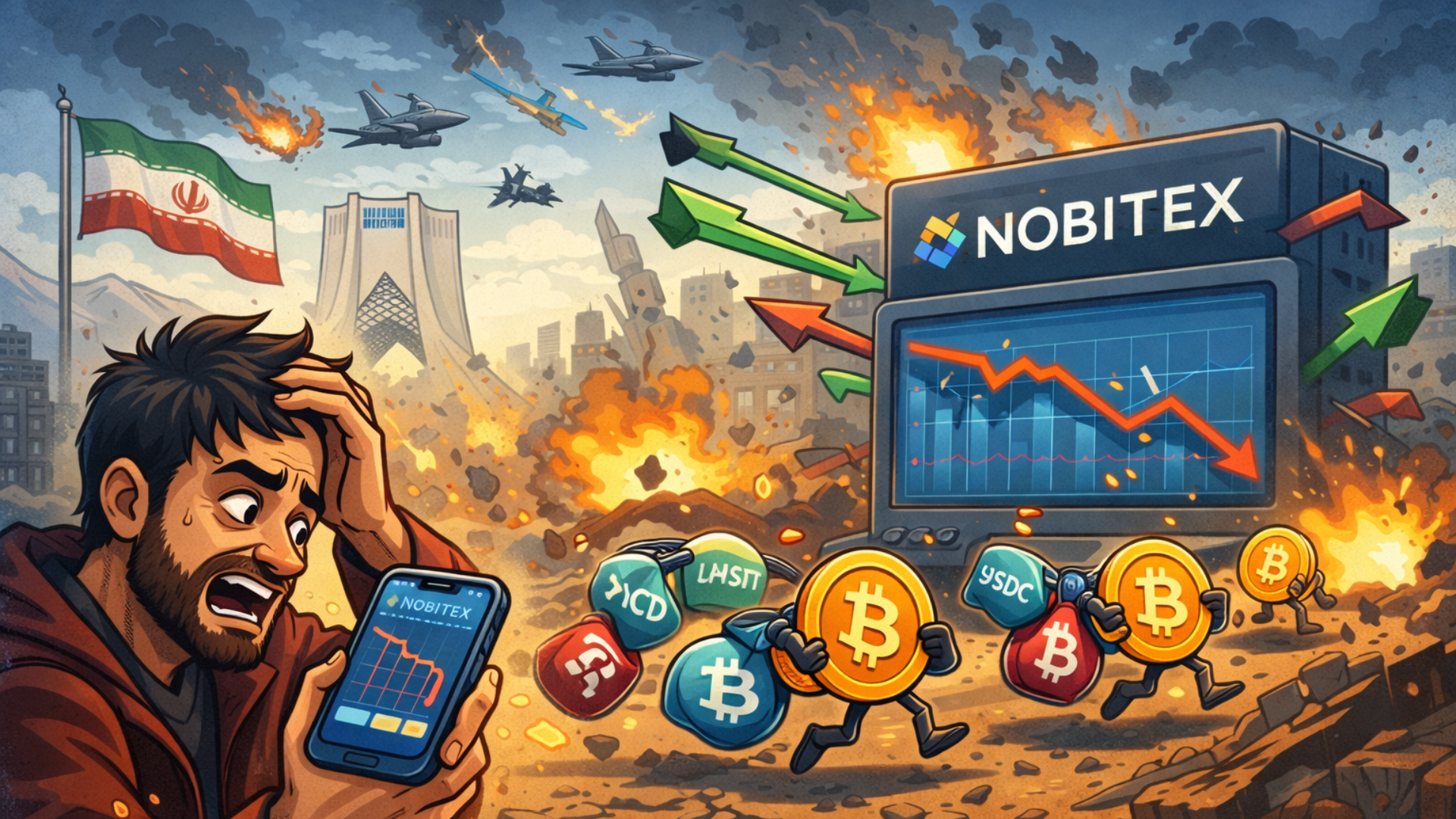
Nobitex crypto outflow after airstrikes hit the region, Iranians did not rush to the bank. They rushed to their crypto wallets. Nobitex, Iran’s largest domestic crypto exchange, recorded notable outflows following airstrike events, with users pulling funds off the platform at a pace well above normal activity. The pattern is not random. It tells a clear story about how people living under sanctions and geopolitical pressure use crypto differently from everyone else.
What Happened to Nobitex During Airstrike Events?
Nobitex sits at the center of Iran’s domestic crypto market. It handles IRR-based trading pairs and serves as the primary on-ramp for most Iranian crypto users. During periods of regional military escalation, the platform has seen withdrawal volumes climb sharply, with users moving Bitcoin and USDT off the exchange and into private wallets.
The behavior follows a recognizable pattern. When geopolitical tension rises, trust in centralized platforms drops fast. Users who keep funds on an exchange during a crisis risk losing access if the platform goes offline, faces government intervention, or gets caught in the crossfire of sanctions enforcement. Moving to self-custody removes that risk immediately.
How Big Were the Outflows?
Reports from on-chain analysts and regional crypto observers pointed to withdrawal spikes that outpaced typical daily volumes by a meaningful margin during airstrike periods. While exact figures vary by source, the directional trend was consistent across multiple events. Bitcoin and USDT saw the highest outflow volumes, which makes sense given their liquidity and cross-border utility.
Why Nobitex Specifically?
Nobitex is the most accessible and widely used exchange for Iranian retail users. It operates in a legal gray area but has maintained consistent service for years. Because it holds the largest share of domestic crypto volume, any behavioral shift among Iranian users shows up most clearly on Nobitex. Other smaller platforms saw similar trends, but Nobitex data provides the clearest signal.
Why Do Airstrikes Trigger Crypto Outflows?
The connection between military events and crypto withdrawals goes deeper than panic selling. Several specific factors drive this behavior in Iran’s context, and they differ from how users in stable economies might react.
- Loss of platform access: Airstrikes can damage infrastructure, disrupt internet access, or prompt emergency government restrictions on financial platforms. Users move funds preemptively to avoid being locked out.
- Fear of government asset freezes: During national emergencies, Iranian authorities have the ability to freeze accounts on domestic platforms. Self-custody removes that vulnerability entirely.
- Currency collapse risk: Military escalation often accelerates rial depreciation. Users convert to Bitcoin or USDT and move those assets off exchange to lock in value before conditions worsen.
- Historical precedent: Iranians have lived through multiple cycles of sanctions tightening and regional conflict. Many users have learned from past experience that keeping funds on a centralized platform during a crisis carries real risk.
This behavior mirrors what happened in Ukraine in early 2022, where crypto outflows from local exchanges spiked in the days surrounding the Russian invasion. Sanctioned or conflict-affected populations consistently treat crypto as a financial exit, not just an investment.
What Does This Tell Us About Crypto in Sanctioned Economies?
The Nobitex outflow data points to something broader than a single event. Crypto in Iran functions as a parallel financial system, and airstrike-triggered outflows reveal just how deeply that system is embedded in daily financial planning.
For Iranians, self-custody is not an advanced technical preference. It is a practical necessity. A hardware wallet storing Bitcoin offline cannot be frozen by a government, taken down by infrastructure damage, or blocked by a sanctions update. That makes it more reliable than any bank account or exchange balance during a crisis.
Furthermore, the outflow pattern shows that Iranian crypto users are financially sophisticated. They do not wait for a crisis to fully unfold before acting. They move funds early, based on threat signals, which reflects a level of financial preparedness that comes from years of operating under economic pressure. Our guide on Bitcoin and stablecoin remittances covers how Iranians also use these assets to move money across borders when domestic options fail.
The broader takeaway for the global crypto space is significant. Exchange outflows during conflict are not a sign of panic or irrationality. They represent a rational, informed response from users who have built crypto into their financial survival strategy.
Frequently Asked Questions
What is Nobitex and why does it matter for Iranian crypto users?
Nobitex is Iran’s largest domestic crypto exchange, operating with IRR trading pairs and serving as the main entry point for retail crypto buyers in Iran. It holds the highest share of domestic trading volume, which makes it the clearest indicator of behavioral trends among Iranian users.
Why do Iranians withdraw crypto from exchanges during airstrikes?
Iranians withdraw funds during military events to protect against platform outages, government freezes, and rial depreciation. Moving to self-custody wallets removes dependence on any centralized platform that could become inaccessible during a crisis.
Is self-custody common among Iranian crypto users?
Self-custody adoption in Iran is higher than in many other countries, driven by years of experience with sanctions and financial instability. Hardware wallets like Ledger and Trezor are practical tools, not optional upgrades, for many Iranian holders. See our full guide on wallet security for more context.
Does this pattern appear in other conflict-affected regions?
Yes. Similar outflow spikes appeared on Ukrainian exchanges ahead of the 2022 Russian invasion. Populations facing conflict or severe economic instability consistently show higher rates of self-custody adoption and crisis-driven crypto withdrawals compared to users in stable markets.