Tether has reportedly frozen about $39.27 million in USDT across 10 Tron addresses linked to Xinbi Guarantee, according to blockchain analytics firm MistTrack.
MistTrack identified the wallets on September 8 and said they collectively held 39,273,713 USDT when it detected the restrictions. One of the addresses contained more than $10 million in USDT.
The reported freeze follows Tether’s earlier restrictions on funds linked to Huione Guarantee, another Telegram-based escrow marketplace that has drawn scrutiny from blockchain investigators. However, Tether has not publicly confirmed the Xinbi-related freeze or disclosed the reason for the restrictions.
MistTrack Flags 10 Tron Addresses
MistTrack said its attribution of the 10 addresses was based on wallet labels, transaction patterns, and links to wallets identified as “Guarantee Merchant” addresses.
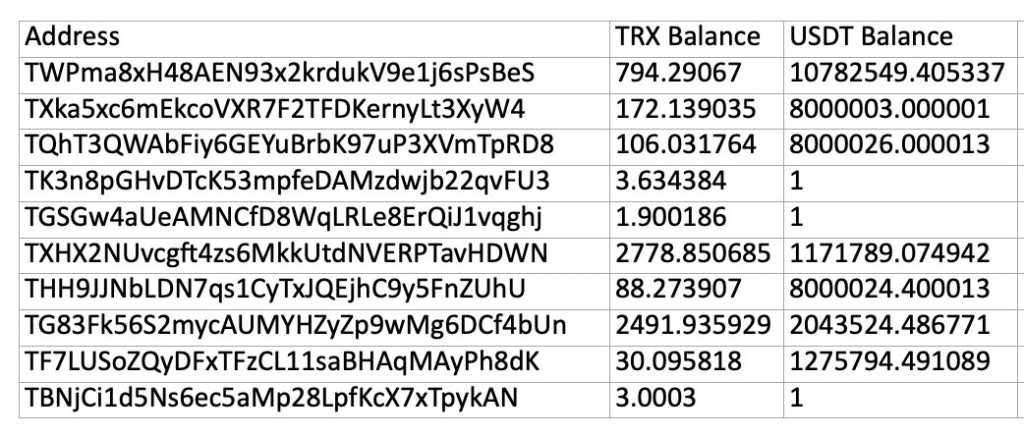
The analytics firm reported that the wallets were connected to Xinbi Guarantee, a Chinese-language Telegram-based guarantee and escrow marketplace.
| Detail | Reported Information |
| USDT frozen | 39,273,713 USDT |
| Network | Tron |
| Addresses | 10 |
| Linked entity | Xinbi Guarantee |
| Largest identified wallet | More than $10 million USDT |
Table 1. Key details of the reported $39.27 million USDT freeze.
MistTrack’s wallet attribution does not, by itself, establish that the frozen funds came from criminal activity. The available reporting also does not establish whether the wallets were still being used for Xinbi’s previous operations or were connected to successor services after Telegram removed the marketplace.
Xinbi Was Removed From Telegram in 2025
Xinbi Guarantee was among several Chinese-language guarantee marketplaces removed from Telegram in May 2025. These services used escrow-style arrangements to facilitate transactions between users, with the marketplace acting as an intermediary.
This structure mirrors the risks seen in other peer-to-peer crypto scams, where informal intermediaries can leave users with little recourse if something goes wrong.
The wider ecosystem has since faced scrutiny from blockchain investigators over alleged connections to scams, money laundering and other illicit activity.
Removing one marketplace has not necessarily eliminated the underlying network. The Crypto Times reported that other Chinese-language guarantee services, including Tudou Guarantee, later emerged after Huione Guarantee was removed.
This makes it difficult to determine whether funds connected to the latest wallets represent older Xinbi activity, continued operations, or successor services.
Tether Can Restrict USDT at the Wallet Level
The reported action also highlights a core USDT feature. Tether can restrict transfers from specific blockchain addresses.
When an address is frozen, USDT held there cannot be freely transferred, while its transaction history remains visible on the blockchain. This gives Tether a level of control that is different from the irreversible transaction model of the underlying blockchain.
Tether has previously frozen USDT connected to sanctions investigations and suspected illicit activity. In July, the company reportedly restricted 131 Tron wallets after the U.S. Treasury’s Office of Foreign Assets Control added those addresses to an ISIS-K designation, affecting more than $1.4 million in USDT.
The Xinbi-related wallets, however, have not been publicly tied to a specific sanctions designation based on currently available information.
Why Tether Froze the Funds Remains Unclear
The main unanswered question is why Tether froze the 10 addresses. MistTrack linked the wallets to Xinbi Guarantee and reported the restrictions, while TechFlow and ABAB News also covered the freeze. However, Tether has not publicly explained the action.
The available evidence supports the reported wallet attribution and freeze, but does not establish that the funds were illicit or confirm whether the move is part of a broader investigation. The action follows Tether’s earlier restrictions involving Huione-linked funds, indicating continued scrutiny of Telegram-based escrow and guarantee networks.
What Comes Next
The next development to watch is whether Tether confirms the freeze and explains why it restricted the 10 addresses. Investigators will also track whether funds linked to Xinbi move through other wallets or successor services.
For USDT holders, the incident highlights that blockchain transactions remain visible even when Tether can restrict transfers. The reported freeze affects nearly $39.3 million, but it does not show that the wider Xinbi-linked network has been dismantled.
What This Means for You: If you hold USDT, this case shows that the token is not fully censorship-resistant because Tether can restrict funds held at specific addresses. Avoid interacting with wallets or services linked to unverified guarantee marketplaces, keep records of your transactions, and use reputable platforms with clear compliance practices.