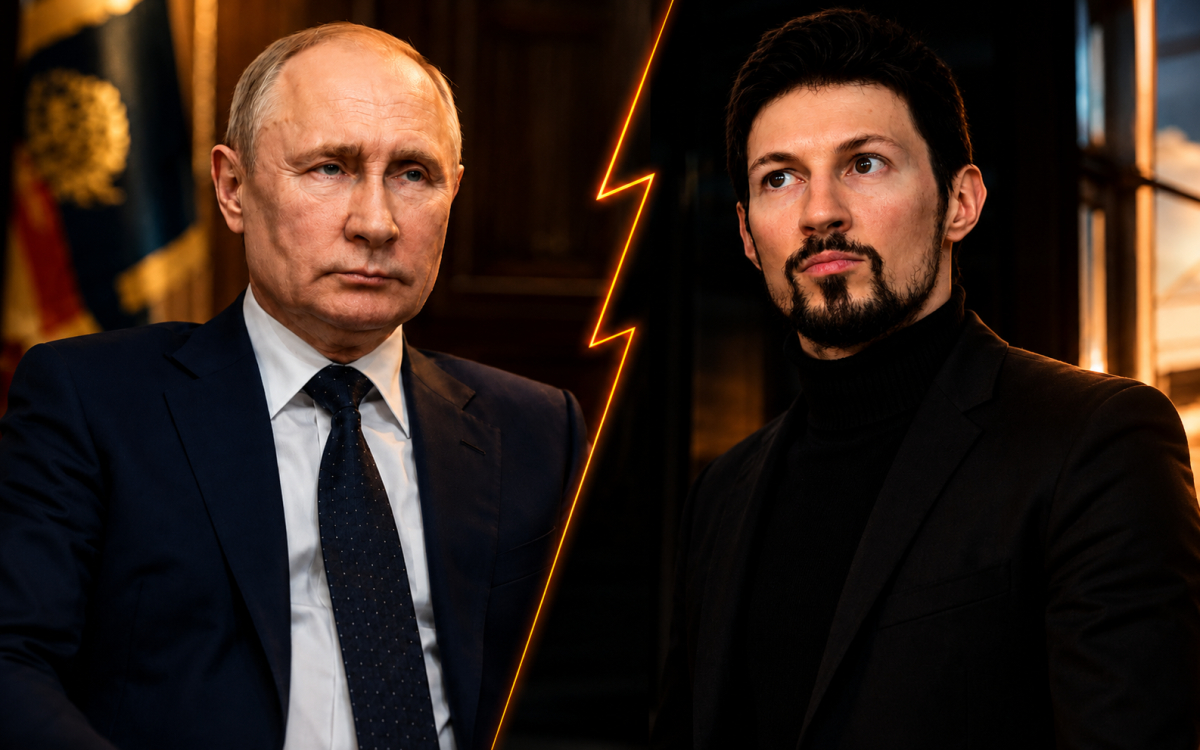
Russia’s Federal Security Service (FSB) charged Telegram founder Pavel Durov with aiding terrorist activity and placed him on an international wanted list on July 29, 2026, according to Interfax, over the messaging platform’s alleged failure to remove content the agency says was used to coordinate attacks inside Russia.
What Russia Alleges
The FSB said the charges relate to Telegram’s alleged failure to remove channels, chats, and bots it says were used by Ukrainian intelligence services and by terrorist and extremist organizations to prepare and coordinate acts of sabotage, terrorism, mass killings, and cyber fraud within Russia.
The agency separately claimed that a chatbot on the platform was used to recruit Russians, including some minors, for violent acts, and said dozens of individuals had been detained since mid-2025 in connection with this.
These are allegations from a Russian state security agency made in the context of an active war with Ukraine, and they have not been independently verified. If convicted, Durov could face up to life in prison in Russia. Neither Durov nor Telegram had immediately commented as of this writing.
Durov’s Background and the Broader Dispute
Durov, who was born in Russia but holds Emirati and French citizenship, founded VKontakte, Russia’s Facebook-equivalent social network, before selling his remaining stake in 2014 amid pressure from Russian authorities, and launched Telegram that same year. The platform now has more than 1 billion users and is used on both sides of the Russia-Ukraine war.
Russia attempted to block Telegram entirely between 2018 and 2020 but failed, and Interfax reports the platform has been fined more than 100 million rubles, roughly $1.3 million, this year alone for failing to remove content prohibited under Russian law.
Earlier this year, Durov said Russian authorities had opened a separate criminal investigation against him, which he characterized as based on fabricated pretexts intended to restrict Telegram and suppress privacy and free speech rights. Readers can find more on Durov’s background in our crypto personality profile.
This is a separate matter from Durov’s 2024 arrest in France, where authorities investigated allegations that the platform was used to facilitate serious criminal activity and that Telegram had not sufficiently cooperated with law enforcement requests.
Durov has denied wrongdoing in that case, calling his arrest “legally and logically absurd,” and French authorities allowed him to travel to Dubai under temporary restrictions in June 2025.
The charges arrive amid a broader, well-documented Russian effort to bring the domestic internet under tighter state control since the 2022 invasion of Ukraine, including bans on Facebook, Instagram, and X, throttling of YouTube, and restrictions on WhatsApp and Telegram.
Russia has continued promoting its state-backed MAX messaging app as an alternative, which openly states it will share user data with authorities on request and reportedly does not use end-to-end encryption.
The Crypto Angle
The charges land as Telegram has been expanding in the Web3 space. Earlier this month, Durov said the company plans to roll out a native, non-custodial GRAM wallet to Telegram’s roughly 1 billion users, a rollout our earlier coverage of Telegram’s GRAM wallet plans detailed, following June’s rebranding of The Open Network’s native token from Toncoin to GRAM as Telegram takes on a larger role in that ecosystem.
What Comes Next
Durov, based outside Russia, faces no immediate prospect of arrest unless he travels to a jurisdiction willing to act on Russia’s international warrant.
What this means for you: this is a legal and geopolitical dispute playing out against the backdrop of an active war, not a resolved criminal matter, and its practical relevance to Telegram’s crypto ambitions depends on whether it affects Durov’s ability to travel or operate freely as the company continues building out GRAM and its broader TON-based wallet infrastructure.