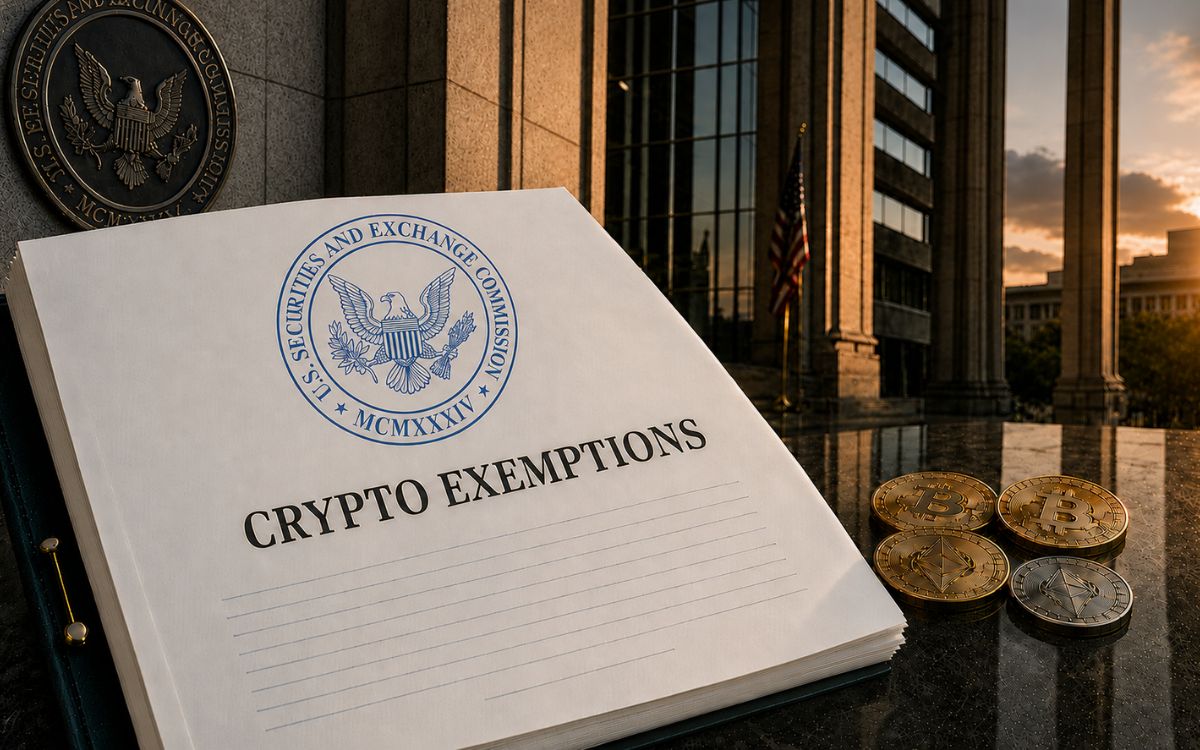
The U.S. Securities and Exchange Commission proposed new crypto exemptions on August 18, 2026, that would let crypto asset issuers raise up to $75 million every 12 months without registering the offering under the Securities Act of 1933.
A smaller exemption in the same proposal caps offerings at $5 million over a four year period for earlier stage projects. SEC Chairman Paul S. Atkins said the rules are meant to give crypto entrepreneurs a clear path to raise capital while keeping existing investor protections in place.
The Two Exemptions in Regulation Crypto Assets
The proposed framework, named Regulation Crypto Assets, creates two separate paths for issuers. The $5 million exemption is a one time option built for projects still working toward network maturity.
The $75 million exemption can be used once every 12 months, but it comes with added conditions. Issuers relying on the larger exemption must give investors financial statements and file ongoing reports, not just a one time disclosure.
Both exemptions also carry a conditional safe harbor. If an issuer meets the conditions, its crypto asset would not count as part of an investment contract under the Securities Act of 1933 or the Securities Exchange Act of 1934, according to the SEC’s official announcement. The proposal would also block state securities regulators from imposing separate registration rules on offerings made under these exemptions.
Why This Builds on the March Interpretation
This proposal did not appear out of nowhere. It builds directly on the SEC’s March 2026 interpretation, which first sorted crypto assets into five categories and explained when a token stops being tied to an investment contract, a framework covered in our breakdown of the SEC and CFTC crypto taxonomy.
Tuesday’s proposal turns that interpretive language into an actual registration exemption issuers can rely on, rather than just guidance describing how the SEC views existing law.
The Disclosure Rules Token Buyers Will See
Projects that raise money under either exemption would owe investors more paperwork than a typical private token sale, including narrative disclosures about how the funds get used. Readers following our news coverage should expect more U.S. based token offerings once this rule takes effect, since issuers no longer face the same pressure to structure raises offshore.
The 60 Day Comment Window Ahead
The public comment period stays open for 60 days after the proposal is published in the Federal Register, and the SEC has not set a date for a final vote. Investors and issuers who want to weigh in can do so directly through the comment portal listed in the SEC’s release, and any changes made before adoption would depend on what that feedback shows.
What this means for you: If you are new to crypto, this proposal does not change any rules yet, since it still needs to clear a public comment period before it can take effect.
This article is for informational purposes only and does not constitute financial advice. Do your own research before making any investment decisions.