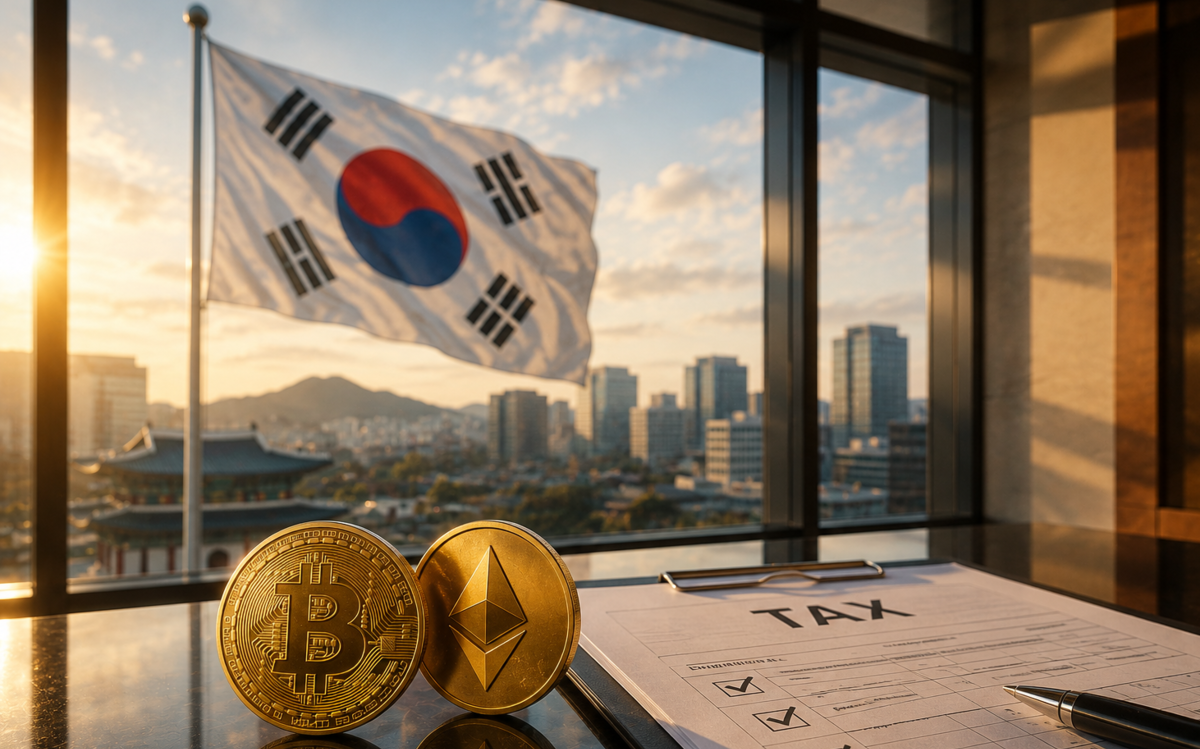
South Korea’s Deputy Prime Minister Koo Yoon-chul confirmed that crypto gains will be taxed starting January 2027, ending one of the longest-running delays in the country’s digital asset policy. He made the confirmation at a National Assembly Finance and Economy Planning Committee session on July 29, 2026, giving Korean investors and exchanges a fixed date after the levy was pushed back repeatedly since its original 2022 target.
From Repeated Delays to a Fixed Deadline
Korean lawmakers have deferred the crypto gains tax twice before, first in 2021 and again in 2023, and a further two-year delay was floated as recently as this month. Each delay pushed the tax back without changing the underlying plan: profits from selling crypto would eventually be taxed like other capital gains.
The Finance Minister’s confirmation breaks that pattern. For years, Korean retail traders treated the tax as a moving deadline likely to slip again, and some built their selling strategy around that expectation. A hard January 2027 date removes that assumption.
The confirmation also arrives alongside separate efforts to draft a stablecoin framework, and opposition lawmakers have pushed to repeal or soften the gains tax entirely. That means January 2027 is a baseline the government has committed to, not the final word, since a shift in political balance before then could still alter it.
Separately, South Korean lawmakers have proposed amendments letting financial regulators request the freezing of exchange accounts linked to illegal transfers, aimed at giving authorities faster tools against fraud and money laundering.
What This Means for Korean Crypto Holders
The 2026 tax year becomes the last untaxed one for Korean crypto holders, which could pull some selling forward before the window opens. Exchanges will also need to finalize reporting systems ahead of the January start. Moves like this tend to ripple into trading behavior months before they take effect, a pattern we track closely in our market news coverage.
The Stablecoin Rules Still Need to Catch Up
Korea’s stablecoin framework and its crypto gains tax are being written on separate tracks, and lawmakers still need to reconcile the two over the next 18 months. One open question is whether stablecoins, which are designed to hold a steady value, will end up taxed more lightly than assets like Bitcoin that swing in price.
That distinction is still unresolved, and so is a bigger one: opposition lawmakers are actively pushing to repeal or soften the tax altogether, which means the January 2027 date could still move again before it takes effect. Markets showed no direct reaction to the news, since tax policy like this tends to move local trader behavior rather than global prices.
This article is for informational purposes only and does not constitute financial advice. Do your own research before making any investment decisions.
What this means for you: If you hold crypto in Korea, gains you sell in 2026 still won’t be taxed, since the new rule only kicks in once January 2027 begins. That gives you a defined window to plan around, though lawmakers could still change the details before then. It’s one piece of a wider pattern in Korean digital asset policy this year, alongside moves like the tokenized bond pilot between Ripple and Kyobo Life.