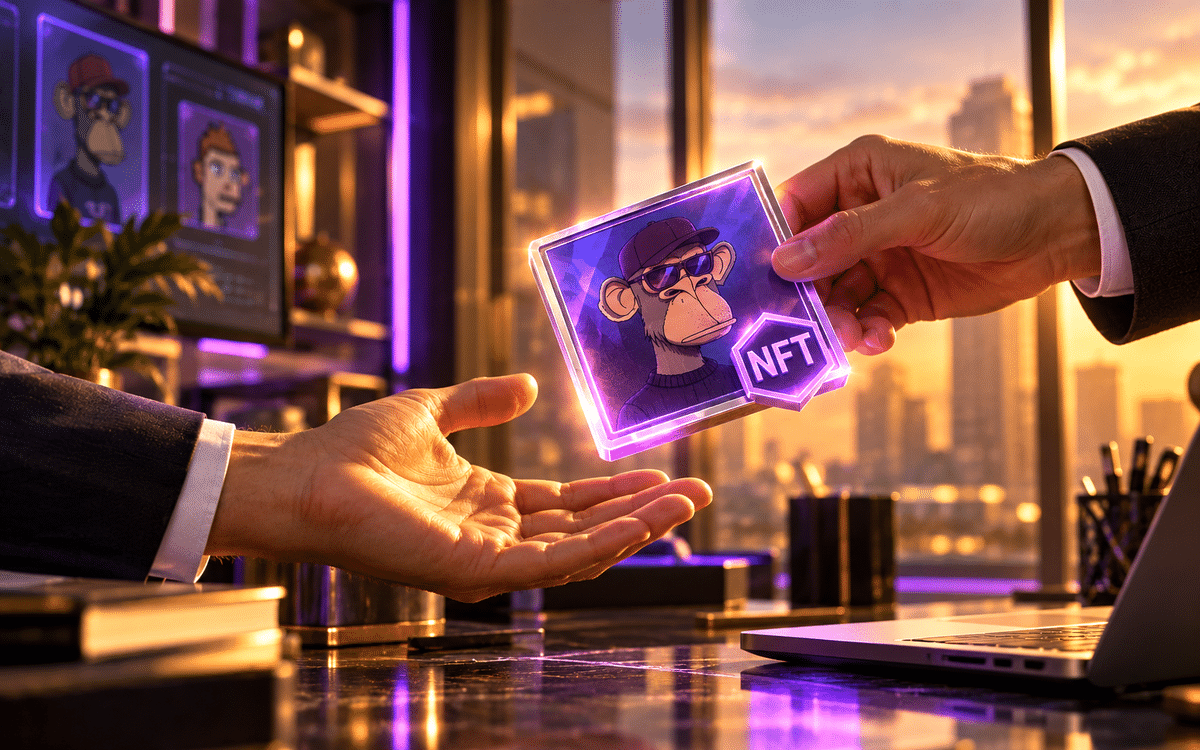
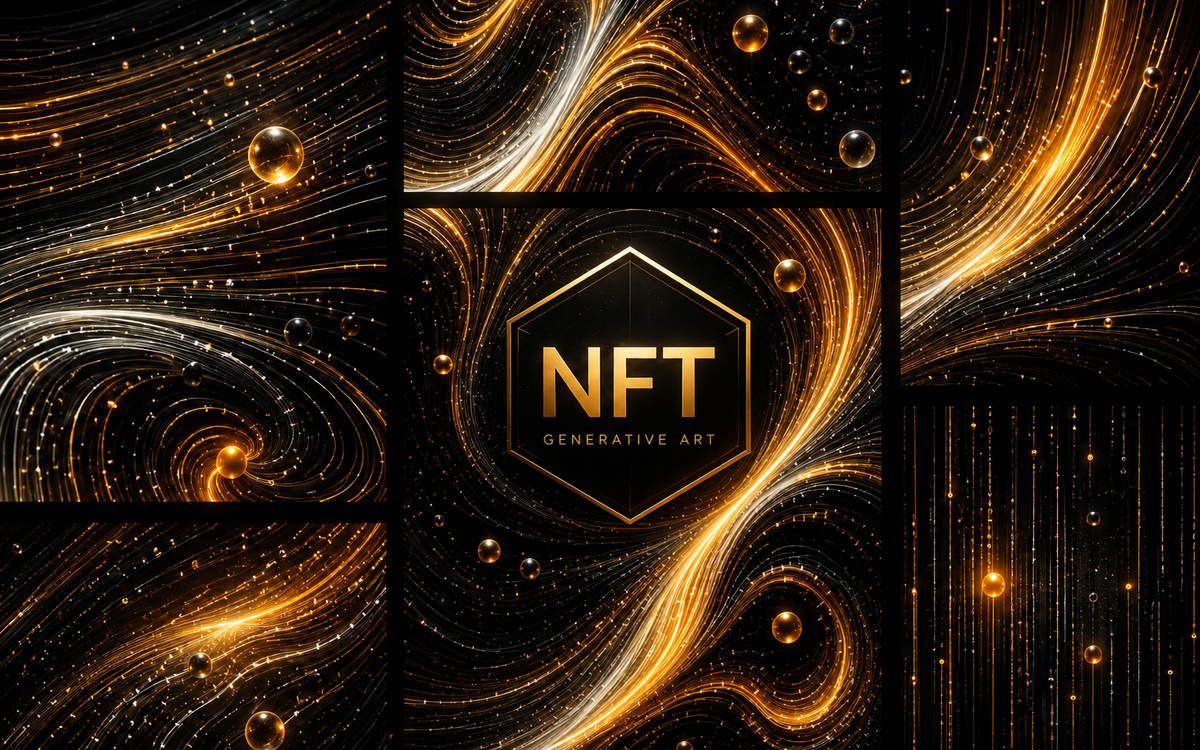
A generative art NFT is a digital artwork created by an algorithm rather than drawn by hand, then minted on a blockchain as a one-of-a-kind token. The artist writes the rules once. The code then produces thousands of variations, each one slightly different because of built-in randomness, and each one recorded as its own NFT with verifiable ownership.
That distinction matters for anyone new to NFTs, because it changes what you’re buying. You’re not purchasing a single image an artist finished by hand. You’re purchasing one output of a system, distinguished from every other output by its specific combination of traits. Art Blocks, the platform that popularized this model on Ethereum, has processed more than a billion dollars in trading volume since artist Erick Calderon (known as Snowfro) launched it in November 2020.
How Does a Generative Art NFT Get Made?
Think of a generative art project the way you’d think of a cookie cutter factory that also randomizes the dough color, the sprinkle pattern, and the icing every single time. The factory owner (the artist) designs the machine and its possible combinations once. After that, each cookie that comes out is unique, but every cookie still looks like it belongs to the same batch.
In practice, that “machine” is code, usually written in JavaScript or a creative-coding library like p5.js. The artist defines the visual building blocks, shapes, color palettes, line weights, background types, and the conditions under which each element can vary. A random seed, often derived from the NFT’s own token data on the blockchain, feeds into that code at the moment of minting and determines which combination the buyer receives.
Tyler Hobbs’ Fidenza collection on Art Blocks is one of the best-known examples: the same algorithm produced thousands of flowing, ribbon-like compositions, and no two came out identical.
Why Does This Matter If You’re New to NFTs?
If you’ve only seen hand-drawn or 1-of-1 NFT art, generative collections can look confusing at first, especially when a project promises “10,000 unique pieces” from what appears to be one artist. The confusion usually comes from not knowing that the artist built a system rather than 10,000 individual files. Once you understand that the code is doing the drawing, the size of these collections stops looking like a red flag and starts looking like the point.
This also affects value. Because every trait combination is generated by the same set of rules, some combinations occur far less often than others. That built-in scarcity is what collectors are usually pricing in when a piece sells for more than others from the same collection. We’ve watched this play out across current collections in our NFTs section, where rarer trait combinations consistently command higher prices than the collection floor.
What Role Do Smart Contracts Play?
A smart contract is the part of the blockchain that enforces the rules the artist set, without needing a middleman to check anything by hand. In a generative NFT project, the smart contract typically:
- Controls when minting opens and how many pieces can be created.
- Handles or verifies the randomness used to assign traits, so the outcome can’t be manipulated after the fact.
- Stores the core logic connecting each token to its specific set of traits.
- Prevents the same combination from being duplicated or altered later.
These contracts run on networks like Ethereum, Polygon, or Solana. That’s also where you’ll want to check gas fees before minting, since Ethereum mints in particular can get expensive during high-demand launches.
How to Start Collecting or Exploring Generative Art NFTs
Getting started doesn’t require any coding knowledge of your own, just a wallet, a bit of research, and a sense of which platform fits the chain you’re comfortable using. Here’s the general path most first-time collectors follow.
- Pick a platform. Art Blocks remains the most established venue for curated generative collections on Ethereum; fx(hash) is a popular Tezos-based alternative with lower fees.
- Set up a wallet. Make sure it’s compatible with the chain the project uses, and fund it with enough of the native token to cover both the mint price and gas. If you’re picking one for the first time, our guide to NFT wallets for collectors walks through what to look for.
- Research the artist and the algorithm before minting, not after. Established platforms usually publish sample outputs or a preview tool so you can see the range of what the algorithm can produce.
- Mint during the project’s public sale window. You’ll typically pay a fixed mint price plus network gas, and receive your specific output only after the transaction confirms on-chain.
- Check your traits and rarity ranking on the collection’s page or a rarity tool once your token reveals, if the project uses delayed reveal.
Common Mistakes to Avoid
Most of the regret first-time buyers report comes down to a handful of avoidable missteps, not bad luck.
1. Assuming “Generative” Means “Random Junk”
Well-designed generative systems are deliberately constrained by the artist. The randomness operates inside carefully chosen boundaries, not outside them.
2. Skipping the Algorithm’s Track Record
A project’s visual quality is entirely dependent on how well the code was written. Look at past output from the same artist or studio before minting blind.
3. Ignoring Gas Costs on High-Demand Mints
Popular Ethereum-based drops can push gas fees higher than the mint price itself during the first minutes of a sale.
4. Confusing Floor Price With Rarity Value
A collection’s floor price reflects its cheapest listed piece, not what a rare trait combination within that same collection might be worth.
Where Generative Art Fits Into NFTs Today
Generative art NFTs are still a small corner of the broader NFT market, but they’re one of the clearest examples of code functioning as a creative medium rather than just a distribution tool. Newer entrants like fx(hash) have lowered the barrier to entry for artists who don’t want to deploy their own smart contract from scratch, while established Ethereum collections continue to set the pace for what collectors expect from a curated drop.
Where this goes next likely depends less on the art itself and more on tooling: better rarity verification, cheaper minting on layer-2 networks, and clearer licensing standards would all make it easier for newcomers to tell a well-built project from a rushed one. For a wider look at where NFTs are trading and trending, our NFT marketplace guide is a good next stop.
Frequently Asked Questions
Still working out the basics? These are the questions people new to generative art NFTs ask most.
Is generative art the same as AI art?
No, they can overlap but aren’t the same thing. Generative art relies on rules and randomness written directly by an artist, often with no machine learning involved. AI art typically uses a trained model, like a diffusion model, to interpret a prompt. Some newer projects combine both approaches.
Do I own the copyright to a generative art NFT I buy?
It depends entirely on the project’s terms, which are usually published before minting. Some projects, including many on Art Blocks, grant the buyer commercial rights to their specific output. Others retain full copyright with the artist. Always check the license before assuming either way.
Why do some traits make a generative NFT more valuable?
Rarer trait combinations are typically programmed to occur less frequently across a collection. Because the probabilities are set in the code before minting, anyone can verify how rare a given trait is, which is part of why rarity tools have become common in this corner of the NFT market.
Can the artist change the algorithm after a collection mints out?
No, not on a properly deployed generative NFT project. Once the smart contract is live and minting has occurred, the logic that generated each piece is locked on-chain. This is one of the main reasons collectors trust that a piece’s rarity and traits won’t be altered later.
What’s the difference between Art Blocks and fx(hash)?
Art Blocks runs on Ethereum and curates projects before they go live, which usually means higher mint prices and gas costs. fx(hash) runs on Tezos, has a more open submission model, and generally has lower fees, making it a common entry point for newer generative artists.