Key Takeaways
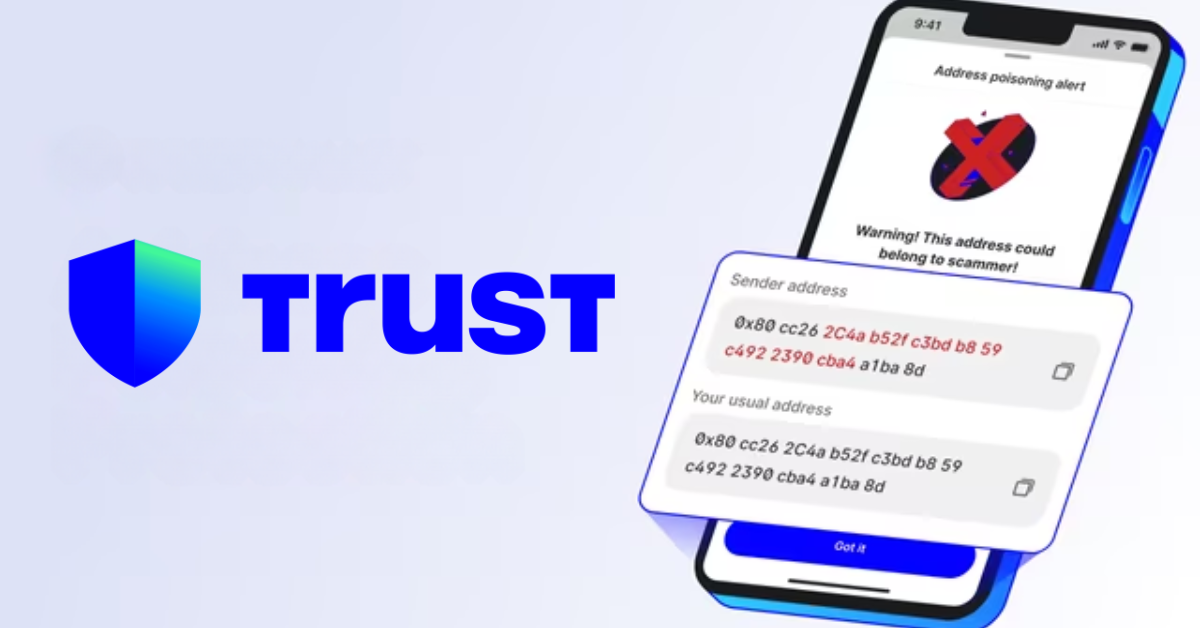
- Trust Wallet now features real-time checks against a database of known scam addresses across 32 EVM chains.
- The update targets “address poisoning,” a tactic responsible for over $500 million in cumulative crypto losses.
- Protection is live for major networks including Ethereum, BNB Smart Chain, Polygon, and the Layer-2 powerhouse, Base.
Address poisoning losses keep rising
Crypto is currently facing a massive wave of ‘address poisoning’—a sneaky phishing trick where scammers send a tiny bit of crypto to your wallet. They use an address that looks almost identical to one you’ve used before, hoping you’ll accidentally copy it from your history for your next big transfer. It sounds simple, but it’s devastating; we saw one person lose $50 million in a single USDT transaction late last year.
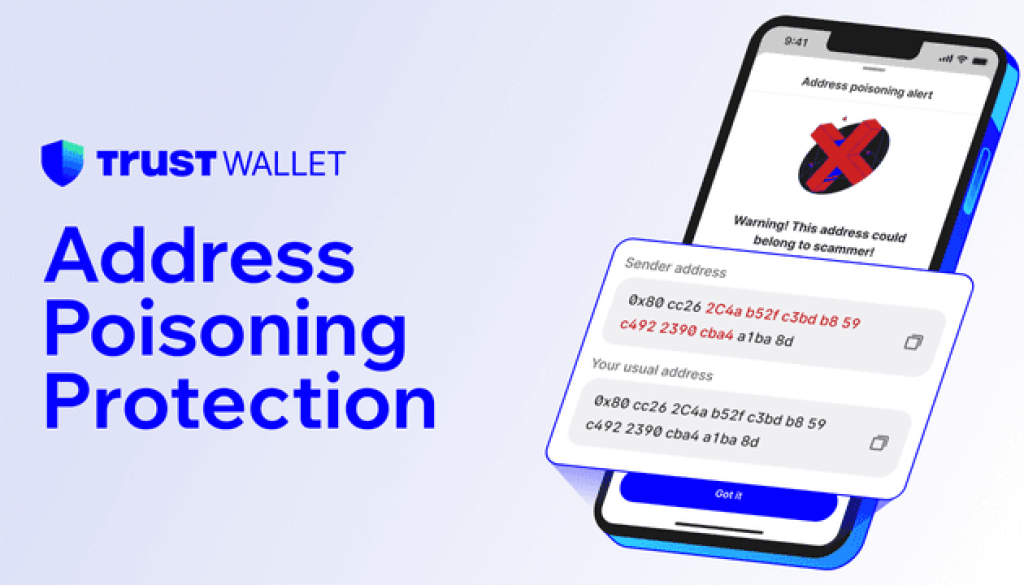
Industry figures like CZ have been pushing for wallets to catch these ‘poison addresses’ automatically for a while now. After several big hits—including a $7 million breach on Trust Wallet’s browser extension—the pressure is on.
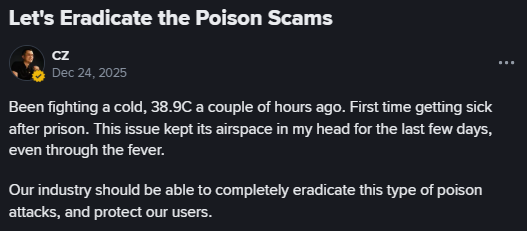
By finally adding this screening layer, providers are trying to win back user trust and shut down one of the fastest-growing scams in the game.
A New Standard for Wallet Security
Think of Trust Wallet’s new automated screening as a digital firewall for the ‘copy-paste’ crowd. It basically double-checks your destination against a massive list of known scam addresses and warns you before you hit ‘send.’ This isn’t just a small update either; it already works across 32 different EVM chains.
The real win here is how it tackles our worst habit: blindly copying addresses from old transaction logs instead of using a verified address book.
While wallets like Rabby and Phantom have similar tools, Trust Wallet’s massive scale makes this one of the most important security upgrades we’ve seen all year.
Final Thoughts
As scammers get more creative with “vanity” addresses and transaction spoofing, the burden of security is shifting from the user to the interface. Trust Wallet’s move is a necessary evolution in making crypto safer for the average investor.
Frequently Asked Questions
What is address poisoning?
It’s a scam where attackers send small amounts of crypto to make their address appear in your history, hoping you’ll copy it by mistake.
Does this feature work on all blockchains?
It currently supports 32 EVM-compatible networks, including Ethereum, Arbitrum, and Avalanche.
Is my transaction history now safe to copy from?
While the filter helps, security experts still recommend double-checking every character or using a saved “Address Book.”