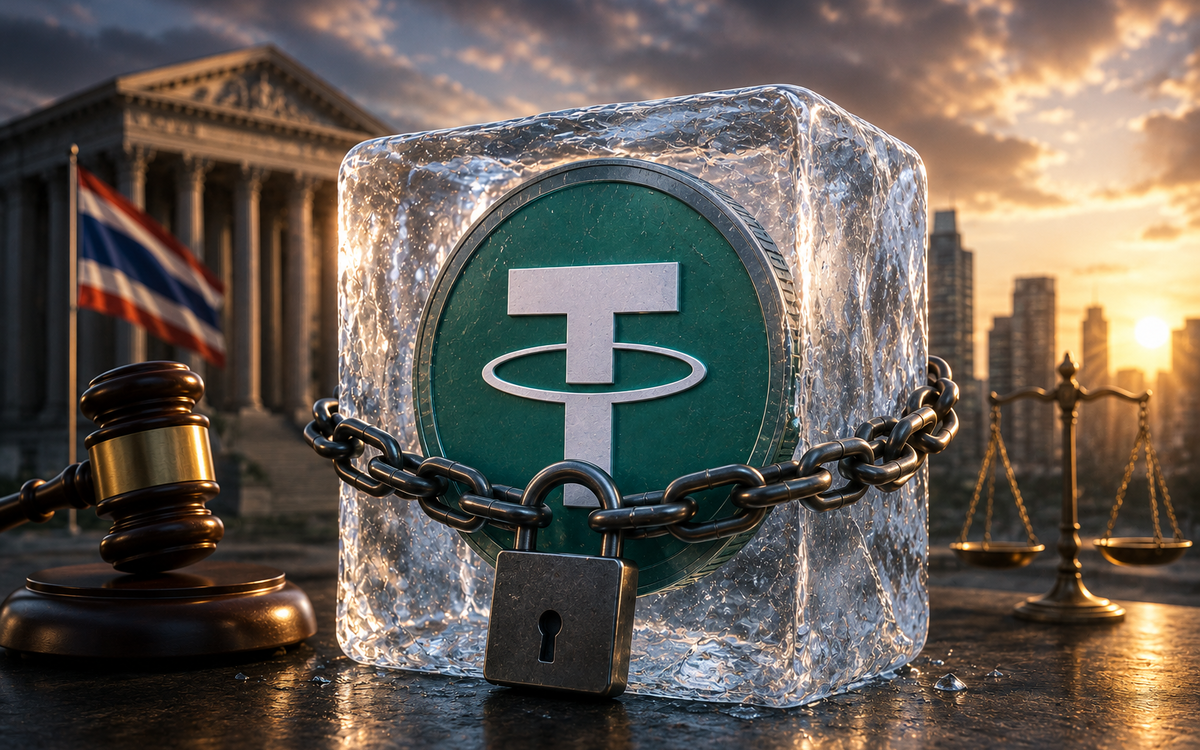
Two Thai businessmen have sued Tether over $42.4 million in USDT that the stablecoin issuer allegedly froze nearly four months before U.S. authorities obtained a seizure warrant.
Nutthawat Rukthammachalern and Natthawat Kasamvilas filed the lawsuit on Aug. 31 in the U.S. District Court for the Southern District of New York. According to the complaint, Tether blacklisted 10 Ethereum addresses holding a combined 42,417,785.62 USDT on Oct. 30, 2025, following an informal request from a Homeland Security Investigations (HSI) agent.
The businessmen claim there was no warrant, court order, subpoena, or other formal legal process authorizing the freeze at the time. A magistrate judge in the Eastern District of North Carolina later issued a seizure warrant on Feb. 19, 2026.
Tether Froze the USDT Before a Warrant Was Issued
According to the complaint, the two businessmen contacted Tether after discovering that their addresses had been blacklisted. Kasamvilas reportedly learned about the restriction when he attempted to make a transaction, after which Tether directed him to an HSI special agent rather than providing a legal basis for the freeze.
The plaintiffs say they acquired the USDT through secondary-market transactions and were not direct customers of Tether. Their lawsuit therefore challenges whether Tether could restrict the tokens at law enforcement’s request before a court authorized the seizure.
The case was filed as Rukthammachalern et al. v. Tether Holdings, S.A. de C.V. et al., case number 1:26-cv-07400. The four Tether entities named as defendants include Tether Holdings, Tether International, Tether Investments, and Tether Operations.
Timeline of the $42.4M Tether Freeze
The timing of the freeze is central to the lawsuit because Tether allegedly blocked the funds months before authorities obtained a seizure warrant.
| Date | Event |
| Oct. 30, 2025 | Plaintiffs allege Tether froze 10 Ethereum addresses holding about $42.4 million USDT without a warrant. |
| Feb. 19, 2026 | A North Carolina magistrate judge issued a seizure warrant. |
| Feb. 24, 2026 | The U.S. Attorney’s Office in EDNC announced a broader seizure of more than $61 million in cryptocurrency. |
| July 31, 2026 | Plaintiffs filed a return-of-property application in North Carolina. |
| Aug. 31, 2026 | Plaintiffs sued Tether in the Southern District of New York. |
Table 1. Timeline of the $42.4M Tether USDT Freeze
The February warrant directed Tether to burn the frozen tokens and reissue an equivalent amount to a government-controlled wallet. Five days later, U.S. authorities announced the seizure of more than $61 million in USDT connected to an investigation into alleged cryptocurrency investment fraud.
$42.4M Freeze Compared With Other Major USDT Freezes
The $42.4 million freeze is large, but it is not the biggest amount Tether has blocked from moving. The figures below put the disputed freeze in context alongside other major USDT freezes linked to law enforcement actions.
| Tether Freeze | Amount | Date | Context |
| Thai businessmen | $42.4M | Oct. 30, 2025 | Disputed wallet freeze |
| Five Tron wallets | $182M | Jan. 11, 2026 | Law enforcement-related freeze |
| Two addresses | $344M | April 23, 2026 | U.S. law enforcement coordination |
| Southeast Asia fraud case | $225M | Nov. 2023 | Human trafficking and pig-butchering investigation |
Table 2. $42.4M Tether Freeze Compared With Other Major USDT Freezes
Tether froze more than $182 million across five Tron wallets in January 2026, and announced a separate $344 million freeze across two addresses in April. Tether said the April action followed information from U.S. authorities about activity linked to unlawful conduct.
The company previously described a $225 million USDT freeze in November 2023 as one of its largest-ever freezes at the time. That action involved wallets linked to an international human trafficking syndicate and was carried out with the U.S. Department of Justice and OKX.
The Case Is Linked to a Crypto Fraud Investigation
The disputed wallets appear to be tied to a broader investigation into an alleged pig-butchering scheme, in which victims are deceived into sending funds to fraudulent investment platforms.
The businessmen do not appear to dispute that authorities considered the funds connected to the investigation. Instead, their complaint focuses on Tether’s actions before the seizure warrant was issued and whether the company had independent authority to freeze tokens held by third parties.
The complaint also alleges that Tether used its Ethereum smart contract’s blacklist function to prevent the addresses from moving their USDT. The plaintiffs argue that Tether’s technical ability to restrict tokens does not necessarily give the company legal authority over assets held in wallets it does not own.
What the Plaintiffs Are Seeking
The plaintiffs are asking Tether to remove the 10 Ethereum addresses from its blacklist and stop the company from burning or reissuing the disputed USDT to a government-controlled wallet until the court reaches a final decision.
They are also seeking financial damages and the return of income they claim Tether earned from the reserves backing the frozen tokens. The lawsuit includes claims for conversion, trespass to chattels, and unjust enrichment.
What Comes Next
The lawsuit is now pending in the U.S. District Court for the Southern District of New York, while the related North Carolina proceeding concerns the frozen assets. The allegations against Tether have not been adjudicated, and the case does not establish that the initial freeze was unlawful.
The dispute could put Tether’s USDT blacklist powers under closer legal scrutiny, particularly when tokens are frozen following a law enforcement request before a court issues a seizure order.
What this means for you: Tether can freeze USDT held in specific wallets, which means the funds may no longer be transferred. This case could help clarify when Tether can freeze users’ USDT and what rights wallet owners have if they believe the freeze was made without a valid legal basis.