Key Takeaways
- Ripple’s platform now combines custody, treasury automation, and settlement into a single institutional workflow.
- The expansion aligns with the Ripple USD (RLUSD) stablecoin supply reaching a milestone of $1.5 billion.
- Recent conditional OCC approvals for a National Trust Bank position Ripple to manage reserves under federal oversight.
Ripple deepens institutional bet as RLUSD supply reaches $1.5 billion
Ripple is aggressively positioning itself as the primary alternative to legacy correspondent banking. By integrating the assets from its $200 million acquisition of Rail and the treasury tools of Palisade, Ripple now offers a seamless pipeline for collection, custody, and payout.
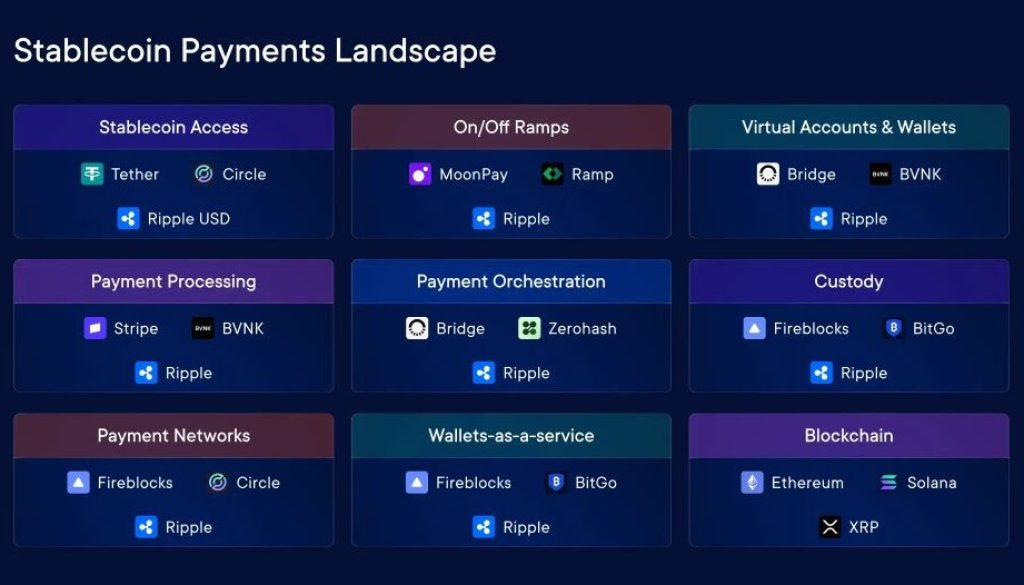
This upgrade isn’t just about speed; it’s about liquidity. Traditional cross-border transfers often require banks to pre-fund accounts in foreign jurisdictions—capital that essentially sits idle. Ripple’s blockchain-based settlement rails aim to eliminate this “dead capital,” allowing institutions to convert and settle in near real-time.
The company’s growth is backed by staggering numbers. With a valuation holding steady at $17.7 billion and over $100 billion in total processed volume, Ripple is no longer a peripheral player.
Partnerships with Brazil’s Banco Genial and Switzerland’s AMINA Bank prove that the institutional appetite for stablecoin-based settlement is global. As the supply of RLUSD scales to $1.5 billion, the focus has shifted from “if” banks will use blockchain to “how fast” they can integrate Ripple’s federal-compliant stack.
Bridging the Gap Between Legacy Finance and Blockchain
Things are finally starting to go Ripple’s way in Washington. The U.S. OCC just gave the green light for Ripple’s National Trust Bank charter, which is a massive deal. It basically means Ripple can now handle its stablecoin reserves with the same “official” status as a big-name bank.
This is all part of their “Crypto Agenda“—a plan to make sure the U.S. doesn’t lose out to Asia when it comes to the future of money. By getting the government on their side, Ripple is making sure they have the muscle to compete globally without leaving home.
Final Thoughts
Ripple is successfully evolving from a simple messaging protocol into a comprehensive financial powerhouse. By solving the liquidity trap of pre-funded accounts, they are making a compelling case for the total tokenization of global trade.
Frequently Asked Questions
What is RLUSD?
RLUSD is Ripple’s 1:1 dollar-pegged stablecoin designed for enterprise-grade settlement and transparency.
Does Ripple have a banking license?
Ripple has received conditional approval from the OCC for a National Trust Bank charter to manage digital assets.
How many markets does Ripple Payments support?
The platform currently operates in over 60 global markets, processing billions in volume.