Key Takeaways
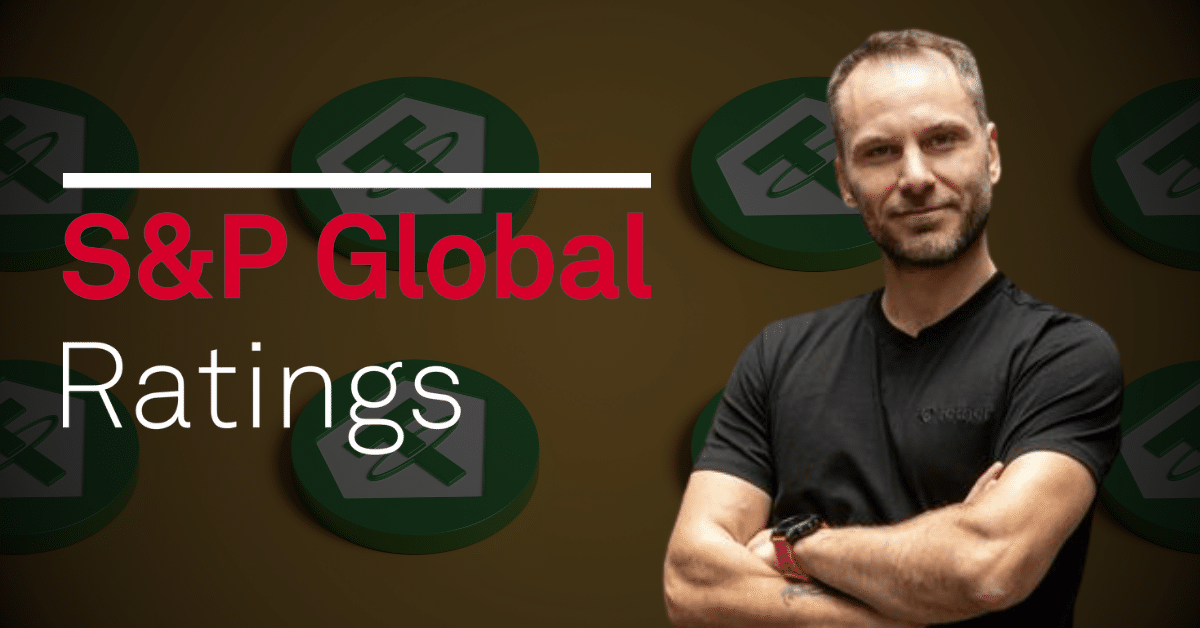
- S&P Global Ratings downgraded Tether’s USDt to the lowest score on its stablecoin stability scale, citing concerns over the token’s ability to maintain its dollar peg.
- The “weak” assessment was driven by Tether’s reliance on “higher-risk” reserve assets, including Bitcoin (5.6% of USDt in circulation), gold, loans, and corporate bonds, which are subject to high volatility.
- Tether strongly disputed the downgrade, with CEO Paolo Ardoino calling the report “misleading” and defending Tether’s operational resilience, while also noting the company’s significant holdings of US Treasurys and gold reserves, which rival those of nation-states.
S&P Downgrade Cites Volatile Assets in Tether’s Reserve Backing
S&P Global Ratings has delivered a significant blow to the market perception of the world’s largest stablecoin, Tether’s USDt, by downgrading its stability rating to the lowest possible score. The assessment, labeled “weak,” directly questions USDt’s capacity to consistently maintain its 1:1 US dollar peg under stressed conditions. The primary rationale for the downgrade is Tether’s strategic choice to back USDt with “higher-risk” reserve assets, which S&P Global contends are susceptible to higher volatility.
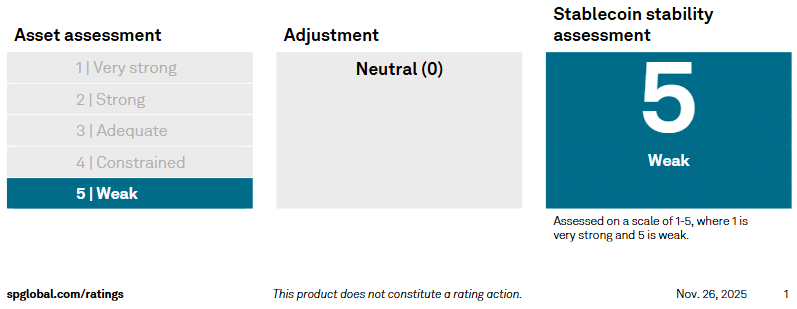
Key among these risky assets are cryptocurrencies like Bitcoin, which S&P noted represents 5.6% of USDt in circulation. The report meticulously pointed out the danger in this allocation: since Bitcoin’s share “exceed[s] the 3.9% overcollateralization margin” (associated with a collateralization ratio of 103.9%), a rapid decline in the price of BTC or other less liquid assets could immediately reduce the collateral coverage, posing a direct threat to the peg. Additional factors contributing to the weak rating included Tether’s regulatory jurisdiction in El Salvador, whose National Commission of Digital Assets (CNAD) has looser requirements for reserve assets, and a perceived lack of sufficient audits or proof-of-reserve reports.
Tether Pushes Back Against “Misleading” Characterization
Tether swiftly and strongly rejected the S&P downgrade report in an official statement, calling it “misleading” and emphasizing they “strongly disagree with the characterization presented.” The company’s leadership didn’t just disagree, they argued the entire rating methodology was broken, asserting it “fails to capture the nature, scale, and macroeconomic importance of digitally native money.” Essentially, Tether claimed the report missed the point and ignored the hard data proving USDt’s massive global use and reliability.
Tether CEO Paolo Ardoino provided a more direct philosophical pushback, questioning the utility of traditional financial ratings agencies altogether. Ardoino pointed out that classical rating models, historically built for legacy institutions, have sometimes given investment-grade ratings to companies that subsequently collapsed. The CEO emphasized the solid, low-risk foundation of USDt’s reserves, noting that roughly 75% of USDt’s backing comes from low-risk instruments such as US Treasurys and other short-term financial instruments.
Tether’s Function as a Quasi-Central Bank
Despite the controversy over the risk profile of a portion of its reserves, data confirms Tether’s immense and growing economic footprint. Ardoino revealed that the company is the 17th largest holder of US Treasurys globally, with over $112 billion in short-term US government securities, surpassing the reserves of most countries. Furthermore, Tether has accumulated 116 tons of gold held in reserve.
This colossal accumulation of US government securities and gold, coupled with its ability to mint and redeem digital dollars, has led many market analysts to suggest that Tether is now operating like a quasi-central bank. This operational scale positions USDt as a systemic force in the financial world, making its stability rating a matter of global importance, especially as the stablecoin market cap has topped $300 billion.
Final Thoughts
The S&P downgrade of USDt reflects genuine concern over the high-risk, volatile components in Tether’s reserve backing, despite the company’s vast holdings of US Treasurys. While Tether dismisses the rating as flawed, the incident highlights the ongoing debate between traditional financial risk models and the new, massive-scale economy represented by market-dominant digital assets.
Frequently Asked Questions
Why did S&P Global downgrade the USDt stability rating?
It cited the presence of “higher-risk” assets like Bitcoin, gold, and corporate bonds in the reserve backing.
What percentage of reserves does Bitcoin represent?
Bitcoin represents 5.6% of USDt in circulation, which exceeds the overcollateralization margin.
How did Tether’s CEO respond to the report?
He classified the report as “misleading,” defending USDt’s resilience and questioning the utility of traditional financial ratings agencies.