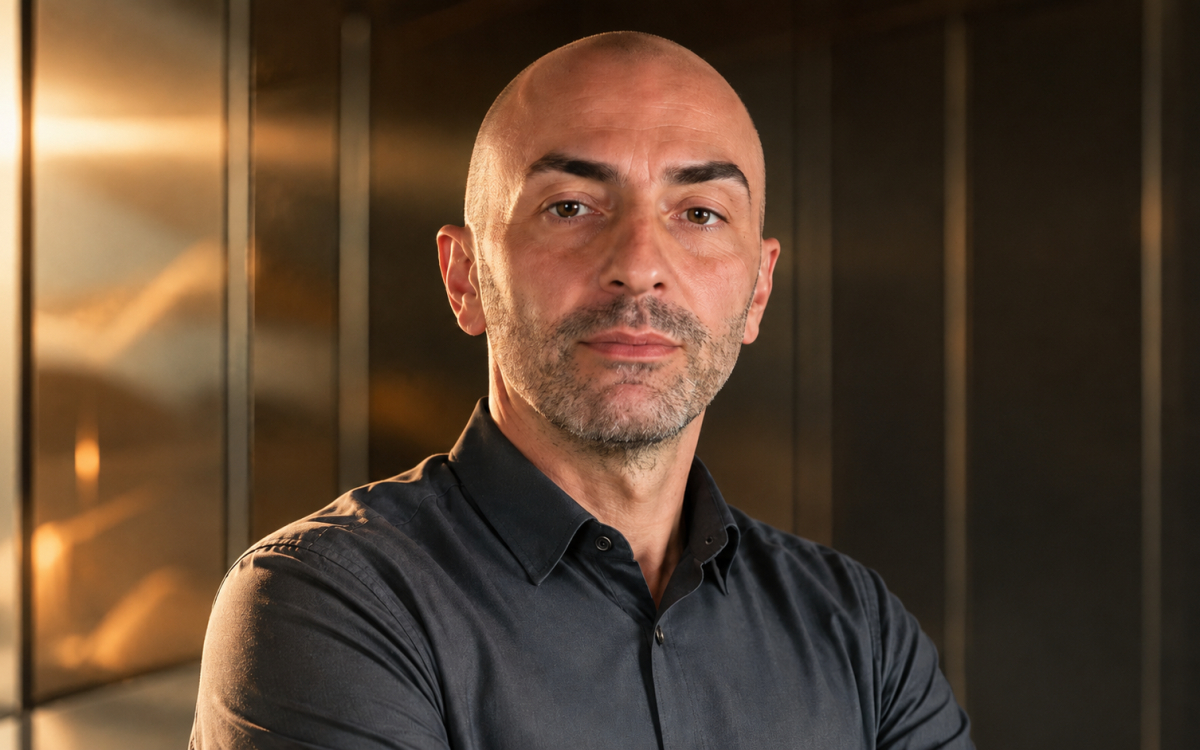
Nick Szabo is a computer scientist, cryptographer, and cypherpunk who invented the concept of smart contracts and proposed Bit Gold, a digital currency widely regarded as a direct forerunner to Bitcoin. He’s also one of several names tied to the long-running speculation over Satoshi Nakamoto’s true identity, a claim he has publicly denied.
Who Is Nick Szabo?
Nick Szabo built his career around a mix of interests: computer science, cryptography, and law. He graduated from the University of Washington in 1989 with a degree in computer science, where his interest in cryptography took hold.
Years later, he went on to complete a Juris Doctor from George Washington University Law School in the early 2000s. During law school, Szabo and his classmates took part in a moot court competition against John Roberts, now Chief Justice of the US Supreme Court, and Sonia Sotomayor, who also went on to sit on the Court.
Szabo’s father shaped much of how he thinks about power. His father lived through Hungary’s uprising against Soviet rule, and Szabo has said that experience is why he doesn’t trust governments or other central authorities with too much control.
Unlike many public figures in crypto, Szabo doesn’t seek attention. He rarely gives interviews and almost never comments on current events, letting his written work speak for itself instead. That written work is extensive: since the 1990s, he has authored essays and academic papers on digital currency, contract law, and cryptography that continue to circulate widely in the space.
Nick Szabo’s Career and Contributions
Szabo became involved with the cypherpunk movement not long after leaving the University of Washington in 1989. The cypherpunks were an online group that debated the use of cryptography and privacy tools to drive social and political change.

Members included Satoshi Nakamoto, Bitcoin’s pseudonymous creator. Hal Finney, who built Reusable Proof-of-Work (RPoW), an early precursor to Bitcoin’s mining system, was also a member, along with Adam Back, creator of the Hashcash function later used in both RPoW and Bitcoin.
DigiCash and Ecash
After graduating, Szabo worked on Ecash, a digital currency project built by David Chaum’s company DigiCash. Ecash was one of the first serious attempts at a global digital currency, though unlike Bitcoin, it was centrally controlled. The Mark Twain Bank in the US and Deutsche Bank in Germany both offered Ecash to customers before DigiCash folded in 1998.
Szabo and others who worked on the project found that its centralized design was a serious flaw because it allowed the operator to alter users’ balances. Cryptographer Adam Back later summarized the lesson: a decentralized, peer-to-peer approach was needed instead.
Smart Contracts and Bit Gold
Szabo’s best-known contribution is the smart contract, a concept he proposed in 1994 and detailed in a 1996 paper. A smart contract is a program that executes automatically once predetermined conditions are met, a concept now central to Ethereum and countless other blockchain platforms.
In 1998, he published a paper on secure, timestamped digital records as an alternative to vulnerable written ones. In 2005, he outlined the concept of “Bit Gold” on his blog, arguing that a digital asset could hold value the way gold and antiques do, because it can’t be forged. Bit Gold is widely regarded as one of the earliest attempts at a decentralized digital currency and a direct conceptual forerunner to Bitcoin.
Public Speaking and Seminars
Szabo has also taken part in public discussions on blockchain technology outside his own writing. On April 7, 2016, he led the first session of Lykke’s “Future of the World Economy” seminar series, an open education program featuring industry practitioners and academics discussing blockchain and related technologies. That first seminar focused on blockchains and smart contracts, with Lykke founder Richard Olsen, who also founded Oanda and Olsen & Associates, serving as discussant. It’s one small part of a much bigger story, one you can explore further on our crypto personalities page, which highlights the people shaping the crypto industry.
Nick Szabo’s Views and Positions
Szabo has written at length about privacy, decentralization, and the risks of concentrated power. While consulting for DigiCash, he started using pseudonyms online, a habit he later called exhausting to keep up. “In my limited experience creating Internet pseudonyms, I’ve been quite distracted by the continual need to avoid leaving pointers to my True Name lying around,” he wrote, pointing to stray emails, shared files, and traceable logins as the recurring problems.
Even on the occasions Szabo does speak publicly, such as the Lykke seminar, he tends to stick to technical and historical topics rather than short-term crypto market moves or specific price levels. His public writing instead focuses on the long-term case for decentralized systems and the structural weaknesses of centralized alternatives, a position shaped by both his father’s history and his own experience with DigiCash’s centralized failure.
His legal training also shows up in his writing. Szabo has argued that contract law and cryptography solve a similar problem: how to make an agreement enforceable without relying on a trusted third party. That framing underpins the smart contract concept itself, and it’s a theme he returned to repeatedly across his essays through the 1990s and 2000s.
Rather than positioning digital currency as a replacement for existing financial institutions outright, Szabo’s early writing tends to frame it as a means to reduce the amount of trust any single party must place in another, a distinction that sets his work apart from purely ideological takes on decentralization.
Nick Szabo’s Net Worth
Szabo has never disclosed his net worth, and no filing, exchange record, or wallet has been tied to him with certainty. Coinpaper estimates it at $2 million to $5 million, pointing to his early presence in Bitcoin’s history, possible speaking fees, and a reported role with JAN3.
The Satoshi Nakamoto speculation covered above also feeds into the net worth question. If Szabo were ever confirmed as Satoshi, or part of the group behind Bitcoin, his holdings could theoretically run into the tens of billions. That’s unproven, so it stays a hypothetical rather than an actual estimate.
Is Nick Szabo Satoshi Nakamoto?
Szabo’s Bit Gold idea looks a lot like Bitcoin, and that has led many people to guess that Szabo is Satoshi Nakamoto. He’s one of several names people bring up in what’s often called “The Hunt for Satoshi,” the ongoing, worldwide search for who really created Bitcoin, since Satoshi disappeared from public view in 2011.
The Bitcoin whitepaper, shared with the cypherpunk mailing list at the end of October 2008, never mentioned Bit Gold. Hal Finney reportedly told Satoshi to look at Bit Gold, but as far as anyone knows, Satoshi never reached out to Szabo directly and didn’t respond to Finney’s suggestion.
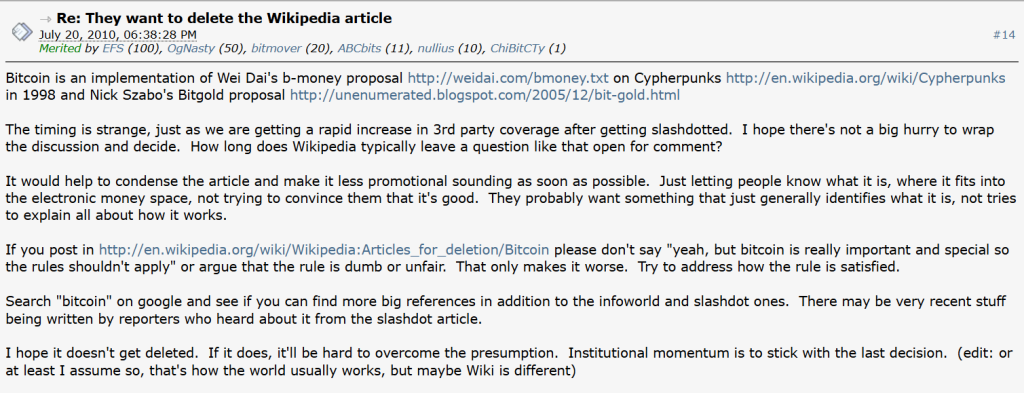
About a year after Bitcoin launched, Satoshi wrote in a Bitcointalk forum post that Bitcoin is “an implementation of Wei Dai’s b-money proposal on Cypherpunks in 1998 and Nick Szabo’s Bit Gold proposal”.
Frequently Asked Questions
Here are answers to some of the most common questions readers ask about Nick Szabo.
What did Nick Szabo invent?
Szabo is credited with inventing the concept of smart contracts, which he proposed in 1994 and detailed in a 1996 paper. He’s also known for Bit Gold, a 2005 proposal for a decentralized digital currency that many consider a direct forerunner to Bitcoin.
What is Bit Gold?
Bit Gold was a digital currency concept Nick Szabo outlined in 2005, based on the idea that scarcity, not central control, gives an asset its value. It’s widely regarded as one of the earliest blueprints for a decentralized digital currency and shares key design similarities with Bitcoin.
Is Nick Szabo Satoshi Nakamoto?
There’s no confirmed connection between Nick Szabo and Satoshi Nakamoto, and Szabo has publicly denied being Bitcoin’s creator. The speculation stems from the strong similarities between his Bit Gold proposal and Bitcoin’s design, along with the fact that Satoshi later credited Bit Gold as a direct influence on Bitcoin.
Did Nick Szabo work with Satoshi Nakamoto?
There’s no public record of direct collaboration between the two. Both were active in the cypherpunk mailing list around the same time, and Hal Finney reportedly suggested Satoshi look at Szabo’s Bit Gold proposal, but Satoshi never contacted Szabo directly, as far as the public record shows.
What is Nick Szabo’s net worth?
Szabo has never disclosed his net worth. Coinpaper has published a third-party estimate of $2 million to $5 million based on his early Bitcoin-era involvement and possible income from speaking engagements, though no public filing or recognized wealth publication has confirmed that figure.