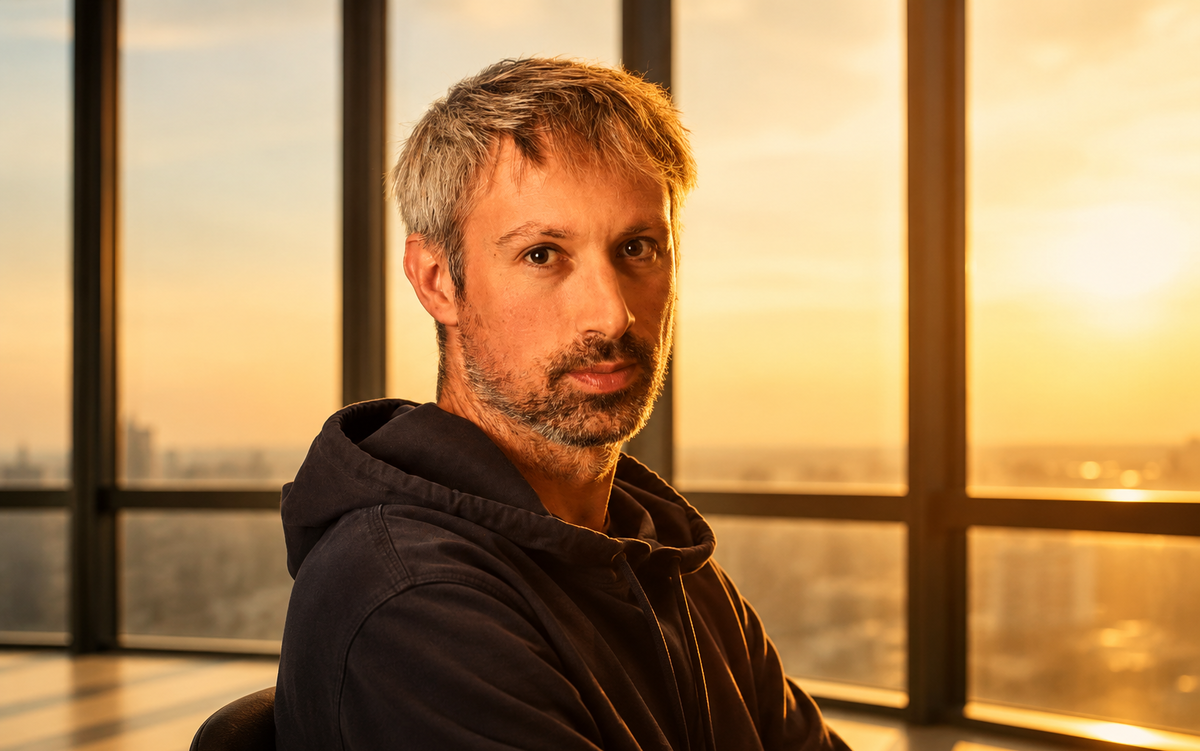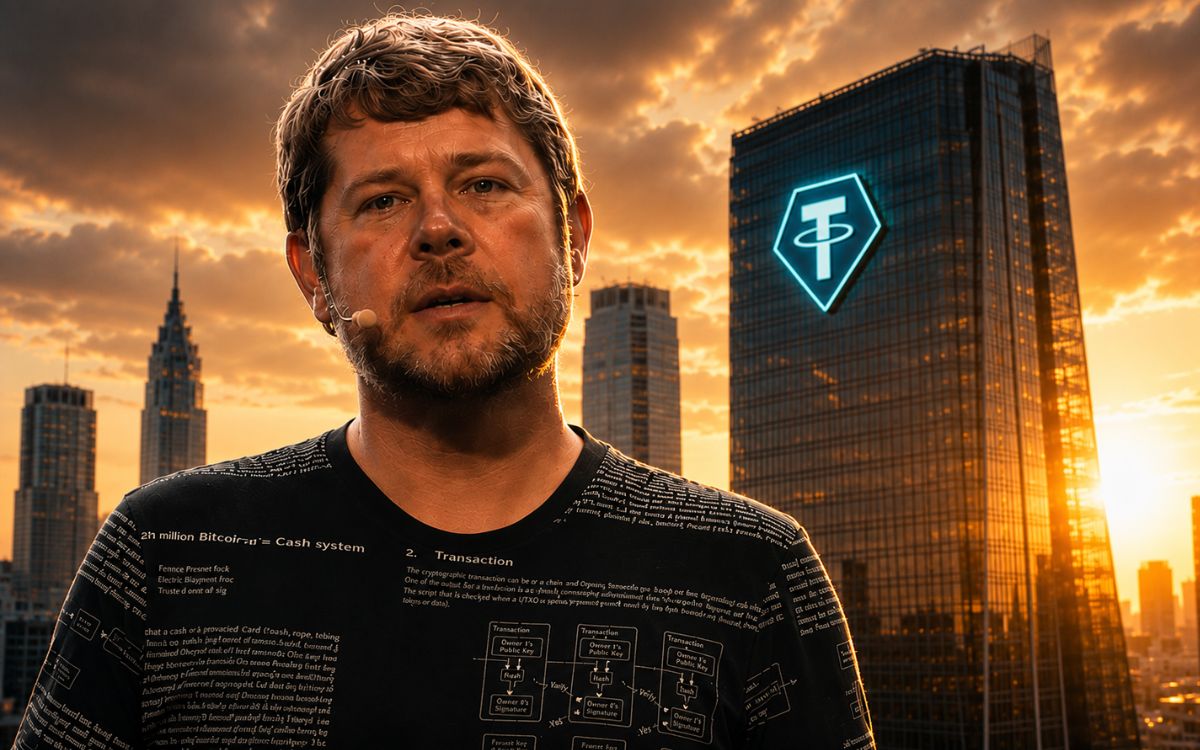
Craig Sellars is a blockchain technologist widely reported as a co-founder of Tether (USDT), the dollar-pegged stablecoin that launched on the Omni Layer in 2014. Known for his technical role in early tokenization infrastructure, he has since turned to decentralized identity research through a protocol he calls Keychain.org.
Who Is Craig Sellars?
Craig Sellars became known in crypto through his work on Tether (USDT), which CryptoSlate’s profile of Craig Sellars describes as launching in 2014 out of a founding group that included Sellars, Brock Pierce, and Reeve Collins. Before stablecoins existed as a category, Sellars worked on meta-protocols, systems that used the Bitcoin blockchain to represent non-native assets.
That work centered on the Omni Layer, a token issuance platform built on Bitcoin, which became the technical foundation for Tether’s original release. Sellars fits a category UTB covers on its crypto personalities hub, technologists whose early decisions shaped products traders now use daily.
Sellars calls himself a “blockchain philosopher and technologist,” a label that fits the direction his career has taken since Tether’s early years. With stablecoin operations now run by Tether’s corporate leadership, he has spent recent years on decentralized identity research. In a conference presentation posted to YouTube, he introduced a project called Keychain.org, calling it more significant to him personally than his earlier work on Tether.
CryptoSlate frames Sellars as part of the technical and advisory layer behind stablecoin infrastructure rather than a public-facing executive, and his talks tend to focus on protocol design rather than market commentary.
Craig Sellars’ Career and Contributions
Sellars’ most cited contribution is his role in Tether’s creation. CryptoSlate describes him as widely regarded as a co-founder and later advisor as the token grew from an Omni-based asset into one of the highest-volume dollar-pegged instruments in the market. His work is credited with helping prove that a public blockchain, Bitcoin through the Omni Layer in this case, could serve as a settlement rail for a centrally issued asset, a thesis that now underpins the stablecoin market.
As Tether expanded to additional blockchains for faster settlement and lower fees, the groundwork Sellars helped establish became standard practice for other issuers. USDT is now used for exchange settlement, as a trading-pair quote currency, for cross-border transfers that skip bank rails, and as DeFi collateral, per CryptoSlate’s overview of the token’s market role. Tether has also faced ongoing reserve-transparency questions, a subject UTB tracked in its coverage of Tether’s first Big Four audit.
Fiat-backed stablecoins carry risks tied to reserve quality, redemption access, and regulation that varies by jurisdiction, plus technical risks like chain congestion and bridge failures. Centralized issuers can also freeze addresses for compliance reasons, a tradeoff CryptoSlate flags as relevant to anyone weighing USDT against a fully decentralized asset like Bitcoin.
Outside of Tether, Sellars has said in his own remarks that he worked on early NFT concepts around 2015, describing them at the time as “vAtoms,” or virtual atoms, alongside collaborators including Reeve Collins. His attention has since moved to Keychain.org, an open identity standard he compares in scope to Bitcoin or HTTP.
Craig Sellars’ Views and Positions
Sellars treats decentralized identity as the natural extension of his earlier tokenization work. In a recorded conference address, he said “the most important aspect of decentralization is identity,” arguing that individuals, not platforms, should control and profit from their own data.
He introduced Keychain.org as a developer toolset built on what he called the multi-dimensional identity protocol, or MDIP, following the W3C’s decentralized identifier standards. In his description, a user’s identity reference sits on a blockchain, starting with Bitcoin’s Omni Layer, while the underlying data is encrypted on IPFS. He paired that with an application layer called Self ID, meant to let users share verified attributes without exposing full personal or medical records.
Sellars contrasted this with existing identity platforms in the same address, saying competitors “want to own your information, all of it, in their private database.” He said Keychain.org and Self ID were built so “we don’t know who you are, we don’t want to know who you are,” describing an open network where users grant and revoke their own data access.
He said the toolset was designed for a range of users, from NGOs to mobile apps, and pointed to the 1.7 billion unbanked people worldwide as a group that could benefit from a portable, self-controlled identity standard. His stated long-term goal is an interoperable digital identity marketplace where users and the partners who verify their data are both compensated.
He called the identity project “the most important thing I’ve ever worked on,” more significant, in his telling, than creating Tether. The exact date and venue of the presentation could not be confirmed from the source material.
Craig Sellars’ Net Worth in 2026
No verified net worth figure exists for Craig Sellars as of 2026. CryptoSlate’s coverage focuses on his technical work at Tether and his identity research rather than his finances, and no filing, exchange disclosure, or estimate from outlets like Forbes or Bloomberg could be found.
His advisory and technical role, rather than an executive or equity position, makes his wealth harder to estimate than founders with disclosed ownership stakes. His documented association is his work on Tether (USDT) and blockchain identity infrastructure, so any online figure should be treated as unconfirmed unless it names a checkable source.
Frequently Asked Questions
Readers researching Craig Sellars tend to ask a similar set of questions. Here are direct answers to the ones that come up most.
Who is Craig Sellars?
Craig Sellars is a blockchain technologist widely reported as one of Tether’s co-founders, working alongside Brock Pierce and Reeve Collins on the stablecoin’s 2014 Omni Layer launch. He later shifted to decentralized identity research, introducing Keychain.org in a public conference presentation. CryptoSlate profiles him mainly through his technical contributions rather than a public-facing executive role.
Was Craig Sellars a Tether co-founder?
Industry coverage, including CryptoSlate’s profile, widely describes Sellars as part of Tether’s founding group rather than a later hire. His documented role centers on the technical feasibility of issuing dollar-pegged tokens on the Omni Layer, and he later served in an advisory capacity as Tether expanded to more blockchains.
What is Craig Sellars’ role at Tether today?
Public sourcing does not indicate Sellars holds an active executive role at Tether today. His documented contributions tie most closely to the company’s early technical architecture, and current operations are managed by Tether’s corporate leadership rather than its original founders.
What is Keychain.org, the project Craig Sellars introduced?
Keychain.org is a decentralized identity toolset Sellars described as the multi-dimensional identity protocol, or MDIP. It lets users control which personal data they share, referencing identity records on a blockchain while storing encrypted data on IPFS. Sellars paired it with an application layer called Self ID for managing and monetizing shared data.
How much is Craig Sellars worth in 2026?
No verified net worth figure is publicly available for Craig Sellars as of 2026. No filing or reputable financial publication has published a specific estimate, so any figure circulating without a named source should be treated as unconfirmed.
What did Craig Sellars work on before Tether?
Before Tether, Sellars worked on meta-protocol systems that used Bitcoin’s blockchain to represent assets beyond the native coin, work that fed into the Omni Layer. He has also said he contributed to early NFT-style concepts around 2015, described then as vAtoms, though the full details have not been independently confirmed by UTB.