Key Takeaways:
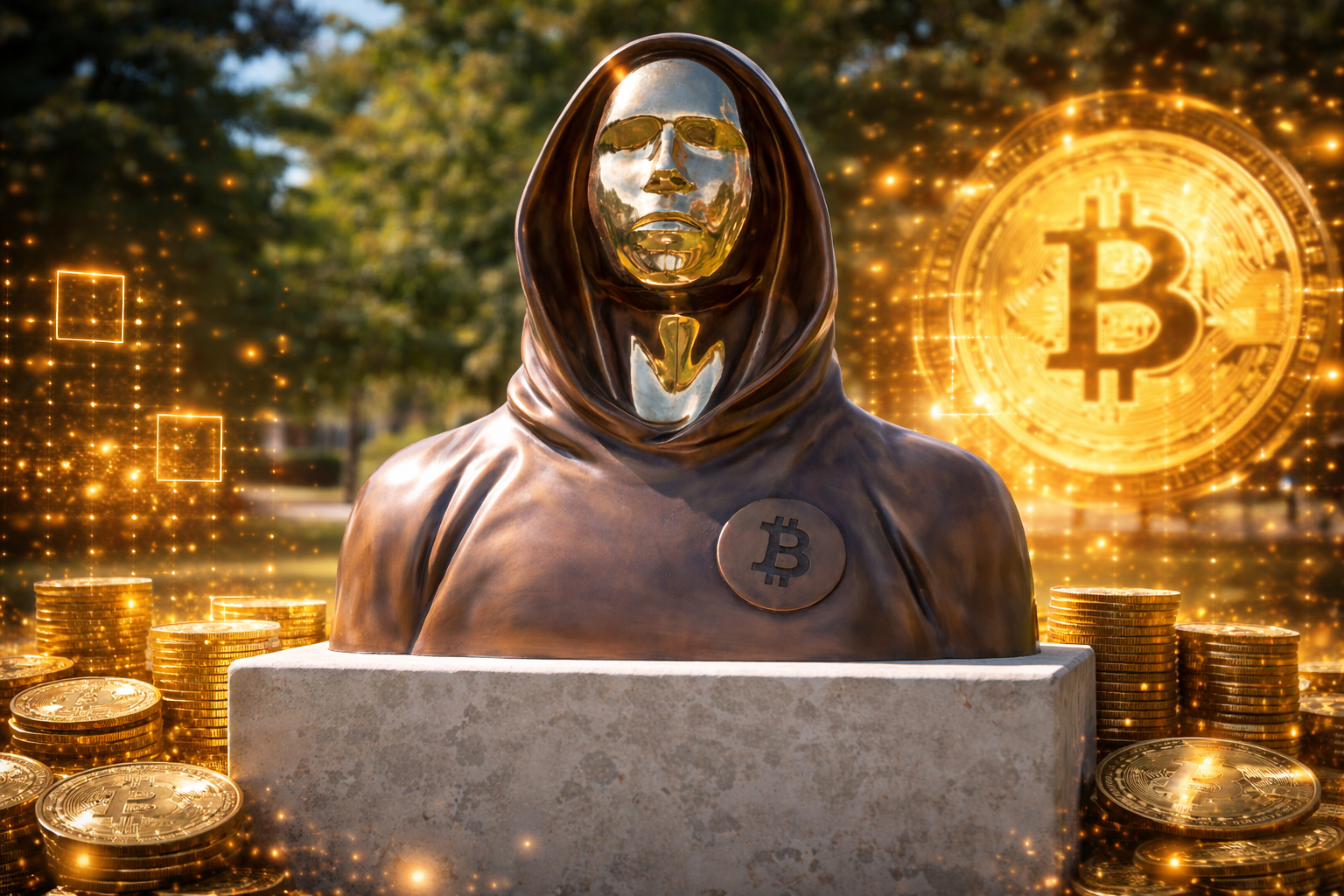
- Who started Bitcoin? It was created by an anonymous person or group using the pseudonym Satoshi Nakamoto.
- The Bitcoin whitepaper came out on October 31, 2008, and the network went live on January 3, 2009.
- Nakamoto disappeared from public communication in 2011, leaving behind roughly 1 million BTC that has never moved.
Bitcoin was started by someone called Satoshi Nakamoto. That name is a pseudonym, though. Nobody knows if Satoshi is one person, a team, or even still alive. What we do know is that in 2008, this anonymous creator published a nine-page document that changed how people think about money. It arrived at a time when trust in banks had collapsed after the global financial crisis. Nakamoto’s answer was a payment system with no banks, no middlemen, and no one authority in charge.
What Was the Bitcoin Whitepaper?
The whitepaper was the foundation of everything Bitcoin became. On October 31, 2008, Satoshi Nakamoto posted a paper titled “Bitcoin: A Peer-to-Peer Electronic Cash System” to a cryptography mailing list. It proposed a way for two people to send value directly to each other online without involving a bank or payment processor.
The Problem It Solved
Before Bitcoin, digital cash had one core problem: double-spending. You can send someone a digital file and still keep a copy. The same issue applied to digital money.
Nakamoto’s whitepaper solved this without relying on a trusted third party. A network of computers would all agree on the order of transactions using a system called proof of work. This made cheating the network extremely expensive and impractical. That was a genuinely new fix to a problem that had blocked cryptographers for years.
When Did Bitcoin Actually Launch?
The Bitcoin network went live on January 3, 2009. Nakamoto mined the first block, called the Genesis Block, and embedded a message inside it. The message read: “The Times 03/Jan/2009 Chancellor on brink of second bailout for banks.” That was a headline from a British newspaper, and it was not accidental. It was a direct statement about why Bitcoin needed to exist.
A few days later, on January 12, 2009, Nakamoto sent 10 BTC to developer Hal Finney in the first Bitcoin transaction ever recorded. Finney was a cryptographer who had worked on earlier digital cash projects and was one of the first people to take Bitcoin seriously.
Who Could Satoshi Nakamoto Be?
Researchers, journalists, and developers have spent years trying to figure out who Satoshi really is. Several names have come up over the years, though none have been confirmed. Here are the most talked-about candidates:
- Hal Finney: The first person to receive Bitcoin. He denied being Satoshi but had close early contact with the creator. Finney passed away in 2014.
- Nick Szabo: Creator of “Bit Gold,” a conceptual predecessor to Bitcoin. Linguistic analysis of the whitepaper shows strong similarities to his writing style.
- Dorian Nakamoto: A California-based physicist whose birth name was originally Satoshi Nakamoto. He denied any involvement, and an email from Satoshi’s account stated “I am not Dorian Nakamoto” shortly after media reports surfaced.
- Craig Wright: An Australian computer scientist who has claimed to be Satoshi since 2016. UK courts ruled in 2024 that he is not Satoshi Nakamoto, and he has faced legal consequences for his claims.
Most researchers consider Nick Szabo the strongest candidate based on technical overlap and writing patterns. Still, no definitive proof has ever emerged.
What Happened to Satoshi After Bitcoin Launched?
Satoshi stayed active in Bitcoin’s development until around mid-2010. During that time, Nakamoto communicated through the BitcoinTalk forum and via email, fixing bugs and working with other developers.
The Final Goodbye
In April 2011, Satoshi sent a final email to developer Mike Hearn. It said: “I’ve moved on to other things. It’s in good hands with Gavin and everyone.” After that message, the communication stopped completely.
Nakamoto never cashed out. The wallets tied to Satoshi hold roughly 1 million BTC, and those coins have never moved. At peak prices, that amount exceeded $60 billion. The fact that nothing was ever sold adds weight to the idea that Satoshi either passed away, lost access to the private keys, or chose to disappear on purpose.
Why Does Satoshi’s Identity Still Matter?
Satoshi’s identity goes beyond curiosity. If those 1 million BTC ever moved, it would immediately shake the crypto market. It would also raise questions about who holds that much influence over Bitcoin’s supply.
Beyond price impact, the mystery shapes what Bitcoin stands for. No CEO, no founder still pulling strings, no company behind it. That design makes Bitcoin more resistant to censorship, pressure from governments, and outside interference. Satoshi stepping away was arguably the most important thing the creator ever did for Bitcoin.
If you want to hold Bitcoin the way Satoshi intended, a hardware wallet is the safest option. Both Ledger and Trezor offer solid self-custody solutions. To buy Bitcoin, platforms like Coinbase and Kraken are good starting points. You can also read more about choosing the best Bitcoin wallet to find what suits your needs.
Frequently Asked Questions
Who is Satoshi Nakamoto?
Satoshi Nakamoto is the pseudonym used by Bitcoin’s creator. Nobody has confirmed whether Satoshi is one person or a group, and the identity remains unknown to this day.
When was Bitcoin created?
The Bitcoin whitepaper was published on October 31, 2008. The network officially launched on January 3, 2009, when Satoshi mined the Genesis Block.
How much Bitcoin does Satoshi own?
Estimates put Satoshi’s holdings at around 1 million BTC. Those coins have never moved since they were mined in Bitcoin’s earliest days.
Could Satoshi Nakamoto ever be identified?
It is possible but unlikely. Without movement of the original wallets or a verified cryptographic signature, any claim to be Satoshi stays unproven.