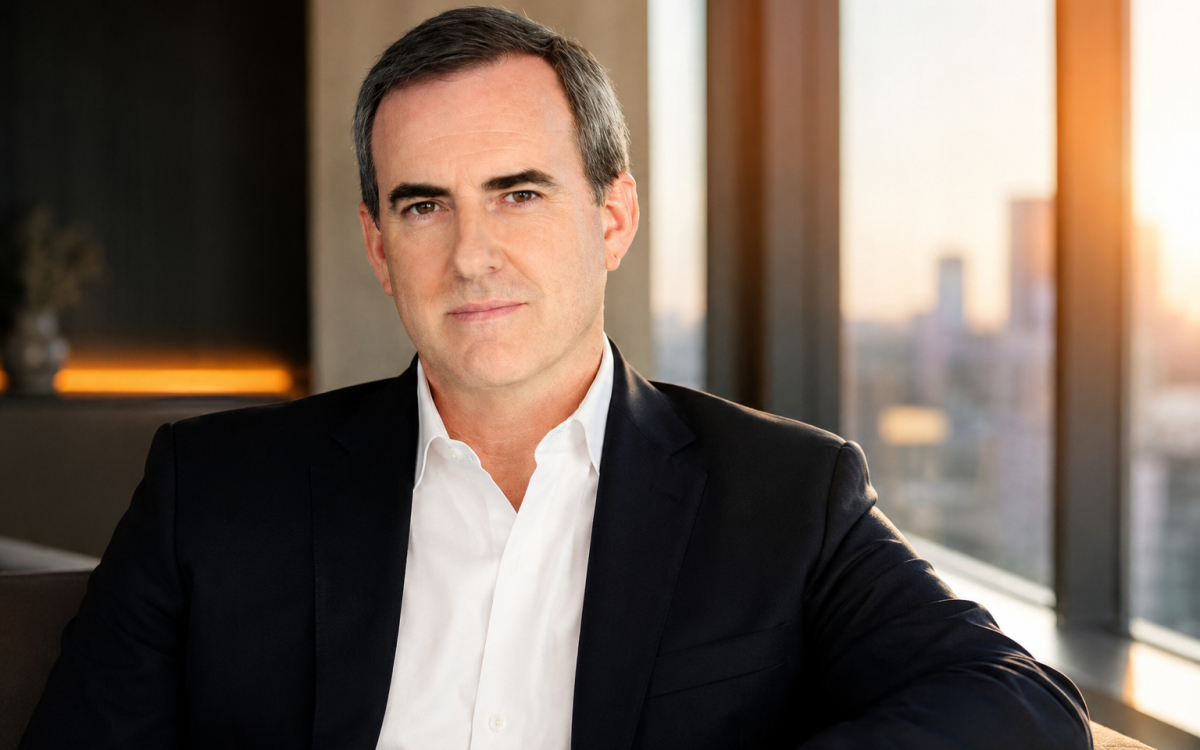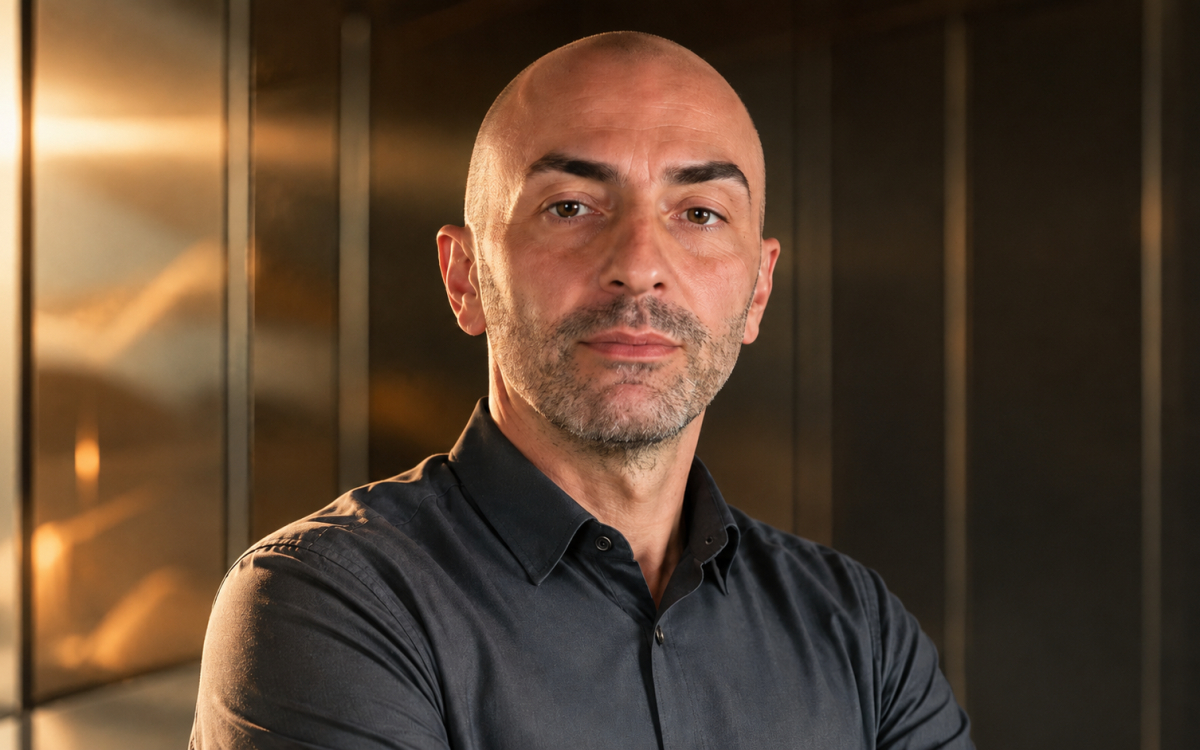
Yannik Schrade is a German computer scientist and cryptographer best known as the co-founder and CEO of Arcium, a decentralized confidential computing network built on secure multi-party computation. He co-invented the Cerberus MPC protocol and previously built shiftscreen, an iOS productivity app that ranked among the Apple App Store’s top sellers.
Who Is Yannik Schrade?
Yannik Schrade is a German computer scientist, cryptographer, and entrepreneur. He studied Law at Heidelberg University from 2018 to 2020 before switching to Computer Science and Mathematics at the Technical University of Munich starting in 2020. He enrolled in that program through 2024 but dropped out in 2022 after co-founding Arcium, choosing to dedicate himself fully to the company rather than complete his degree. You can find profiles of other builders shaping the Web3 industry on our crypto personalities page.
Little public information exists about his personal life beyond his professional work. He has referenced George Orwell’s 1984 in discussions of privacy and surveillance and lists Friedrich Nietzsche’s Beyond Good and Evil and Thus Spoke Zarathustra among his favorite readings. Outside his work in cryptography, Schrade is involved in wildlife management and conservation, including rescuing and rehabilitating animals.
Yannik Schrade’s Career and Contributions
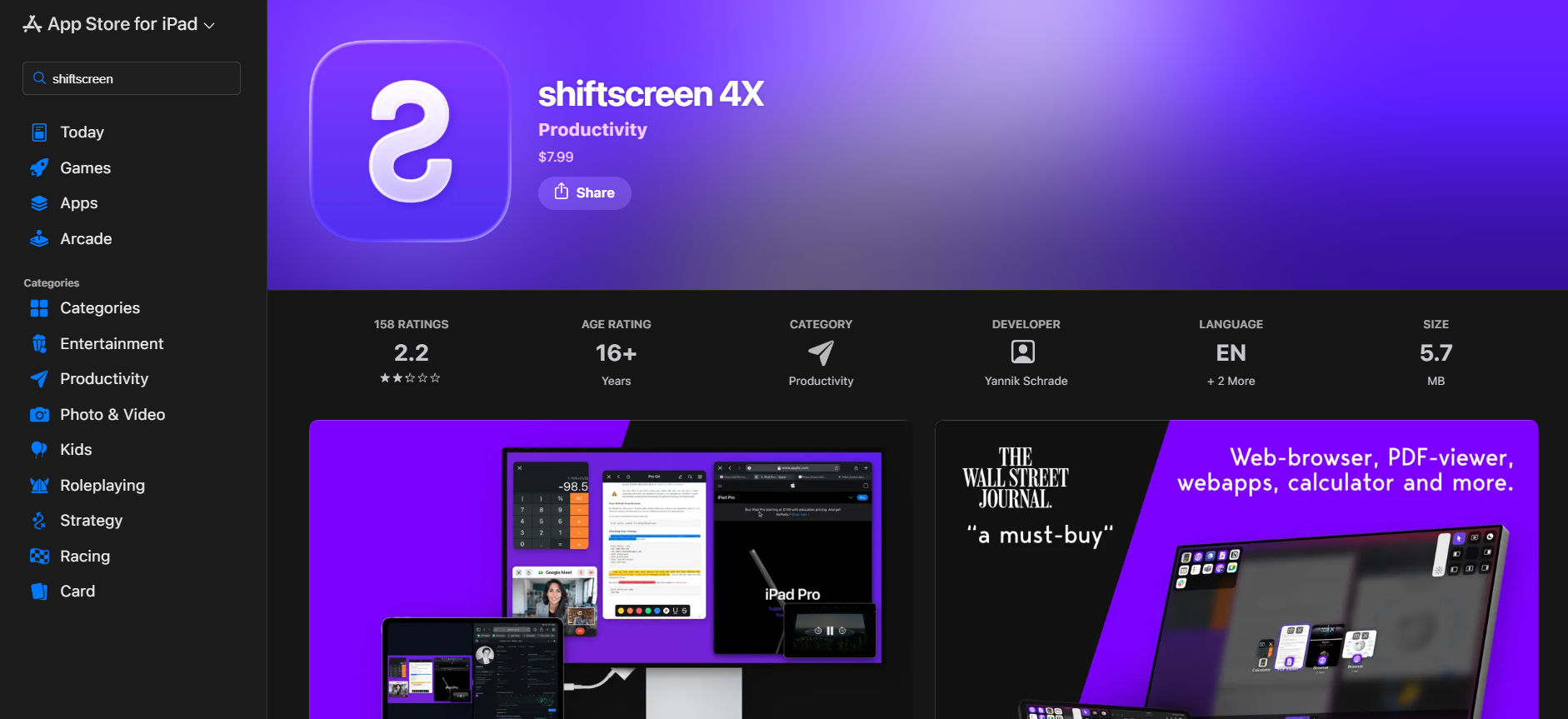
Before Arcium, Schrade founded shiftscreen in February 2020, an iOS app that let users connect an iPad or iPhone to an external display and use it as a second screen for productivity work. The app supported multiple windows, including web browsers and PDF viewers, and later expanded through an update called Shiftscreen 4X. It reached over 100,000 paying users in more than 130 countries, became a top-selling app on the Apple App Store during its active period, and was featured by The Wall Street Journal (WSJ) as a “must-have app.” Schrade ran shiftscreen until January 2022.
In 2022, Schrade co-founded what became Arcium, originally launched as Elusiv and focused on zero-knowledge (ZK) privacy tooling before rebranding to Arcium in May 2024. He co-founded the company alongside Nico Schapeler as CTO, Julian Deschler as CSO, and Lukas Steiner as COO. Schapeler leads cryptography research and protocol implementation, building on prior experience with the Elusiv privacy application. Deschler directs strategic growth in decentralized technologies, and Steiner oversees operations, finance, and recruiting.

Schrade has also co-founded ZKurve AG, a separate venture, which he continues to run alongside Arcium.
Arcium describes itself as building the encrypted execution engine of the internet, aiming to enable privacy-preserving applications without sacrificing performance or decentralization. The company has raised more than $15 million from investors and assembled a team of cryptographers and engineers to build out its confidential computing network. Arcium has also acquired Inpher, a company focused on privacy-preserving computation, further expanding its technical base.
Yannik Schrade’s Technical Contributions
Schrade’s cryptographic work centers on secure multi-party computation, or MPC, and its application to confidential computing. He is the co-author and inventor of the Cerberus MPC protocol, described as the first practical, general-purpose dishonest-majority MPC protocol with security under identifiable abort, meaning it can identify cheaters even in trustless, decentralized settings. Cerberus forms a core piece of the broader Arcium protocol.
In August 2025, Schrade formalized what he calls the MPC Scaling Law, a bandwidth-growth heuristic for secure multi-party computation protocols inspired by Nielsen’s Law of Internet Bandwidth. The heuristic classifies MPC protocols as either latency-constrained or bandwidth-constrained and predicts that bandwidth-constrained pairwise MPC designs, such as Cerberus, become roughly 33% faster per round each year as internet bandwidth grows, until propagation delay becomes the limiting factor. He has not yet published a full paper on this heuristic and has said it still needs to incorporate Moore’s Law for local operations and account for lattice-based protocols.
Schrade is also the author of w25519, an open-source cryptographic library implemented in Rust that provides Short-Weierstrass curve operations on an isomorphic representation of Curve25519. The library enables more efficient elliptic curve Diffie-Hellman key exchange within rank-1 constraint systems, a format commonly used in zero-knowledge proof construction.
Yannik Schrade’s Views and Positions
Schrade describes privacy as “the most important freedom right of the 21st century and beyond,” arguing that as more of life shifts into digital systems, strong encryption becomes a requirement rather than an option. He has framed privacy-preserving technology as essential not just for individual rights but for national security, resilient digital infrastructure, and safe AI development. He has said privacy should never come at the cost of usability, arguing that privacy tools that limit functionality will fail to find adoption.
He regularly speaks at industry conferences, including Solana Breakpoint, EthCC, and Token2049, and has appeared on the Tucker Carlson Show to discuss encryption and surveillance.
Much of his public commentary connects to the Solana ecosystem, where Arcium builds its confidential computing infrastructure. Readers new to that ecosystem can find the basics in our guide on whether Solana is a good investment.
Frequently Asked Questions
Need a refresher? Here are the questions readers most often ask about Yannik Schrade.
Who is Yannik Schrade?
Yannik Schrade is a German computer scientist and cryptographer known as the co-founder and CEO of Arcium, a decentralized confidential computing network. He previously founded shiftscreen, a productivity app that ranked among the top sellers on the Apple App Store, before dropping out of university in 2022 to build Arcium full time.
What is Arcium?
Arcium is a decentralized confidential computing network that uses secure multi-party computation to allow computations on encrypted data without decrypting it. Yannik Schrade co-founded the company in 2022 as Elusiv, and it rebranded as Arcium in May 2024. The company has raised more than $15 million from investors and describes its goal as building the internet’s encrypted execution engine.
What is the Cerberus MPC protocol?
Cerberus is a secure multi-party computation protocol co-invented by Yannik Schrade, described as the first practical, general-purpose dishonest-majority MPC protocol with security under identifiable abort. That property enables the protocol to detect cheating participants even in trustless, decentralized environments and is a core component of Arcium’s broader protocol.
What did Yannik Schrade build before Arcium?
Before Arcium, Schrade founded shiftscreen in February 2020, an iOS app that let users connect an iPad or iPhone to an external monitor for productivity work. The app reached over 100,000 paying users in more than 130 countries and was recognized by The Wall Street Journal as a “must-have app” before Schrade founded Arcium in 2022.
Did Yannik Schrade finish his university degree?
Schrade did not finish his university degree. He studied Law at Heidelberg University from 2018 to 2020, then switched to Computer Science and Mathematics at the Technical University of Munich starting in 2020. He dropped out of that program in 2022 after co-founding what would become Arcium, choosing to focus on the company full-time instead of completing his degree.