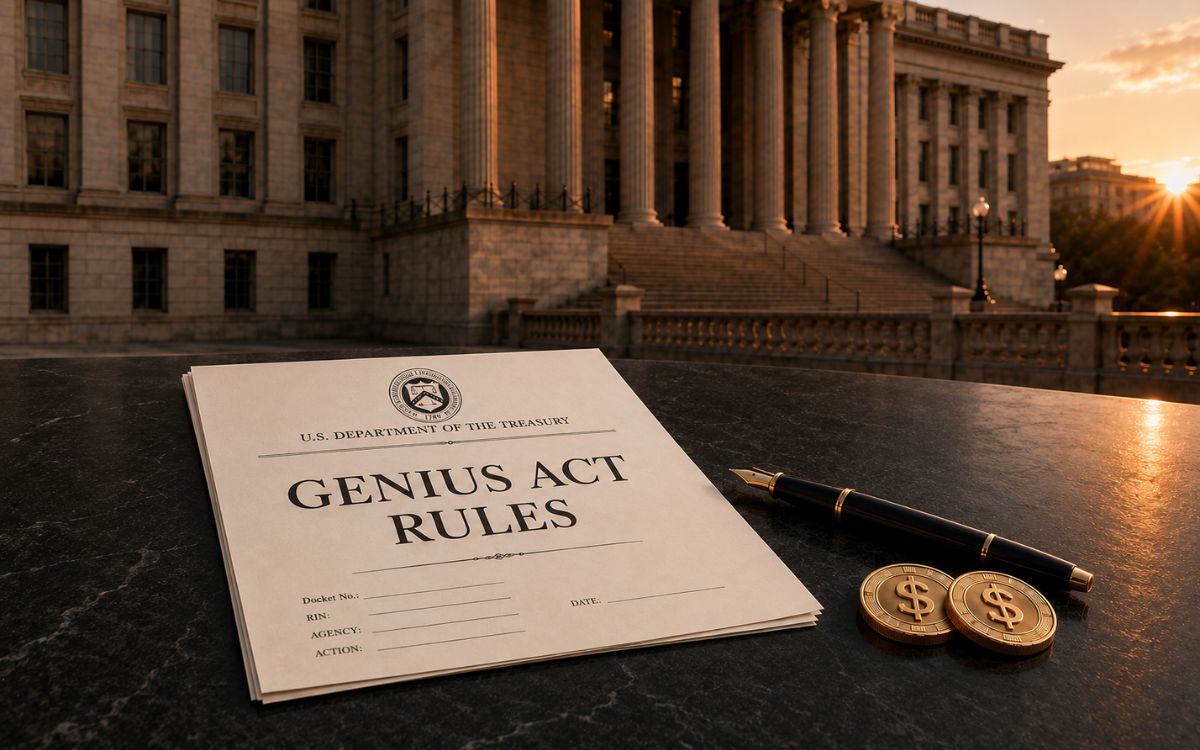
The U.S. Department of the Treasury issued a Notice of Proposed Rulemaking on August 17, 2026, laying out how it plans to enforce Section 3 of the GENIUS Act, the federal law that governs who can legally issue a payment stablecoin in the United States.
Treasury Secretary Scott Bessent framed the move as part of the administration’s push to give issuers clear rules while positioning the U.S. dollar as the anchor for global stablecoin activity. The proposal opens a formal 60-day comment window, giving exchanges, banks, and stablecoin issuers a direct chance to shape how licensing will work before it becomes mandatory.
What Treasury’s Proposed Rule Defines
Congress passed the GENIUS Act in July 2025, and the law already requires stablecoin issuers to hold one dollar of reserves for every dollar in tokens outstanding, according to Congress.gov’s summary of the enacted bill. The Treasury’s Notice of Proposed Rulemaking adds enforcement detail on top of that framework.
It defines when a company crosses the line into needing a GENIUS license in the first place, and separately, what counts as offering or selling a stablecoin to someone in the U.S., a distinction that matters most for foreign-issued tokens.
Beginning January 18, 2027, anyone issuing a payment stablecoin domestically will need a federal or state license. By July 18, 2028, U.S. platforms will only be allowed to offer stablecoins from licensed issuers. Bessent said “Treasury is moving quickly to implement that framework” as the agency works through the rulemaking process.
Why Your Stablecoins Aren’t Affected Yet
If you hold or use dollar-pegged stablecoins day to day, this proposal does not change anything about your holdings right now. It is the process that will decide which issuers keep operating in the U.S. once the 2027 and 2028 deadlines hit, so the coins your exchange or wallet supports could look different depending on whether their issuers qualify.
Builders, smaller issuers, and anyone else with a stake can submit formal comments before the window closes.
The 60-Day Window Before Licensing Rules Lock In
Treasury has not set an exact closing date beyond the standard 60 days from Federal Register publication, so the final rule could still shift based on industry feedback. This proposal builds on an advance notice Treasury issued last September, meaning the agency already collected one round of industry input before drafting this version.
The next concrete marker is January 18, 2027, when the licensing requirement takes effect, a deadline every stablecoin issuer serving U.S. customers now has to plan around. Our news section will carry the next update once Treasury finalizes the rule.
What this means for you: The stablecoins in your wallet today are not at risk from this filing, but which issuers stay licensed to operate in the U.S. will be decided over the next several months.