Key Takeaways
- Wyoming has officially launched the Frontier Stable Token (FRNT), making it the first U.S. state to issue a fiat-backed digital asset.
- The token is designed to reduce transaction costs for constituents, offering peer-to-peer settlement for approximately $0.01.
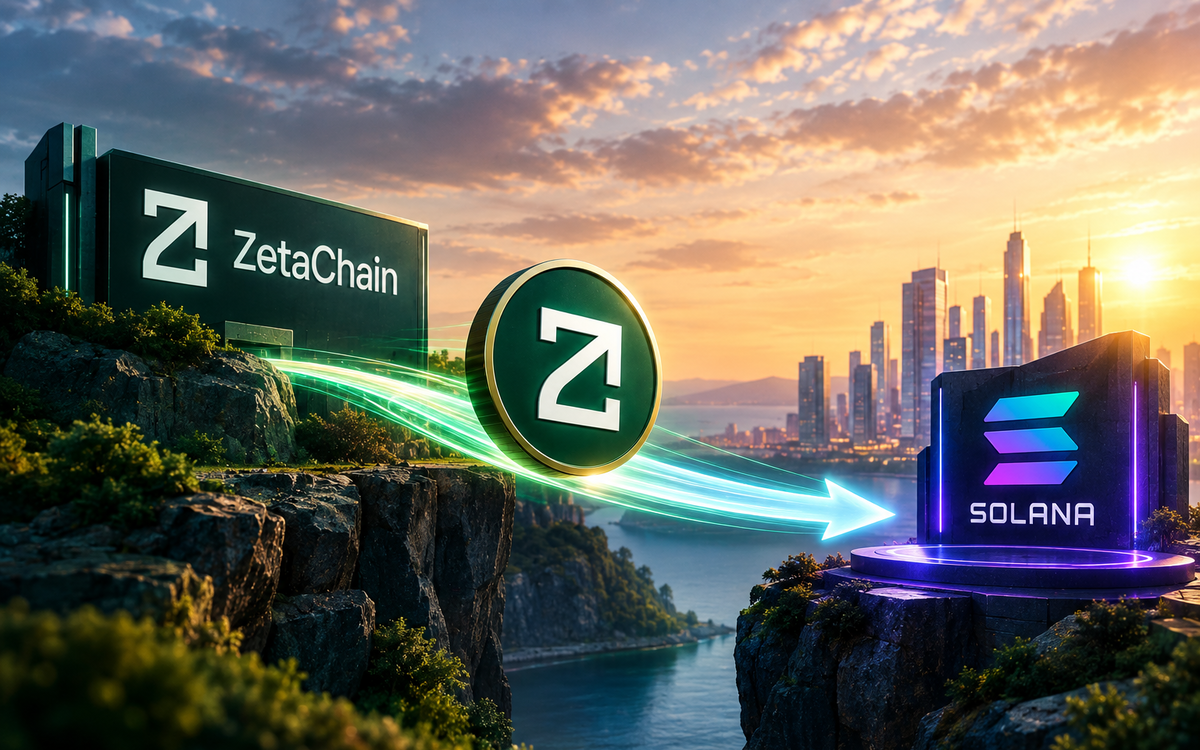
- FRNT is natively on Solana but utilizes the Stargate platform for bridging to major networks like Ethereum, Base, and Polygon.
Wyoming’s Frontier Stable Token Enters Public Circulation
In a landmark move for the U.S. digital asset landscape, Governor Mark Gordon announced the public rollout of Wyoming’s Frontier Stable Token (FRNT). This state-backed initiative marks the first time a public entity in the United States has issued a fully-reserved, fiat-backed stablecoin. Governed by a seven-member commission, the token is backed 1:1 by U.S. dollars and short-duration Treasuries. The primary goal is to provide a “cheaper, faster, and more transparent” alternative to traditional payment methods while generating interest income that returns directly to the state’s school funding and tax relief programs.
Right now, Kraken is the go-to spot to pick up FRNT, which runs natively on Solana. But don’t let the Solana tag fool you into thinking it’s stuck there. The state team made interoperability a top priority from day one. Thanks to Stargate, you can bridge your tokens to almost any big network out there—think Ethereum, Arbitrum, Avalanche, Base, Optimism, and Polygon.
It’s essentially a “chain-agnostic” asset that lets you move your funds exactly where you need them without the usual technical headaches. By leveraging decentralized finance (DeFi) infrastructure, Wyoming aims to place itself at the forefront of the “on-chain” economy, effectively turning state-issued currency into a global utility for digital commerce.
Stablecoins as a Tool for Government Efficiency
A core motivation for the FRNT token is the reduction of processing fees that plague local government transactions. Converse County Treasurer Joel Schell highlighted that credit card processing costs the county’s constituents tens of thousands of dollars annually. Because the county cannot legally absorb these fees by raising taxes, the burden falls directly on the residents.
FRNT solves this by enabling dollar-denominated transactions with near-instant settlement times and fees as low as one cent, bypassing traditional banking intermediaries that typically charge 2% to 3% per swipe.
Looking toward the remainder of 2026, the Wyoming Stable Token Commission plans to scale the program by onboarding more resale partners and integrating the token across various state agencies. The commission is also positioning Wyoming as a consultant for other public entities, such as the Bank of North Dakota, which is currently testing its own “Roughrider” coin. As the supply of FRNT grows, the state hopes to demonstrate that stablecoins are not just speculative assets but essential tools for enhancing public sector efficiency and lowering the taxpayer burden.
Final Thoughts
Wyoming’s FRNT token is a bold experiment in public finance. If successful, it could serve as the blueprint for how states use blockchain technology to reclaim revenue from private payment processors.
Frequently Asked Questions
Where can I buy the FRNT token?
FRNT is currently available on the Kraken exchange and through the Rain platform on the Avalanche blockchain.
Is FRNT a Central Bank Digital Currency (CBDC)?
No, it is a state-issued stablecoin backed by private reserves, distinct from a federally issued CBDC.
Which blockchains support FRNT?
While it is native to Solana, it can be bridged to Ethereum, Base, Polygon, Arbitrum, Optimism, and Avalanche.