Key Takeaways:
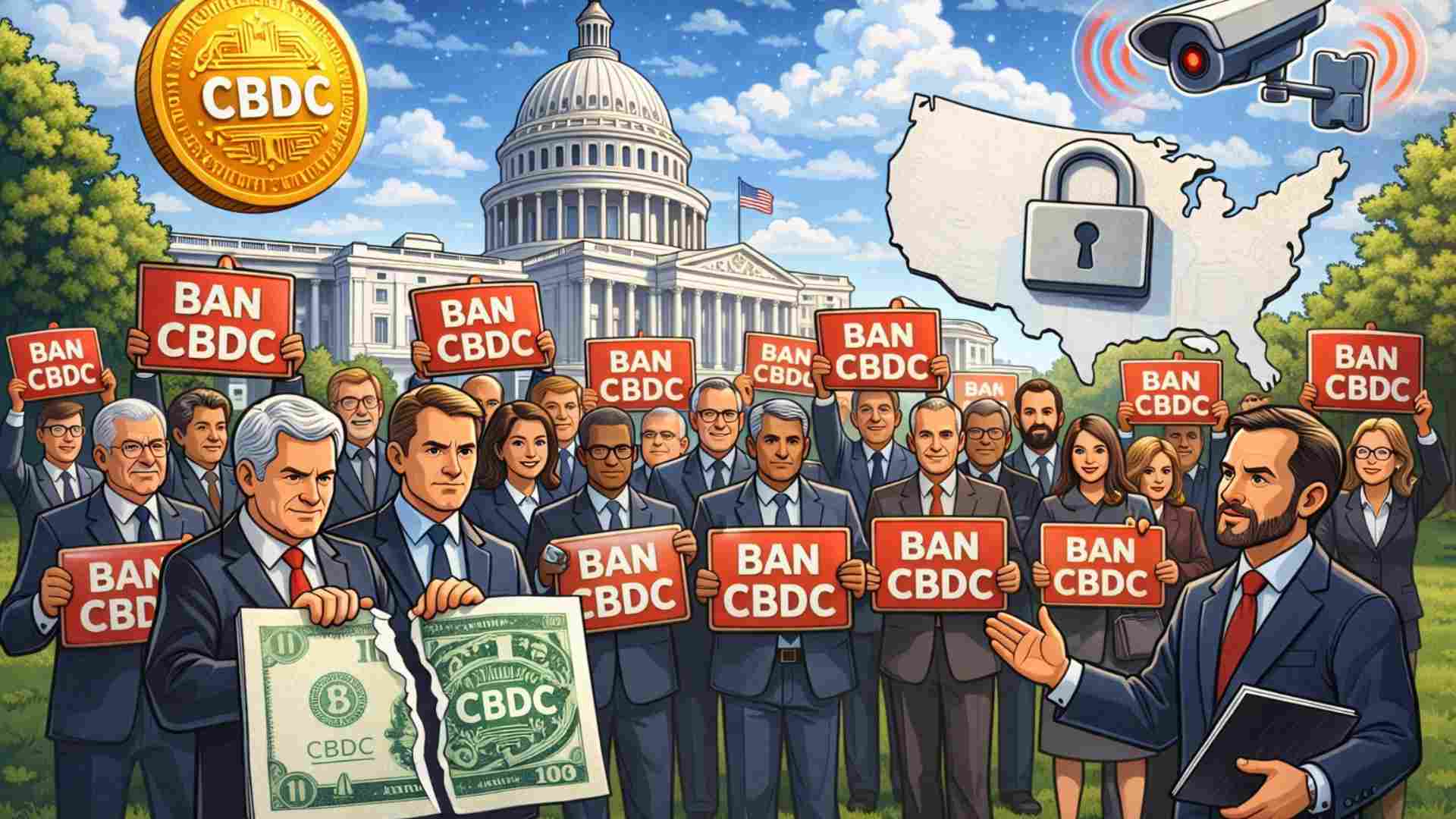
- 28 US lawmakers sent a letter demanding a permanent ban on issuing a central bank digital currency.
- They argue the current temporary freeze until 2031 leaves the door open for a future CBDC.
- Their main concerns include financial surveillance, Federal Reserve overreach, and threats to civil liberties.
Twenty-eight members of Congress are calling for a permanent US central bank digital currency ban. Representative Michael Cloud led the effort, and on March 8, 2026, the group sent a formal letter to congressional leadership with a clear position: no CBDC, not now, not at any point in the future.
Under the current law, the Federal Reserve is only blocked from issuing a CBDC until 2031. These lawmakers say that temporary freeze is not nearly enough, and they want a full, permanent prohibition written into law with no expiration date attached.
Why Are Lawmakers Calling CBDCs “Anti-American”?
The phrase “essentially anti-American” came straight from the letter these representatives signed. That is not casual political language. It reflects a deep concern about what a government-issued digital currency would mean for ordinary Americans and their financial freedom going forward.
The three main arguments these lawmakers raised are worth understanding in full.
Financial Surveillance
A CBDC gives the federal government direct visibility into your spending habits. Unlike cash, every digital transaction through a government-run currency leaves a permanent record. Lawmakers see this as a serious privacy threat, since it would effectively end truly private financial activity for American citizens.
Federal Reserve Overreach
A government-controlled digital currency shifts significant power to the Fed, potentially allowing authorities to influence or restrict individual spending behavior. That kind of direct control is a major departure from how monetary policy has traditionally functioned in the US.
Civil Liberties at Risk
When a government can monitor your money and program restrictions into it, that power extends far beyond finance. China’s CBDC already demonstrates this in practice, where the system ties financial access to social behavior and compliance. US lawmakers are watching that model closely, and they want no part of it here.
What Is the Problem With the Current Legislation?
The existing bill places a temporary ban on the Fed issuing a CBDC until 2031, which some viewed as a workable compromise. The 28 lawmakers behind this letter disagree, and they want to restore the stricter language from the previously proposed Anti-CBDC Surveillance State Act, which carried no expiration date at all.
A ban with a deadline is, in practical terms, just a delay. Here is why that distinction matters so much:
- Elections shift policy. A 2031 expiration could easily get reversed after a change in administration or congressional majority.
- Permanent bans carry more legal weight. They require significantly more political effort and consensus to overturn.
- The language itself sends a message. A permanent ban signals that the US draws a firm line on CBDC issuance, which matters for investor confidence and financial policy globally.
Leaving wiggle room in the legislation is exactly what these representatives want to eliminate, because temporary measures can be revisited and undone when political winds change.
How Does This Connect to the Broader Crypto Conversation?
This debate sits inside a much larger discussion about financial freedom, government control, and who gets to decide how money works. Bitcoin and other decentralized cryptocurrencies exist entirely outside government authority, which is one of their core strengths. A CBDC is structurally the opposite: the government issues it, controls it, and can program conditions and restrictions directly into it.
Crypto advocates have argued for years that financial privacy is a fundamental right, not a privilege the government grants. A CBDC challenges that position directly, which is why this legislative push resonates strongly with the crypto community. You can read more about how decentralized currencies differ from government-issued digital money on UseTheBitcoin.
The differences between Bitcoin and a CBDC are sharp and worth keeping in mind:
- Bitcoin runs on a decentralized network, while a CBDC runs entirely through government infrastructure.
- Bitcoin transactions are pseudonymous, while CBDC transactions are fully traceable and visible to issuing authorities.
- No central authority can freeze your Bitcoin without your private keys, but a CBDC can be programmed to expire, restrict certain purchases, or block transfers entirely.
What Happens Next With the US Central Bank Digital Currency Ban?
Political momentum against a US CBDC is clearly growing, but momentum alone does not create law. Congress still needs to pass a bill, and the President needs to sign it before any permanent ban takes effect.
The current political climate leans crypto-friendly, which works in these lawmakers’ favor. Industry groups have pushed back against CBDC proposals for years, and a permanent legislative ban would effectively close this debate for a generation.
Global pressure remains, though. The IMF and central banks worldwide continue exploring digital currencies, and a US permanent ban would be a direct counter-signal to that broader trend. For anyone holding Bitcoin or using crypto regularly, this matters, since a widely adopted CBDC could reshape digital payments and crowd out private alternatives over time. A permanent ban keeps that space open and signals that lawmakers recognize clear limits on government involvement in digital finance.
Frequently Asked Questions
What is a central bank digital currency?
A central bank digital currency is a government-issued digital form of a country’s official currency. Unlike Bitcoin or other cryptocurrencies, a CBDC is fully controlled and issued by a central authority, typically a country’s central bank.
Why do US lawmakers want a permanent CBDC ban?
The 28 lawmakers argue that a CBDC would enable financial surveillance, give the Federal Reserve excessive control over individual spending, and threaten civil liberties. They believe a temporary ban until 2031 is not sufficient protection against these risks.
How is a CBDC different from Bitcoin?
Bitcoin is decentralized, pseudonymous, and operates without government control. A CBDC is government-issued, fully traceable, and can have restrictions programmed into it, making the two fundamentally different in how they function and who controls them.
What is the Anti-CBDC Surveillance State Act?
The Anti-CBDC Surveillance State Act was a previously proposed bill that would have placed a permanent ban on the Federal Reserve issuing a digital currency. The 28 lawmakers behind the recent letter want to reinstate its stricter, permanent language in current legislation.