Investing in cryptocurrency gives you faster transactions, lower fees on cross-border payments, and access to an asset class that trades every hour of every day. Bitcoin and other digital assets have moved from a niche experiment to a category that institutions now hold directly. As of late August 2026, US spot Bitcoin ETFs held roughly $98.56 billion in assets, showing how mainstream crypto exposure has become.
That doesn’t mean crypto is right for everyone or risk-free. Prices swing hard, and investing in any digital asset means accepting volatility that stocks and bonds rarely match. But for people weighing whether crypto deserves a place in their financial plan, it helps to know what the technology does well.
Cryptocurrency’s advantages come from how blockchain networks are built. Transactions settle directly between two parties without a bank standing in the middle, records are public and hard to alter, and the market never closes. Those design choices translate into concrete benefits for both everyday users and investors. Here are nine benefits that explain what the technology does well.
1. Faster, Borderless Transactions
A bank wire sent from New York to Manila can take two to five business days once you account for intermediary banks and cutoff times. A Bitcoin or XRP transaction settles in minutes, any day of the week, because the network runs continuously with no banking hours to wait around. For anyone who has ever watched an international payment sit “pending” over a weekend, that difference isn’t small.
2. Lower Transaction Costs
Sending money abroad through traditional channels still costs real money. The World Bank puts the global average cost of sending remittances at 6.36 percent of the amount sent, and banks remain the most expensive option at close to 15 percent per transfer in recent data. Crypto rails cut out several of the intermediaries that drive those fees. A Bitcoin or Ethereum transaction can cost a few dollars regardless of whether you are sending $200 or $20,000, though fees do rise when network activity spikes.
3. Financial Inclusion
Opening a bank account still requires documentation, a permanent address, or a nearby branch, requirements that shut a lot of people out of the traditional system. A crypto wallet needs none of that. Anyone with a smartphone and an internet connection can download a wallet app and start receiving, holding, and sending value, which matters most in regions where bank branches are scarce, or account minimums are out of reach.
4. Full Control Over Your Assets
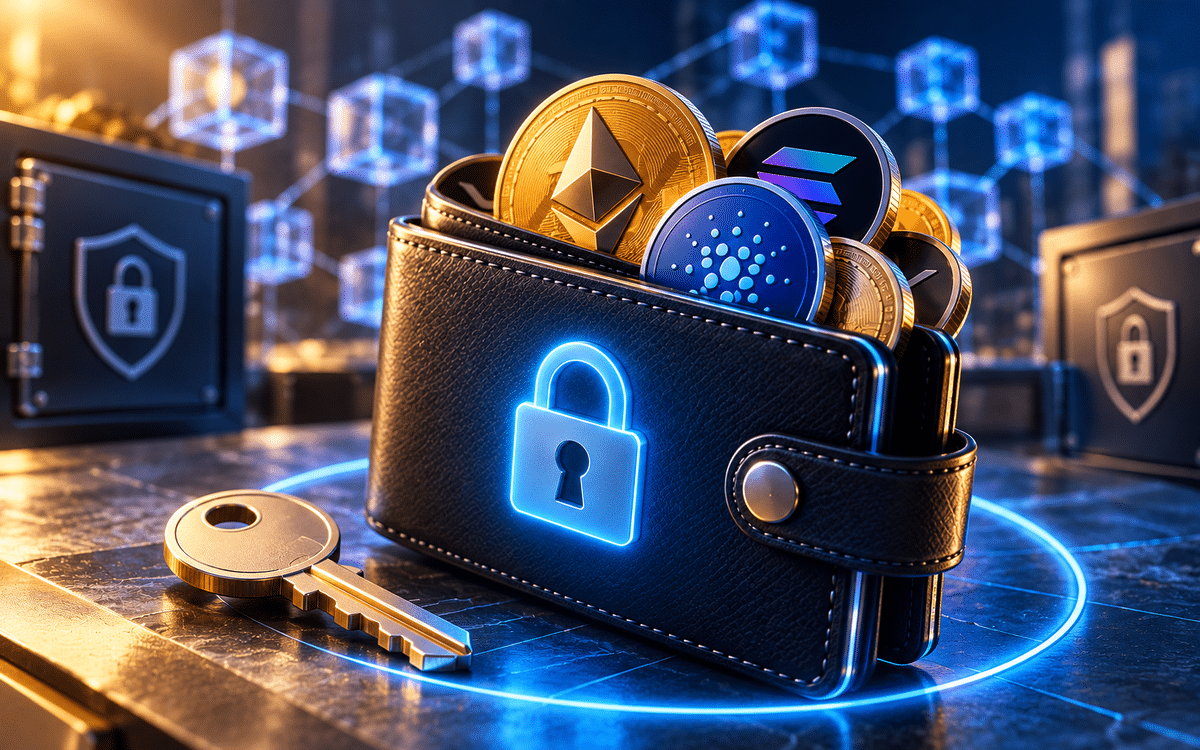
When you hold crypto in a self-custody wallet, you control the private keys, and nobody else can freeze the account, reverse a transaction, or block a withdrawal. That is a real shift from a bank account, where the institution ultimately decides what you can do with your own money and when. The tradeoff is that you’re entirely responsible for keeping those keys safe.
5. Transparency and Security
Every transaction on a public blockchain like Bitcoin or Ethereum is recorded on a ledger that anyone can inspect. Once a block is confirmed, changing it would require rewriting every block after it, which is why blockchain records are considered close to tamper-proof. Encryption and private keys authorize each transaction, and no single party can approve or reverse one alone.
6. New Investment Opportunities
Crypto markets never close. Stocks stop trading at 4 p.m. on weekdays, but Bitcoin, Ethereum, and thousands of other tokens trade 24 hours a day, seven days a week. That gives investors the flexibility to react to news or price moves at any hour, as the strongest ETF inflow week of 2026 in late August showed, when bitcoin and ether ETFs pulled in $2.6 billion in a single week as trading volume tripled.
7. Portfolio Diversification
Crypto assets do not always move in the same direction as stocks or bonds, which is one reason some investors add a small crypto allocation to an otherwise traditional portfolio. If you want a deeper walkthrough on building that kind of mix, our guide on how to build your own crypto portfolio covers allocation strategies in more detail. Diversification does not eliminate risk. It spreads it, so a decline in one asset class does not sink your entire portfolio at once.
8. A Possible Hedge Against Inflation
Bitcoin’s supply is capped at 21 million coins, and no central bank or government can print more. That fixed supply is the core reason some investors treat Bitcoin as a hedge against currencies losing purchasing power over time. It is not a guaranteed hedge, and Bitcoin’s price has been far more volatile year to year than gold or other traditional inflation hedges, but the scarcity argument is a real structural feature of the asset.
9. Easier Access Than Ever Before
Buying crypto today looks nothing like it did a decade ago. Exchanges such as Bitget let you create an account, verify your identity, and buy your first Bitcoin or Ethereum in a few steps, all from a phone. You do not need to understand how blockchain consensus works to hold crypto responsibly, the same way you do not need to understand how a card network processes payments to use a debit card.
What to Watch Out for Before Investing
Before you put money into crypto, run through the handful of problems that trip up most new investors.
A. Investing More Than You Can Afford to Lose
Crypto’s volatility means a position can drop sharply in a short window, so treat any crypto allocation as money you could lose entirely.
B. Leaving Funds on an Exchange Indefinitely
Exchanges can be hacked or restrict withdrawals during outages, so long-term holdings belong in a wallet you control.
C. Chasing Hype Around a Trending Coin
Price spikes driven by social media attention often reverse just as fast as they rose.
D. Skipping Basic Wallet Security
Failing to write down a recovery phrase and store it offline is how people lose access to their funds permanently with no way to recover them.
Working through this list before you buy anything is the difference between investing with a plan and reacting to whatever is trending that week.
Why Does This Matter If You’re New to Crypto?
If you are just starting to look at crypto, the benefits above translate into a simple takeaway: you get more control over your money, lower costs on transfers, and access to a market that traditional finance cannot fully replicate. For our full walkthrough on getting oriented before you invest, check our crypto basics guide, which covers the fundamentals this article assumes you already understand.
None of that erases the risks. Prices can swing 10 percent or more in a single day, and unlike a bank deposit, crypto holdings are not insured against loss. The benefits are real, but they come with a different risk profile than a savings account or an index fund.
Frequently Asked Questions
Still have questions? These are the ones that come up most often from people considering their first crypto investment.
Is investing in cryptocurrency safe?
Crypto investing carries real risk, including price volatility and the possibility of losing access to funds if you mismanage your private keys. Choosing a reputable exchange, using a secure wallet, and only investing what you can afford to lose all reduce that risk, but they do not eliminate it.
How much money do I need to start investing in crypto?
Most exchanges let you buy a fraction of a coin, so you can start with as little as $10 or $20. There is no minimum amount required to begin, though transaction fees make very small purchases less cost-efficient.
What is the difference between holding crypto on an exchange and in a wallet?
Holding crypto on an exchange means the exchange controls the private keys, similar to how a bank holds your deposit. Moving crypto to a wallet you control means you hold the keys directly, which gives you more control but also more responsibility for keeping those keys secure.
Can cryptocurrency protect against inflation?
Some cryptocurrencies, like Bitcoin, have a fixed supply cap, which is why some investors view them as a potential inflation hedge. This is not guaranteed. Crypto prices are volatile enough that short-term price drops can happen even during periods of high inflation.
Do I need to understand blockchain technology to invest in crypto?
No. You can buy, hold, and sell crypto through an exchange without understanding how blockchain consensus or mining works, in the same way most people use a credit card without understanding payment processing. That said, understanding the basics helps you make more informed decisions about which assets to hold.