
US spot Bitcoin exchange-traded funds (ETFs) posted $201.9 million in net outflows on August 28, 2026, ending a nine-day inflow streak just as Bitcoin’s price pulled back from a three-month high above $80,000, even as Ethereum funds extended their own inflow streak to ten straight days.
How the Price Moved Over the Last Week for Bitcoin
Bitcoin crossed $80,000 on August 27 for the first time since May, reaching an intraday high of $81,455 the following day before Federal Reserve Chair Kevin Warsh’s hawkish remarks at the Jackson Hole symposium sent it plunging to $76,845, with the day closing near $77,800.
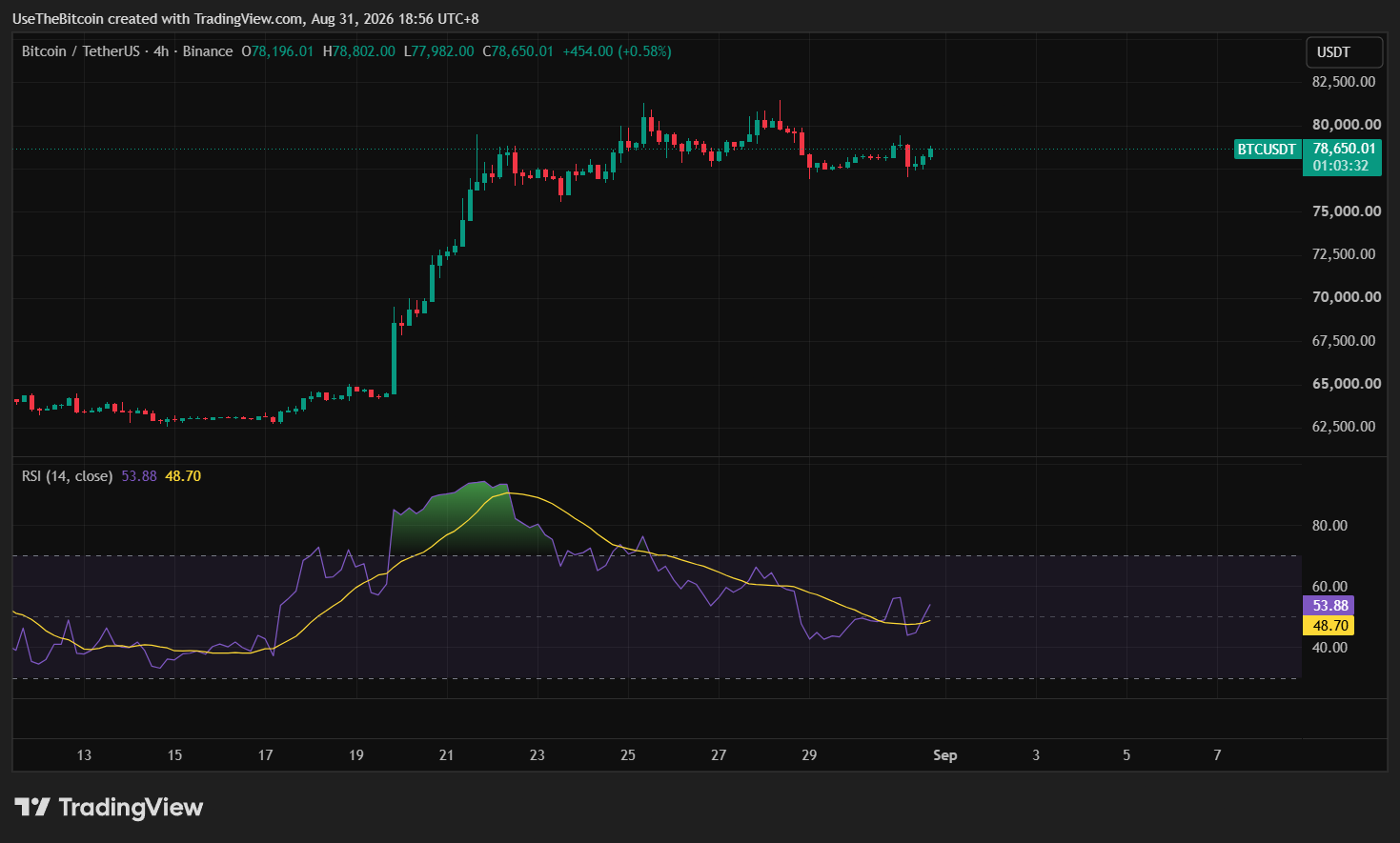
Bitcoin recovered to around $79,400 over the weekend and is currently trading at around $78,600 as of this writing.
The ETF Reversal Itself
According to SoSoValue data, US spot Bitcoin ETFs recorded $201.81 million in net outflows on August 28 Friday, ending nine consecutive trading sessions of inflows from August 17 through August 27.
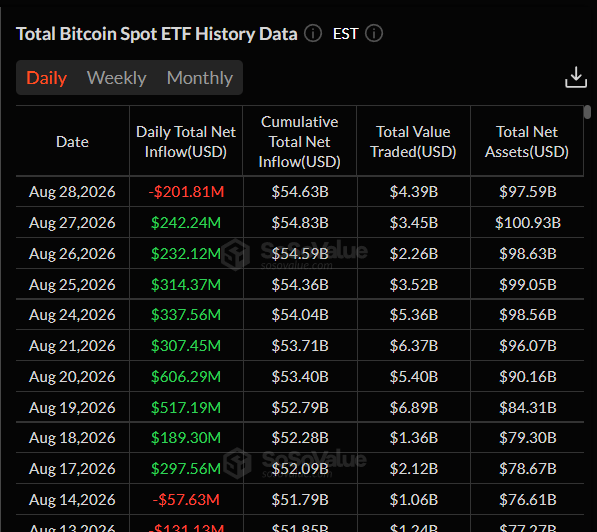
That nine-day streak brought in more than $3 billion, including a single-day inflow of $606.3 million on August 20 alone, the largest since May, with daily inflows repeatedly topping $300 million throughout the run. Bitcoin’s price surged from the $64,000 range to above $80,000 during that same stretch.
Total net assets held by the funds fell after the reversal, to near $97.59 billion after the funds topped $100 billion for the first time on the Thursday prior. Cumulative net inflows since the funds launched in January 2024 stand at roughly $54.63 billion.
The outflow was concentrated in specific funds. ARK 21Shares’ ARKB led with $114.9 million in net outflows, followed by Bitwise’s BITB at $49.7 million, BlackRock’s IBIT, the largest Bitcoin ETF by assets, at $33.4 million, and VanEck’s HODL at $13.2 million. Morgan Stanley’s MSBT was the only fund to record inflows that day, adding $9.3 million.
The relatively modest outflow from IBIT, given its size, supports reading this as short-term profit-taking near recent highs rather than a broader institutional retreat, especially since the single-day outflow represents only about 6.6% of the cumulative inflows gathered over the prior nine sessions.
Given that Bitcoin’s price had surged more than 20% in a fairly short window heading into the reversal, some redemptions clustering near the recent highs would be a fairly ordinary market response rather than a sign of deteriorating sentiment toward the asset class broadly.
Ethereum and Other Funds Kept Climbing
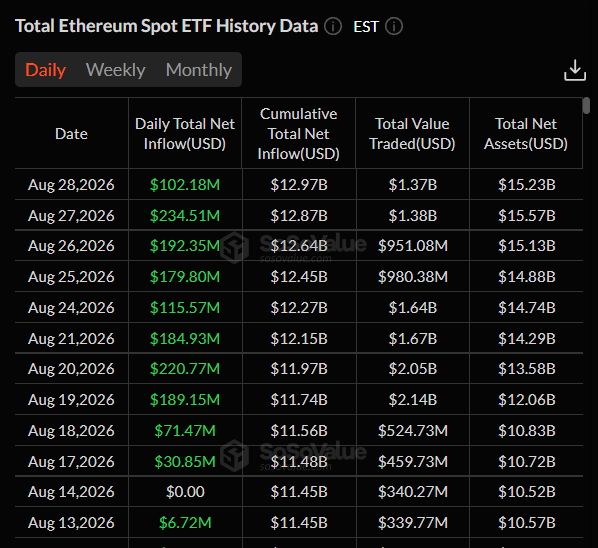
Ethereum ETFs showed no similar fatigue, taking in $102.1 million on the same day to extend their own inflow streak to ten consecutive sessions, lifting cumulative inflows to about $12.9 billion against roughly $13.8 billion in total net assets.
XRP funds added a further $26.2 million, with Ethereum and XRP funds having last recorded net outflows on August 11 and August 5, respectively.
Solana ETFs have kept up their own momentum too, with Bloomberg ETF analyst Eric Balchunas noting the category has attracted $1.7 billion in cumulative flows without a sustained stretch of outflows, and Bitwise’s Solana ETF becoming the first fund in that category to cross the $1 billion mark. He called the performance “impressive,” a notable turnaround given what he described as a “nightmare downturn” in the category during the first half of 2026.
What Triggered the Reversal
Fed Chair Kevin Warsh’s Jackson Hole remarks on August 28 weighed heavily on sentiment. Warsh emphasized that the personal consumption expenditures price index was running at 3.7% year over year and 4.1% on a six-month annualized basis, stressing that the Fed still has work to do on inflation.
The market read this as leaving the door open for further rate hikes, and the CME FedWatch Tool showed the probability of a September rate hike jumping from 35.4% before the speech to 61.9%.
Gold fell, and US stocks gave back early gains on the same news, a reaction consistent with the broader debasement trade dynamic our earlier coverage of gold and Bitcoin’s recent rally has tracked, since a more hawkish Fed reduces near-term expectations for the kind of easing that has driven demand for scarce assets.
What Comes Next
Market participants are watching ETF flows closely from Monday through Wednesday this week to determine whether Friday’s outflow is a temporary correction or the start of something more sustained. Notably, if ETF funds continue to flow out of the market, Bitcoin’s momentum to reclaim $80,000 and above could potentially weaken.
What this means for you: a single day of outflows after nine straight days of inflows is a modest data point relative to the tens of billions these funds have gathered since launching, and it does not by itself signal a reversal in institutional appetite, which has stayed robust across both Bitcoin and Ethereum funds even through this specific pullback.