
Key Takeaways
- Since September 1, 2026, Russian residents can buy crypto through intermediaries registered with the Bank of Russia. Non-qualified investors must pass a test and can buy up to 300,000 rubles of the most liquid coins a year.
- Selling is just as simple: transfer your coins to an exchange, set your price, and sell and withdraw your money.
- Crypto still cannot be used to pay for goods and services inside Russia. Crypto income is taxed as personal income at 13% to 22%, and several Russia-focused platforms are under US, EU or UK sanctions.
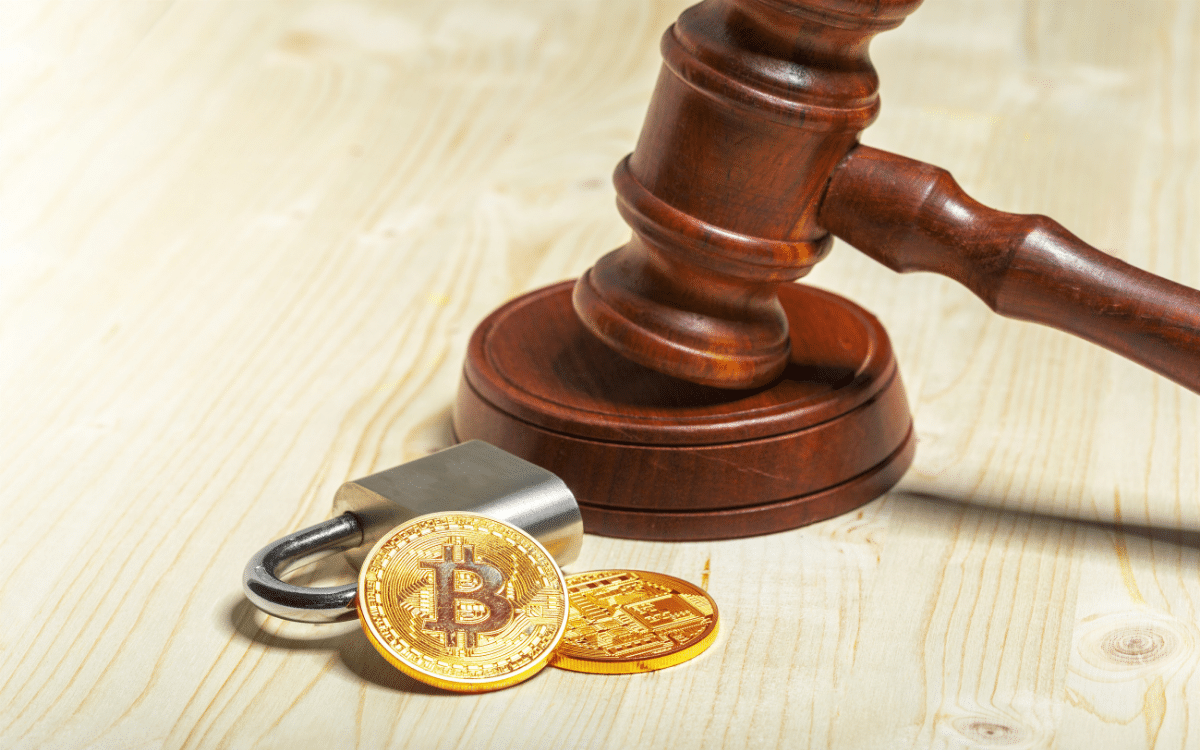
Cryptocurrency trading in Russia has adapted to global sanctions, and most international exchanges have left. US and European authorities shut down Garantex in March 2025 and Bitzlato in January 2023. Federal Law No. 282-FZ “On Digital Currencies and Digital Rights” took effect on September 1, 2026. It sets up a regulated crypto market run through intermediaries registered with the Bank of Russia and keeps the ban on using crypto as payment inside Russia (Bank of Russia).
Traders must adhere to KYC and AML rules, and crypto income is taxed at personal income tax rates of 13% to 22%. It must be reported to the Federal Tax Service (FTS). This guide outlines how to buy and sell crypto in Russia within the current legal framework.
How to Buy Cryptocurrency in Russia?
Since September 1, 2026, residents can buy crypto through brokers, management companies, crypto exchanges and digital depositories that work under the new law. On October 6, 2026, the Bank of Russia added the first four crypto exchanges and five digital depositories to its registers (Bank of Russia).
Choose a Cryptocurrency Exchange in Russia
Several platforms Russian users relied on are gone. Garantex and Bitzlato were shut down, LocalBitcoins closed in February 2023, and Binance sold its Russia business in September 2023. Look for an intermediary on the Bank of Russia’s registers, and check whether it is under US, EU or UK sanctions.
What to Look For in a Russian Exchange:
- Support for Russian Rubles (RUB): Ensure the platform allows deposits and withdrawals in RUB.
- Bank of Russia Registration: Check that the platform is registered or licensed by the Bank of Russia for crypto services.
- Russian-Language Support: Choose exchanges with localized services for better accessibility.
Register and Verify Your Account
Create an account on your chosen platform and complete KYC (Know Your Customer) verification as required by Russian regulations.
Sign Up: Provide your email address and create a secure password.
Identity Verification: Submit your passport or national ID and proof of address (utility bill or bank statement). Some exchanges may ask for a selfie or video verification for additional security.
Under the 2026 law, you must also pass a test before an intermediary can sell you crypto, whether or not you are a qualified investor.
Deposit Russian Rubles (RUB) to Your Exchange Wallet
Funding your account is straightforward using local payment methods.
Bank Transfers: Utilize the Faster Payments System (FPS) through Russian banks like Sberbank, Tinkoff, and VTB for quick and low-cost transfers.
Qiwi Wallet: QIWI Bank, the bank behind the wallet, lost its banking licence on February 21, 2024 (Bank of Russia).
P2P Transactions: Binance P2P is no longer an option. Binance sold its entire Russia business to CommEX in September 2023 and said off-boarding Russian users would take up to a year (Binance).
Place a Buy Order
Choose the Cryptocurrency to Buy: Decide which cryptocurrency to purchase. Research the purpose and historical performance of the cryptocurrency before buying.
To buy cryptocurrency:
- Navigate to the “Buy” or “Trade” section of the platform.
- Enter the amount in RUB or the cryptocurrency quantity you wish to purchase.
- Choose your order type:
- Market Order: Buy instantly at the current price.
- Limit Order: Set your target price and wait for the market to match it.
- Confirm the transaction, and the cryptocurrency will appear in your wallet.
Secure Your Cryptocurrency
After buying, securing your crypto is crucial.
Exchange Wallets: Suitable for short-term trading but vulnerable to hacking.
External Wallets: Use hardware wallets like Ledger Nano or software wallets like Trust Wallet for better security. Always back up your private keys and recovery phrases securely.
How to Sell Cryptocurrency in Russia?
Due to international sanctions, many global exchanges no longer operate in Russia, and Garantex, Bitzlato and Binance P2P are no longer options. Under the 2026 law, registered crypto exchanges can buy crypto from clients on their own account.
Transfer Crypto to Your Exchange Wallet
To sell your cryptocurrency, first ensure it is in the exchange wallet of your chosen platform.
- If your crypto is stored in an external wallet, transfer it to your exchange wallet.
- Log in to the platform, navigate to the Deposit section, and select the cryptocurrency you wish to sell. Copy the provided wallet address.
- Use your external wallet (e.g., Ledger, Trust Wallet, or MetaMask) to send the crypto to the exchange wallet. Double-check the wallet address to avoid errors.
Select the Amount of Crypto to Sell
Once your cryptocurrency is deposited, proceed to the Sell section of the platform.
- Enter the amount of cryptocurrency you wish to sell, either in terms of the crypto itself (e.g., 0.05 BTC) or its RUB equivalent.
- Confirm the current market price displayed by the exchange to ensure it meets your expectations.
Choose the Type of Sell Order
Russian exchanges and P2P platforms offer two primary types of sell orders:
- Market Order: Sells your crypto instantly at the current market price. Ideal for quick transactions.
- Limit Order: Lets you set a specific price for your crypto. The transaction will execute only when the market price matches your target.
Use market orders for smaller transactions or when speed is crucial. For larger trades, a limit order may help you get a better rate.
Convert Crypto to Rubles (RUB) or Stablecoins
Once the sale is complete, the proceeds will appear in your exchange wallet.
- Convert to RUB: Most platforms allow direct conversion of your crypto to Russian Rubles.
- Convert to Stablecoins: If you plan to reinvest or avoid holding RUB, convert your crypto to stablecoins like USDT for stability.
Withdraw RUB to Your Bank Account or E-Wallet
Now that your RUB is in the exchange wallet, withdraw it to your preferred payment method.
Bank Transfers:
- Use Russian banks like Sberbank, Tinkoff, or VTB via the Faster Payments System (FPS) for quick withdrawals.
- Funds typically arrive within minutes.
E-Wallets: Withdraw to e-wallets like YooMoney, which are popular for smaller transactions or frequent withdrawals.
P2P Trading: P2P platforms enable direct RUB transfers to other users through local banks or online wallets.
FPS bank transfers remain the most reliable option for larger amounts, while e-wallets are more flexible for small or frequent withdrawals.
Exchanges Russian Users Relied On, And Their Status In 2026
Of the six platforms below, five have shut down, left Russia or bar Russian users. Atomize is the exception: it is licensed under Russia’s Digital Financial Assets Law.
1. Garantex (Shut Down In March 2025)
Founded: 2019
Headquarters: Moscow, Russia
Status:
The US sanctioned Garantex in April 2022. On March 6, 2025, US, German and Finnish authorities seized its web domain and froze over $26 million in crypto. Garantex then moved customers and funds to a successor exchange, Grinex (US Treasury).
Compliance: Garantex and Grinex are under US and UK sanctions. The US designated Grinex in August 2025, and the UK sanctioned it the same month (UK government).
Bitzlato (Shut Down In January 2023)
Founded: 2016
Headquarters: Registered in Hong Kong
Status:
On January 18, 2023, US authorities arrested Bitzlato’s founder in Miami. French authorities, working with Europol, dismantled its infrastructure and seized its crypto, and the US Treasury’s FinCEN named it a primary money laundering concern (US Justice Department).
Compliance: US prosecutors said Bitzlato asked users for minimal identification and became a haven for criminal proceeds.
Atomize
Founded: 2020
Headquarters: Moscow, Russia
Focus: Tokenization and DFA Trading
Why It’s Popular:
Atomize is one of Russia’s few fully licensed platforms under the Digital Financial Assets Law (Federal Law No. 259-FZ). It specializes in tokenized assets and is primarily geared toward businesses and institutional investors. However, it is also available to individual traders looking for a secure and regulated platform.
Features:
- Offers tokenized digital financial assets (DFAs) compliant with Russian law.
- High-level security and regulatory oversight.
- Strong integration with Russia’s financial systems.
Compliance: Atomize is a registered digital financial asset operator in Russia. On March 25, 2024, the US Treasury sanctioned it (listed as Atomaiz) and its Cyprus-based majority shareholder, Tokentrust Holdings (US Treasury).
LocalBitcoins (Closed In February 2023)
Founded: 2012
Focus: Peer-to-Peer Trading
Status:
LocalBitcoins stopped new sign-ups on February 9, 2023, and suspended trading a week later. Users had 12 months to withdraw their bitcoin (LocalBitcoins).
HTX, Formerly Huobi (Not Available In Russia)
Founded: 2018 (Huobi Global)
Focus: Trading Platform and P2P Services
Status:
HTX’s user agreement, last updated in September 2026, bars users from the Russian Federation from all of its services (HTX user agreement). On May 26, 2026, the UK added Huobi Global S.A. to its Russia sanctions list for making funds available to Russia’s financial sector (UK government).
Binance (Left Russia In 2023)
Founded: 2017
Focus: Peer-to-Peer Trading in Russia
Status:
Binance sold its entire Russia business to CommEX in September 2023. Its P2P marketplace is no longer an option for Russian users.
Regulations and Taxations for Cryptocurrency Exchanges in Russia
Three sets of rules apply: Russia’s crypto law, its tax rules, and foreign sanctions that limit services for Russian users.
Regulations:
- Federal Law No. 282-FZ “On Digital Currencies and Digital Rights” has governed crypto trading since September 1, 2026. Non-qualified investors can buy the most liquid coins, up to 300,000 rubles a year through one intermediary, after passing a test. Qualified investors also take a test but have no limit (Bank of Russia).
- Crypto exchanges and digital depositories must be on Bank of Russia registers and follow local KYC and AML requirements. Platforms admitted under the transitional rules must fully comply by September 1, 2027.
- Cryptocurrency cannot be used as a legal payment method for goods and services.
- Federal Law No. 221-FZ of August 8, 2024 set the legal basis for crypto mining, including registers for miners, and lets the government ban mining in some regions (Kremlin).
- Federal Law No. 223-FZ of August 8, 2024 allowed crypto in foreign trade settlements under an experimental legal regime (Kremlin). The 2026 law lets exporters and importers use crypto for cross-border payments.
- Residents may trade crypto abroad only through their foreign bank accounts and must report crypto held abroad to the tax authorities.
Taxation:
- Since 2025, digital currency counts as property for tax purposes, and its sale and mining are exempt from VAT (Federal Law No. 418-FZ). Crypto income is taxed together with salary and similar income at 13% up to 2.4 million rubles a year, rising in steps to 22% above 50 million rubles (Federal Tax Service).
- Users are required to keep records of all transactions for accurate reporting to the Russian Federal Tax Service (FTS).
- Mined coins count as income at their market value on the day you receive them, and mining infrastructure operators must report their clients’ mining to the tax service (Kremlin).
Foreign Sanctions:
- EU: since October 2022, EU providers may not offer crypto wallet, account or custody services to Russian persons and residents. The EU also bans transactions in the A7A5 and RUBx tokens and, since April 2026, crypto transfer and exchange providers established in Russia. In July 2026 it added 14 platforms outside the EU to its transaction ban (Council of the EU).
- US: the Treasury has sanctioned Garantex, Grinex, Bitpapa and other Russia-linked crypto services (US Treasury).
- UK: on May 26, 2026, the UK sanctioned EXMO Exchange Limited, Rapira Group LLC, Bitpapa IC FZC LLC and Huobi Global S.A., among others (UK government).
Conclusion
Buying and selling cryptocurrency in Russia now runs through a regulated market. Since September 1, 2026, residents can trade crypto through intermediaries registered with the Bank of Russia, within the limits set for non-qualified investors. Garantex, Bitzlato, LocalBitcoins and Binance are no longer options, and several Russia-focused platforms are under US, EU or UK sanctions.
By using trusted platforms and following the steps in this guide, you can safely navigate the crypto market in Russia. It’s essential to stay informed about the latest regulations, taxation policies, and platform updates to avoid legal or financial pitfalls.