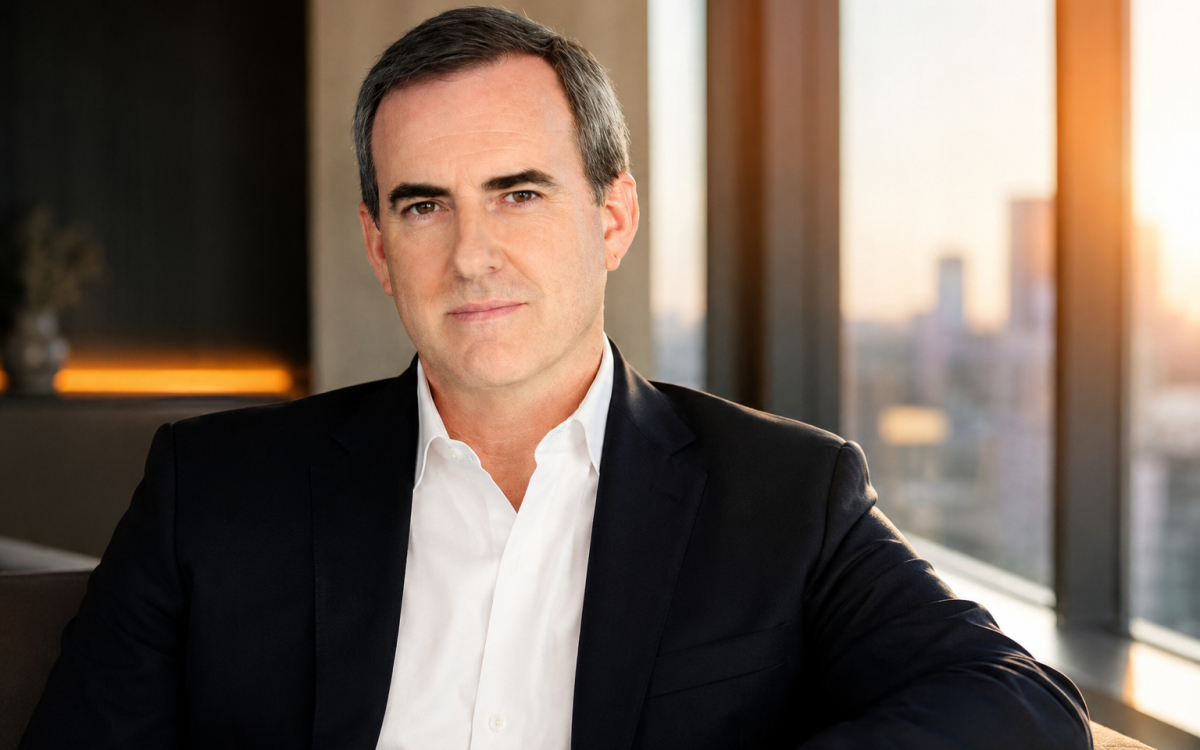
Hugo Philion co-founded and now runs Flare Labs, the company behind Flare Network, a layer-1 blockchain built to bring smart contract functionality to assets like XRP, Bitcoin and Dogecoin that were never designed to support it. Under his leadership, Flare’s FAssets system had processed more than 150 million FXRP tokens by mid-2026, and Philion has publicly set a goal of routing as much as 5 billion XRP through the network.
Before any of that, he spent years as a derivatives trader managing portfolios for funds worth more than $1 billion, a background that still shows up in how he talks about risk and collateral in decentralized finance.
Who Is Hugo Philion?
Philion, who is from London, spent years as a commodity derivatives portfolio manager at large funds well before he touched crypto, a background that later shaped how Flare approaches risk in decentralized finance.
He holds a Bachelor of Science in Investment and Financial Risk Management from Cass Business School, graduating with First Class Honors in 2010. Philion returned to school years later, earning a Master of Science in Machine Learning from University College London in 2018. It was there, while studying alongside Sean Rowan and Nairi Usher, that the three future co-founders first met.
By his own account, Philion grew restless with traditional finance around this time and became drawn to blockchain, partly out of concern over the centralizing forces he saw building in artificial intelligence. Starting in 2017, he and his co-founders began researching consensus algorithms and cross-chain interoperability, work that became the foundation of Flare’s core idea: give smart contract capability to blockchains, the XRP Ledger among them, that were never built to support it.
Hugo Philion’s Career and Contributions
Philion and his co-founders published Flare’s original whitepaper in August 2020, introducing what was then called the Spark token. The project had already caught the attention of Xpring, Ripple Labs’ investment arm, which provided early funding in 2019, and Flare raised a further $11.3 million in 2021 from investors including Digital Currency Group and Kinetic Capital, according to CoinDesk.
In 2021, Songbird tested features ahead of the main chain, and Spark was renamed FLR in a December 2022 whitepaper update. Under Philion, Flare’s focus shifted toward FAssets, letting non-smart contract tokens like XRP, Bitcoin and Dogecoin function inside DeFi.
FAssets launched on the Flare mainnet in September 2025, and by mid-2026 the network had processed more than 150 million FXRP. On May 14, 2026, it shipped a v1.3 upgrade that cut FXRP minting down to a single XRP transaction, according to CoinMarketCap’s Flare tracker.
Philion has also outlined Confidential Compute, a system using trusted execution environments meant to let institutions trade and lend against tokenized assets without exposing their activity publicly. The same CoinMarketCap tracker lists an April 2, 2026 testnet launch, with a full rollout targeted for Q3 2026.
He describes XRPL as handling issuance and settlement while Flare provides the programmable compute layer on top, the kind of infrastructure thinking that puts him among the founders featured on our crypto personalities page.
Hugo Philion’s Views and Positions
Philion’s public commentary returns to one theme: blockchains need better, more decentralized access to data before they can support serious real-world use. He argues most existing oracle systems fall short on security and decentralization, leaving smart contracts dependent on data that cannot always be verified.
Why Decentralized Data Matters to Philion
In a sit-down interview with Decrypt, Philion said data powers most of the value in current crypto use cases, and in his view, most of the future value too. He has criticized the practice of restaking to secure oracle networks, arguing it adds financial complexity without necessarily reducing risk. Flare’s answer, in his telling, is to enshrine oracles directly into the network’s validator set rather than relying on a separate external layer.
Hugo Philion’s Net Worth in 2026
No verified personal net worth figure for Hugo Philion is publicly available from a named financial outlet. Flare’s tokenomics show that 19.2% of the initial 100 billion FLR supply went to the team, advisors and early backers, according to CoinDesk, but that figure covers the whole team rather than Philion individually, and no source has broken out his personal share. Treat any specific net worth number you find online for Philion without a named, credible source as unverified.
Hugo Philion in the News
Flare published a governance proposal on April 10, 2026 aimed at capturing maximal extractable value, or MEV, at the protocol level, according to CoinDesk. The plan would cut annual FLR inflation from 5% to 3%, raise the network’s base gas fee, and route the resulting revenue into a new Flare Income Reinvestment Entity used for token buybacks and burns.
CoinDesk reported the move would make Flare one of the first layer-1 blockchains to capture MEV at the protocol level, a direction Philion has pushed since Flare’s 36-month FlareDrop schedule concluded in January 2026.
Frequently Asked Questions
Need a refresher on Hugo Philion? Here are the questions readers most often ask about him.
Who is Hugo Philion?
Hugo Philion is the co-founder and CEO of Flare Labs, the company behind Flare Network, a blockchain built to let assets like XRP and Bitcoin work inside smart contracts. He previously worked as a derivatives trader before studying machine learning at UCL, where he met his co-founders.
What is Hugo Philion’s net worth in 2026?
No verified net worth figure for Philion has been published by a named financial outlet. Flare’s team and backers collectively hold 19.2% of the initial FLR supply, but no source has disclosed what share, if any, belongs to Philion individually.
What company did Hugo Philion found?
Philion co-founded Flare Network alongside Sean Rowan and Nairi Usher. Their original whitepaper, published in August 2020, introduced the idea of bringing smart contract capability to blockchains such as the XRP Ledger that lacked it natively.
Is Hugo Philion connected to Ripple or XRP?
Philion is not employed by Ripple, but Flare has deep ties to XRP. Ripple’s investment arm, Xpring, funded Flare early in 2019, and Flare’s FAssets system now lets XRP holders use their tokens in DeFi through a wrapped version called FXRP.
Is Hugo Philion still leading Flare in 2026?
Yes. As of mid-2026, Philion remains CEO of Flare Labs and continues to lead its expansion into XRP-focused DeFi products and its planned Confidential Compute system.