This article contains affiliate links. If you sign up or buy through them, UseTheBitcoin may earn a commission at no extra cost to you. It does not change what we write. Disclosure Policy
The best crypto card depends on where you live and on whether you want to spend crypto you already own or earn crypto on a credit card. In the US, the Gemini Credit Card is the most straightforward crypto rewards credit card: no annual fee, no membership or staking, and up to 4% back in crypto. To spend crypto you hold, ether.fi Cash suits DeFi users, Nexo suits Europeans who would rather borrow than sell, and KAST is a free stablecoin card in many countries.
We checked every card below on 26 November 2026, using the provider’s own card pages, fee schedules and cardholder agreements first, and reviews or news only where those were missing. Some links on this page are affiliate links: if you open an account through them, UseTheBitcoin may earn a commission at no extra cost to you. See our disclosure policy.
Quick picks
- Best crypto credit card in the US: Gemini Credit Card, with no annual fee and rewards in bitcoin or 50+ other coins.
- Best for large Coinbase balances: Coinbase One Card, 2% to 4% back in bitcoin (needs a Coinbase One membership).
- Best for spending USD or USDC in the US: Coinbase Card, with no card, foreign transaction or ATM fee from Coinbase.
- Best for DeFi users, in the US and abroad: ether.fi Cash, 3% back on the first $2,000 a month on the free tier.
- Best in Europe if you would rather borrow than sell: Nexo Card, which can spend from a credit line backed by your crypto.
- Best free stablecoin card: KAST, 1.5% back in US dollars on the first $2,000 a month (check your country in the app).
- Best for people already on Crypto.com: Crypto.com Visa Card, if you pay for a Level Up plan or lock CRO.
- Best self-custody card: MetaMask Card, which spends stablecoins straight from your MetaMask wallet (new US sign-ups are closed).
Best crypto cards compared
The table shows the card type in the provider’s own terms, who holds your money, where you can order the card and what the rewards depend on. Rates and fees are as published on 26 November 2026.
| Card | Type | Who holds your funds | Where you can get it | Rewards | Fees to know |
|---|---|---|---|---|---|
| Crypto.com Visa Card | Prepaid Visa | Crypto.com | US, UK, EEA, Canada, Australia and more | 0% on the free tier; 1.5% to 4.5% in CRO with a paid plan or a CRO lockup, capped each month | 3% FX fee on lower US tiers; inactivity fee after 12 months |
| Coinbase Card | Prepaid Visa (sold as a debit card) | Coinbase | US | Variable, shown in the app | No card, FX or ATM fee from Coinbase; spread when crypto is sold |
| ether.fi Cash | Visa that spends stablecoins or borrows against your crypto | Your ether.fi Vault (a smart contract account) | About 80 countries and 30 US states | 3% in ETHFI on the first $2,000 a month (free tier) | Variable interest when borrowing; $50 physical card on the free tier |
| Nexo Card | Mastercard with debit mode and crypto-backed credit mode | Nexo | EEA and UK | Credit mode only: 0.5% to 2% in NEXO or 0.1% to 0.5% in BTC, with $5,000+ in assets | Credit line interest; 0.2% FX in Europe on weekdays |
| KAST | Visa that spends a stablecoin balance (legally a credit line backed by it) | KAST’s custody partners | Many countries; the list is shown in the app | 1.5% in US dollars on the first $2,000 a month (free tier) | Up to 1.75% FX (US terms); ATM $3 plus 2% |
| Bybit Card | Debit Mastercard (EU card) | Bybit | EEA except Malta, Australia, parts of Asia and Latin America | 1% in the EU without VIP status; VIP tiers up to 10% with monthly caps | 0.9% when paying from crypto; 0.5% FX in the EU |
| Wirex One | Visa card from a self-custody stablecoin app | You (crypto); regulated partners (fiat) | Most of the EEA, Australia and other countries; UK moving over; not the US | 0.5% in US dollars; 1% to 8% if you hold Wirex’s WPAY token and a minimum balance | Conversion spread on crypto |
| MetaMask Card | Debit Mastercard (virtual) | You (your MetaMask wallet) | About 50 countries, including the UK, most of the EEA, Canada, Mexico and Japan; new US sign-ups closed | 1% back in mUSD | No card fee; 0.5% to 0.875% on some tokens; 1% cross-border fee |
| RedotPay | Prepaid card, Visa according to reviews | RedotPay | 100+ countries; not the US, mainland China or India | None without Pro ($12.90 a month): 3% on Apple Pay and Google Pay, up to $18 a month | $10 virtual or $100 physical card; 1% conversion; 1.2% FX |
| Revolut crypto card | Revolut card linked to your crypto balance | Revolut | UK and EEA | None | Revolut’s exchange rate on every payment |
| Gemini Credit Card | Credit card, Mastercard | A bank credit line (WebBank) | US, all 50 states | 4% on gas, EV charging and transit (first $300 a month), 3% dining, 2% groceries, 1% other | No annual or FX fee; APR 16.49% to 34.49% |
| Coinbase One Card | Credit card, American Express | A bank credit line (First Electronic Bank) | US, Coinbase One members | 2% to 4% in bitcoin, by how much you hold on Coinbase | Coinbase One from $49.99 a year; APR 19.74% to 29.74% |
| Crypto.com Visa Signature Credit Card | Credit card, Visa | A bank credit line (Comenity Capital Bank) | US | From 1.5% on the free tier, more on paid Level Up tiers, in CRO or bitcoin | 3% FX fee; APR 18.24% to 32.24% |
| Fold Bitcoin Credit Card | Credit card, Visa | A bank credit line (Celtic Bank) | US, rolling out to its waitlist | 1.5% in bitcoin; up to 5% with a large Fold Reserve balance | APR and FX fee not published |
Debit, prepaid or credit: what kind of crypto card is it?
Most crypto cards are prepaid or debit cards that spend a balance you already have, and only a few are real credit cards. A prepaid card spends money you load onto the card first. A debit card spends straight from your account, selling crypto at the moment you pay if needed. A credit card lends you the money and sends a monthly bill, and its crypto comes as a reward.
A fourth kind sits between debit and credit: cards such as ether.fi Cash, Nexo’s credit mode and KAST let you spend against crypto you keep as collateral. You don’t sell your coins, but you borrow, and the loan can be closed out if your collateral falls in value. Our guide to how a prepaid crypto card works covers prepaid cards in more detail.
Custody is the other question. With Crypto.com, Coinbase, Nexo, Bybit, KAST, RedotPay and Revolut, the company holds your crypto. With self-custody cards such as the MetaMask Card and Wirex One, the keys stay with you and only the amount you spend leaves your wallet. Our list of the best crypto wallets covers the wallets themselves, and if you need a card for several currencies, see our guide to crypto debit cards that work with multiple currencies.
The best crypto cards for spending crypto
Crypto.com Visa Card: best for Crypto.com users
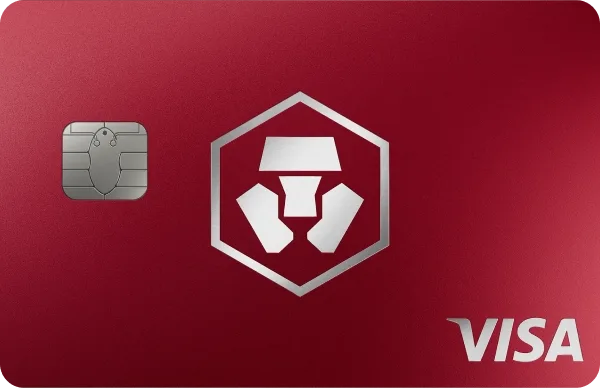
The Crypto.com Visa Card is a prepaid card: you top it up in your local currency, from a bank card or by converting crypto in the Crypto.com app, and then spend that balance. It is available in the US, UK, EEA, Canada, Australia, Singapore and other markets. Rewards depend on your Level Up plan, not on the color of the card.
- Rewards: 0% on the free Basic plan. Plus pays 1.5% in CRO on the first $750 a month, for $4.99 a month or $500 of CRO locked for 12 months. Pro pays 2.5% on the first $1,500 a month, and the Private tiers pay 3.5% and 4.5% with a $50,000 or $500,000 CRO lockup.
- Fees: no annual card fee. US cardholders on the lower tiers pay 3% on foreign currency spending, and an inactivity fee applies after 12 months without use.
- Watch out: rewards come in CRO, and a CRO lockup (see how crypto staking works) carries price risk for a full year. Cancelling the plan drops your rewards to 0%.
Open the card through Crypto.com, or read our Crypto.com review first.
Coinbase Card: best for spending USD or USDC in the US
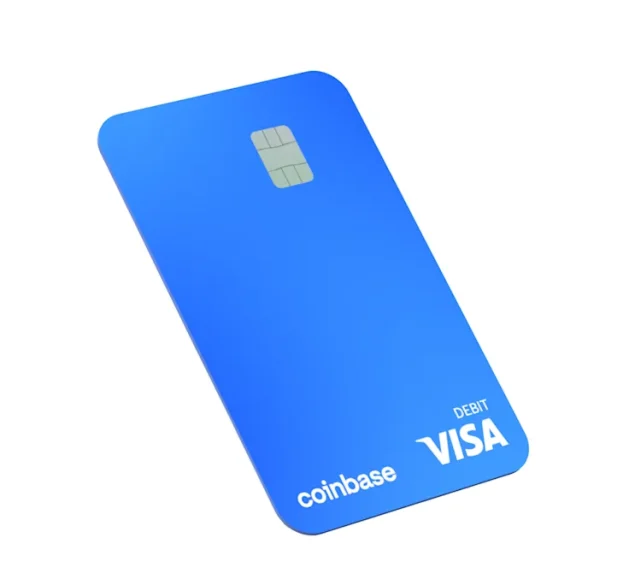
The Coinbase Card is a Visa card for US customers that spends from your Coinbase account. Coinbase calls it a debit card, but the issuer’s cardholder agreement describes a prepaid card. Paying with USD or USDC costs nothing extra; paying with other crypto means Coinbase sells it at checkout at its own spread.
- Rewards: optional crypto rewards from a rotating list, at a variable rate Coinbase shows only in the app. The 4% XLM and 1% BTC rates often quoted online date from the 2020 launch.
- Fees: no card, foreign transaction or ATM fee from Coinbase (the ATM owner may still charge).
- Watch out: the spread on crypto sales is not published, and every crypto sale can be a taxable event.
Get the card through Coinbase.
ether.fi Cash: best for DeFi users
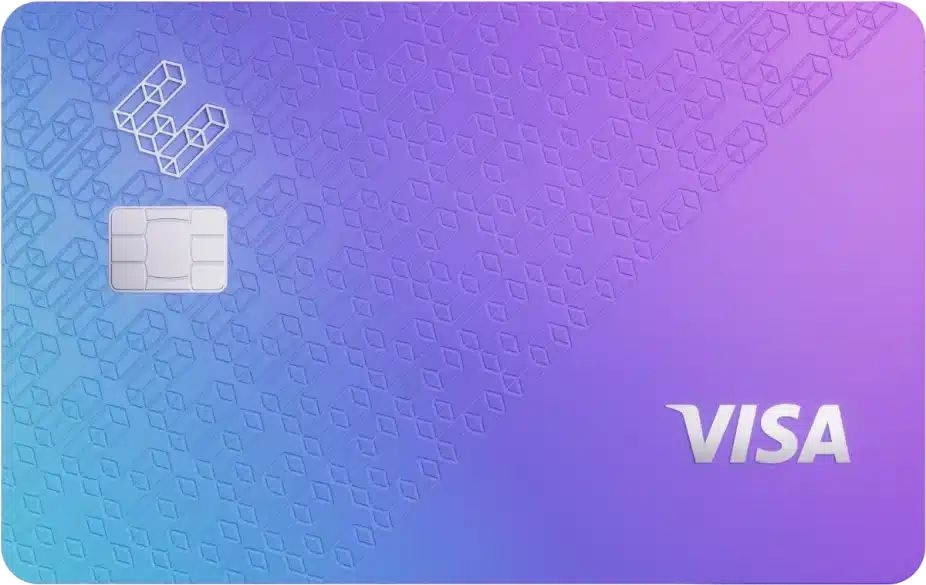
ether.fi Cash is a Visa card, issued by Third National, that spends from your ether.fi Vault, a smart contract account. In Direct Pay mode it spends stablecoins such as USDC, USDT or EURC with no interest. In Borrow mode it borrows against everything in your Vault at a variable rate, with no due date, and your collateral can be liquidated if its value falls too far. It is open in about 80 countries and, for personal accounts, in 30 US states.
- Rewards: on the free Core tier, 3% back on the first $2,000 of spending a month, then 1% up to $3,000 and 0.5% after that. Cashback is paid in the ETHFI token. Paid tiers raise the 3% band.
- Fees: the Core tier has a free virtual card and a $50 physical card. ether.fi adds a 0.5% margin to foreign currency spending on Core.
- Watch out: Borrow mode is a loan, so interest starts at once and falling prices can trigger liquidation.
See the ether.fi Cash card page.
Nexo Card: best in Europe if you would rather borrow than sell
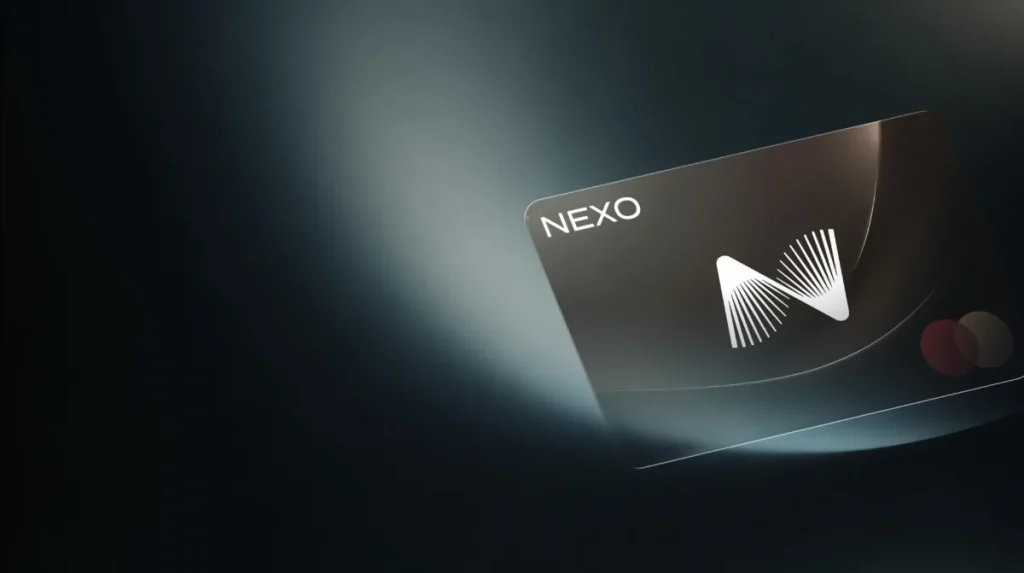
The Nexo Card is a Mastercard for residents of the EEA and the UK that switches between two modes. Debit mode spends your own stablecoins, crypto or fiat balance on Nexo. Credit mode spends from a Nexo credit line secured by your crypto, so you can pay without selling your coins and without a credit check. It is not available in the US.
- Rewards: only in credit mode and only with more than $5,000 in assets on Nexo: 0.5% to 2% back in NEXO tokens, or 0.1% to 0.5% in bitcoin. The 2% rate needs 10% of your portfolio in NEXO.
- Fees: no monthly, annual or inactivity fee. Foreign currency spending costs 0.2% on weekdays in Europe and 0.7% at weekends, more elsewhere.
- Watch out: credit mode is a loan with interest, and reviews say physical card orders have been paused since January 2025 even though Nexo’s pages still offer one.
See the Nexo Card page or our guide to what Nexo is.
KAST: best free stablecoin card
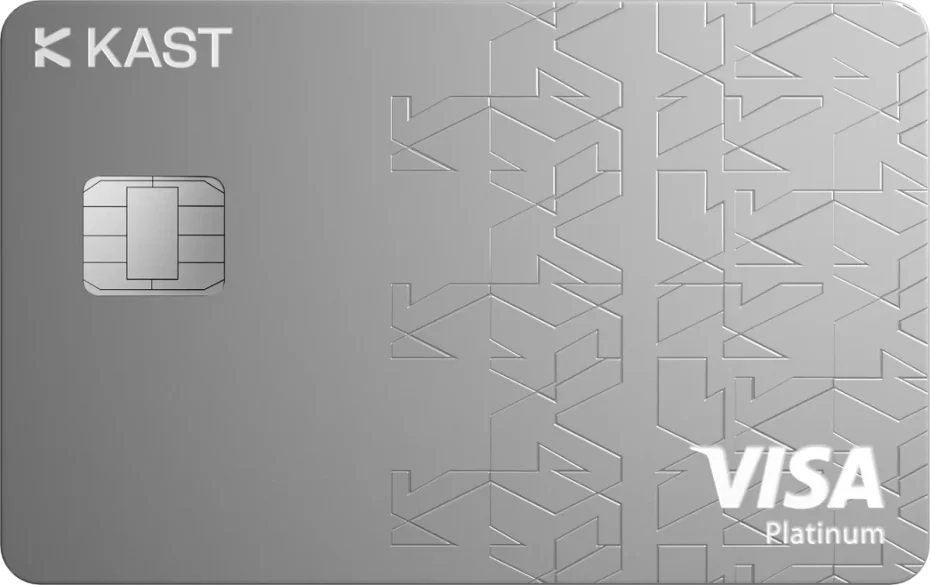
KAST is a Visa card that spends a US dollar balance you fund with USDT, USDC or other coins. It works like a debit card day to day, although KAST’s cardholder agreements describe a credit line secured by your balance. KAST says the card works in 170+ countries but shows the list of countries where you can sign up only in its app.
- Rewards: the free Standard plan pays 1.5% back in US dollars on the first $2,000 a month. Premium ($1,000 a year) pays 2% on the first $10,000, and Private ($10,000 a year) pays 3% on the first $40,000.
- Fees: foreign currency spending costs up to 1.75% under the US terms and more under the non-US terms; ATM withdrawals cost $3 plus 2%.
- Watch out: KAST has changed its rewards several times. It replaced points with cash back in May 2026, cancelled its token launch in November 2026, and stops earning points on 30 November 2026.
See the KAST website.
Bybit Card: best for Bybit users in Europe

The Bybit Card spends from your Bybit account and converts crypto at checkout. In the EEA it is now issued by Bybit EU as a debit Mastercard (not in Malta); other versions run in Australia, parts of Asia and Latin America. It is not available in the US, and sources disagree on the UK.
- Rewards: in the EU, 1% without VIP status since June 2026; VIP tiers earn 2% to 10% with monthly caps between €50 and €600. Outside the EU, the base rate is 2% capped at 5 USDT a month, on crypto-funded spending only.
- Fees: no annual fee. Paying from crypto costs 0.9%, and EU card payments in other currencies cost 0.5%.
- Watch out: the high rates need VIP status, and Bybit cut its standard rewards twice in 2026.
See the Bybit Card page.
Wirex One: best for self-custody outside the US
Wirex One replaced the old Wirex app in most countries in September 2026. Your crypto and stablecoins sit in a self-custody wallet in the app, while fiat balances are held with regulated partners, and the Visa card spends from them. It covers most of the EEA, Australia and other countries, but not the US. In the UK the old Wirex app still runs while GBP accounts move over.
- Rewards: 0.5% back in US dollars on the Base tier. Higher tiers pay 1%, 3%, 5% and 8%, but each needs a minimum portfolio and a share of it in Wirex’s WPAY token (for example $2,500 and 3% in WPAY for 3%).
- Fees: no subscription. Crypto conversions carry a spread.
- Watch out: the old Cryptoback rewards in WXT have ended, and the higher rates tie you to the price of WPAY.
Open an account through Wirex.
MetaMask Card: best self-custody card

The MetaMask Card is a virtual debit Mastercard that spends straight from your own MetaMask wallet on Linea, Base, Solana or Monad. You approve a spending limit for each token, and the card converts the tokens at Mastercard’s rate when you pay, so there is nothing to top up. It can be ordered in about 50 countries, including the UK, most of the EEA, Switzerland, Canada, Mexico and Japan. MetaMask has temporarily closed new US sign-ups; existing US cardholders keep their cards.
- Rewards: 1% back in mUSD, MetaMask’s dollar stablecoin, plus 4% on hotels booked through MetaMask Card Travel.
- Fees: no annual fee. Spending a stablecoin in your own or the merchant’s currency is free; other stablecoins cost 0.5% and tokens such as wETH 0.875%. MetaMask’s fee table also lists a 1% fee when the merchant is in another country.
- Watch out: new users get a virtual card only, because the Metal card can no longer be ordered, and each spending approval costs a small network fee.
See the MetaMask Card page.
RedotPay: best for spending stablecoins where other cards are not offered
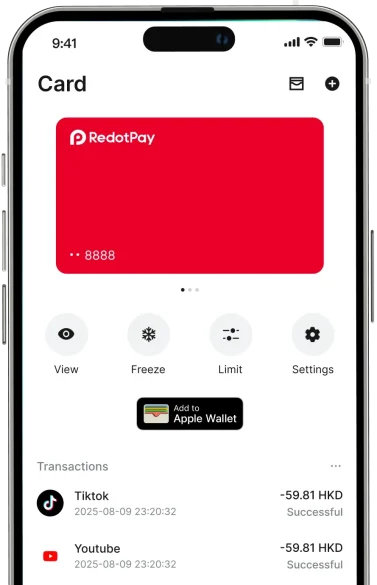
RedotPay is a prepaid card funded from a crypto balance in the RedotPay app, which converts your chosen coin at the moment you pay. Reviews describe a Visa card. It covers 100+ countries, but not the US, mainland China or India, and new cards stopped for South Korean users in September 2026.
- Rewards: none on the standard card since February 2026. RedotPay Pro ($12.90 a month or $129 a year) pays 3% on Apple Pay and Google Pay purchases, up to $18 a month.
- Fees: $10 for a virtual card and $100 for a physical one, 1% to convert crypto and 1.2% on payments in another currency.
- Watch out: the fees add up on everyday spending, and you need full identity checks.
See the RedotPay website.
Revolut: best for occasional spending in the UK and Europe
Revolut lets UK and EEA customers link a card to the crypto they hold in Revolut. When you pay, Revolut sells your crypto at its exchange rate, starting with your largest balance or with the coin you picked. Revolut launched its first physical crypto card in May 2026.
- Rewards: none at the moment.
- Fees: no fee for using the crypto card in the EEA fee terms; the price you pay includes Revolut’s exchange rate.
- Watch out: every payment is a sale of crypto, which can be taxable, and Revolut’s crypto features are not offered in the US.
The best crypto credit cards in the US
Real crypto credit cards are a US product so far. You need a credit check, you get a monthly bill, and your rewards arrive in crypto. Pay the full balance every month: at APRs of 16% and up, carrying a balance costs more than the 1% to 4% these cards pay back.
Gemini Credit Card: best crypto credit card overall
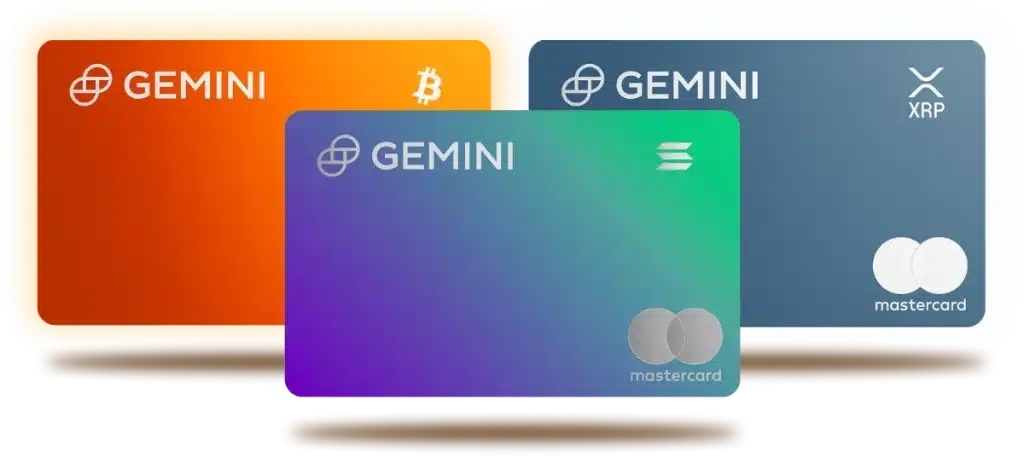
The Gemini Credit Card is a Mastercard issued by WebBank, available in all 50 states, with no annual fee and no foreign transaction fee. Rewards land in your Gemini account after each purchase, in bitcoin or 50+ other coins.
- Rewards: 4% on gas, EV charging, transit, taxis and rideshare on up to $300 of that spending a month, then 1%; 3% on dining, 2% on groceries and 1% on everything else.
- Costs: purchase APR of 16.49% to 34.49% (cardholder agreement of 1 April 2026).
- Watch out: the $200 welcome bonus was paused for approvals after 31 January 2026.
Apply through Gemini, or read our Gemini review.
Coinbase One Card: best for large Coinbase balances
The Coinbase One Card is an American Express credit card issued by First Electronic Bank, for US members of Coinbase One, the paid Coinbase subscription. It pays bitcoin back at a rate set by how much you hold on Coinbase.
- Rewards: 2% with under $10,000 on Coinbase, 2.5% from $10,000, 3% from $50,000 and 4% above $200,000. The higher rates cover the first $10,000 of spending a month.
- Costs: no card fee, but Coinbase One costs from $49.99 a year. APR of 19.74% to 29.74% under the terms effective 1 November 2026.
- Watch out: the top rate needs a very large Coinbase balance.
Get the card through Coinbase.
Crypto.com Visa Signature Credit Card
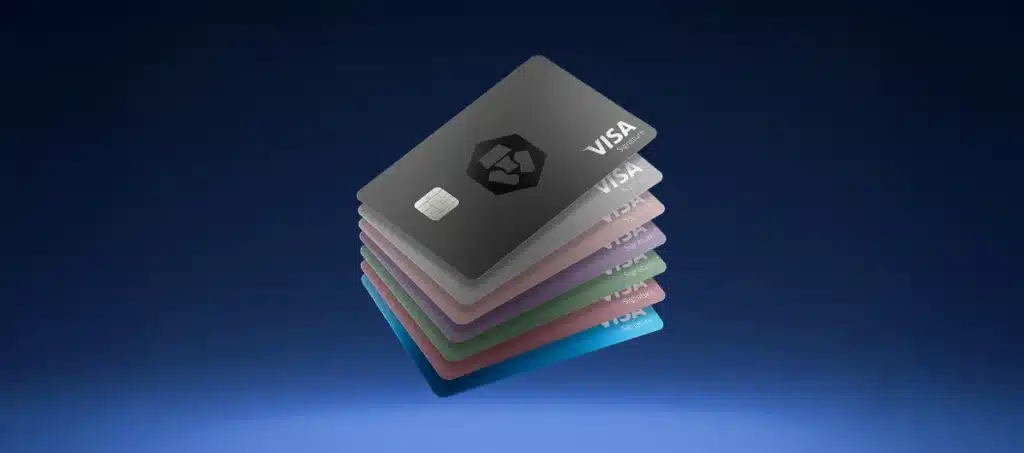
Crypto.com also has a US credit card, issued by Comenity Capital Bank, separate from its prepaid card. Your reward rate follows your Crypto.com Level Up plan, starting at 1.5% on the free tier, and you can take rewards in CRO or, since May 2026, in bitcoin with monthly caps.
- Costs: no card fee, but a 3% foreign transaction fee and an APR of 18.24%, 26.24% or 32.24%.
- Watch out: the higher rates need a paid Level Up plan or a CRO lockup, and the foreign fee makes it a poor travel card.
Apply through Crypto.com.
Fold Bitcoin Credit Card

Fold’s Visa credit card, issued by Celtic Bank, pays 1.5% back in bitcoin on eligible purchases with no cap. Higher rates of up to 5% apply to the first $5,000 a month if you keep a large balance in Fold Reserve ($100,000 for 5%). Fold has been sending cards to its waitlist in batches since May 2026, so check whether you can apply.
Cards we removed and why
Several cards that still appear on other “best crypto card” lists are closed, closing, paused or limited to a few countries, so we took them out:
- BitPay Card: stopped working on 15 June 2023, and no replacement has launched.
- Gnosis Pay: the card and web app stop on 20 December 2026, and its GNO cashback ended on 30 September 2026.
- Plutus: card spending has been paused since Plutus left its banking partner in October 2025, with no relaunch confirmed.
- Binance Card: closed in the EEA and the UK in December 2023 and was never offered in the US; a newer version runs only in selected countries in Latin America, the CIS and New Zealand.
- THORWallet: the old Visa card with a Swiss account no longer exists in that form, and THORWallet’s own card page still marks the new card as coming soon.
How to choose a crypto card
- Check where you live. Most cards serve only some regions: the credit cards are US-only, while Nexo, Revolut and Bybit’s EU card are for Europe.
- Decide whether you want to spend crypto or earn it. To earn crypto on normal spending, a credit card paid off monthly is usually cheaper. To spend crypto you hold, pick a debit, prepaid or crypto-backed card.
- Decide who should hold your funds. Exchange cards are simpler; self-custody cards keep your coins in your own wallet until you pay.
- Read the conditions behind the headline rate: staking, lockups, paid plans, token holdings and monthly caps.
- Add up the fees you will actually pay: foreign exchange, crypto conversion, ATM, card delivery and inactivity fees.
If you only need to turn crypto into cash now and then, our guide to converting crypto to cash covers other ways.
Taxes: what happens when you spend crypto with a card
In the US and the UK, paying with crypto counts as selling it. The IRS treats paying for goods or services with crypto as a sale, so you have a capital gain or loss on each payment. HMRC lists using tokens to pay for goods or services as a disposal for Capital Gains Tax. A card that sells a little crypto every time you buy coffee can create hundreds of small taxable sales a year.
Spending stablecoins or a fiat balance avoids most of that, because their value barely changes. How crypto rewards are taxed depends on the card and your country, so keep records and ask a tax adviser if you are unsure. Tax software such as CoinLedger or Koinly can import card transactions; see our list of the best crypto tax software.
Risks and limits of crypto cards
- Custodial cards depend on the company: if it fails or freezes accounts, your balance is stuck.
- Rewards paid in a company’s own token (CRO, ETHFI, NEXO, WPAY) can lose value, and lockups tie up your money for months.
- Crypto-backed credit can be liquidated if prices fall, and interest can wipe out your rewards.
- Card programs change quickly. Since late 2025, Plutus has paused card spending, Gnosis Pay has announced its closure, and Bybit, KAST and Wirex have rewritten their rewards.
- Spreads on crypto conversions are often not published, so the real cost of a payment can be higher than the listed fee.
This page is for information only and is not financial advice.
How we picked these cards
We started from the cards on our three older card lists, which this page replaces, and added the cards that appear on most other current lists. For each card, we read the provider’s card page, fee schedule, help center or cardholder agreement on 26 November 2026, and the US credit card agreements filed with the CFPB. Where a provider’s page could not be read, we used recent reviews and news and say so in the text. Where sources disagreed, we say so or leave the figure out. We label each card by what its terms say (prepaid, debit or credit) rather than by its marketing, and we removed cards that are closed or paused.
Frequently asked questions
Is there a credit card for crypto?
Yes, but mainly in the US. The Gemini Credit Card, the Coinbase One Card, the Crypto.com Visa Signature Credit Card and Fold’s bitcoin credit card are real credit cards that pay rewards in crypto. Most other “crypto cards” are prepaid or debit cards that spend a balance you already hold.
Is the Crypto.com card a credit card?
The Crypto.com Visa Card is a prepaid card: you load money onto it and spend that balance. Crypto.com also offers a separate US credit card, the Crypto.com Visa Signature Credit Card, issued by Comenity Capital Bank.
What is the difference between a crypto debit card and a prepaid card?
A debit card spends straight from your account, selling crypto at the moment you pay if needed. A prepaid card spends only the money you loaded onto the card beforehand. Some cards sold as debit cards, such as the Coinbase Card, are prepaid cards under their cardholder agreements.
Do I pay tax when I spend crypto with a card?
In the US and the UK, usually yes. Both the IRS and HMRC treat paying for goods with crypto as selling it, so each payment can create a capital gain or loss. Spending stablecoins or fiat balances creates little or no gain.
Which crypto card works in the US?
US residents can use the Coinbase Card, ether.fi Cash in 30 states, and the Gemini, Coinbase One, Crypto.com and Fold credit cards. MetaMask has paused new US sign-ups, and Nexo, Bybit, Wirex One, RedotPay and Revolut’s crypto card are not offered to US residents.
Which crypto card has the lowest fees?
For US residents, the Coinbase Card charges no card, foreign or ATM fee when you spend USD or USDC, and the Gemini Credit Card has no annual or foreign fee. In Europe, Nexo charges 0.2% on foreign currency on weekdays. Conversion spreads are often unpublished, so compare the price you actually pay.
Are there crypto cards with no KYC?
Every card on this list needs identity checks, because Visa, Mastercard and American Express cards are issued by regulated banks or e-money firms. Be careful with offers of anonymous crypto cards: they can be shut down with your money still on them.
Do crypto cards work with Apple Pay and Google Pay?
Several do, including the Bybit Card and RedotPay, whose Pro plan pays its cashback only on Apple Pay and Google Pay purchases. Check the provider’s card page for your country before you rely on it.
Sources
- Crypto.com: US prepaid card and card rewards and benefits
- CFPB: Coinbase Card prepaid agreement
- ether.fi: how cashback works and where the card is available
- Nexo: Nexo Card
- KAST: US cardholder terms
- Bybit EU: card cashback release
- Wirex One litepaper and upgrade FAQ
- RedotPay: card fees and RedotPay Pro
- Revolut: crypto fees (EEA, January 2026)
- Binance: EEA card closure FAQ
- Gemini Credit Card and its cardholder agreement (April 2026)
- Coinbase One Card cardholder agreement
- Crypto.com: US credit card launch
- Fold: bitcoin credit card
- MetaMask: card limits and fees and card page
- Gnosis Pay: closure notice
- Plutus: migration FAQ
- IRS: virtual currency FAQ
- HMRC: what is a disposal (CRYPTO22100)
More crypto guides: Guides hub · What is cryptocurrency · What is a seed phrase · 7 crypto scams to avoid