Key Takeaways
- Most users only use bridge aggregators to compare routes, price, and transfer time for transferring their tokens from the BNB Smart Chain network to Ethereum.
- Do a prior check if your token is compatible with both networks and that you have BNB and ETH for gas fees.
- Always use official bridge sites, check the address and network it is going to, and do at least one small test transaction prior to larger transfers.
The transfer between BNB Smart Chain and Ethereum is possible owing to both the cross-chain bridge and a transfer service that operates in these networks. For users who have self-custody wallets, a bridge aggregator is the easiest option to consider, as it compares different routes and shows the expected amount of assets, fees, and transfer duration.
Other available options are to use a direct bridge, send tokens via a centralized exchange, or use a built-in bridge available in a wallet if it is compatible with the tokens you’d like to exchange. The right approach for bridging crypto depends on the amount of the asset, the value of the transaction, and other associated fees.
This article contains four methods and things to do before making a transfer. The information used for comparison comes from published provider sources, not any successful transfer.
The Easiest Way to Transfer Tokens from the BSC to Ethereum
Choosing the easiest method will depend on what tokens you have, as well as what options are available and how much these options cost. You can use a bridge aggregator like the BNB Chain Bridge to see which options you have for moving funds from BNB Smart Chain to Ethereum.
Remember to check what you will receive, the total costs involved, and the expected duration of the transaction. In case the aforementioned options don’t support your token and/or offer a poor exchange rate, you may want to consider using a direct bridge or a centralized exchange.
Before You Bridge: Checklist
Check these three things before sending tokens across chains.
Is the Token Supported on Both Chains?
A token’s name and symbol do not ensure that it exists the same way on both networks. For instance, USDT used on BSC is different than USDT on Ethereum, as their token contracts are different.
Make sure that your bridge of choice supports the asset across both networks. If it doesn’t, you will have to trade the asset to one of the supported ones before bridging.
For instance, tokens like ETH/WETH, USDC, and USDT may be found operating on BNB Smart Chain through the Across bridge. Yet, the tokens supported per network differ, so you should look at the token list from both networks before proceeding with your transfer.
Both BNB and ETH Are Required for Gas
In most cases, users will need to pay transaction fees on BSC using BNB and on Ethereum using ETH. Paying for your exchange on the blockchain may not be the only transaction involved.
After the tokens are transferred to Ethereum, you will have to spend ETH to move or spend them on dApps. A transaction may be relayed or sponsored through the bridge, but keep in mind that not all transactions are gasless, thus ensure you have enough funds.
Verify the Network and Receiving Address
Make sure you are transferring to the Ethereum mainnet, not BSC or any other EVM-compatible system. Wallet addresses may appear to be the same on each network, but assets recorded on various networks are different.
Always check the recipient address, token being transferred, and network before making the transfer. In case you are sending funds to the exchange, ensure that it accepts that specific token on Ethereum.
As explained by Binance, selecting the wrong network or sending the asset in its unsupported form would result in lost money from the transaction.
Method 1: Bridge Aggregator
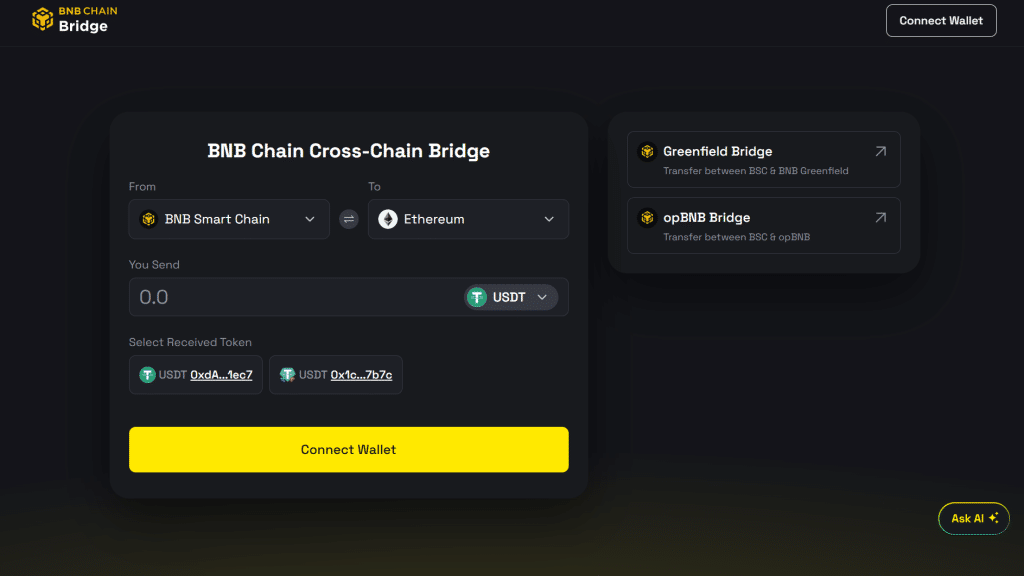
Bridge aggregators are used to access different providers to find routes for a given transfer. BNB Chain Bridge is one of the possible options, while MetaMask introduces cross-chain routing with its bridge. However, availability depends on the asset and networks in question.
You should confirm that the asset you send is in line with the destination asset. An aggregator is a good starting point, but it does not eliminate the risks posed by the bridge provider being used. BNB Chain indicates that it does not manage or control any individual route provided by the aggregator.
Method 2: Direct Bridge
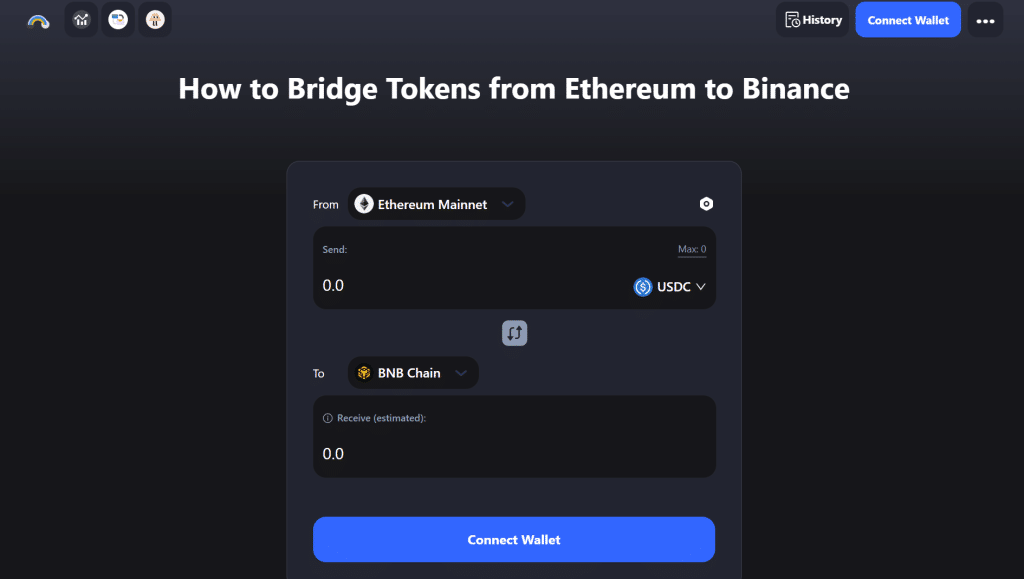
With a direct bridge, you can go straight to the provider instead of comparing passages through an aggregator. For example, users can select the Celer cBridge, which helps facilitate the exchange of assets such as USDT and USDC across Ethereum and BNB Chain.
The Steps for Bridging with Celer cBridge
- Go to the Celer cBridge official website.
- Connect the wallet you are using.
- Select BNB Chain as the source and Ethereum mainnet as the destination.
- Choose a token you want to bridge.
- Check out the estimated amount you will receive and see the fees and duration of the transaction.
- Approve the token if necessary and confirm the transaction.
- Monitor your transaction in the cBridge transaction history.
According to Celer, many transactions are executed almost instantly, however, some require as long as 20 minutes, which could depend on the network load. This is the official statement of the provider, but it does not mean that this would happen to every transaction.
Before using a direct bridge, check its rates using an aggregator. Furthermore, confirm that you are on the official web page of the provider and that the token address and the recipient network are correct.
Method 3: Through a Centralized Exchange
Centralized exchanges also represent another method if they support the desired token on BSC and have allowed its withdrawal on the Ethereum network. In this case, you just deposit an asset and withdraw it through a certain network rather than using a cross-chain bridge directly.
Trading through an exchange can be an advantage, however, one has to deal with deposit delays, processing periods, withdrawal fees, and trading costs.
Make sure to check whether the exchange accepts your token, your deposit network, and the Ethereum withdrawal for that asset before initiating the transfer.
Different networks are employed by different platforms, thus check that the network operated by the exchange is the same as the one used by the receiving party.
Method 4: Built-In Bridge of Your Wallet
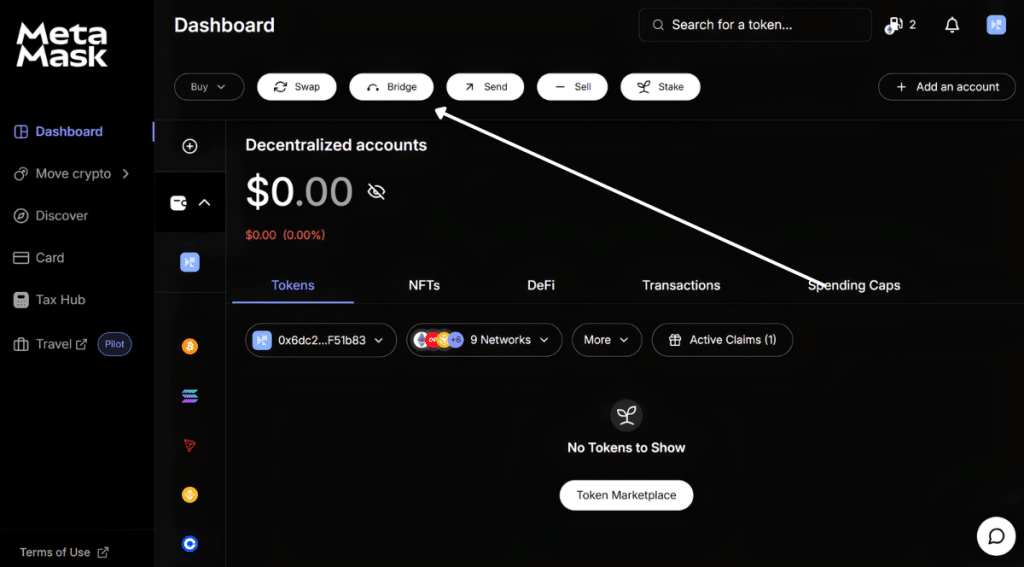
Some wallets contain bridge aggregators, allowing comparisons of different paths. The bridge feature of MetaMask allows one to choose the sending network and token, destination, and amount that they want. The cross-chain feature may allow both bridging and swapping.
Wallet-integrated bridges depend on independent routing companies. While the user interface may be better, it doesn’t mean that transactions are simpler or cheaper because they are done through a provider.
There can also be changes in available networks and tokens. Before attempting to use the service, always double-check whether the wallet allows for transfers from BSC to Ethereum with your required asset.
Bridging Back From Ethereum to BSC
The procedure for moving backward follows the same basic principles as the previous process, except for the fact that the source and destination networks will be changed.
- Choose Ethereum as your source and BNB Smart Chain as your destination.
- Select a token that is available on both networks.
- Make sure you have enough ETH for the first transaction.
- Verify the routes, fees, and final amount.
- Complete the transaction and keep track of it until the tokens arrive on BSC.
You might require BNB for the tokens after the arrival of the tokens on the BSC. You should also confirm if the asset being received is a token or a bridged counterpart. Don’t think that a route is applicable in the reverse direction just because there is a forward direction available.
Common Issues That You May Encounter
Below are some common issues you might face while bridging tokens from one blockchain to another, along with instructions to check the transfer and fix any likely problems you can come across.
No Tokens Appear after Bridging
Start by checking the transaction history of the bridge, then check to see if the transfer has been completed. Then make sure that you switch your wallet to Ethereum and check the balance.
Transfers Stuck or Pending
A pending transfer could be awaiting validation by the source chain, a relayer, or its destination transaction. To check on the source transaction, it should be viewed on a block explorer and the status should be confirmed through the bridge’s official status page.
You shouldn’t submit a new transfer just because the previous one looks delayed. In case the provider states that the transfer was canceled or stuck, make sure that recovery instructions are followed. Please never share the seed phrase with the support staff or recovery service.
Wrapped and Native Tokens
Tokens that share the same ticker symbol may exist on different networks with different contracts and issuance arrangements. The bridged asset can be either a wrapped asset or an asset released via cross-chain technology, unlike a native asset, which is issued under the target network’s system.
It’s important to check the token contract and the assets the application can accept. The same name does not mean every other token with a similar name can be used interchangeably.
Is Bridging Secure?
Bridging is associated with risks including the hacking of smart contracts, unsuccessful transactions, and potential threats. Different designs of bridges yield different risks, as noted by Ethereum.org.
Make sure to use the official bridge site, check network and token information, and fees. Also, it would make sense to execute a small test transfer. As for wallets, check for approvals and never disclose your recovery phrase. It must be noted that there is no completely risk-free method for bridging.
Frequently Asked Questions
When transitioning from BSC to Ethereum, one might wonder about transactions, duration of reaching the other blockchain, and the fees involved in doing so. Below, you will find answers to the questions you might encounter along the way.
How long does it take to bridge from BSC to Ethereum?
The duration of bridging from BSC to Ethereum may vary depending on various factors, including the provider chosen, the conditions of the network being used, and the size of the transaction. According to Celer, many transactions get completed almost immediately while some transactions can take as long as twenty minutes. Other systems may take much longer, thus it is critical to check the actual time still required for your transactions before starting with them.
How much does it cost to bridge from BSC to Ethereum?
There is no fixed amount charged for every transaction carried out. The total fee charged is usually a combination of BSC gas charges, bridge fees, relay service fees, token swap charges, and Ethereum gas fees.
Can I use Binance instead of a bridge?
Yes, provided that the exchange allows deposits using the BSC network and withdrawals using the Ethereum network for your token. Prior to transferring, verify the available networks, deposit criteria, withdrawal cost, and processing time.