Key Takeaways
- Yield farming gives investors in crypto the chance to earn money via methods such as lending, liquidity provision, and other DeFi solutions amongst others, however, it is still a risky way of investing.
- Aave, Curve, Convex, Beefy, Uniswap, PancakeSwap, and Raydium are appropriate for meeting various demands, which include lending stablecoins and automated vaults.
- Profiting from high APY can lead to a situation of impermanent loss, vulnerabilities of smart contracts, and depegging phenomena.
Yield farming means making money from coins via lending them to DeFi platforms. A yield farmer earns from interest accrued, additional fees, and combinations of other strategies.
Choosing a cryptocurrency protocol that best fits its coin and the risk threshold is among the hardest things to do in yield farming. For instance, lending stablecoins is extremely different from lending coins that do not have much liquidity. Still, both methods have the same annual percentage yield (APY).
In this article, we have made a comparison of seven farming platforms in order to review the networks involved, their most used strategies in yield farming, the extent of the protocol, and the risk factors.
Best Yield Farming Platforms at a Glance
The TVL data is taken from DefiLlama as of 20th October, 2026. TVL shows the value of the assets deposited in the protocol, while APY shows the annual income generated from using the strategy or pool.
| Platform | Main Use | Networks | TVL Snapshot | APY and Risk |
| Aave | Lending | Ethereum and supported networks | $17.82B | Variable lending rates; Low to Medium |
| Curve | Stablecoin liquidity | Ethereum and supported networks | $1.29B | Pool-dependent fees and incentives; Medium |
| Convex | Curve reward optimization | Mainly Ethereum | $733.3M | Incentive-dependent; Medium to High |
| Beefy | Auto-compounding vaults | More than 40 supported chains | $109.61M | Vault-specific returns; Medium to High |
| Uniswap | Liquidity provision | Ethereum and other networks | About $4B across the tracked core protocol | Fee income varies; Medium to High |
| PancakeSwap | Liquidity and farming | 12 supported chains | $3.37B | Pool and incentive-dependent; Medium to High |
| Raydium | Solana liquidity | Mainly Solana | $1.17B | Trading fees and incentives; High |
We do not present an average APY for each of the platforms due to the presence of different pools on the platforms, which might have varying assets, incentives, and risk profiles. In order to find out the up-to-date APYs of pools, please check the DefiLlama Yields dashboard.
The stated values are for reference purposes only, meaning that they are not guaranteed returns. Data for protocols such as Aave, Curve, Convex, Beefy, PancakeSwap, and Raydium are tracked separately by the protocols.
How It Was Selected and Evaluated
The assessment takes into account the core of each platform, the network’s scope, the liquidity, and the risks involved with it. Risk ratings are editorial opinions and should not be considered as official ratings or confirmations of safety.
We considered four factors:
- Strategy and usability: If the platform has potential for liquidity provision, loans, as well as fixed return strategies or automatic compounding.
- Total value locked (TVL) and liquidity: More deposit volumes point towards the usage of the platform, however, TVL alone does not guarantee that there is no risk of losing the funds.
- Market risks: This means that risks pertaining to vulnerabilities in smart contracts, price fluctuations of tokens, impermanent losses, and dependence on rewards are involved.
- Transparency of returns. Whether users can check the pool’s APY, pool’s fees, and the underlying assets before making a deposit.
APYs and TVL can change daily. The ratings below are meant as an overall guide to the nature of risks involved with the pools and are far from being recommendations to deposit into pools.
The Top Yield Farming Platforms
The service of yield farming gives individuals the opportunity to earn cash by lending digital currencies, providing liquidity to exchanges, or through staking. Each platform has its own way of generating money, potential earnings, and degree of risks involved.
1. Aave – Best for Lending-Based Yield
Aave allows users to lend cryptocurrencies and stablecoins, allowing borrowers to pay interest to suppliers who receive variable returns depending on the level of demand for borrowing, liquidity, and similar factors.
Aave is a good option for users who want to earn yields without actually managing a traditional liquidity provider position. The platform uses Ethereum and other networks, but each market has its own available coins and interest rates.
2. Curve – Ideal for Liquidity with Stablecoins
Curve works with liquidity pools for assets trading at identical price ranges, including stablecoins and some liquid staking tokens. When conducting swaps using such pools, traders incur fees, and liquidity providers may also get rewards.
Stablecoin pools may show lower price movements than pools involving unrelated and volatile tokens. However, such pools possess certain risks as well. Should a stablecoin break its peg, the pool will be exposed mostly to the weaker asset.
3. Convex – Top Choice for Curve Reward Strategies
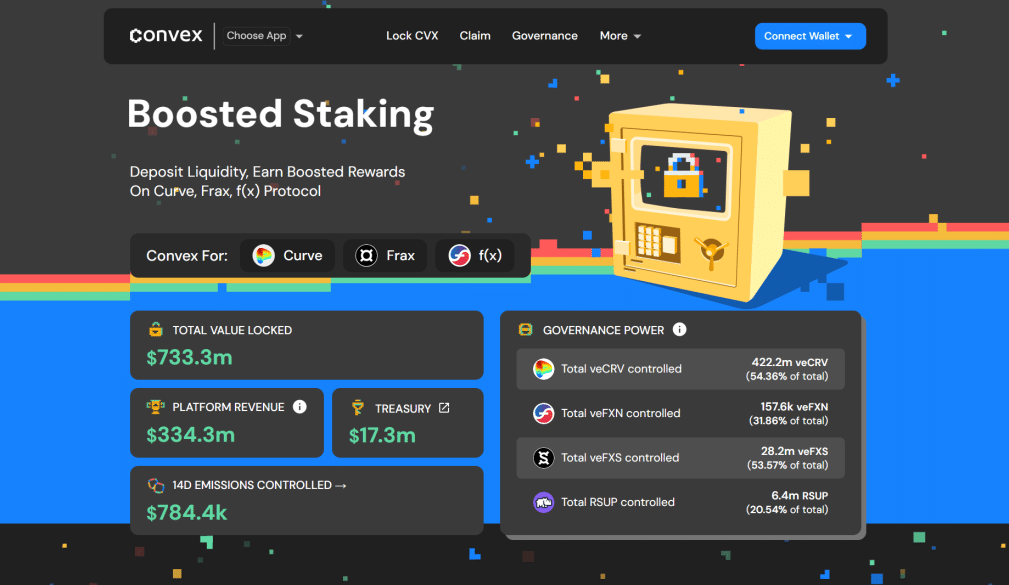
The platform Convex Finance enables qualifying liquidity providers in the Curve ecosystem to receive higher CRV incentives through the rewards system that it provides.
Unlike other lending protocols, Convex mainly focuses on improving Curve-related rewards. Its return rates depend on the pool in question, the distribution of rewards, and the prices of tokens used.
Even though this extra layer of rewards provides additional income opportunities, it complicates the system through additional protocols and mechanics.
4. Raydium – Best for Solana Yield Farming
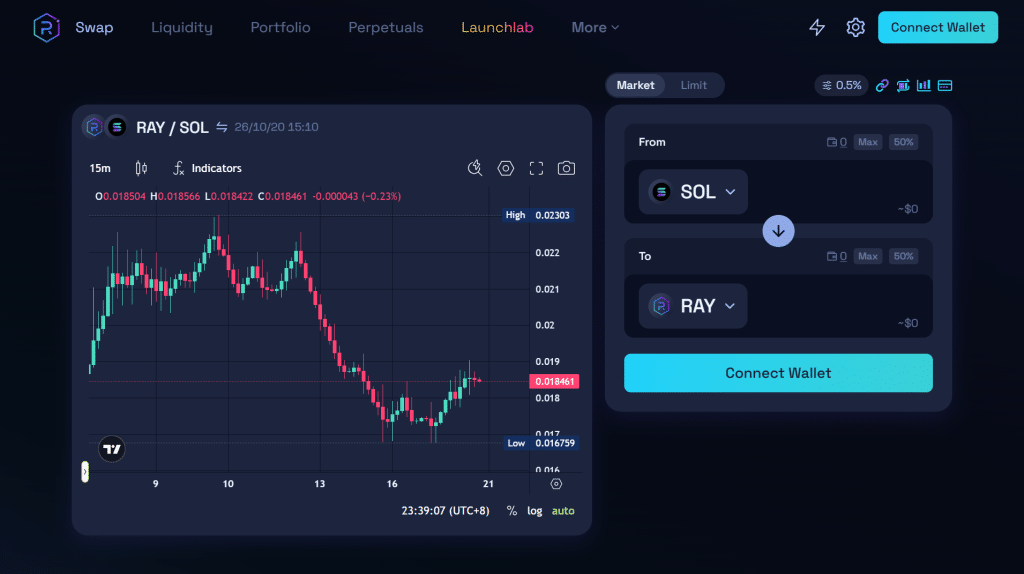
Raydium is a decentralized exchange built on the Solana blockchain and offers liquidity pools, as well as other trading products. Participants in liquidity pools can obtain a portion of the eligible trading fees allocated to them in addition to other potential rewards for participating in specific liquidity pools.
Compared to Ethereum, transaction fees on Solana are relatively lower. Nevertheless, their low transaction rates do not remove the danger posed by token price volatility or liquidity risks.
5. PancakeSwap – The Top Platform for Farming on BNB Chain
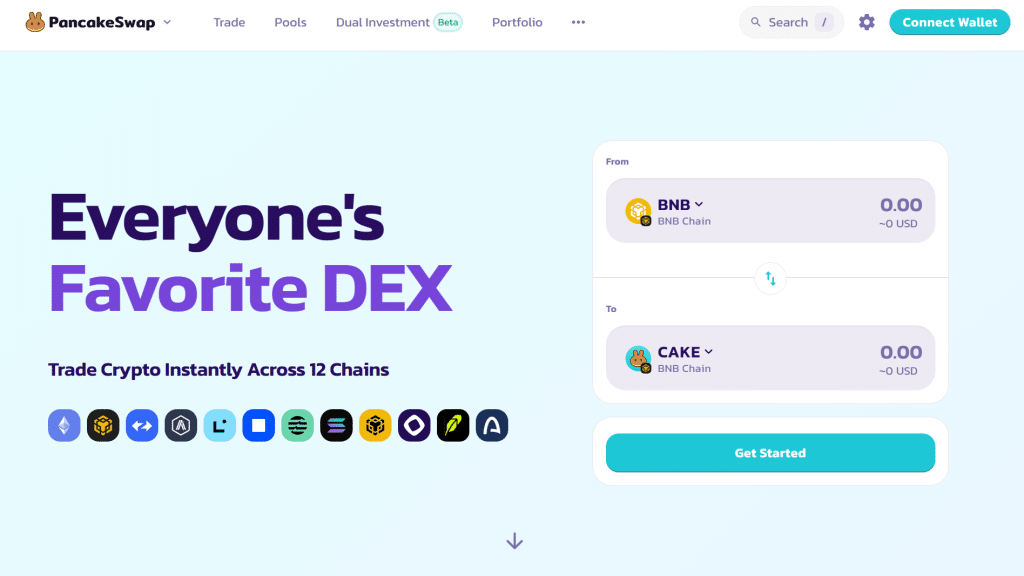
PancakeSwap provides liquidity pools, farming opportunities, and numerous DeFi services on various networks, and most of the TVL tracked as of October 20 comes from the BNB Chain.
All users are required to reward the platform with the liquidity they contribute to the given pool. APY varies for different pools and tokens used on the platform. The main risk is that any reward, such as CAKE or any other tokens, may prove to be volatile.
6. Beefy – The Best Platform For Auto-Compounding Vaults
Beefy is a platform that has made yield farming activities more efficient through Vaults. It helps the vault reward and then reinvest the rewards in order to earn even more.
Beefy offers a wide range of blockchain technologies that allow users to analyze various yield farming techniques without having to go through the hassle of manually cashing out and reinvesting the yield.
The only downside is that the user still faces general protocol risks related to yield farming protocols, token volatility, implementation risks associated with strategy errors, as well as the inherent smart contract risk of the automation layer.
7. Uniswap – Best for Flexible Liquidity Provision
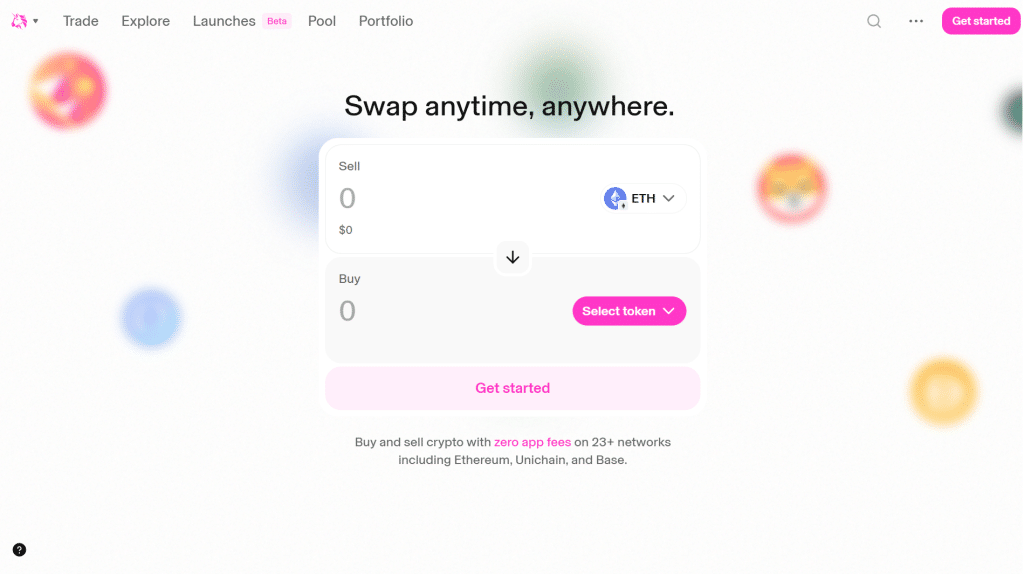
Users are able to provide token pairs to liquidity pools on Uniswap and gain a percentage of relevant trading fees. Uniswap’s concentrated liquidity pools allow the liquidity suppliers to select the price range within which their funds will be effective.
Thus, capital efficiency can be optimized as long as the market pricing remains within the range indicated by the supplier. Yet, a position can earn no fees if the price deviates beyond the selected range, which means that adjustments need to be implemented in this case.
Understanding Yield Farming and Sources of Yield
Yield farming is a process of putting crypto assets into various DeFi protocols to generate income. There are a few sources to gain from: lending fees, trading fees, token rewards, and revenues from complex techniques.
Lending protocols return to their suppliers the interest they charge their borrowers. Liquidity providers share the fees from trades. Some protocols give out more tokens to increase deposits, while some of the vaults reinvest returns automatically.
These sources do not bring profit equally. Trading fees depend on the activity, lending rates on borrowing demand, and sometimes token rewards become worthless. For example, the APY rate presented on the display may consist, in fact, of several sources. Therefore, it is worth knowing how much is made from interest, how much from fees, and how much from other sources.
Getting Started With Yield Farming: An Example of How it Works
Imagine investing $1,000 into a stablecoin pool that is offering an APY of 5%. If this interest rate were to remain unchanged for an entire year, your investment after one year would amount to roughly $1,050.
This example is merely an example of how yield farming works and is not meant to be used as a prediction. The actual APYs on offer may be different, there may be transaction fees to pay, and there may be issues with the stablecoin or protocol.
Before depositing:
- Ensure that you verify the official protocol’s website and the pool correctly.
- Look into the relationship between the assets, APY, TVL, and withdrawal conditions.
- Familiarize yourself with the risks of the pool and see whether returns depend on the reward tokens.
- Gather the fees applicable and other charges concerning the deposit, withdrawal, or transaction.
- Begin by depositing an amount you are not afraid to lose and confirm how the withdrawal operations are executed before depositing anything further.
Risks to Understand Before You Deposit
While yield farming can provide gains, it brings with it a certain level of risk. Hence, before depositing your assets, have a good idea of the potential risks and threats and how they are likely to affect your investment.
Impermanent Loss
Providing liquidity for two assets can lead to changes in price with respect to each other. The consequence of this could be that the current value of your position might be smaller than that of holding the tokens. The loss could be compensated by trading fees, though this is not an assurance of profit.
Risks Associated with Smart Contract and Depeg
Any vulnerability or exploitation can present a risk for deposited assets. Stablecoins can also lose their pegging; liquid staking and wrapped assets can be below the value of the original assets. An audit does add some uncertainty but does not provide assurance of the protocol’s reliability.
Reward Tokens Whose Value Decreases
A pool may proclaim a high APY due to its distribution of a protocol token. However, if the value of the token decreases, the actual value of rewards may be less than what was anticipated. Therefore, do take into account the actual returns in the token that you wish to accumulate instead of merely relying on the figures presented by the platform.
Safer Alternatives: Earn Products and Staking
Individuals looking for easier options for earning returns in cryptocurrencies can look at yield farming in contrast with earn products.
Although using earning products may look less complicated, they also carry the risk of counterparties and custody since it is possible that the service holds the assets. Staking is a method of earning with the proof-of-stake mechanism, but in this case, there are risks such as slashing, freezing, and depreciation of tokens.
In any case, neither of the above-mentioned methods is risk-free. In order to assess them properly, it is good to consider how assets are managed, if withdrawal is postponed, how returns are generated, and if something happens with the provider or the protocol.
Frequently Asked Questions
Profit from yield farming varies across different assets, platforms, and mechanisms. The answers below will help you clarify some of the common questions before the decision to invest.
Is Yield Farming Still Profitable?
Sometimes it can result in profits, but it depends on transaction fees, return interest rate, payments, token price, etc. A high APY does not ensure that the profit will be high enough to cover the losses and the fees incurred.
How Does Tax Work on Yield Farming?
Tax on yield farming will depend on your country as well as the nature of your operation. There are various taxes applicable on receiving rewards, performing swaps, withdrawing liquidity, and making sales. Hence, maintaining a record of transactions becomes necessary in addition to consulting a tax consultant with expertise in taxes pertaining to cryptocurrency.
What is Practical APY?
There is no such thing as one practical APY for all strategy types. Lending stablecoins may yield lower and variable returns while liquidity pools and the farms with incentives can show very high rates, yet so can the high risk. Confirm the live data of pools and find out the source of yield before depositing.