Key Takeaways
- Arbitrum is one of the most active Layer 2 scaling solutions on Ethereum, with transaction fees that are usually much lower than on the Ethereum mainnet.
- Users mainly want to bridge to Arbitrum to avoid high costs on Ethereum while still getting the same mainnet security.
- Arbitrum has also been used for tokenized real-world assets (RWAs) with TradFi institutions like BlackRock, Franklin Templeton and WisdomTree as notable examples.
As many of you know, Ethereum can get very slow and at the same time expensive, especially when the network is busy.
Arbitrum is a layer 2 scaling solution that offers a cheaper and faster transactions by bundling those multiple transactions together and then settling them on the Ethereum mainnet in a single transaction.
Without further delay, let me show you how to bridge funds from Ethereum to Arbitrum or specifically Arbitrum One.
The cheapest and fastest way onto Arbitrum
The cheapest and fastest way into the Arbitrum blockchain will depend on where your funds are starting at.
If you are already in another layer 2 blockchain, then it would just be very cheap for you to just bridge those funds to Arbitrum by using a blockchain bridge for less than a dollar and a shorter waiting time.
But if your funds are mostly sitting on the Ethereum mainnet in a Web3 wallet, that could be a bit expensive.
Your best move is to use a centralized exchange to buy crypto assets compatible with Arbitrum, then send those funds to your Web3 wallet on Arbitrum for a lower cost.
Before you bridge
Let’s say your funds are in a Web3 wallet and you want to bridge your funds to Arbitrum. You must prepare a small amount of ETH tokens on the Ethereum mainnet in order for your bridge transaction to go through.
Gas fees on Ethereum rise and fall with network activity, so check the current fee before you start. In early November 2026, when this guide was published, around $10-$20 in ETH value was enough for multiple transactions, so you did not need to deposit a lot of ETH to your Web3 wallet.
How to use the official Arbitrum bridge
For this guide, we will be using the official Arbitrum bridge first in order to familiarize you with the process of using blockchain bridges.
Later in the tutorial, I will also be providing a list of alternative bridges you can use to bridge your funds to Arbitrum.
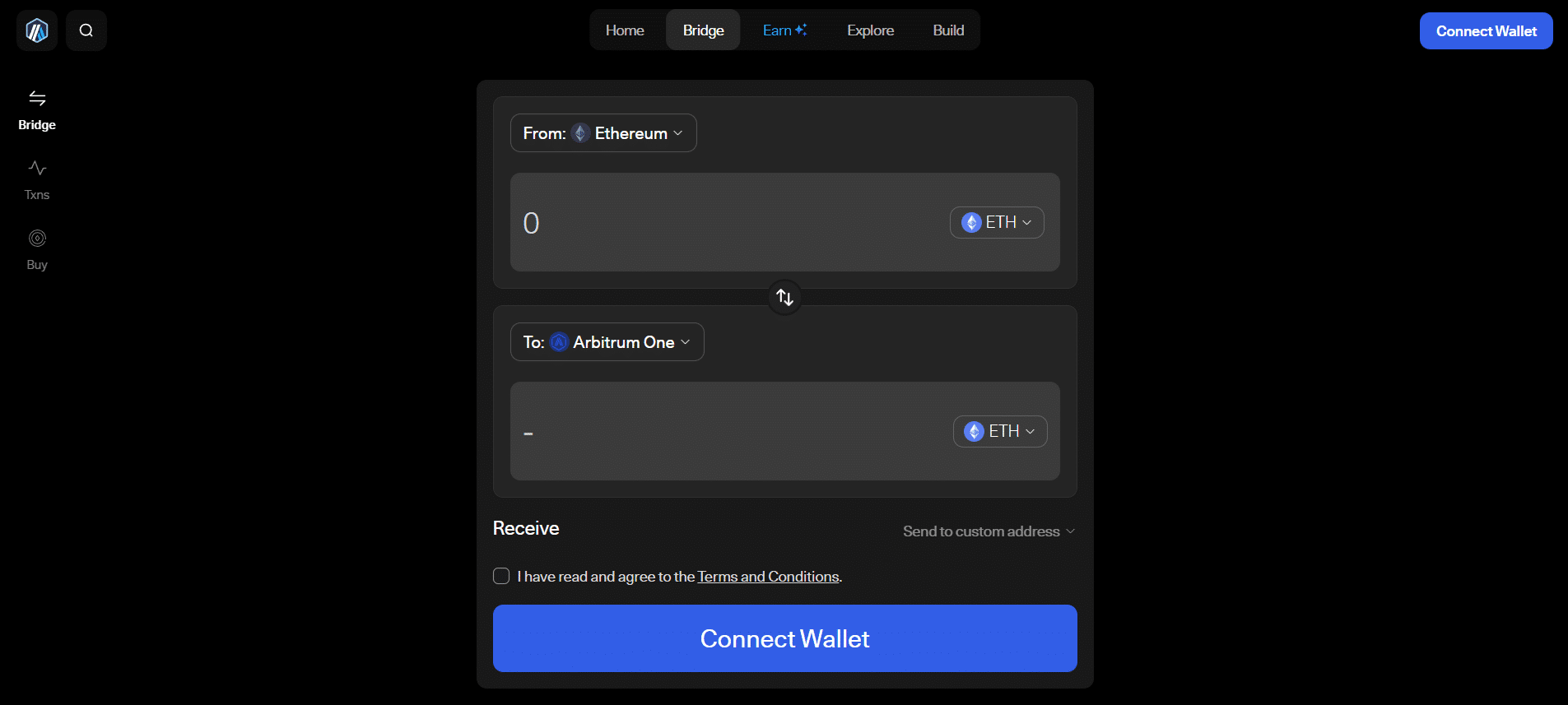
First, head over to the official Arbitrum bridge at https://portal.arbitrum.io/bridge.
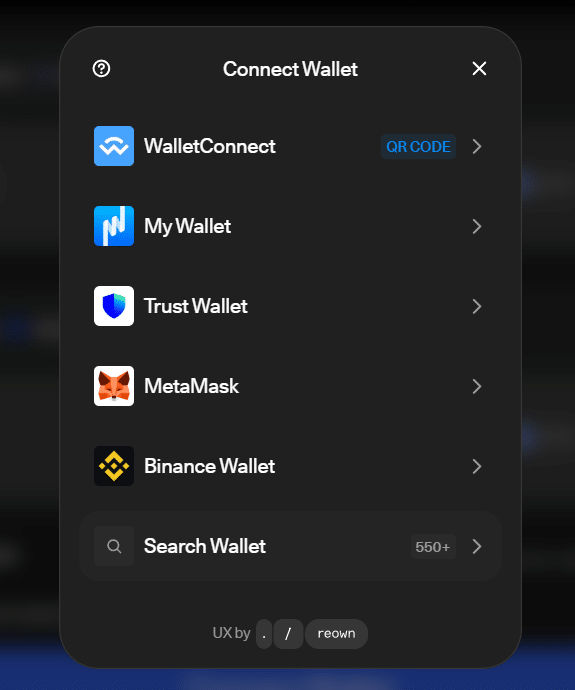
Then you will have to connect your Web3 wallet where your funds are sitting at.
After connecting your Web3 wallet, if your funds are in Ethereum, set the “From:” section to Ethereum and the “To:” section to Arbitrum One.
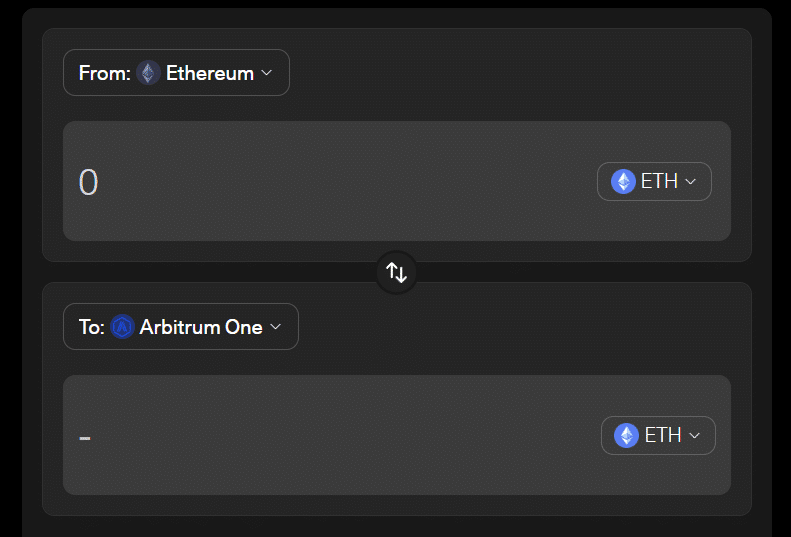
Now, enter the amount you want to bridge from mainnet Ethereum to Arbitrum.
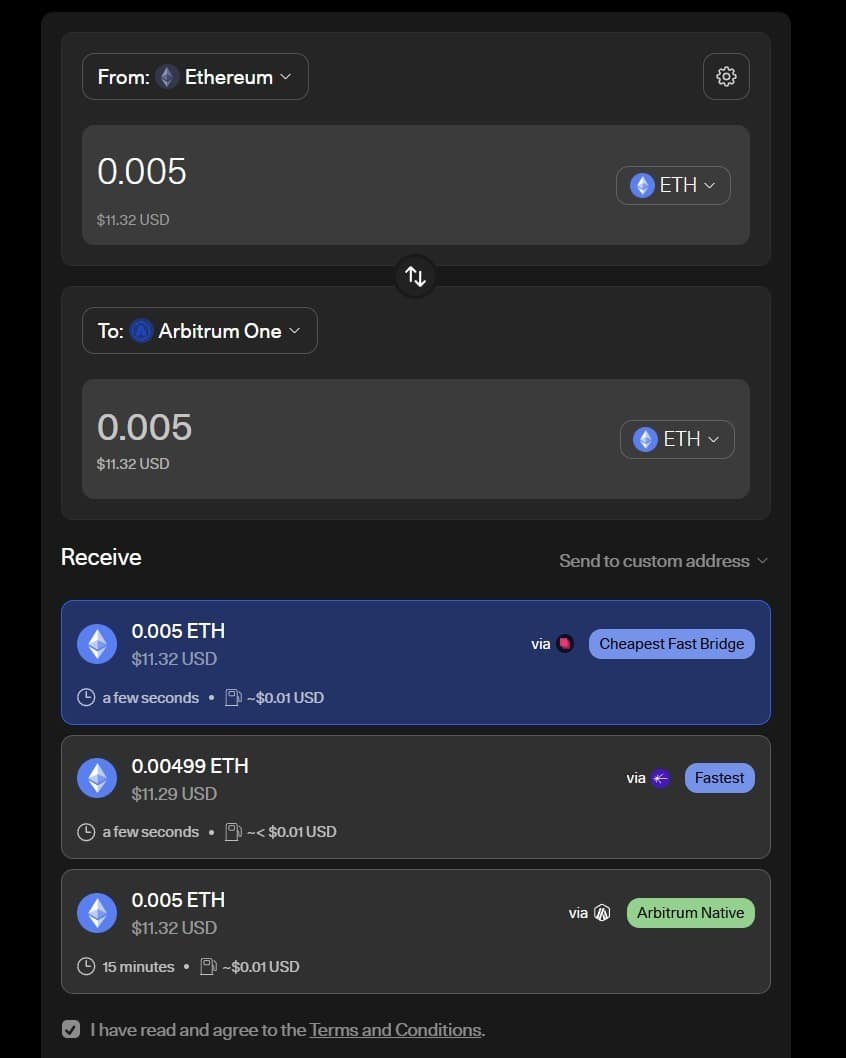
The bridge will then provide options for which platform you want to bridge your funds on. You can choose the cheapest bridge or the fastest bridge.
Also, don’t forget to tick the “I have read and agree to the Terms and Conditions” box in order to proceed.
Then a pop-out from your Web3 wallet will appear asking you to approve the transaction. Sign the transaction, then wait for your funds to bridge to Arbitrum.
It can be a few minutes or a little longer, depending on how busy the network is. Don’t stress; your funds won’t be lost. Moving funds the other way is much slower: withdrawals from Arbitrum One back to Ethereum through the official bridge take roughly one week because of a dispute window of about 6.4 days, and you then claim the funds on Ethereum.
Faster alternatives
Now that you have learned how to bridge your bridge to the official Arbitrum bridge, I will now show you some popular bridges that also support Arbitrum and Arbitrum-based assets.
Portal by Wormhole

Portal leverages the Wormhole interoperability protocol to bridge assets across popular chains, and it supports Arbitrum along with many other blockchains and the most popular Arbitrum native assets.
Stargate Finance

Stargate Finance supports many networks on its platform, and its protocol fee is flexible rather than fixed, so check the quoted fee before you confirm. The bridge can also be used to transfer dozens of assets between Arbitrum and other supported layer 1s and layer 2s.
Across Protocol

Across Protocol was built specifically for Ethereum and Ethereum-based layer 2s and is one of the few bridges to support slippage-free transfers. The platform supports a range of blockchain networks, including Arbitrum.
Circle’s CCTP
If you want a more institutionally backed bridge to switch your USDC or EURC stablecoins to Arbitrum, you can also try Circle’s Cross-Chain Transfer Protocol (CCTP) bridge.
Sending funds from an exchange straight to Arbitrum
Earlier in the “The cheapest and fastest way onto Arbitrum” section, I mentioned that your best move is to use a CEX and transfer it to Arbitrum at a cheaper cost.
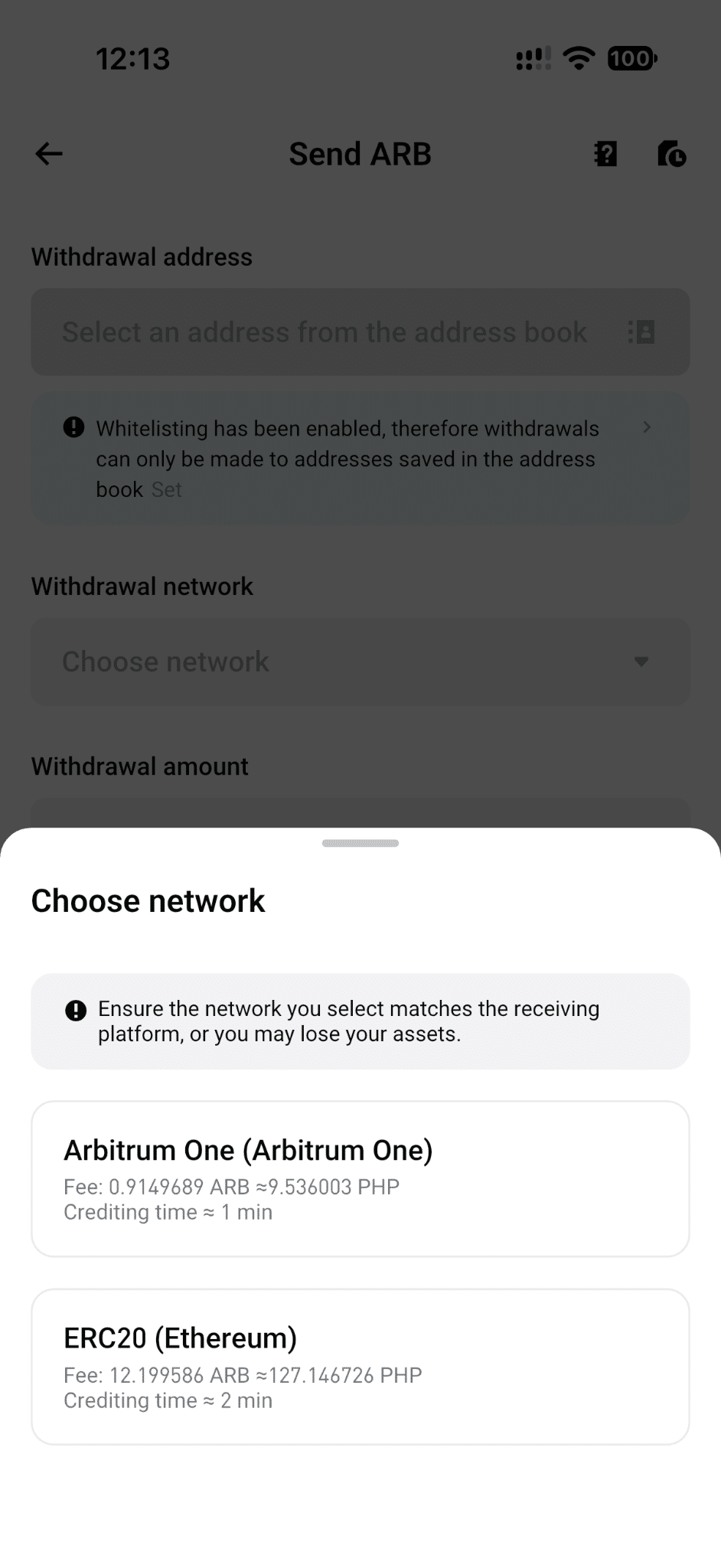
As you can see in the screenshot above, the exchange only charged a small network fee of 0.91 ARB to transfer the funds directly to Arbitrum rather than bridge from a Web3 wallet. Each exchange sets its own withdrawal fee, and it can change over time.
Bridging safely
If your funds are really in a custodial wallet, I would be careful about using bridges because they are prone to hacks and could put your funds at risk.
I do want to clarify that blockchains are indeed unhackable, but the moment humans build on top of those blockchains starts to create some cracks and loopholes in the system that could be exploited by hackers, so I would advise you to bridge at your own risk and only bridge when you really need to.
To reduce the risks, use only reputable blockchain bridges and avoid those that are just starting out. Additionally, a personal habit of mine is to avoid bridging on Fridays, because I suspect attackers prefer to strike when developers are preparing for the weekend. This is my own rule of thumb, not a proven pattern.
Frequently Asked Questions
Here are the most common questions about bridging funds to Arbitrum.
Why do I need ETH to use the Arbitrum network?
When moving funds (ETH and non-ETH) from Ethereum to Arbitrum, you will need to have ETH tokens in your wallet on the corresponding Arbitrum chain. This is because ETH is the currency used for gas fees on Arbitrum and all Arbitrum transactions are powered by ETH. Wrapped ETH cannot pay gas, so keep some native ETH; our WETH vs ETH guide explains the difference.
Should I skip using the Arbitrum bridge?
You may want to skip bridging if you already have funds sitting in a centralized exchange or you do not have enough funds in your layer 1 and want to “top up” your balance through a CEX or fiat on-ramp. When you transfer funds from your CEX of choice, you will have the option to move them directly to Arbitrum instead of Ethereum. For fiat on-ramps, you will select Arbitrum directly.
What is the main advantage of using Arbitrum Bridge?
The main advantage you can get of using the Arbitrum Bridge is lower transaction costs, making it a more cost-effective solution than Ethereum.
More crypto guides: Guides hub · What is cryptocurrency · What is a seed phrase · 7 crypto scams to avoid