Key Takeaways
- In the United Kingdom, selling or exchanging of a token may lead to Capital Gains Tax, if the investor experiences any gain during that exchange.
- Depending on their legal structure, tokenized stocks may be taxed in accordance with traditional shares, cryptoassets, or any other financial instruments.
- Since tax rules in the European Union differ among countries, it is important for investors to understand capital gains, income, and transaction tax rules in their country as well.
Tokenized stocks allow investors to trade shares of a company through tokens on the blockchain. These tokens enable investors to hold the corresponding shares of stock, have the right over the issuer, or any other arrangements linked to a regular stock.
However, what is the taxation of tokenized stocks in the European Union and the United Kingdom? The answer will vary based on the legal format of the tokens, the country of the investor, and the way the tokens are owned in regard to sales, dividends, and the like.
The sale of tokenized stocks is likely to lead to a capital gain tax while receipts from the sale of dividend or anything else is likely to be classified under investment income and, therefore, taxed accordingly.
The EU does not have a single taxation system for tokenized stocks. Each member state uses its own taxation policy, while the UK employs separate tax regulations.
What Are Tokenized Stocks?
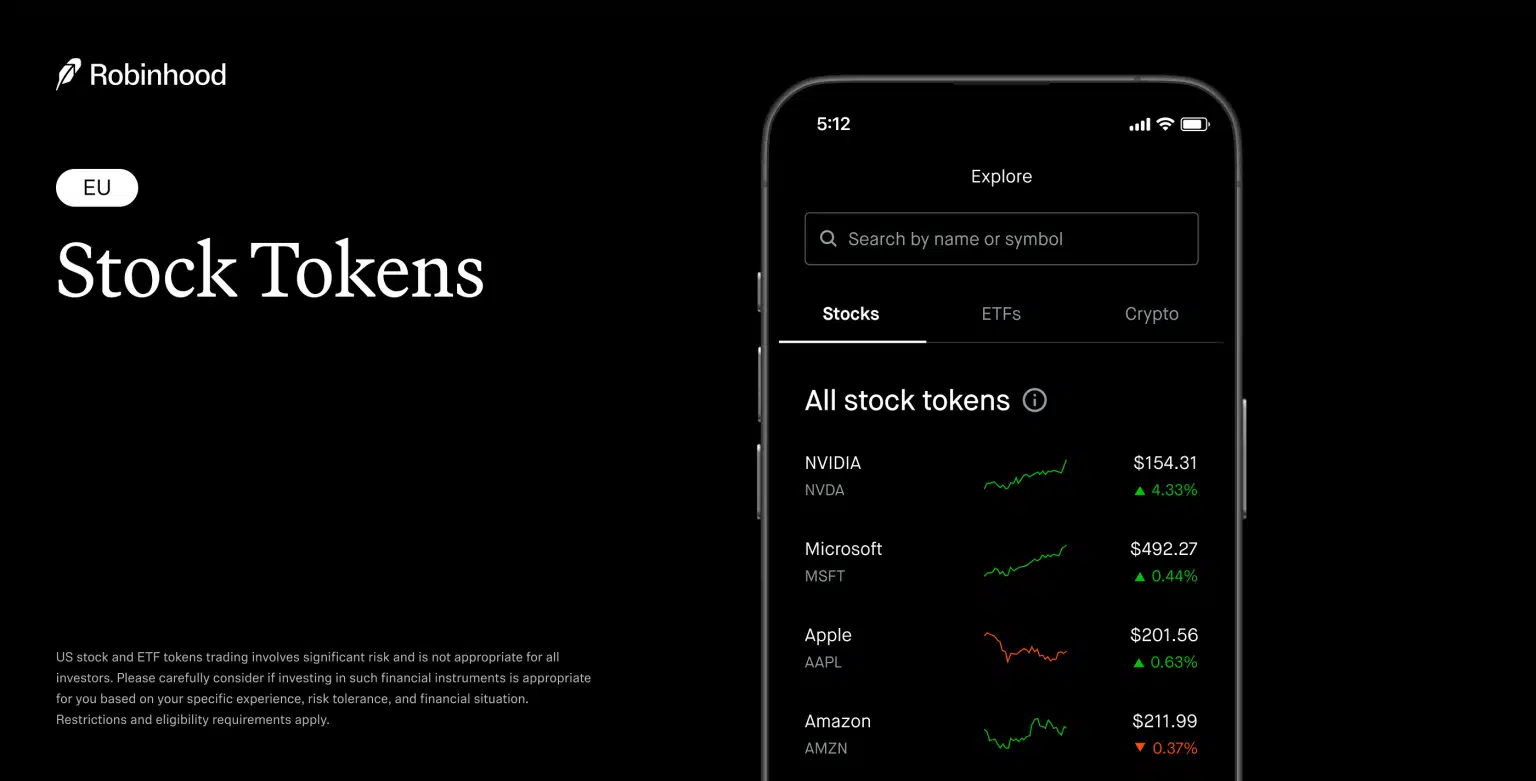
Tokenized stocks are tokens on the blockchain that allow retail investors to gain exposure to shares of publicly traded companies. The structure of tokenized stocks can differ depending on how the token is set up. In some cases, the token represents a share held by a custodian on behalf of the token holder.
Other times, it gives contractual rights to a return based on the price of the underlying asset without any ownership of an actual stock. This has implications for taxes.
Tokens that actually represent shares may be governed by the taxation of equity and investment income, whereas tokens that simply give price exposure will have a different treatment.
According to the European Securities and Markets Authority (ESMA), cryptocurrencies that meet the qualifications of financial instruments remain under the governance of existing financial services regulations regardless of the platform they use for their transactions.
Thus, investors are advised to read the terms of the specific token before determining the required taxation for that specific token.
How Are Tokenized Stocks Taxed in the EU?
The taxation of Tokenized Stocks in the EU varies, as there is no fixed capital gains tax for Tokenized Stocks. The taxation of the investor varies from EU country to country regarding capital gains on investments, dividends, and other financial activities.
Capital Gains Tax
When an individual sells tokenized shares, he or she may incur a capital gains tax if the price at which they sell their investment exceeds the price paid for it. For instance, if an individual buys into a tokenized share for €1,000 and later sells that tokenized share for €1,400, capital gains tax will apply to that transaction.
| Transaction | Amount |
| Purchase cost | €1,000 |
| Sale proceeds | €1,400 |
| Gross gain | €400 |
Depending on the investor’s country and any possible exemptions, the €400 gain might be taxable.
Taxable Gain may be decreased by various fees and fees. Tax allowances, exemptions, and various preferential treatments of investments might also be provided by a few countries.
The example does not show taxes or deductions, which means that it is not the final tax liability of any investor.
Taxes on Dividends
Dividends can be paid to holders of tokenized stocks in accordance with dividends of the underlying stocks. The amount of dividend received may be subject to taxation of investment income; tax rates vary according to residence of the investor and to the specific structure of the token.
In addition, it is essential for an investor to determine whether the distribution to him/her is indeed a dividend from the said corporation, or a contractual payment from the issuer of the token. This may affect the way income is reported.
Taxes on Financial Transactions
Various EU member states impose taxes on the purchase and sale of financial instruments. Typically, this tax applies to shares and, depending on the classification of the tokenized security, possibly to tokenized securities as well.
For instance, France has a tax on financial transactions on certain shares of large companies that are publicly traded. Spain and Italy also have taxes on financial transactions covering certain share trades.
However, a tokenized stock is not necessarily subject to the same tax as a traditional stock. The applicable tax rules depend on the nature of the security itself, the issuer of the security, the type of transaction, and the laws of the relevant country.
How Are Tokenized Stocks Taxed in the UK?
The taxation of tokenized stocks in the UK is different. HM Revenue and Customs (HMRC) looks at the nature and characteristics of the underlying asset to treat it for tax purposes. This means tokenized stocks may be subject to different tax treatment, depending on whether they are shares, contracts, or crypto assets.
The disposal of tokens may involve:
- Selling the tokens for pounds or other currencies
- Exchanging the tokens for a different crypto asset
- Transferring the tokens to another person, subject to any exceptions that apply
- Using the tokens to pay for goods or services
Tax on Businesses
Businesses, including corporations, may have different tax obligations than individual trade in respect to specific stock tokenization activities.
HMRC has laid down guidelines based upon which the companies processing cryptocurrency transactions must pay Corporation Tax or Income Tax on the basis of specific differentiating factors associated with the situation.
An investment company involved in the business of tokenized stock trading must consider the sale or disposal of an investment in terms of tax treatment.
Income Tax on Dividends
You may receive dividends when investing in tokens representing stocks that are tokenized. Income tax treatment of the payment as a dividend depends on your individual tax situation, the character of the payment received, and whether the token gives you rights to underlying stock.
Just because a token issuer makes a payment following an underlying company’s dividend does not automatically make it a dividend.
EU vs UK: Tokenized Stock Tax Differences
| Tax Area | European Union | United Kingdom |
| Capital gains | Varies by country | Capital Gains Tax may apply |
| Dividends | National tax rules apply | Dividend tax may apply |
| Token classification | Based on legal rights and national rules | Based on asset features and legal rights |
| Transaction taxes | Vary by country | Stamp Duty or SDRT may apply |
| Business activity | National income and corporate taxes apply | Income Tax or Corporation Tax may apply |
The main difference is that investors in the EU must follow the customs regulations for taxation in each of their respective countries, while investors in the UK follow guidance from HMRC and taxation legislation specific to the UK.
Risks and Tax Factors
There are risks that you must take into account.
Token Structure
Tax implications of a token representing real shares may be different than a token simply reflecting the price of a stock. Investors should verify whether they own actual shares, a contractual interest, or some other type of financial investment.
Cross-Border Transactions
An investor may own a token issued in one country, conduct transactions on the token in a second location, and have their headquarters in another country.
The concept of tax residence usually plays an important role in determining the investor’s obligations regarding reporting. Other factors that may affect the decision are foreign withholding taxes and double taxation rules.
Changing Tax Rules
Tax agencies persist in creating rules and regulations for virtual currencies and tokenized securities. Investors need to review the official guidelines before they submit returns, especially if the design of the token does not correlate to conventional shares or cryptocurrencies.
Frequently Asked Questions
Below are some of the most common questions regarding the taxation of tokenized shares in the UK and EU.
Are tokenized shares taxed like the regular shares in EU?
Not necessarily. The taxation of tokenized shares depends on the type of token (including the legal characteristics of the token) and local tax laws of the member states. If the specific token is interpreted as a share then it will normally be subject to taxation as per securities laws, however, depending on the characteristics of the token there may be further taxation implications that arise.
Do the UK investors need to pay Capital Gains Tax on tokenized shares?
They may indeed. Depending on the characteristics of the token representing the share, the UK tax authority, HMRC may determine that the disposal of the token represents a taxable gain. Therefore, it is important to analyse the relevant law before reporting this transaction.
Are dividends paid from tokenized shares taxable?
If considered as dividends, the subsequent taxation of the dividend will depend on the type in question as well as tax law of the respective country.
More crypto guides: Guides hub · What is cryptocurrency · What is a seed phrase · 7 crypto scams to avoid