Key Takeaways
- Massive Savings: Crypto remittance offers fees as low as 0.1% of the transaction value, compared to the 6%+ average cost of traditional wire transfers to Pakistan.
- Speed: Funds are available for withdrawal in Pakistani Rupees (PKR) within minutes, bypassing the multi-day settlement delays of legacy banking systems.
- P2P Focus: Due to local banking restrictions on crypto, the most common and efficient cash-out method is the use of Peer-to-Peer (P2P) exchanges on major global platforms.
To send money to Pakistan with crypto, the sender buys USDT or USDC on a global exchange and sends it to the recipient over a low-fee network such as Tron, Polygon or Solana. The recipient sells it for PKR on the exchange’s P2P marketplace to a verified local buyer, who pays into their Pakistani bank account or mobile wallet.
The Crypto Advantage Over Traditional Pakistani Remittance
Pakistan is a major recipient of international remittances, yet Overseas Pakistanis (OPs) routinely face high fees and long transfer times from traditional money transfer operators and banks. Average global remittance costs hover above 6%, a significant drain on funds sent home.
Crypto remittance solves this by leveraging stablecoins, such as USDT or USDC. These digital currencies are pegged 1:1 to the US Dollar, providing price stability while utilizing rapid, low-cost blockchain networks. This method provides a borderless and instantaneous transfer of value, allowing the recipient to receive PKR in their bank account almost immediately.
Step-by-Step Guide: Sending Crypto from Abroad to PKR
The most practical and widely used method for crypto remittance to Pakistan involves using the P2P marketplaces offered by global exchanges, as direct bank-to-exchange transfers are often restricted by local banks.
1. Sender: Acquire and Send Stablecoins
The sender purchases stablecoins (USDC or USDT) on any major global exchange (Binance, OKX, Bybit). To optimize for cost, the sender must choose a low-fee blockchain network (Polygon, Tron (TRC-20), or Solana) for the transfer.
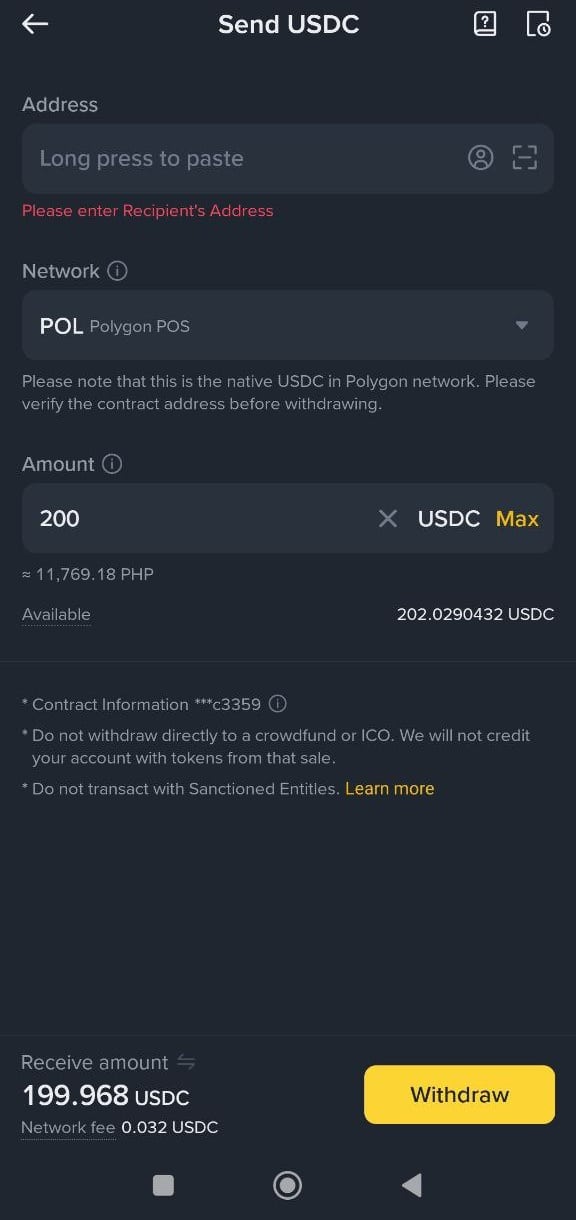
- The sender transfers the stablecoin to the recipient’s wallet on the same exchange platform.
2. Recipient: Utilize the P2P Marketplace
Pakistani banks may only serve exchanges that hold a license or a no-objection certificate (NOC) from the Pakistan Virtual Assets Regulatory Authority (PVARA), so direct bank deposits to most exchanges are still not possible. The secure alternative is the Peer-to-Peer (P2P) marketplace, where the recipient sells their crypto directly to a verified local buyer for PKR.

- The recipient lists their stablecoins (USDT/USDC) for sale on the exchange’s P2P platform.
- They accept an offer from a verified local buyer willing to pay using a Pakistani bank transfer.
3. Cash Out: PKR Withdrawal to Local Bank
Once a P2P trade is agreed upon:
- The local buyer in Pakistan transfers the agreed-upon PKR amount directly to the recipient’s personal bank account (HBL, UBL, MCB, etc.) or mobile wallet.
- Upon confirming the receipt of the PKR in their bank account, the recipient releases the crypto to the P2P buyer via the exchange’s secure escrow system.
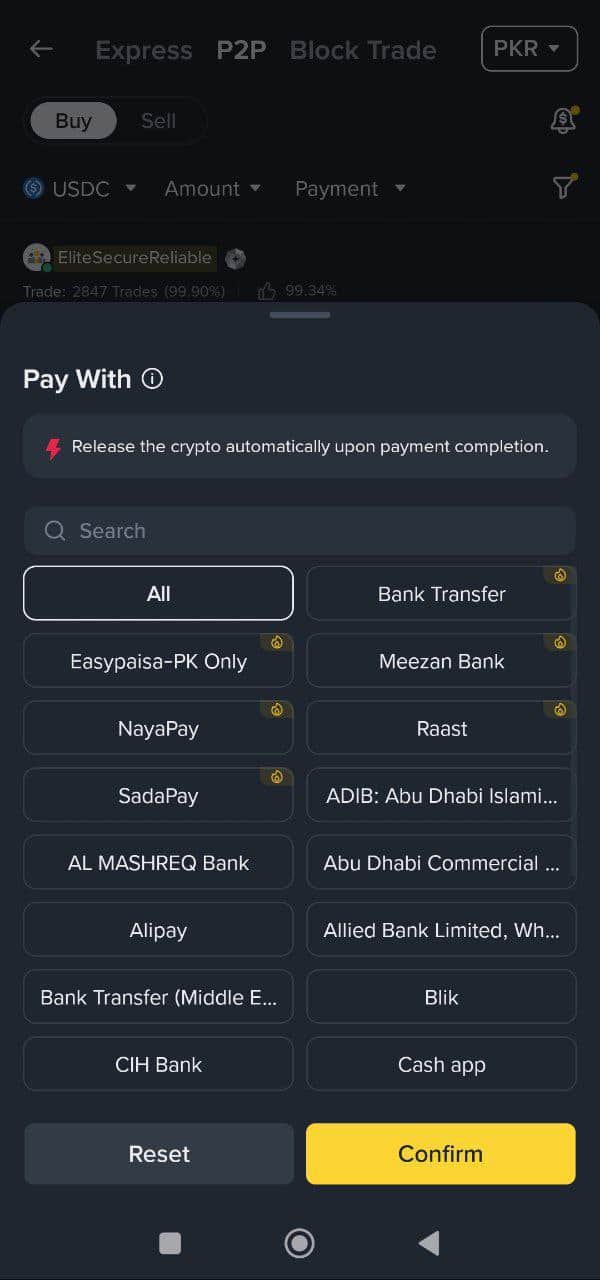
Local PKR Cash-Out Options and Fee Comparison
The P2P market offers the most flexible and low-cost way to liquidate crypto into PKR, utilizing established national payment systems.
| Cash-Out Method | Local Payment Examples (via P2P) | Estimated P2P Fee | Estimated Time |
| Bank Transfer | HBL, UBL, MCB | Typically 0% (Fee is in the exchange rate) | 10–30 Minutes |
| Mobile Wallet | EasyPaisa, JazzCash | Typically 0% (Fee is in the exchange rate) | Instant |
Total Cost Note: The primary costs are the low blockchain network fee (paid by the sender, often < $1) and the minor price difference absorbed in the P2P exchange rate. This is vastly cheaper than the traditional remittance percentage fees.
Why Stablecoin P2P Works for Pakistan Transfers
For sending money to Pakistan, stablecoin remittance through escrow-based P2P platforms offers an unparalleled combination of speed, cost-effectiveness, and direct access to local payment methods. This system ensures that Pakistani families receive the maximum possible value from funds sent from abroad, often in less than 30 minutes.
Frequently Asked Questions
Is cryptocurrency legal in Pakistan?
Crypto is now regulated in Pakistan. The Virtual Assets Act 2026, in force since March 5, 2026, made the Pakistan Virtual Assets Regulatory Authority (PVARA) the licensing body for exchanges and other providers, with fines and prison terms for unlicensed operators. In April 2026, the State Bank of Pakistan (SBP) replaced its 2018 ban and let banks serve PVARA-licensed firms and NOC holders, though banks still cannot trade or hold crypto themselves. Check a platform’s PVARA status before using it.
Which exchanges support PKR withdrawal in Pakistan?
Major global exchanges like Binance and OKX are the most commonly used platforms in Pakistan, primarily due to their highly liquid and escrow-secured P2P marketplaces that support transfers to PKR bank accounts and local wallets. Binance received a PVARA NOC in December 2025, a step toward a local license; an NOC is not a full operating license.
Is using P2P trading safe for remittance?
P2P trading on major exchanges is generally safe because the exchange acts as an escrow agent. The recipient only releases the crypto after they have confirmed the PKR has successfully arrived in their bank account, protecting both parties from fraud.
More crypto guides: Guides hub · What is cryptocurrency · What is a seed phrase · 7 crypto scams to avoid