
Key Takeaways
- Staking Ethereum back then was impossible because it ran on a Proof-of-Work consensus model. You could only mine it.
- Ethereum developers finally switched Ethereum to Proof-of-Stake in 2022, making the network more secure, using less energy, and is now better at implementing new scaling solutions.
- This also means participants can now stake ETH to validate transactions and earn passive rewards.
After Ethereum fully transitioned into Ethereum 2.0 back in 2022 during the Merge event, people were now allowed to set up Ethereum nodes to help protect the network and earn rewards from it.
The good news is that people with the least experience with staking, down to those with the most technical knowledge on Ethereum, now have a fair chance of earning rewards validating the network.
This guide will show multiple ways to stake Ethereum, whether you are a beginner or an experienced ETH validator.
What is Ethereum staking and how does it work?
Ethereum staking means you are using your ETH tokens to help secure the network and earn staking rewards from it.
Back then, the Ethereum network was in a transition period from PoW to PoS. This means that instead of miners competing to solve and validate transactions and earn rewards, ETH holders can just stake their ETH and earn rewards for validating transactions.
When you stake Ethereum, you are actually locking up your ETH tokens. But in return, you earn a reward for doing so. The amount of the reward will depend on how much ETH you stake, as well as how long you plan to stake it for.
How to stake ETH?
We have already found five options for that answer. But how to stake it correctly? To stake Ethereum, you will first need to have a balance of ETH in your account. Then, you can either choose to deposit your ETH on an exchange, into a staking pool, or you can even stake your ETH yourself through solo staking.
Option 1: Stake on an exchange
There are actually two ways to stake ETH on a centralized crypto exchange, based on experience. You can do this by either going to the app’s Earn section or by participating in a stake-to-mine liquidity mining program offered by the platform whenever there is a new project is listed.
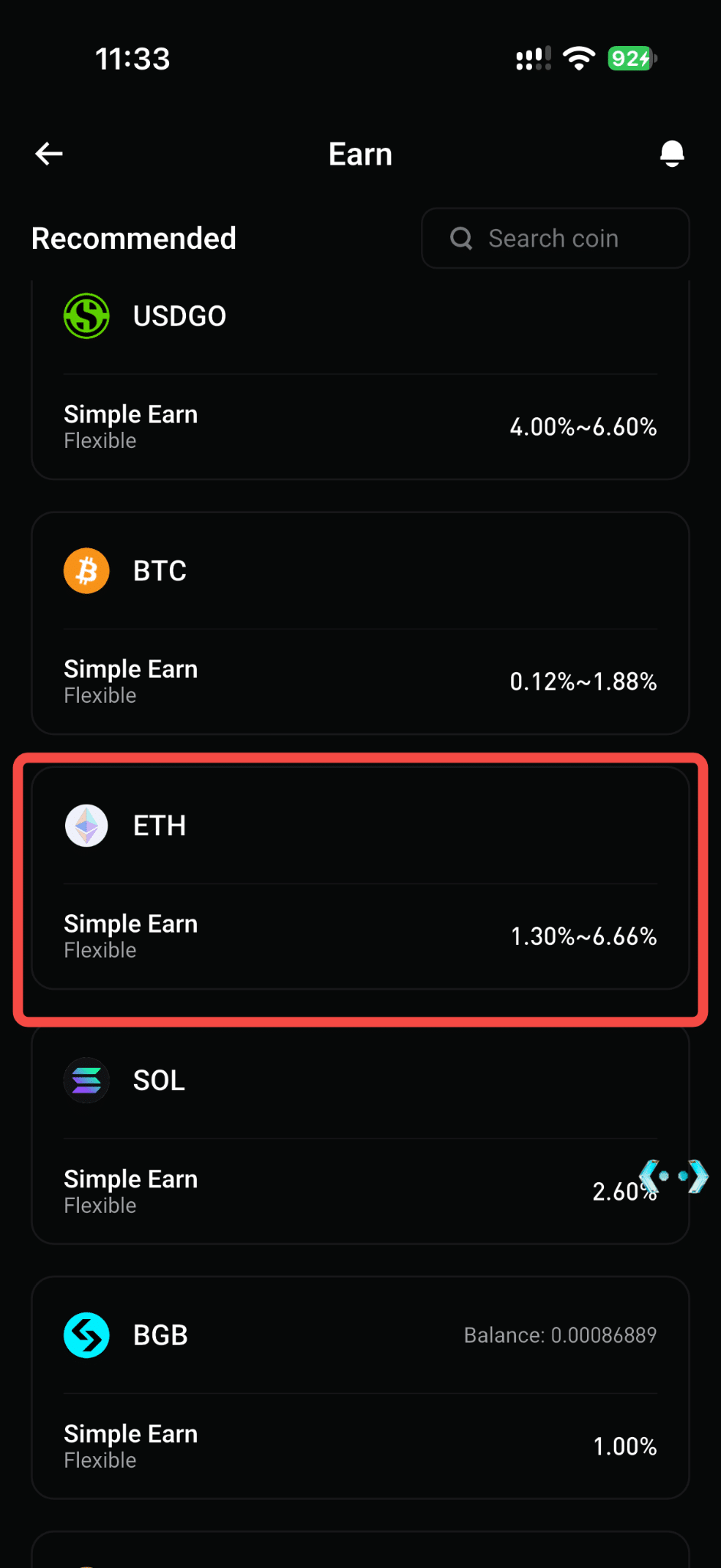
Staking ETH on the Earn section has no risk to you because you can withdraw your assets at any time you wish. It is also the same when participating in launchpools, you get passive income for staking ETH and receive new tokens of the new project.
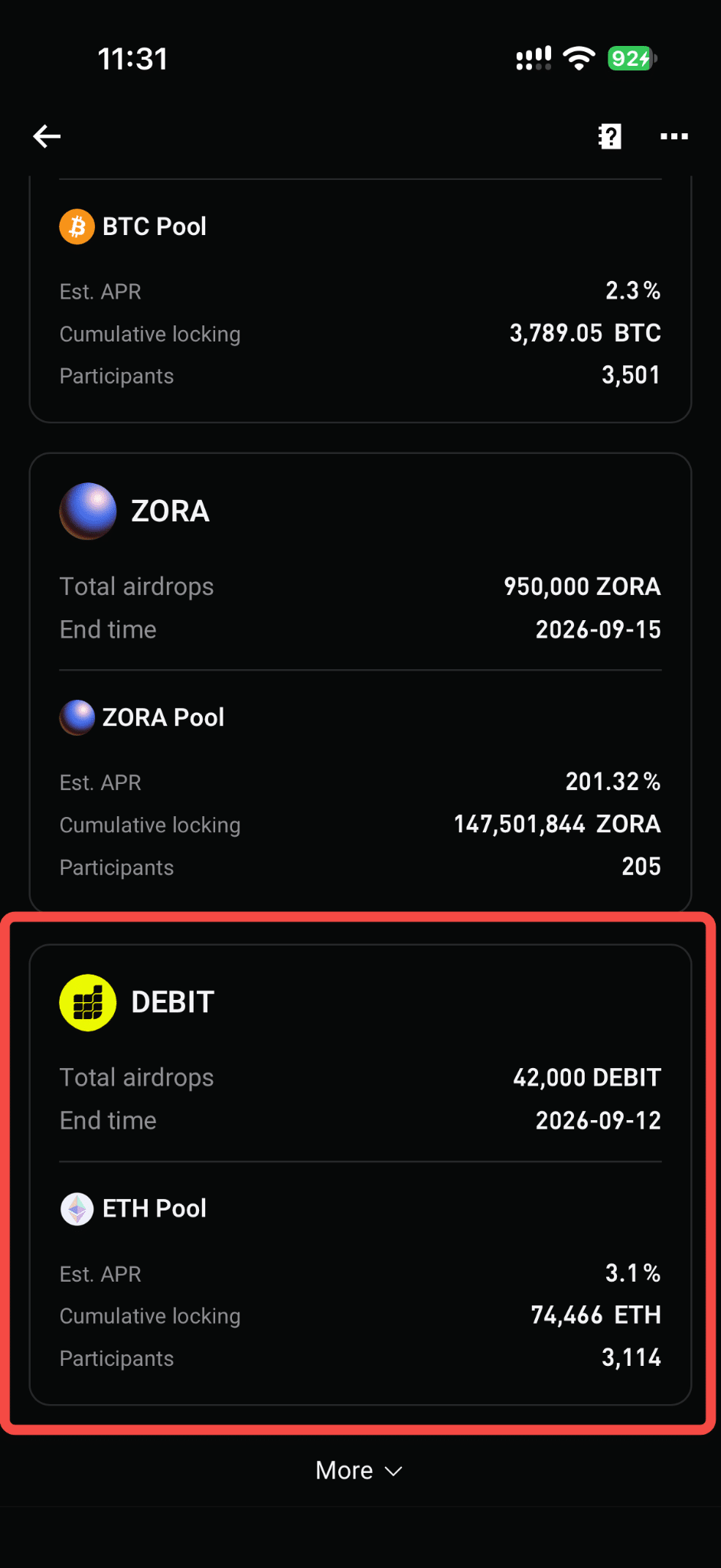
This is the most easiest option when you don’t have a lot of ETH and want the simplest process to stake and earn passive income.
Option 2: Liquid staking
Liquid staking is a new method of staking that involves the tokenization of staked assets which began when Ethereum shifted to proof of stake.
To become an Ethereum validator, you had to stake 32 ETH as collateral. The result of this was the privilege of adding blocks to the blockchain and a handsome reward of 2.3%-2.5% APY. Up to there, this staking was traditional in nature.
When the Merge happened, users could not unstake their Ethereum. However, they still needed to remain liquid while securing the network. This need led to the development of Liquid Staking Derivatives (LSDs), giving rise to liquid staking.
How liquid staking tokens work
In liquid staking, you stake a specific amount of crypto on an exchange. A liquid staking platform such as Lido Finance will give you an LSD (liquid staking derivative) of the crypto you staked. The LSD comes in the form of tokens such as Lido Staked Ether (STETH).
You receive the same amount of LSD for the type of crypto asset you have staked. For example, if you stake 5 SOL on Marinade Finance, then you will receive 5 Marinade Staked SOL or MSOL.
Using them in DeFi
Liquid staking protocols can provide a token tha represents a user’s staked position. The user may then be able to use that token in other DeFi apps, depending on the protocol.
So if you are not much into DeFi and don’t know what you are doing, I recommend going back to Option 1 above.
Option 3: Pooled staking from your wallet
For users who have less than 32 ETH or do not have the technical knowledge or resources to operate as a validator, staking pools can be another option.
In a staking pool, users with low amounts of ETH can pool their tokens to reach the 32 ETH requirement. The rewards are then sent to all participants in the pool pro rata. This option actually benefits smaller investors who still want to earn staking rewards but have limited capital to start.
You also do not need to worry about the pool because the pool validator will take care of it; all you need to do is just join the pool with what ETH you have.
Option 4: Staking-as-a-service
There are also centralized providers that do the staking for their clients. These services are usually easier to use because the provider manages all the processes.
However, users lose some control over their staked ETH and there are often fees that reduce part of the staking rewards.
Option 5: Solo staking
This option is the strictest of all five, wherein a user must own 32 ETH and operate their own validator.
This approach requires technical knowledge, as the validator node must be operated and maintained by the user himself/herself.
Solo staking is usually the most profitable option since there are no third parties are involved, but it requires the greatest responsibility and capital. So unless you know what you are doing, you may want to avoid this option.
Hardware and setup
When setting up an Ethereum node, you need 32 ETH ready, a high-end computer you plan to keep turned on 24/7 and a fast internet connection.
For solo stakers, operating an Ethereum node can be demanding both technically and financially. Additionally, setting up, maintaining the computer and securing a validator node requires technical knowledge and attention to make sure that the node is always online and working in good condition. Because if a validator fails for an extended period of time, this can result in financial losses.
Rewards and penalties
The validator will receive rewards for successfully validating blocks. However, there are also penalties if a validator acts maliciously or is offline for a long time. This is known as slashing and can result in the loss of some of the ETH staked.
Unstaking: how withdrawals work
If you decide to stop staking completely, you must perform a full exit if you are a validator. But if you are just a simple staker on an exchange or using liquid staking on a DeFi protocol, you can simply request to take those ETH tokens off and your Ethereum will be given back to you.
Validator risks: slashing
Validators who violate the network’s rules or are offline for long periods of time risk losing their staked ETH. This so-called “slashing” is designed to ensure validators follow network guidelines. However, this can lead to significant losses if a validator is not properly configured or maintained.
Frequently Asked Questions
Below are the most commonly asked questions about staking Ethereum.
Can I stake less than 32 ETH?
Yes, of the five options in this article, only solo staking requires a strict minimum of 32 ETH to operate as a validator.
Is staked ETH locked?
Your ETH is not permanently locked, but how quickly you can get your tokens back depends on the staking method you subscribed. If you staked your ETH on an exchange or in a liquid staking platform, then you can get your ETH back within the hour. But if you were a validator who just did a full exit, the estimated time to get your ETH back is around days to weeks.
What is the current ETH staking rate?
The average network rate for staking Ethereum is at 2.3% to 2.5% APR.
More on Ethereum: Ethereum hub · Ethereum price today · Ethereum price prediction · How to buy Ethereum