NFT art became a craze in 2021, when digital artworks sold for millions of dollars at major auction houses. But what exactly are these things, and what is left of the market today?
Think of it as a digital version of a physical painting or sculpture. Instead of a tangible object, you’re buying a token that points to a digital file and records you as its owner. The file itself can still be copied, and the token doesn’t give you the copyright unless the artist transfers it.
What are NFTs?
You’ve probably heard about NFTs at this point. But for the uninitiated, NFT stands for “non-fungible token.”
Source
In cryptocurrency, a fungible asset can be interchangeable with other assets of the same type such as dollars for example. Non-fungible means that each asset is unique and not interchangeable.
NFTs are stored on the blockchain, a decentralized ledger that records all transactions. Because the record is on the blockchain, the token itself can’t be counterfeited. The artwork is usually stored elsewhere, often on IPFS or a company’s servers, and its link can break if that host goes offline.
So while you might think that someone is absurd for paying money on a digital file, remember that each NFT is unique and can’t be duplicated. That’s why people are willing to pay large sums of money for them.
What is NFT Art?
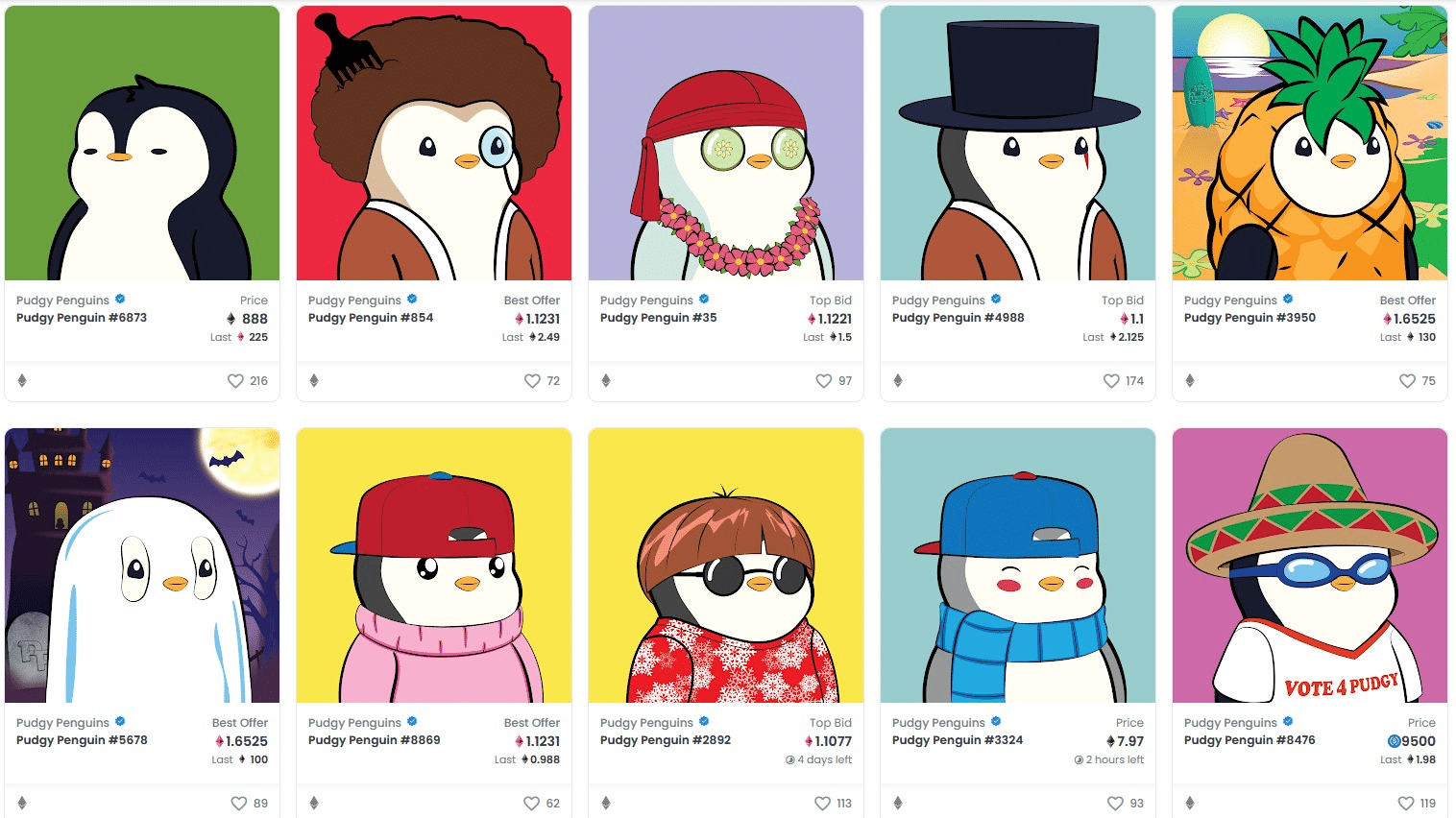
NFT art is a type of digital artwork that is stored on the blockchain. Since these pieces are “non-fungible tokens,” each NFT art is unique and can’t be replaced by another piece of art.
This asset exists exclusively in the digital realm. But since you own the token, only you can sell or transfer it. What else you can do with the image depends on the licence the artist grants. NFT art is created by artists using various digital tools.
Some artists use 3D rendering software to create their art, while others use more traditional 2D drawing programs.
Well-known pieces on lists of the most popular NFT art include ‘Quantum’ by Kevin McCoy, ‘Everydays: The First 5000 Days’ by Beeple, ‘Ringers’ by Dmitri Cherniak, ‘Gucci Ghost’ by Trevor Andrew, and ‘Genesis’ by Trevor Jones and Jose Delbo. Quantum, minted in 2014, sold at Sotheby’s for $1.47 million in June 2021. Everydays sold at Christie’s for $69.3 million in March 2021, and one Ringers piece, ‘The Goose’, fetched $6.2 million at Sotheby’s in June 2023.
NFT art can be any type of digital file: an artwork, a piece of article, music, or even a classic meme. To add more context, the famous meme ‘Disaster Girl,’ which features a 4-year-old girl grinning next to a burning house, was sold as an NFT in April 2021 for 180 ETH, worth about $500,000 at the time.
Why is NFT Art So Popular?
NFT art became popular because it was new, and people were still trying to figure out what it was and what it could be used for. There was a lot of excitement around the possibility of NFT art, and as with any new technology, there was also a lot of hype.
According to CryptoSlam, NFT sales then fell from about $18.3 billion in 2021 to $8.9 billion in 2024 and about $5.63 billion in 2025, when the average sale was worth $96. In September 2025, Christie’s closed its separate digital art department and now sells digital art within its 20th and 21st century category.
During the boom, platforms such as Foundation, SuperRare and Rarible popped up to help artists sell their work, and some pieces fetched quite a high price tag.
Several marketplaces have since closed. Foundation shut down in April 2026 after a planned sale of the platform fell through, and Nifty Gateway closed on April 23, 2026. SuperRare, Rarible and OpenSea are still running.
What Does NFT Art Mean For Creators?
For artists and creators, NFT art is a way to sell their work in a new and exciting market. It’s also a way to get exposure to their work and to reach new audiences.
With everything now found online, it’s no surprise that art has also gone digital. And with the rise of NFTs, we’re seeing a new way for artists to express their mediums and sell their work.
If you’re an artist or creator, then NFT art is something you should keep an eye on. Prices are far lower than during the boom, though, and most NFTs now sell for small amounts.
Some people see NFT art as the future of the art world since it allows artists to sell their work directly to buyers without going through an intermediary. The blockchain also keeps a public record of each piece’s sales and owners, although the image itself can still be copied.
After the boom and the slump, it’s hard to say where NFT art will go from here. Artists are still minting and selling work, and it’s something worth keeping an eye on.
More crypto guides: Guides hub · What is cryptocurrency · What is a seed phrase · 7 crypto scams to avoid