Key Takeaways
- Crypto bridge aggregators are services that evaluate various bridge routes and exchanges, offering easier transfers across many blockchains.
- Each of the services, such as Rubic, Squid, and deBridge, has individual routing capabilities and has access to different networks, therefore, you have to find what is most suitable for your transaction.
- For a more secure choice of a route to transfer, compare not only the fees but also what will be your final amount transferred and the processing time of your transaction.
Crypto bridge aggregator tools allow users to transfer funds between blockchains without having to check multiple bridges one by one; these aggregators are capable of providing token exchange services along with cross-chain transfers, making transfers between various blockchains, such as Ethereum, Solana, Arbitrum, and Base, extremely easy.
It is important to select a proper aggregator depending on what assets you have, the destination network you are using, the desired amount to send, as well as the current transaction fees are. Jumper, Rubic, Bungee, Rango, Squid, and deBridge are all crypto bridge aggregators, but they have various levels of access to multiple networks, routing system quality, and amount of fees for their services.
We will do a comparison of the aforementioned services based on their main characteristics. It provides information on how to assess transfer price and outlines what to take into account when completing a transaction.
What a Bridge Aggregator Does and When You Need One
A bridge aggregation service provides you with a chance to manage multiple bridges, decentralized exchanges (DEXs), and other cross-chain platforms, directly from one interface. Rather than having to try to choose a bridge by hand, you need to select the asset, network for transfer, and token to receive, after which you can see the available options.
For instance, if you want to swap USDC from Arbitrum to USDC on Solana, the aggregator finds the best way to achieve the goal either in a single step or in combination of different actions.
Aggregator vs. a Single Bridge
A single bridge serves the purpose of connecting a defined set of networks using its own transfer method. An aggregator tracks routes offered by various providers, possibly incorporating token exchanges along the way.
The primary benefit of this method is convenience, as you can see all information regarding fees, the estimated amount you will receive, and how much time the transfer will take in one centralized place.
However, it cannot be said that an aggregator’s services are always cheaper than using a bridge directly; everything depends on the protocols being used, overall liquidity, and the current state of a network.
How Routes Are Chosen
When choosing routes, aggregators take into account parameters such as total received amount, fees in the network, liquidity, expected execution time, and the list of available providers. Some aggregators may potentially use intent-based software, allowing liquidity brokers to bid to meet the user’s order.
Sometimes, a route with the lowest quoted fee could be the most expensive route; for instance, a token swap could have slippage, price impact, or other fees that bring down the resulting amount.
Remember to compare the total cost as well as the amount received at the destination, and not only the commission charged on the service by the aggregator. Also make sure to check if there are any intermediate steps or additional gas fees on the destination blockchain.
The Best Bridge Aggregators Reviewed
The following 6 platforms have features that are well documented regarding cross-chain transfers.
1. Rubic – The Best for Finding Low Fee Routes
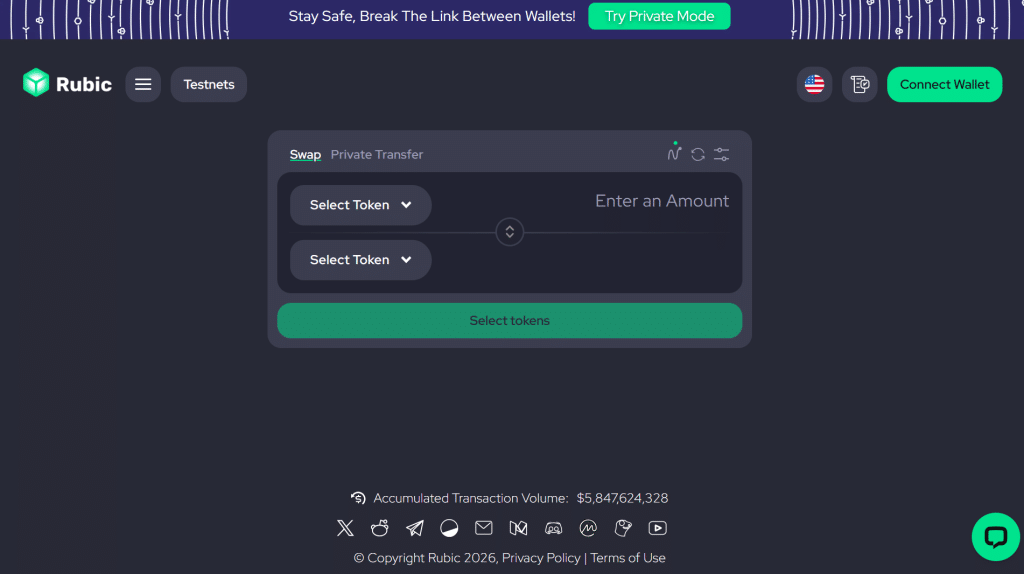
The Rubic service aggregates bridges, DEXs, and other cross-chain services so that users may find routes across supported networks. Its documentation claims support for over 70 blockchains and hundreds of connected protocols.
When price is your primary concern, Rubic is worth checking out. In fact, the platform advertises that there are no protocol fees for selected transactions, including swaps of less than $100 or certain stablecoin and native token exchanges. However, this does not mean all transactions incur no cost, because you must pay network gas and provider fees.
2. Squid – Best for Broad Chain Coverage
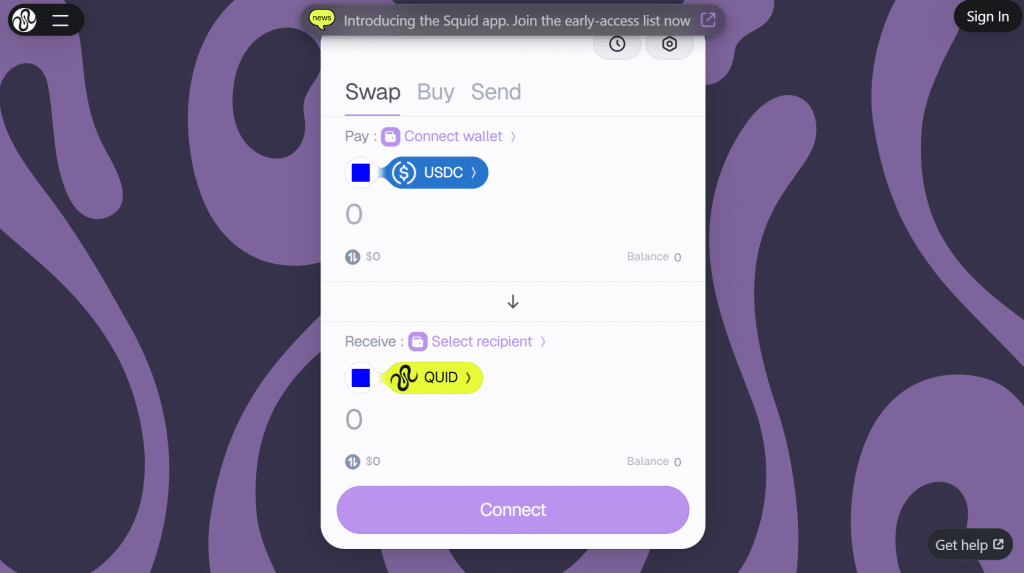
When it comes to cross-chain transfers and swaps, there is no better option than Squid. The information provided by Squid suggests that it supports transfers and swaps across a large number of blockchain ecosystems; there are over 100 of them, including EVM networks and other ecosystems, such as Cosmos, Bitcoin, and Solana. Actual swaps depend on the available networks and tokens at the moment of the operation.
Squid is a network that connects bridges, exchanges, and liquidity providers to carry out routing. Through its execution based on intent, the platform lowers the number of actions that need to be taken by the user.
The official documentation describes that cables do not have their own fees for routing, and only external transaction fees are still applicable. Depending on their needs, third-party applications may implement extra fees.
3. deBridge – Best for Quick Cross-Chain Transfers
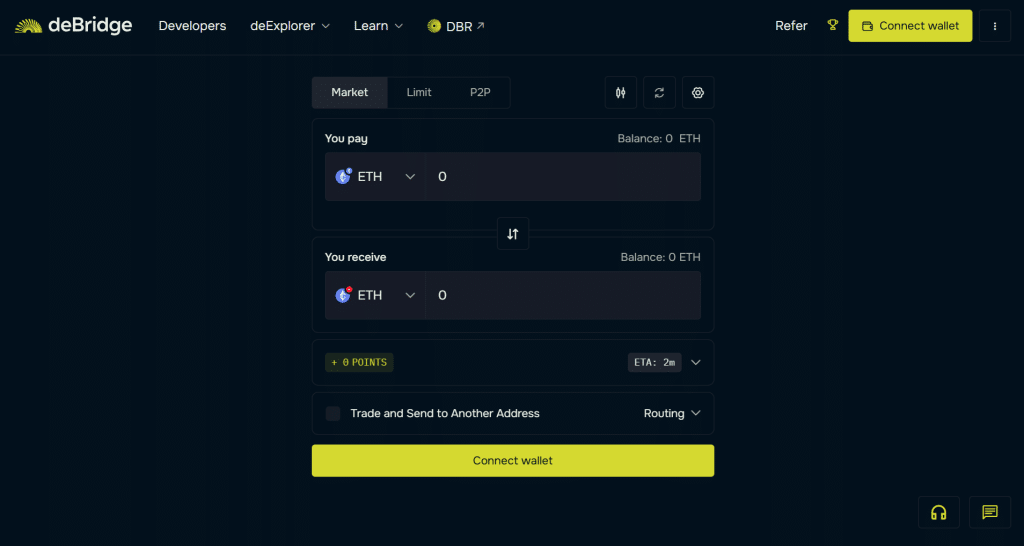
deBridge has created an innovative DLN system for cross-chain transfers. It is based on liquidity providers called solvers that help in processing requests. Unlike regular bridges that are developed using the traditional lock-and-mint model, DLN applies its own order-based technique for asset transfer across different networks.
According to the official resources of deBridge, there are over 24 different blockchain networks used. The protocol is compatible with Ethereum, Solana, Tron, BNB Chain, and Base.
4. Jumper – Best for Beginners
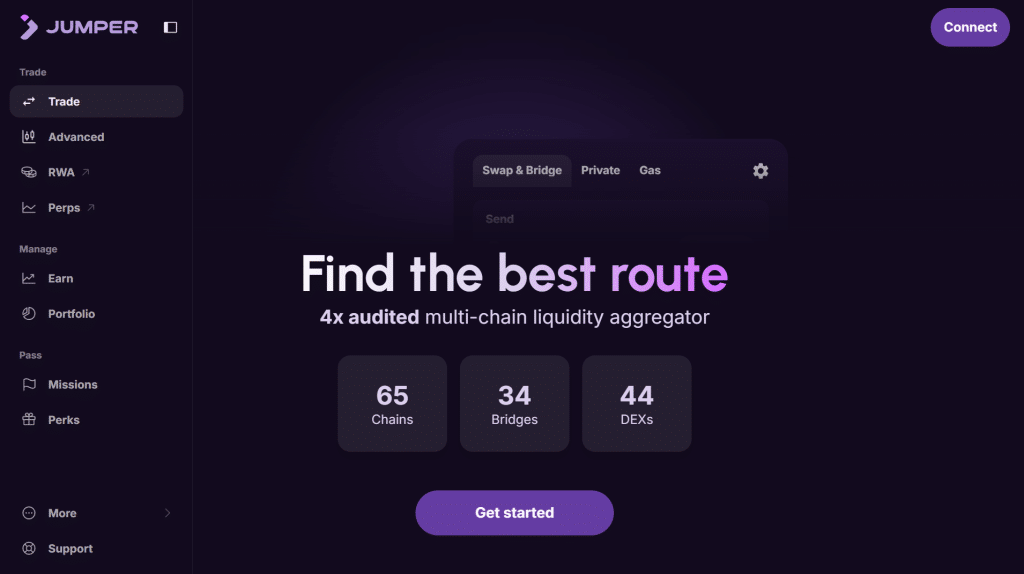
Jumper is a cross-chain interface that operates on LI.FI routing technology. Users can select from various networks, including a source network, asset, destination network, and receiving token before proceeding with the transfer.
Users find it easy to facilitate their transfers without comparing each bridge option, as the platform provides some great features. Nevertheless, the routes selected may come with their own costs.
It is advisable to understand the quoted output and the service fees involved before finalizing a transfer, irrespective of the simplicity involved in using the interface.
5. Bungee – Perfect for Route Comparison Before Big Transfers
Bungee’s creators also developed Socket, and the purpose of Bungee is to compile bridges and swapping routes. Bungee allows comparing routes and doesn’t charge additional markup for routes through other protocols. Bungee Auto can show costs of on-chain execution within the quote too.
When larger amounts are transferred, route comparison is essential since even minor differences in effective exchange rates or percentage fees can have a say in the total amount. Look into liquidity, slippage, and any restrictions before making a choice.
6. Rango – Best for Solana and Non-EVM Routes
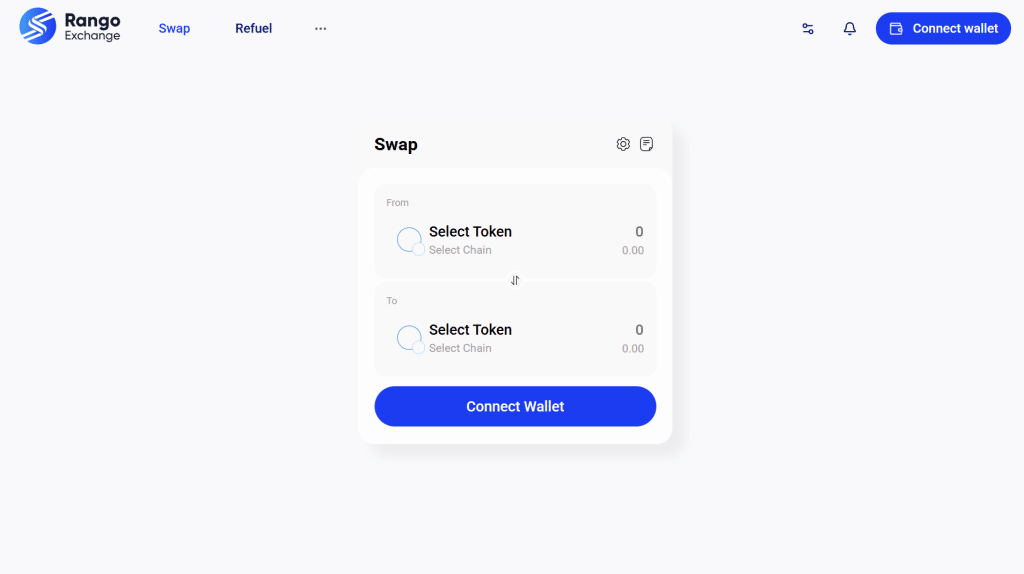
Rango Exchange brings together bridges and exchanges from multiple blockchain systems. The reference covers networks that are based on EVM and Solana, as well as those based on Cosmos and other non-EVM systems, depending on the chain and pathway, among other factors.
This feature is helping Rango to become popular when transferring funds from one network to another, where the same wallet standards comprise all sources for the transaction. It functions by providing swaps and bridges for moving between different assets that are covered by the platform.
How to Use a Bridge Aggregator, Step by Step
The interface may vary based on the available services, but overall the cross-chain process is similar in most cases.
- Pick an aggregator. Go to the website and check its URL before connecting your wallet.
- Select your current network and token. Specify the blockchain where your funds can be found.
- Select the destination token and network. Make sure that your destination wallet is capable of receiving the transaction, so it supports the token you have chosen.
- Specify the amount. Compare the potential routes and analyze the transfer times, fees, and other relevant factors.
- Check gas and authorizations. Confirm that you possess enough gas tokens on your source network and understand which token authorizations are granted during the transaction.
- Confirm your transaction. Make sure to check all transfer details before signing the document.
- Track the transaction. Check the status of your transfer via your aggregator and block explorers.
If a route does not show up, it is possible that the token pair is not supported, liquidity is low, or the provider has switched the route off temporarily. Make sure not to send assets to an address or contract provided via unofficial support communications.
Risks: Smart Contracts, Routes, and Token Approval
Although bridge aggregators allow easier cross-chain transfers, they do not eradicate the risks related to moving assets across different networks.
- Smart contract risk. A vulnerability in a bridge or exchange can create serious financial loss. Although the aggregator is being used, that does not necessarily mean that every protocol is secure.
- Route and liquidity risk. The route chosen by the user, may include several providers. Delays, insufficient liquidity, slippage, or failure of a provider can hinder money transfer.
- Token approval risk. Certain transactions in the EVM require permission for a smart contract to spend the user’s funds. A broad or unlimited token approval can lead to the loss of more funds in the case of the compromise of the wallet or the approved smart contract.
- Risk of the wrong network. Transferring an asset to an unsupported deposit address makes it difficult or impossible to recover it.
How to Stay Safe: Test Amount, Approvals and Revoking Access
Below are some necessary safety tips to use in order to secure your assets and save your funds when transferring them using any bridge.
Perform a Small Transaction
The safest approach is to transfer a small sum first. Although this approach will add some extra fees, this procedure can help your main transaction succeed.
Be Sure to Check the Quote
Do not forget to verify important details about the transaction before you sign any agreements.
Monitor Your Approvals
Pay attention to the amount of access you grant when using the wallet and check if it can allow limits.
Use Official Sources
Use a reliable approval checker for your crypto network to check for token allowances too. Don’t share your seed phrase or private key with bridges, aggregators, or fake support agents.
Frequently Asked Questions
Want some more information? Here are the most commonly asked questions.
Are bridge aggregators secure?
Bridge aggregators can enable cross-chain transactions, but they are still exposed to risks. The level of safety of an aggregator depends on its implementation, the type of bridge, and the degree of safety of smart contracts and transaction authorization. Before you transfer funds, ensure you read through the specifics mentioned in the respective documentation and audit (if available).
Is there a fee charged by the aggregator?
It will depend on the platform used and the transaction route. While some aggregators boast of zero protocol fees, others would charge fees and even allow integrations that may add to the costs. You may still be subject to network gas and underlying bridge or swap fees. Be sure to check the final quote to find out the exact amount.
Which aggregator supports the maximum number of chains?
The number of chains supported keeps changing, and every provider counts them differently. Squid states that it handles over 100 chains, and Rubic claims to have 70 chains supported. You cannot compare these two numbers unless you find out what manner of token pairs each supports.