Key Takeaways
- When starting with crypto market values, CoinGecko and CoinMarketCap are very helpful sources to view the current status of cryptocurrencies.
- If talking about on-chain data research, different platforms can be suitable: Glassnode, Nansen, Dune. Each of them provides some helpful developer tools to analyze blockchain data.
- DeFi platforms can be examined with the help of DeFiLlama and Token Terminal, while Blockworks and Santiment provide more background information while researching.
- Beginners may find free accounts useful, but they should not forget about API limitations, data timelines, export possibilities, and rules of commercial data usage.
Crypto data platforms serve the purpose of helping users analyze rates, monitor blockchain happenings, and compare different DeFi protocols while researching digital assets. Some platforms deal only with the current market rates, while others are focused on wallet activities, protocol profitability, or customized queries.
The choice of the service will depend on the question being solved. For instance, an ordinary investor who needs the current rates will not require an expensive analytics dashboard. On the other hand, a scientist who needs to check the wallet activity or a programmer who needs to create a crypto-related platform might require more data and wider limits.
This article compares nine crypto data platforms according to their usage, free accessibility, and pricing policy. It is advisable to visit the pricing page of a specific platform before becoming a subscriber or developing a solution on that platform because plans are subject to change.
Best for Prices and Market Data
Market data platforms are able to track the prices, market capitalization, trading volumes, exchange listings, and historical performance. They are also used for asset comparisons and to observe the performance of the overall crypto markets.
CoinGecko – Best Overall Platform in Market Monitoring
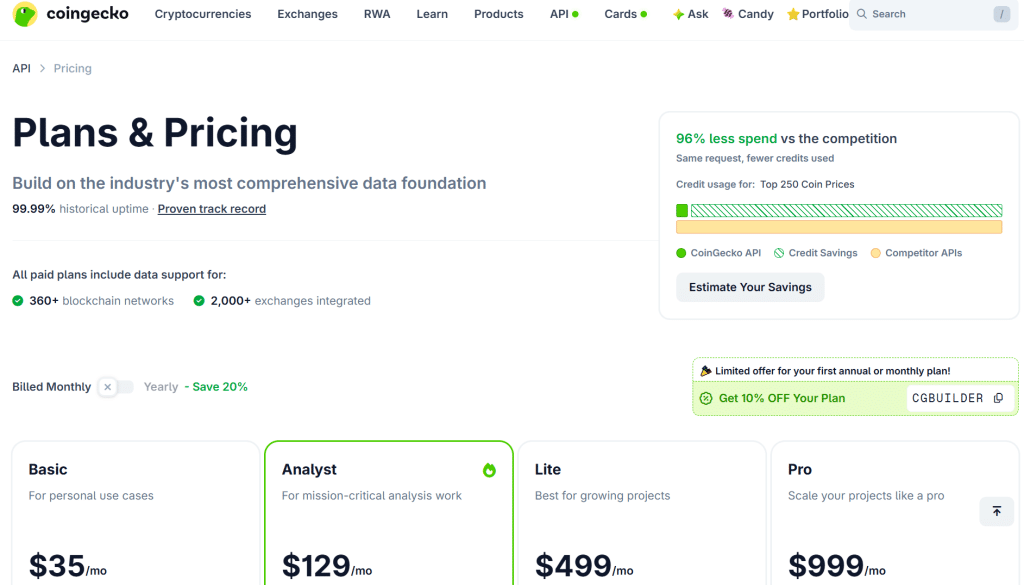
CoinGecko provides prices for cryptocurrencies, their capitalization, volumes, exchange data, and historical graphs. Its website can be used to find out the position of an asset in the market and compare various tokens.
CoinGecko has an API for developers as well. It provides a Demo API plan, which includes free calls (with a limit) and requires attribution. Paid plans allow getting more credits, increased limits, and additional historical information. The Basic API plan costs $35 (or less when paid annually).
CoinMarketCap – Ideal for Rankings and Market Review
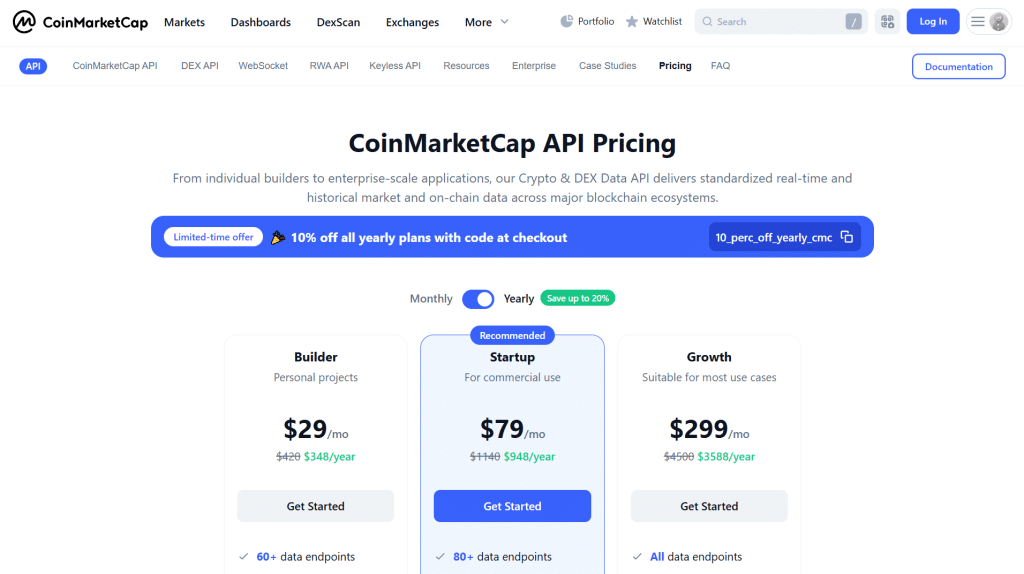
CoinMarketCap provides real-time updates on cryptocurrency prices, market cap, trading volume, exchange standings, and market history. It offers a variety of rankings and asset pages for a thorough comparison of various cryptos.
There is also an API available on the platform. The Basic plan is available free of charge and consists of 15,000 credits on a monthly basis, along with a limit of 50 calls per minute. Subscribers to paid API accounts are provided with additional credits, endpoints, and historical information about the data being analyzed. CoinMarketCap offers the Builder plan for $29/month with annual payments.
Best for Analyzing On-Chain Data
On-chain analysis tools are used to track transactions carried out on a blockchain.
Glassnode – Best for Bitcoin and Market Cycle Analytics
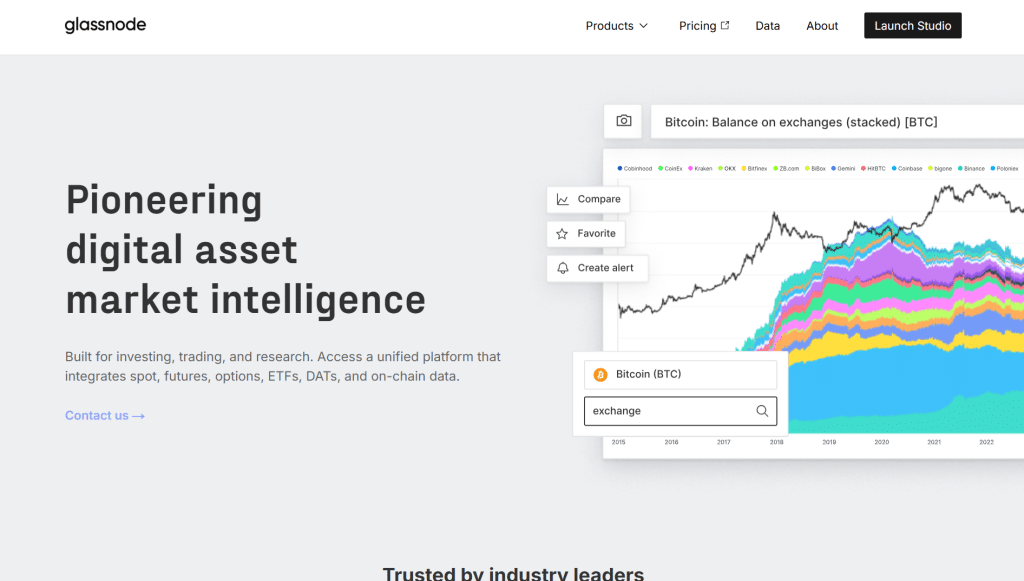
Glassnode specializes in analyzing on-chain data for a wide array of cryptocurrencies, including Bitcoin and Ethereum. Analysts can use Glassnode data to gather insights regarding the market’s activity, in the way of seeing the actions of long-hold investors and transactions into exchanges, etc.
The platform produces on-chain infographics, and those who want to access them must upgrade their account. The free access feature is almost a sideshow in comparison with paid research tools from this website.
The service is good for users who seek to use already existing on-chain data from the experts without developing any requests themselves.
Nansen – The Best Choice for Wallet Labels as Well as Smart Money Tracking
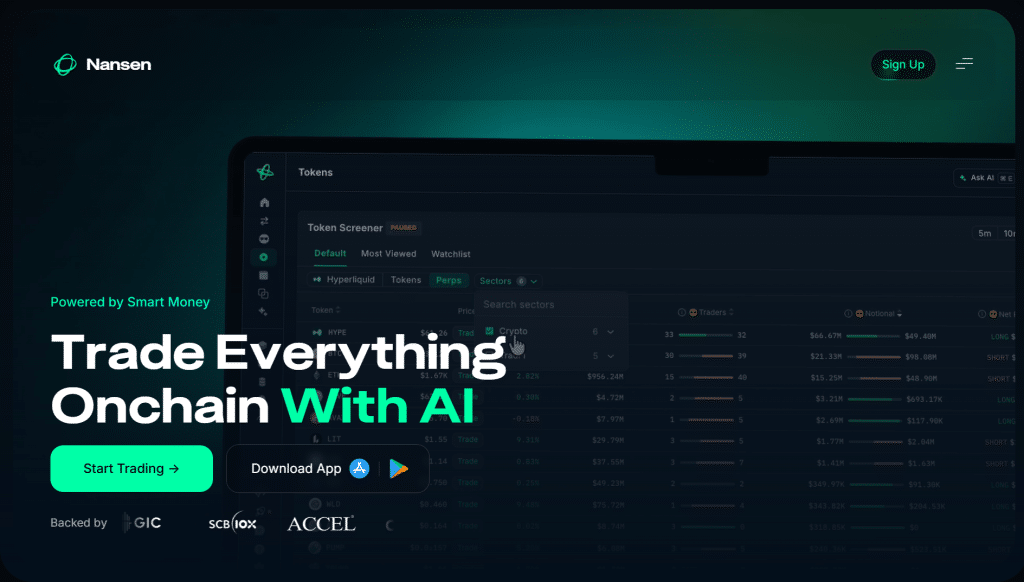
Nansen is a platform that merges blockchain data with wallet labels. Users on the platform will be able to see the labels attached to the addresses. The labels display wallet activity of various organizations classified as Smart Money.
These classifications may help analyze the movement of tokens and wallets and study how certain classes of addresses operate.
Also, wallet labels are nothing more than labels, and they do not indicate the wallet owner or the specifics of each transaction. Nansen gives free access, but you may need to purchase a subscription to get more features.
Dune – Best for Custom On-Chain Queries
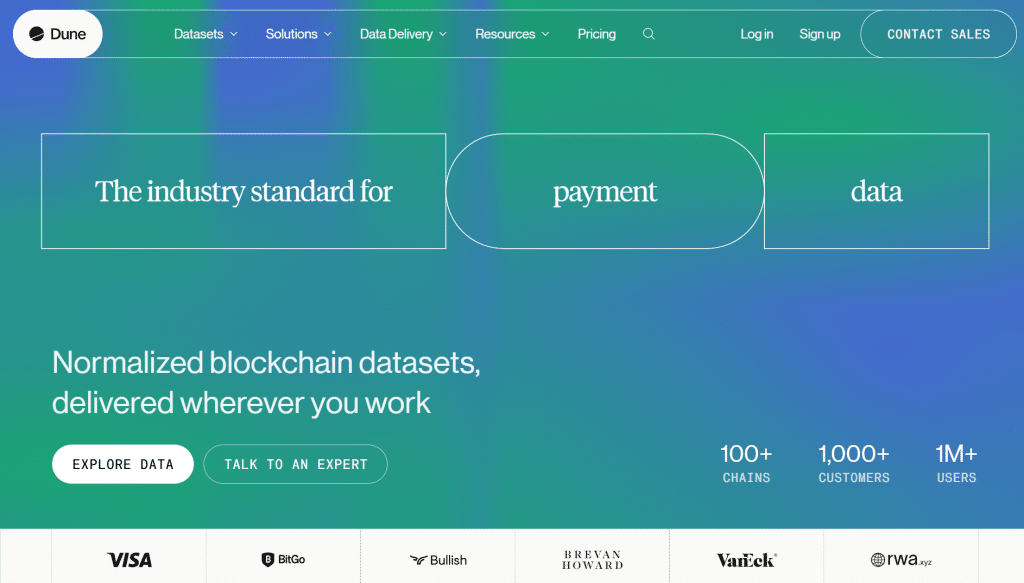
Dune allows users to query blockchain data and build dashboards in SQL. It is especially useful for researchers who need a metric not readily available in a standard analytics dashboard.
Users can also explore public dashboards created by the Dune community and adapt them to their needs. The free plan serves as an initial starter plan to begin learning the ropes of data exploration and building public queries.
Other plans will be paid-for and offer more resources and features, including private versus public work setup and, of course, more demanding queries.
Dune is great for those analysts comfortable working with SQL, while beginners can easily use public dashboards, but building customized metrics will require even further technical knowledge than just using a one-click chart.
Best for DeFi and DEX Data
DeFi data sources specialize in information related to activity in decentralized finance. Their metrics could include total value locked (TVL), trading volume, protocol fees, revenue generation, loans, and yield.
DefiLlama – Best for DeFi Protocol Comparisons
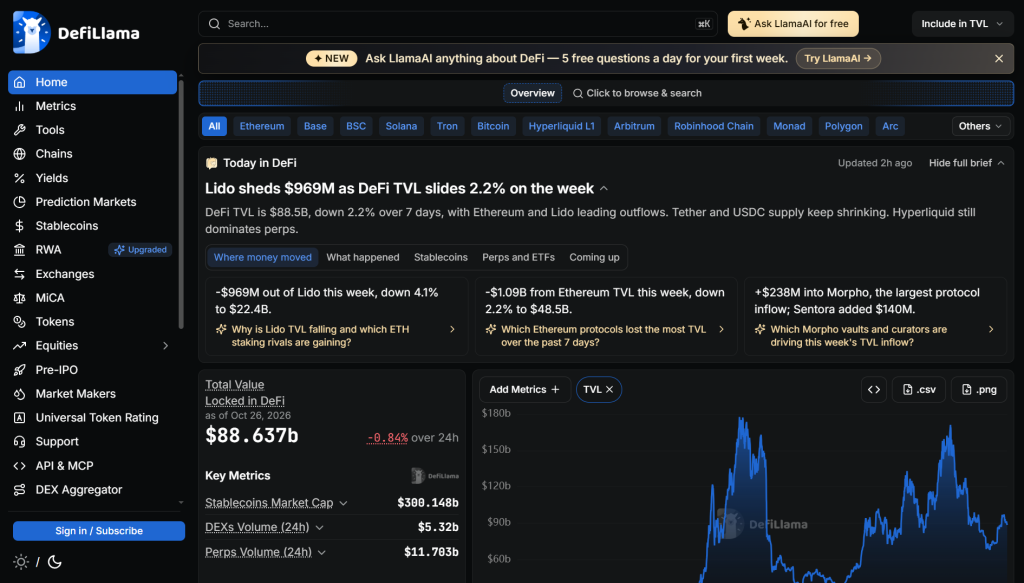
DefiLlama helps trace DeFi protocols across many blockchains. Its dashboards have information on metrics like TVL, protocol fees, revenues, DEX volume, stablecoins, and yield. The site provides most of its basic data free of charge, serving as a good starting point for protocol comparison and observing activities in DeFi.
It even offers an API, but some services are payable or require payment for intensive use. DefiLlama is particularly helpful when comparing protocols on one metric. One important note, however, is that TVL, fees, and revenues are not equal and should not be treated as such.
Token Terminal – Ideal for Protocol Financial Metrics
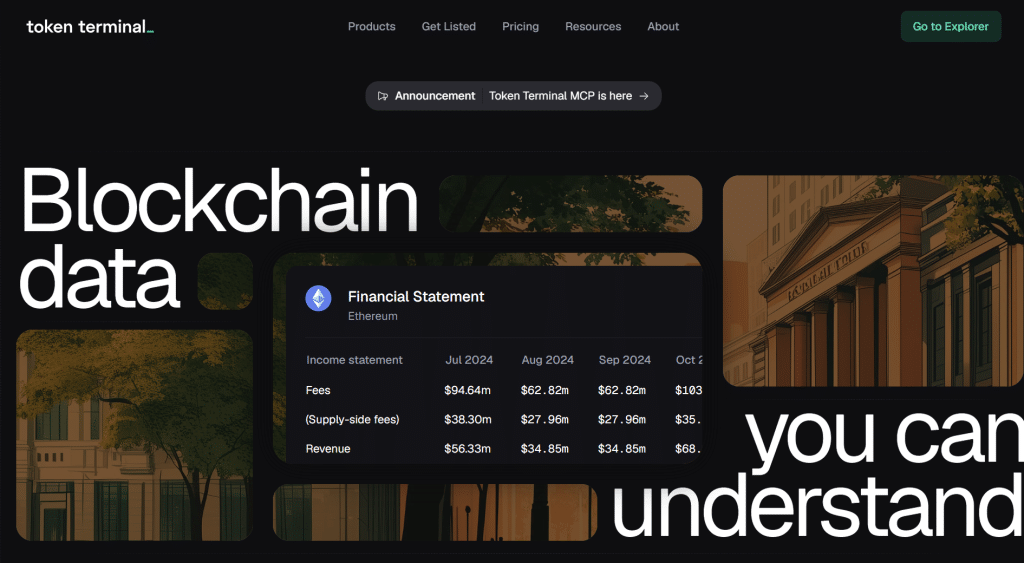
Token Terminal normalizes blockchain and protocol data into financial metrics. This helps users compare revenue, fees, users, or any other activity across protocols and platforms.
The platform can be beneficial for researchers when it comes to analyzing how a specific protocol creates activity and earns money. The dashboard is user-friendly; however, the metrics depend on the definitions and methodology from the provider.
Token Terminal provides free use of its primary data, including historical data and a limited number of dashboards. The monthly subscription for its Pro plan is $350, while the API is available for custom pricing.
Best for Research and Fundamentals
Research platforms are those platforms that offer market information together with information on projects and reports, explaining the requirements for a crypto asset by examining more than just its current price.
Blockworks (Formerly Messari) – Most Appropriate For Research Related To Projects
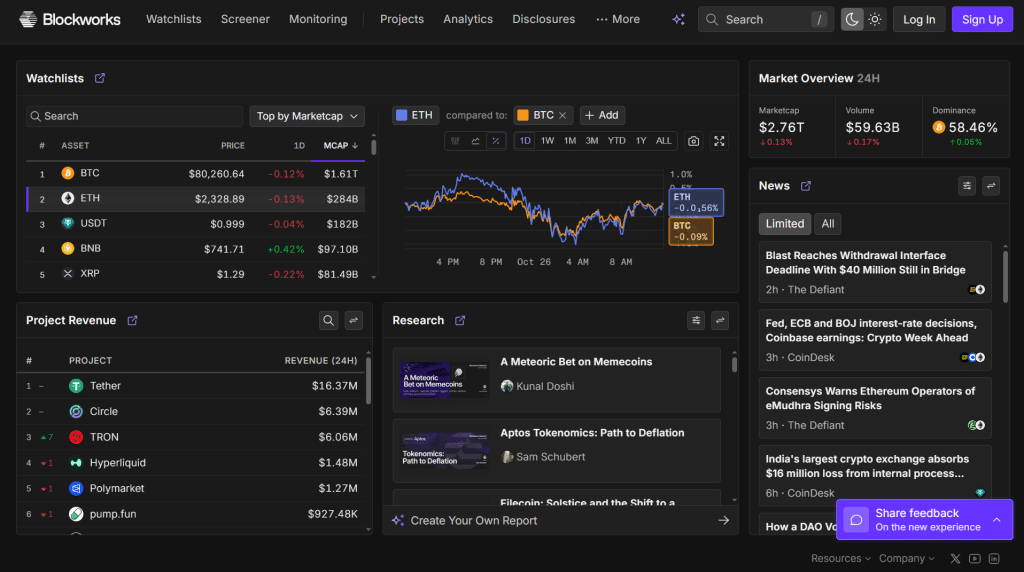
Messari became part of Blockworks in June 2026. With this merger, two companies specializing in gathering crypto data and conducting research joined together.
Blockworks is involved in providing users with information on cryptocurrencies, asset descriptions, research on various projects, and market data.
Using the research tools is very beneficial for those who would like to know more than just the price chart. Reports, data, and all the features available depend on the type of product being offered, so it is recommended to check everything that is available before subscribing.
Blockworks is considered to be more of a research tool rather than a service that can replace the functionalities of all on-chain analytics tools.
Santiment – Most Suitable for Combining On-Chain and Social Data
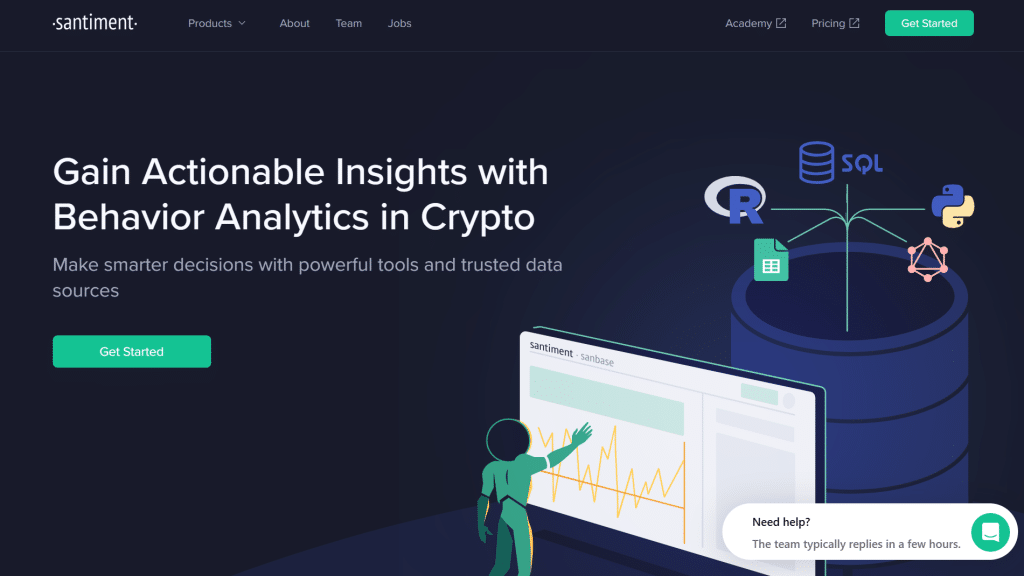
Santiment unites data present on-chain, such as social and market metrics. The network’s digital tools help users analyze assessments related to specific networks as well as movements linked to tokens, along with changes that happened in discussions on the crypto assets online.
This combination serves as a context for doing research on a specific token. However, social activity cannot serve as proof of making any demand or a future price movement. Therefore, the metrics need to be evaluated in conjunction with other data.
Best Data APIs for Developers
Providing crypto data APIs allows apps to generate data regarding prices, market information, blockchain data, and others. Thanks to these APIs, Developers do not need to collect this information manually from several dashboards.
CoinGecko and CoinMarketCap could be good starting points for broad market data. Their APIs allow retrieving price information and history, and the pricing plans depend on call credits, limitations by rate and available endpoints.
But for specialized data, developers need to apply to another data provider:
- Dune – If you need to fulfill specialized blockchain queries and perform analytics in SQL.
- DefiLlama – If you need important DeFi metrics such as TVL and protocol activity. Token
- Terminal – If you need general standardized financial data related to the protocol.
- Artemis – If you need to analyze different blockchain ecosystems and their networks.
Before selecting an API, do not only focus on its monthly price. Check whether your allowance is calculated in requests or credits, how often data will be updated, which chains and endpoints will be covered, as well as whether the license for its use allows commercial purposes or not.
Picking the Right Service: Free vs Paid Plans, APIs and Coverage
Depending on your goals, choose a suitable trading platform.
Select the Type of Data You Need First
CoinMarketCap or Coingecko is sufficient if you are interested only in prices and market capitalization. But you may check Nansen or Glassnode when tracing wallet movement. To find out about DeFi figures, check out DefiLlama or Token Terminal. If you want to come up with your own query, then opt for Dune.
Pay Attention to the Limitations of the Free Plan
Free plans may have limitations regarding the number of monthly API credits, queries available, historical records, dashboards created, and export requirements. A free plan is perfect for personal research, but if your goal is a public solution or a commercial product, you’ll need a different kind of subscription.
Pay Attention to the Coverage Limits
Not all services are compatible with all blockchains; some services do not support any blockchains at all. Be sure that the service of choice has the relevant metrics and networks, especially regarding new blockchains and tokens.
Check the Update Frequency
While some dashboards are updated periodically, others provide information via API updates included in the pricing plan. If you want the most recent data or announcements, take a look at the number of updates available from the providers.
Have a Look at the Licensing Agreements
Before using the data in your application or reselling it, be sure of the rules set forth by the provider. Viewing data is not the same as marketing it.
Keep in mind that a plan that seems to be cheap may end up costing you money if you are making frequent requests or have to get many years of history. So learn the right amount of data you’ll need.
Frequently Asked Questions
Here are the most common questions regarding crypto data platforms
What is considered the best platform for crypto data that is free?
There is never a single best platform because every platform serves its own purpose. For DeFi, DefiLlama is quite helpful, as this platform provides free data about DeFi metrics. CoinGecko and CoinMarketCap are two platforms used for getting generalized data. Dune is used for custom on-chain analysis, but this platform requires knowledge of SQL to create queries.
Do crypto data platforms provide accurate data?
Crypto data platforms may give useful data, however, accuracy will depend on the source and methodology, as the price from different platforms may be different from each other because they take different exchanges and markets into consideration.
Is it possible for me to utilize free crypto data APIs for a business project?
This relies on how the provider states its terms as well as its plans. There is an option in certain free plans where you can use the data for profit, while there can also be others that may limit its application to personal use or require credit.
How does on-chain data differ from market data?
Market data refers to any trade-related information such as price, trading volume, market capitalization, and exchange pair. Meanwhile, on-chain data refers to data that is derived from blockchain activity, such as transfer activity, wallet addresses, and transaction of transfers.