Key Takeaways
- Cross-chain protocols let users transfer digital assets and messages between different blockchain networks.
- These platforms solve the fragmentation issue by offering fast and cheap connections between protocols.
- Selecting the best blockchain interoperability protocol requires balancing security, transaction speeds, and transparent fees.
- Most cross-chain protocols work with liquidity pools, wrapped tokens, or decentralized intent solvers.
- Large crypto bridges offer blockchain interoperability across dozens of platforms.
Cross-chain protocols have become highly popular in recent years with the expansion of multiple blockchains. Different networks offer distinct functionalities, meaning that features from one blockchain could be highly advantageous when combined with another.
This is why there is a wide range of cross-chain protocols that allow for enhanced blockchain interoperability. In the following sections, we will discuss how crypto bridges work and provide a list of the best cross-chain protocols in the market.
Introduction to Blockchain Interoperability
Blockchain interoperability is the ability of different blockchain networks to interact, share, and communicate data (including assets) with one another without the need for a centralized authority.
By default, blockchain networks operate in isolation, creating friction if users want to leverage features from multiple blockchains simultaneously. To solve this issue and make interaction easier, crypto bridges were created.
What are Cross-Chain Protocols and Why Do They Matter?
Cross-chain protocols are among the most useful systems for transferring information and data between blockchain networks. Thanks to this, different blockchain networks can enhance one another by bridging their functionalities.
Besides offering the possibility to link protocols, cryptocurrency bridges are also considered to be cross-chain messaging networks. That means that they don’t only move tokens or information, they allow for smart contract structures to be exported to other network architectures. Therefore, developers can build cross-chain decentralized applications (dApps) that leverage the functionalities of different protocols.
For example, if you hold assets on Ethereum and want to move them to the Tron network to take advantage of lower transaction fees, you cannot just send your tokens directly to a Tron address. Doing so will result in your coins being lost forever.
Because these two blockchains cannot communicate natively, their ecosystems are completely isolated from one another. This is where a crypto bridge comes in, securely linking both networks to make the transfer possible. To make this happen, the bridge locks your Ethereum-based USDT in a secure smart contract and instantly releases an identical amount of native Tron-based USDT into your wallet on the other side.
The Fragmentation Problem: Why Blockchains Can’t Talk to Each Other
As the cryptocurrency market expanded over the years, it did so in a fragmented manner. In the same way that different companies have their own proprietary systems and platforms, digital currencies developed independent networks with distinct architectures and needs.
Developers built networks from scratch, such as Ethereum, Solana (SOL) and Bitcoin (BTC). Those are self-contained environments with different coding languages that cannot read one another’s code.
Moreover, blockchain networks are giant, distributed ledgers that record transactions. This means the Ethereum ledger cannot track transactions processed on the Bitcoin network, or vice versa. Due to strict security protocols and distinct methods for validating transactions, it is impossible for these networks to natively verify external data.
Each blockchain has its own set of rules. Applications built for one network cannot simply run on another without using a crypto bridge. This fragmentation problem creates isolated ecosystems that ultimately stifle the growth and deployment of innovative cross-chain features.
Multi-Chain vs Cross-Chain: Understanding the Difference
To better understand how crypto bridges work, we need to explain the difference between multi-chain and cross-chain. The terminology is important because these two definitions are used to describe completely different things.
Multi-chain refers to applications that have been produced for one blockchain network and then copied and adapted to fit another blockchain architecture. Think of Tether (USDT) running on Ethereum and on Tron, for example. The stablecoin is the same: USDT. However, what changes is the network: Tron and Ethereum.
If users send USDT (ERC-20) to the Tron network (TRC-20), the coins will be lost forever. The coins can’t interact with different networks, even if they are the same asset.
Instead, a cross-chain protocol such as a bridge enables users to connect both blockchain networks. Let’s say that you want to transfer USDT (TRC-20) to buy an NFT on the Ethereum blockchain. If you do it without a bridge, your coins will be lost. But if you do it using a cross-chain protocol, a smart contract will be triggered allowing you to “transform” the TRC-20 tokens into ERC-20 tokens.
Fundamental Mechanics: How Do Bridges Work?
Now that we know the basics of multi-chain and cross-chain functionalities, we can go into more detail about how crypto bridges work. As we discussed, different blockchain networks can’t transfer information, tokens or data between one another.
Crypto bridges coordinate actions in order for those separate and isolated chains to understand each other. This is done by a process that involves locking, sending and releasing funds. Although this seems complex, it is easier and faster than one might think. That’s because everything happens in seconds and in the background.
If a crypto user holding USDT on the Ethereum network wants to use the Tron network for Decentralized Finance (DeFi) this will not be possible without a bridge. To do so, the user will have to connect the wallet to the bridge and deposit the USDT (ERC-20) in a secure vault.
Validators will then monitor this Ethereum vault and confirm that the tokens are safely locked. This is done through cryptographic proof and by sending a secure message to the Tron network. The smart contract on the Tron network that receives the secure message will then verify this information and release the same amount of TRC-20 USDT into the user’s Tron wallet.
In this way, the user will be able to move freely on the Tron network using the USDT that was previously in the Ethereum network.
What Makes a Cross-Chain Protocol a “Good” One?
Not every single cross-chain protocol in the market offers blockchain interoperability with the same reliability. Crypto bridges must have certain qualities in order to be considered “good” or “better” than others.
A good cross-chain protocol needs to have a great balance between security, speed and transaction costs. If one of these aspects is not good enough, then it means this might not be the right platform for cross-chain interoperability.
Security is key because, without it, users’ funds can get stolen or lost. Therefore, a good crypto bridge will always have a focus on security, even if this means that transaction fees are higher. However, if the crypto bridge takes a long time to transfer funds from one protocol to another, then, even if it’s secure, it might not be the most convenient one.
Transaction fees are also an important part of finding a good crypto bridge to use. Not only are low transaction fees a reason to use a bridge, but transparency is as well. Understanding how much a user has to pay from the moment the funds are sent until they are received in the other network plays a decisive role.
Based on this, a good cryptocurrency bridge should offer strong security features, transparent fees (that are as low as possible), and reliability in terms of speed. The focus should always be on security, as without it, the bridge would be considered useless and a risk for the end user.
Wrapped Tokens Explained: What Are You Actually Receiving?
When you use a cross-chain protocol to transfer assets from one blockchain to another, you are not transferring the original asset. You are using something called “wrapped tokens.” Those are representations of assets from one blockchain network on another one. If you want to use Bitcoin on the Ethereum network, you can’t do this directly by transferring your BTC. You will use something called “Wrapped Bitcoin” (WBTC) on the Ethereum network.
It will be different with USDT on Tron and Ethereum. Because Tether issues coins on both protocols, the bridge will simply keep the liquidity in the original network and release the coins on the recipient blockchain.
Therefore, depending on the asset that you are using and transferring, there will be wrapped tokens or just liquidity pools. As Bitcoin does not have native support on the Ethereum blockchain, you will have to send BTC to a bridge, which will later mint new Wrapped Bitcoin as an ERC-20 token.
To receive the BTC back, you will have to unwrap them. This is done by sending the WBTC to the bridge, and the BTC will be unlocked and sent to your wallet once the transaction is completed.
The Economics: The Costs of Bridging
Using a crypto bridge is not free and will require the user to pay to these cross-chain protocols a fee to have access to blockchain interoperability. The estimated fee that you will normally see in the transaction step of a crypto bridge will not always provide a detailed breakdown of what you are paying.
The main fee that you will normally see displayed is the bridge fee. This is the payment that you are making to the protocol to use their services. The fee can be a fixed amount or a percentage of the transaction. Despite having this information, you don’t know how much you will have to pay for gas, slippage, and possible price volatility.
As we discussed, transferring an asset from one blockchain to another requires conversions. Don’t forget you are interacting with three different protocols: the network where the funds are originating from, the bridge, and the recipient network. Interacting with the initial smart contract to lock the tokens will incur fees, and receiving the new tokens in the destination network will also generate a fee event. This applies mostly to wrapped minting (i.e., using BTC/WBTC on Ethereum).
When liquidity pools are involved slippage should be taken into consideration. This is the difference between the expected token price and the actual price at which the transaction executes. If there’s not large liquidity in the pool and the transaction is big, then the execution price will be less favourable. Instead, if there’s abundant liquidity and the transaction is small, slippage will be negligible.
Finally, price volatility can also affect the transaction. As transfers are not instantaneous and require multiple confirmations, you could be exposed to market volatility. Using crypto bridges during periods of large market movements could affect your position after the whole operation is completed.
The Difference between a Crypto Bridge and a Cross-Chain Protocol
Although most of the time crypto bridges and cross-chain protocols are used interchangeably, there is a difference between them. Cryptocurrency bridges transfer a token between different blockchains. Meanwhile, cross-chain protocols move funds from one blockchain to another transforming them into a different token.
Cryptocurrency bridges work by transporting an asset to a new network without structurally changing it. It works by locking or burning the token on the source chain and minting the same token in the recipient network. It is also possible for the bridge to issue a wrapped token on this network. In practice, with a bridge you still have the same asset that you had in the origin chain.
A cross-chain protocol behaves differently. These platforms let users exchange one type of cryptocurrency for a different one in another network. These protocols usually work with a decentralized exchange where the tokens will automatically be swapped.
Users that want to keep the same token and avoid the risk of slippage of using decentralized exchanges should use a cryptocurrency bridge. Alternatively, those users that want speed and convenience, should use a cross-chain protocol.
Top 12 Crypto Bridge Platforms (2026 Rankings)
Now that we have analysed every aspect of crypto bridges, we can move on to understanding which are the best cross-chain protocols for blockchain interoperability.
Choosing the right platform is critical, as different protocols offer distinct features. Some bridges focus on transaction speed, while others offer lower fees and commissions. Moreover, certain platforms prioritize security implementations.
To help you evaluate the best crypto bridge platforms, we have created a list of the top 12 leading cross-chain protocols available in 2026. We will analyse network compatibility, security, and user experience, among other key metrics.
Circle CCTP
Circle CCTP is the official protocol used by Circle to move USDC between blockchains. For users who use USDC and need to change networks, this is the best platform to use.
Rather than sending funds to another blockchain protocol and getting wrapped USDC, CCTP lets users receive native USDC on another blockchain. If you want to use USDC on Solana but you have USDC on Ethereum, then Circle CCTP will be the right platform to use. This works by burning your tokens on the Ethereum platform and minting new USDC directly on Solana.
Pros:
- No wrapped tokens.
- Highly secure.
- 1:1 burn without slippage.
- Low protocol fees.
Cons:
- It covers only USDC and EURC (and other limited assets).
- Tron network not supported.
- The system relies on Circle’s central attestation service.
- Gas fees apply on both sides (burning and receiving).
Orbiter Finance

Orbiter Finance is another cross-chain bridge built to transfer crypto assets across different networks. Rather than using liquidity pools and legacy networks, Orbiter Finance focuses on Layer 2 ecosystems.
This protocol operates by using a security model called ZK-tech-based cross-rollup bridge. This ensures transactions are protected and processed securely. Moreover, the project has issued an official token called OBT, which can be used for governance and staking.
Orbiter Finance offers support to more than 70 different blockchains, including Ethereum, Tron, Polygon, and many others. It is worth noting that users will receive native assets rather than wrapped tokens.
Pros
- Supports over 70 blockchain networks.
- It has a proven track record of securely bridging networks.
- Fast transaction times.
- No wrapped tokens.
Cons
- Large transactions might not be processed if there’s not enough private Maker capital.
- Bridging back to expensive networks will incur larger fees.
Axelar

Axelar is a decentralized network that offers interoperability across multiple blockchain networks. This protocol acts as a universal web router for Web3, allowing users to connect to more than 70 blockchain ecosystems such as Ethereum, Solana and Cosmos, among others.
Compared to other networks, Axelar has its own token, which is used to protect the network through a Proof-of-Stake (PoS) consensus mechanism. Thanks to its automated gas conversions, Axelar makes it easy to pay fees entirely in the native token of the source network (AXL).
Pros
- Supports more than 70 blockchain networks.
- It is secured through a PoS consensus algorithm.
- Automated gas conversion.
Cons
- Dependent on the AXL token.
- Slower transfers (due to its PoS validation of transactions).
Across Protocol
Across Protocol is one of the best platforms for Ethereum users who want to interact with Layer 2 networks. Thanks to its intent-based system, users don’t have to rely on wrapped tokens.
If a user wants to bridge a transfer from Ethereum to Arbitrum, they can do so by showing their “intent.” That means a relayer will provide those funds on Arbitrum from their own pocket. Because the network is supported by professional relayers, transactions are incredibly fast and fees remain low.
Pros
- Competitive fees and fast transaction times.
- No wrapped tokens.
- Professional relayers help the network stay competitive.
Cons
- Focused primarily on the Ethereum ecosystem.
- Few tokens supported (ETH, WETH, USDC, USDT, WBTC, among others).
Chainlink CCIP

Chainlink CCIP (Cross-Chain Interoperability Protocol) is a universal and secure-by-default standard for token transfers and smart contract messaging. Its security is dependent on a multi-node consensus protocol of independent cross-chain verifiers.
Furthermore, Chainlink offers not only crypto connectivity but also builds connections with traditional financial infrastructure such as SWIFT and ANZ. Additionally, Chainlink CCIP focuses on both enterprise private blockchains and public networks.
Pros
- Institutional grade security.
- Enterprise and public blockchains supported.
- Connection with traditional financial infrastructure.
Cons
- Large dependency on Chainlink’s node network.
- Slower transactions compared to other peer-to-peer alternatives.
deBridge
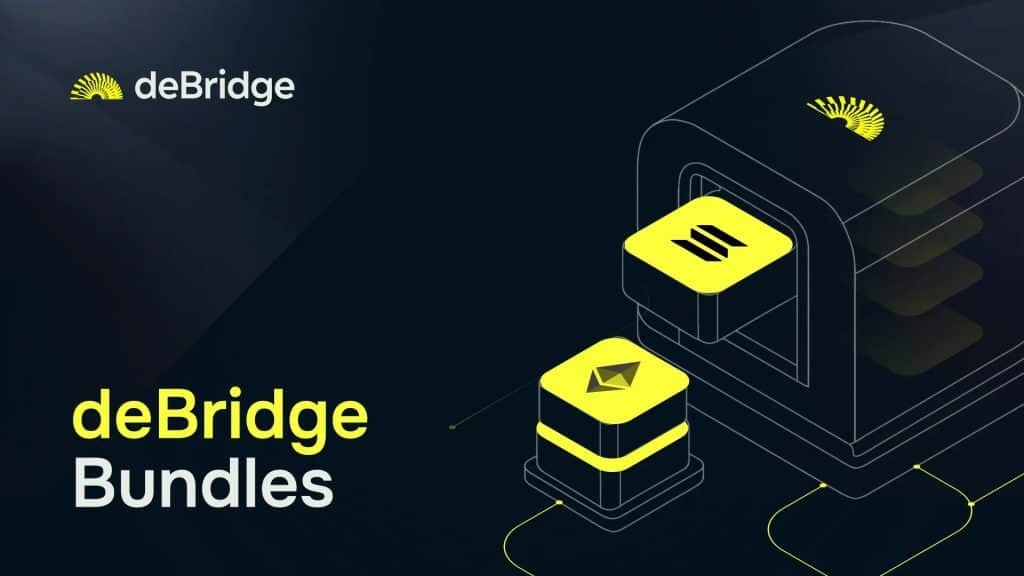
deBridge is a decentralized protocol with zero Total Value Locked (TVL) that operates with an intent-based execution layer. Thanks to its deBridge Liquidity Network (DLN), the network operates as an on-demand marketplace. This makes deBridge very similar to Across Protocol, with the difference that deBridge focuses on multiple chains.
Market makers, called Solvers, compete to fulfill users’ orders. Once a transaction is completed, the funds are transferred to the solver. One positive aspect of this platform is that because there are no liquidity pools, hackers cannot target users’ funds.
Pros
- Extremely secure due to its decentralized structure and no single point of failure.
- No slippage.
- Fast transactions.
- 25 different blockchains are supported.
Cons
- Users depend on Solvers’ capital.
- It uses a third-party system to verify cross-chain information.
- Higher price to ensure users get accurate quotes.
LI.FI
LI.FI works differently as this is considered to be a universal cross-chain bridge and DEX aggregator. This platform allows users to connect to more than 60 different blockchains, bridges and decentralized exchanges. As a result, users can select the cheapest and fastest options for exchanging their tokens.
The platform works seamlessly and provides an intuitive user interface. Users simply request a bridge transaction and LI.FI takes care of the rest. It will perform multiple trades for you to finally receive the funds on the destination network.
Pros
- Broad blockchain interoperability support with over 60 different blockchains and cross-chain protocols.
- Standard transaction times (depending on the routing).
- Advanced options for developers searching complex and multi-step actions.
Cons
- Smart contract risk from underlying protocols.
- Variable fee structure depending on transaction routing.
Hyperlane

Hyperlane is a permissionless messaging standard that lets users exchange data, tokens, and instructions. Layer-1 networks are able to easily install Hyperlane smart contracts and connect with more than 150 different blockchains.
In order to work, Hyperlane uses a system called Warp Routes. With it, tokens are locked on the starting network and new ones are minted on the destination chain. It is important to note that the destination chain will receive a synthetic, wrapped token.
Pros
- Offers support to more than 150 chains with a single integration.
- Over $10 billion USD has already been bridged.
- It supports any arbitrary data.
Cons
- Works only with wrapped tokens for assets.
- Applications can have different security standards.
Wormhole
Wormhole is one of the cross-chain protocols in the market that focuses mostly on institutional players. As of today, the crypto bridge connects more than 45 public and private blockchains. It serves as a communication layer that allows networks like Solana and Ethereum to share information and assets with each other.
By using a set of 19 off-chain validator nodes, these nodes ensure that smart contracts are correctly deployed and initialized. If 13 out of 19 validators validate an event, then relayers pick this signature and trigger the final action on the destination chain.
Pros
- Native tokens supported (no need to use wrapped tokens in new integrations).
- Extensive messaging infrastructure.
- Primary protocol for networks like Solana and Aptos.
Cons
- Heavily centralized with 19 validators.
- Legacy asset routing still relies on wrapped tokens.
Synapse
Synapse is a crypto bridge and liquidity network that supports more than 20 different blockchains. Although it was born as a stablecoin platform, it was able to expand into a decentralized finance (DeFi) hub. Users rely on it to move assets between Ethereum and other chains.
Compared to other blockchain interoperability protocols, Synapse relies on liquidity pools. Not only do they send data between blockchains, but they also offer low-fee asset interoperability. Due to this architecture, transactions are fast, cheap, and safe.
Pros
- Swaps are efficient thanks to large stablecoin pools (resulting in minimal slippage).
- It offers support to over 20 EVM and non-EVM chains.
- Automated bridging selects the cheapest and fastest route for users.
- Non-wrapped tokens are also supported where possible.
Cons
- Users could be exposed to vulnerabilities within Synapse’s large liquidity pools.
- It faces competition from other solutions offering similar services.
Relay
Relay is one of the fastest crypto bridges offering blockchain interoperability. The platform was able to scale to become one of the largest infrastructure cross-chain protocols, connecting more than 85 blockchain networks.
Like many other crypto bridges, Relay works with an intent-based architecture. That means that relayers will compete to offer the cheapest and fastest route for your transaction. As there are no liquidity pools involved, there is also no central point of failure for hackers to attack.
Pros
- Intent-based protocols offer fast transaction speeds.
- More than 85 blockchain networks are supported.
- It also offers advanced enterprise features.
Cons
- Liquidity and execution times rely on the availability of market makers.
- Although it is not exposed to liquidity pool risk, users could still be exposed to smart contract risk.
Stargate v2
Stargate V2 is a cross-chain liquidity network built on top of LayerZero V2 offering fast and secure asset transfers across multiple blockchain networks. Users can bridge native USDC, USDT, ETH, BTC and many other digital assets across more than 80 networks.
Compared to the original protocol, Stargate V2 introduced transaction batching. This allowed transactions to offer lower fees. Furthermore, it included AI to enhance liquidity management. Thanks to those implementations users can select a more economic option to route transactions or a fast and more expensive solution for immediate transfers.
Pros
- Batched transactions offer lower gas prices for transfers.
- Transactions settle on the source chain.
- AI planning makes the whole protocol more efficient.
Cons
- The cheaper batching option can take some time before the transaction is completed.
- Users could be exposed to baseline smart contract bugs or exploits.