Key Takeaways
- The term wallet address refers to a public address for accepting cryptocurrency.
- Various cryptocurrencies such as Bitcoin, Ethereum, and Tron have their unique specifications for presenting their addresses.
- You may disclose your wallet address to others, however, you are discouraged from sharing your private keys and recovery phrases.
- In address-poisoning scams, the scammer uses addresses that look similar to route the funds incorrectly.
A crypto wallet address is a group of either a combination of various characters or numbers through which a person can receive their crypto on the blockchain. Different cryptocurrencies like Bitcoin, Ethereum, Solana, and Tron work properly due to their unique address structure, and if one isn’t using the correct network, the transaction may fail or be sent to an incorrect address.
One should know that scammers can create similar addresses to those the crypto user has used before. This article provides helpful information on how wallet addresses work and where to find them and check them before transferring digital currencies.
A Wallet Address Explained Simply
The wallet address shows the person to whom they should send the cryptocurrency. It can be communicated to a third party or used to transfer the digital funds into a wallet.
An Ethereum address may look like this:
0x742d…
It is a sample of a wallet address and not the actual one. The complete Ethereum address is 42 characters long and includes the prefix 0x.
Every time a cryptocurrency is transferred by a person, the details of the destination address are recorded on the blockchain. Anyone can publicly share their e-wallet address, at which point anyone who has the e-wallet address can access the entire transaction history.
What is the Difference Between a Wallet Address, Public Key, Private Key and Recovery Phrase?
All of these are different terms, although similar in some aspects.
| Term | What it means | Can you share it? |
| Wallet address | The destination used to receive crypto | Yes |
| Public key | A key used to create addresses or verify signatures. | Generally public |
| Private key | A secret key that authorizes transactions | No |
| Recovery phrase | A set of words used to restore wallet access | No |
The cryptographic key used to derive an address or verify signatures is also used to validate the destination address for receiving crypto.
A public key is also an important part of the cryptographic aspect of your wallet. Depending on the blockchain, the public key or another account structure might be used to generate an address.
A private key allows the signing of transactions. Once someone obtains it, they can control the funds connected to that private key.
A recovery phrase is known as a seed phrase or secret recovery phrase. It consists of either 12 or 24 words that confirm that you are the owner of a wallet and its contents. It is crucial to secure your recovery phrase as well as the private key that you use to access your cryptocurrency. No legitimate wallet provider or support representative will ever ask you for these.
Address Formats by Blockchain
Wallet addresses vary by blockchain and account type.
| Blockchain | Common address format | Example pattern |
| Bitcoin (BTC) | Legacy addresses start with 1. P2SH addresses start with 3. SegWit and Taproot addresses start with bc1. | bc1q… or bc1p… |
| Ethereum and EVM networks | Usually 42 characters, beginning with 0x. | 0x… |
| Solana (SOL) | Typically a lengthy collection of letters and numbers, a Base58 encoded address. | 5K… |
| Tron (TRX) | Base58Check address, typically 34 characters lengthy and starting with T. | T… |
It is important to verify the asset and network type prior to executing a transaction. Depending only on the address format will not give a guarantee which network you should choose.
How to Find Your Wallet Address
You can easily discover the address you have chosen in different types of wallets. Each wallet and asset has its own approach to this.
Most mobile wallets display a receiving address and QR code.
- Open your wallet app and unlock it.
- Select the cryptocurrency you want to receive.
- Tap Receive. Choose the network if prompted.
- Copy the address or display its QR code.
- Share it with the person sending you crypto.
Before you share the address, just check the asset and network for accuracy. It should be noted that some wallets allow the use of many different networks. When it comes to sending cryptocurrency, scanning a QR code is a great option. It helps you to avoid errors in typing, but always check the destination regardless.
In Metamask
These steps should be followed to locate your MetaMask wallet address.
Launch MetaMask and Pick an Account
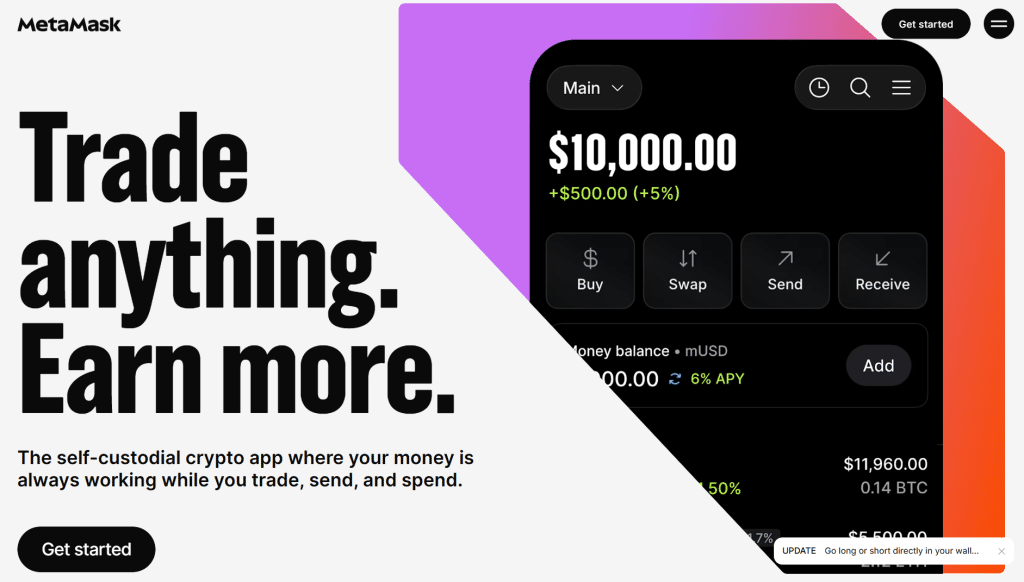
Open your cell phone or web browser to use MetaMask and select your desired account.
Locate and Copy Your Address
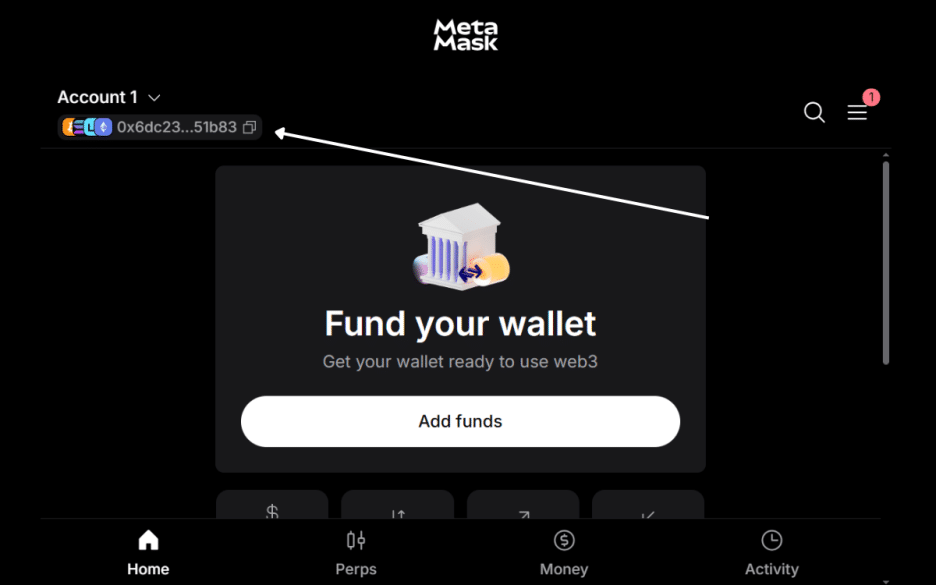
Locate the public address associated with your account under your account name, tap/click on it, and copy it.
Confirm the Network Status
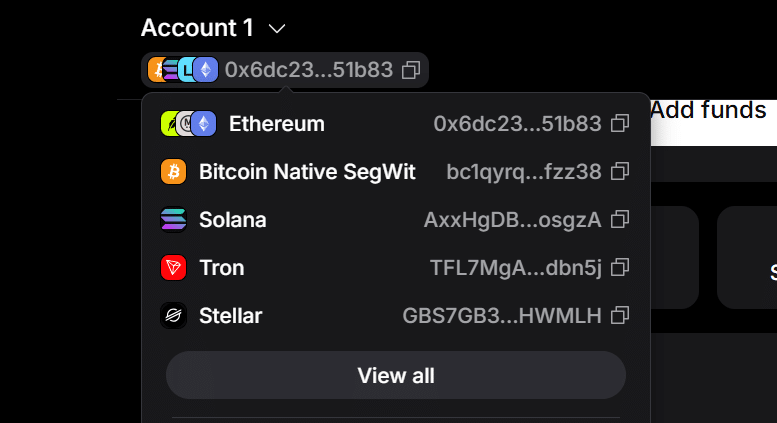
Select the right network before receiving any funds.
On an Exchange
You need to check your exchange account for the deposit information before initiating a fund transfer to your account.
- Log in to the exchange of your choice.
- Find the section called Deposit or Receive on the exchange platform.
- Select the coin you want to deposit.
- Pick the corresponding network as well.
- Read the deposit details.
- Note the address; you can write it down or scan the QR code.
Various exchanges may have multiple deposit addresses for one coin based on the network being used. It also happens that certain coins require a memo, tag, or additional identifying information in order for the deposited funds to reach their destination.
Take, for example, XRP. When depositing XRP, you need to supply not only its address but also a destination tag. No tag may result in difficulties with the deposit transfer process. Always use the relevant deposit information that you can find on the exchange.
Sending to an Address Safely
The sender should confirm the recipient of any cryptocurrency, what kind of currency is going to be sent, and which network is planned to be used.
The Network Must Match
The network shared by the sender and the receiver must be identical. When it comes to sending digital tokens or cryptocurrency, it is necessary to check what currency is being used for the transfer, which network is being utilized, and whether the exchange or the wallet accepts this network.
One must also verify whether it is necessary to include a memo or a destination tag in the transaction.
Address-Poisoning Scams
Address poisoning is a method of fraud whereby a criminal sends a small amount of money from a crypto wallet that is very similar to the address that has already been used by the victim. The criminal’s aim is to trick the victim into using the wrong address taken from their transaction history.
On August 11, a crypto user lost almost 100,000 USDT after sending the money to an address that had been in their transaction history for 66 days but was actually fake. The criminal relied on the victim’s habit of using the address copied from their history. The stolen USDT was converted to 52.8 ETH soon after the fraud, which made it impossible to freeze the assets.
Make a Test Transfer First
If you’re trying to transfer to a new recipient or making a large transfer, it is a good idea to initiate a smaller test transfer first.
A test transfer can confirm that:
- You have the right address.
- You have chosen the proper network for the transfer.
- The recipient exchange or wallet can accept the transfer.
- The amount of money arrives correctly.
Wait for sufficient confirmation of the test transfer before sending the rest of the amount. The fact that you successfully initiate a test transfer does not guarantee that your later transfer will be successful.
Every single time before you send the money, don’t forget to double-check the address, network, token, and deposit requirements.
Can You Reuse or Change Your Address?
Reusing addresses depends on the type of blockchain and wallet. Certain wallets allow you to receive many payments at one address, while Bitcoin wallets can use more than one receiving address in order to increase anonymity. Normally, addresses cannot be altered by the user, but the wallet has a way of generating a new address.
Frequently Asked Questions
The most common questions regarding crypto wallet addresses and their safety.
Is sharing my crypto wallet address secure?
The answer is yes. A public address is normally considered secure when it comes to receiving crypto assets. However, anything the owner of the wallet knows about the address will enable any user to check all transaction history of the wallet and view its balance via a blockchain explorer. You should never share your private key and your recovery phrase with anyone.
Why does my wallet address look different on other networks?
Various blockchains employ their own addressing schemas. Some chains use the same addressing schema as compatible Ethereum networks. Even though the address itself remains unchanged, it is essential for the network to correspond to the system requirements of the receiver.
Is it possible to retrieve funds that have been sent mistakenly to another address?
Retrieving such funds is quite complicated, if not impossible, because blockchain transactions cannot be reversed once they are confirmed. In case you sent assets to an exchange or platform by mistake, reach out to their support. If it was an individual’s address, the latter is supposed to return the funds.
More crypto guides: Guides hub · What is cryptocurrency · What is a seed phrase · 7 crypto scams to avoid