Key Takeaways
- When someone asks which crypto or blockchain network is the fastest, they usually want to know how quickly transactions will settle.
- Most people now want cheap fees and fast transactions when sending or receiving crypto. Anything that is usually ‘taking too long’ is already unacceptable in 2026.
- Right now, almost all cryptocurrencies are cheap and fast because of low activity during the bear market.
Many transactions happen across different blockchains and blockchain networks every day, and one practical way of saving more and getting a better value for your transactions is to use a crypto exchange with the lowest fees.
Do note that every crypto exchange may have different onchain fees, so finding the lowest fee is as important as finding fast transactions and premium service.
Let’s look at the top crypto projects with the cheapest blockchain fees for this year.
Cheapest coins and tokens to send at a glance
| Name of the cryptocurrency | What blockchain network is used | Network fee cost estimate | Exchange withdrawal fees | Crediting time |
| XRP | XRP Ledger | 0.2 XRP | N/A | 1 minute |
| XLM | Stellar Lumens | 0.02 XLM | N/A | 3 minutes |
| BNB | BEP-20 (Binance Smart Chain) | 0.00005 BNB | N/A | 1 minute |
| SOL | Solana | 0.001 SOL | N/A | 1 minute |
| BTC | Lightning Network | 0.00001 BTC | N/A | 3 minutes |
| ETH | Base | 0.000044 ETH | N/A | 2 minutes |
| HBAR | Hedera | 0.8 HBAR | N/A | 3 minutes |
| ADA | Cardano | 0.8 ADA | N/A | 5 minutes |
How we measured the fees
In terms of how we rank the coins, the fees were measured on a centralized crypto exchange during low-peak hours.
But technically, most crypto you would use to send is cheap and fast right now because of the current bear market, as most blockchain networks have low activity right now in 2026.
When exchange network fees are already this low on a CEX, you can expect even lower fees if you hold crypto in a custodial wallet.
The cheapest crypto to transfer
Here are the cheapest and fastest cryptocurrencies and blockchain networks that you can use to send crypto to someone.
XRP
Despite the legal issues that rocked it in the past under the previous administration in the United States, Ripple’s XRP still remains on the top ten crypto list by market cap.
One Ripple transaction can only cost a user $0.00000837. Although this is one of the cheapest blockchain fees on the market, some transactions may cost more depending on how much data (in bytes) they take up in the block.
XLM

Similar to XRP, Stellar has the characteristics of having fast transactions and being affordable.
Notably, an XLM transaction only costs $0.00000215, making it one of the lowest crypto transaction fees.
For context, the Stellar Consensus Protocol (SCP) makes transactions fast and cost-effective by allowing individual Stellar users to validate transactions on the platform.
BNB

When I first got into crypto and started learning how to transfer this and that, BNB was the first blockchain I used because it was the cheapest and fastest on the list at the time.
I even tried transferring Bitcoin from the exchange to my hardware wallet as Bitcoin on the BNB chain, because we all know Bitcoin’s main network is slow and expensive.
So if you are still trying to learn blockchain like I was years ago, do not ignore BNB, and make sure you get the ‘feel’ for how this blockchain works when sending and receiving crypto.
SOL
I was never a Solana fan because of the meme hype before, but you can appreciate that it has cheap fees and faster transactions.
I tried sending and receiving SOL from my Phantom wallet before, and you could get it within seconds after the transfer.
However, Solana transfers can be a bit expensive if you compare transfers to BNB Chain, so make sure you are okay with that before proceeding.
BTC (Lightning Network)
I know what you are thinking, “Why did you add Bitcoin to this list when it’s so slow and expensive?”
Relax, I’m not talking about Bitcoin in the main Bitcoin network, I’m talking about Bitcoin in the Lightning Network.
The Lightning Network lets users to send and receive Bitcoin quickly and cheaply by moving transactions off the main blockchain, and you can think of it as a fast lane for Bitcoin.
If the Lightning Network gains traction, it may be able to undercut the fees of industry behemoths like Visa and Mastercard, as well as the entire global remittance market.
Additionally, if the Lightning Network continues to grow, it will have a significant impact on the future utility and value of Bitcoin as well.
ETH (Base)
Like Bitcoin on the Lightning Network, Ethereum has its own fast lane on Base, the layer-2 blockchain built by Coinbase.
We all know ETH can be expensive to transfer on the network; that is why I’m so thankful Coinbase built a layer-2 on it in 2023.
Before 2023, people paid a lot of gas on Ethereum just to make transfers, and it was wild back then to pay for that kind of gas fee.
Now, whenever Ethereum’s main network feels a bit busy, I have no worries about switching to the Base network in the meantime.
HBAR

Hedera stands out on the list and I included it because its transaction fees start at a tiny fraction of a cent even as HBAR’s token price moves.
Transaction speeds are also fast, which makes the token practical for micropayments, high-volume applications, and everyday transfers.
That said, HBAR is also included in the x402 payment protocol, so you can use the token as a digital currency over the internet as easily as sending an HTTP request, which is how websites normally communicate.
ADA

Last but not least is Cardano.
Although it’s a layer-1 blockchain, Cardano is cheap to transfer because its fee formula doesn’t let users outbid each other to process a transaction.
Additionally, the blockchain is running on a proof-of-stake (PoS) consensus protocol, so there is less energy being used, keeping the network costs low.
Cheapest way to send stablecoins (USDT and USDC by network)
When sending stablecoins such as USDT or USDC, I would recommend sending them through the Binance Smart Chain (BEP-20) because the fee for transferring is only 0.01 USDT.
Solana is also nice, but if you compare it with BEP-20, Solana’s fees are more expensive to use at 0.05 USDT.
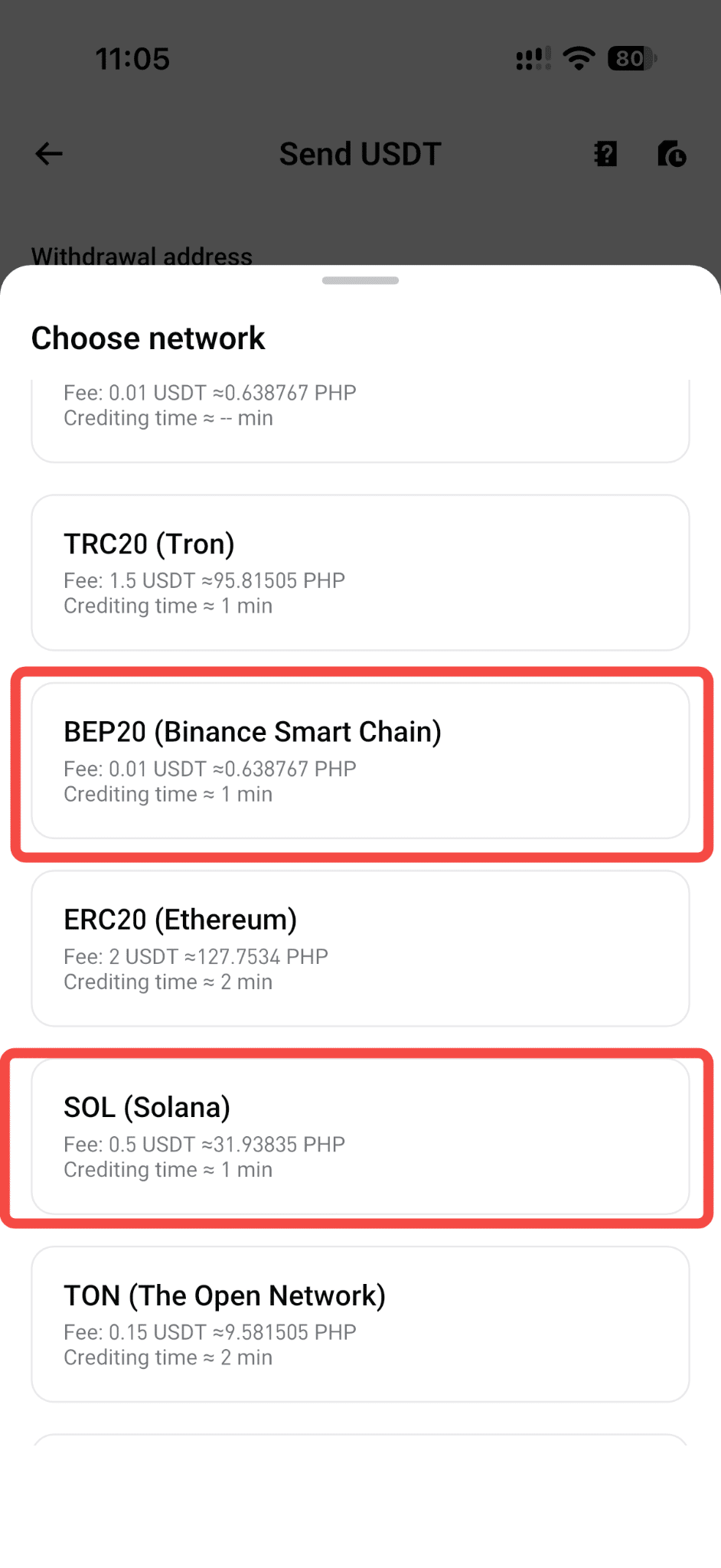
Whenever I am expected to receive crypto, I usually request that stablecoins be sent to me on the BNB chain to avoid the sender incurring a lot of costs.
But it really depends on what purpose and end goal you are going to use those stablecoins for. If you frequently interact with the Solana ecosystem, the most logical option is to send your USDT or USDC to Solana.
Network fee versus exchange withdrawal fee: why your cost differs
In my nine years in crypto, I have never paid exchange withdrawal fees. If there were, they would not have been very noticeable. The fees I usually encounter when sending crypto are the network or onchain fees. Additionally, most of my crypto withdrawals are P2P.
Overall, you don’t need to worry about exchange withdrawal fees because they are usually already included in the network fee. That may be part of the reason why I did not notice other fees when withdrawing crypto from the exchange.
How to cut transfer fees
Blockchain network and transfer fees are already cheap in 2026. But if you want to cut fees even further, here are some tips and tricks to get the most value from your transfers.
Pick the right network
Choose blockchain networks that prioritize payments, like XRP or XLM. You can also choose a layer 2 blockchain since they help make transactions faster on the Ethereum network.
Time your transfer
Check the busiest times in your local area and avoid them if you want cheaper and faster crypto transfers.
Batch your withdrawals
Withdraw or send crypto only if you need to. Every crypto transfer incurs a fee, so be strategic if you want to avoid extra costs.
Common mistakes: wrong network, missing memo or tag
This article is about which blockchains to use to save on fees. But if you make a mistake and send your crypto the wrong way, you are not saving money; you are just creating more headache for yourself.
Among the list, XRP, XLM, and HBAR require a memo or tag if you plan to withdraw your assets from the exchange. If you don’t fill it out, you are at risk of losing your crypto.
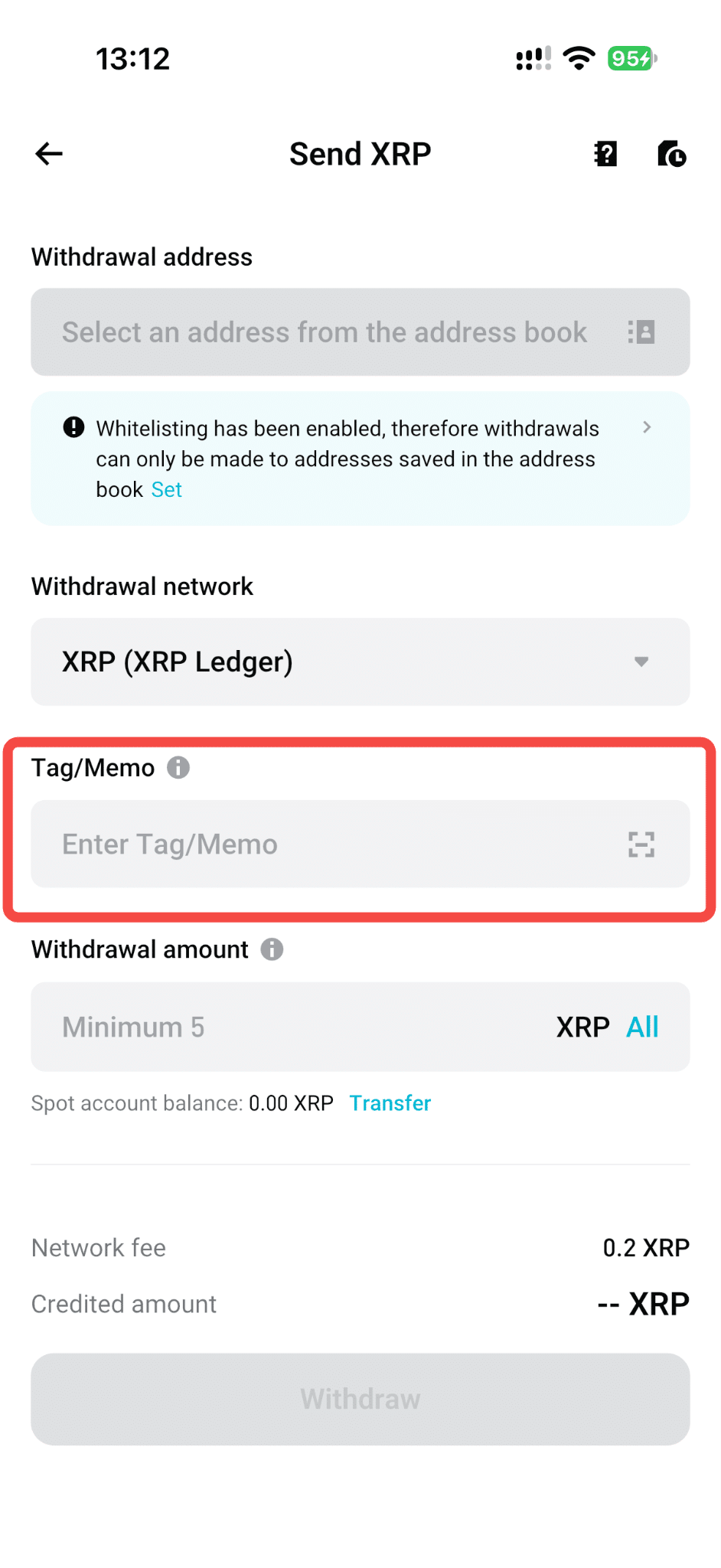
Always make sure you have everything covered before hitting that send button.
Frequently Asked Questions
Here are the common questions about which crypto is the cheapest to transfer in 2026.
Does a low network fee mean low overall cost?
Generally yes but you would need to look at exchange withdrawal fees as well. Most of the time, the exchange withdrawal fees are already combined in the network fee.
What is the cheapest stablecoin to send?
You should look at the blockchain network and not the token itself. USDT or USDC on Solana or BNB are the cheapest stablecoin routes for everyday payments, which is at a fraction of a cent per transfer.
More crypto guides: Guides hub · What is cryptocurrency · What is a seed phrase · 7 crypto scams to avoid